


Move Fast and Break Things? Or Slow Down and Build? A Christian Reflection on Leadership
Silicon Valley says “move fast and break things.” But Christian leadership follows a different standard—one measured not in speed or disruption, but in patience, character, and people faithfully formed over time.
Few phrases have captured the spirit of modern leadership as effectively as Mark Zuckerberg’s famous motto: “Move fast and break things.” It reflects the ethos of Silicon Valley, where speed is celebrated, disruption is praised and success often belongs to those willing to challenge convention. The philosophy has undoubtedly produced innovation. New technologies, businesses, and industries have emerged because leaders were prepared to take risks, act decisively and tolerate failure.
Yet for Christians, leadership is ultimately judged by a different standard. The question is not merely, “Did it grow?” or “Did it succeed?” but “Did it honour God?” and “Did it build people?” While the world often rewards haste, God frequently works through patience. While modern leadership can be obsessed with disruption, Christian leadership is concerned with cultivation. The kingdom of God advances not by breaking things, but by lovingly building them.
This contrast reveals two fundamentally different visions of leadership.
The Culture of Speed
The modern world prizes speed above almost every other virtue. Businesses race to release products. Politicians rush to announce solutions. Organisations pursue rapid growth. Technology has conditioned us to expect instant results. Success is measured in quarters, election cycles, and social media engagement.
The appeal of speed is obvious. Slow organisations can become stagnant. Leaders who endlessly deliberate may miss opportunities. Scripture itself contains examples of decisive action. Nehemiah quickly organised the rebuilding of Jerusalem’s walls. Paul travelled tirelessly throughout the Roman world establishing churches. There is a place for boldness and urgency.
The danger lies in believing that speed itself is a virtue.
When leaders embrace a “move fast and break things” mentality, people often become collateral damage. Relationships are strained, institutions destabilised, traditions discarded, and communities divided. The assumption is that whatever is broken can later be repaired.
But people are not software.
A technology company may recover from a failed product launch. Human beings do not recover as easily from broken trust, damaged reputations, fractured families, or wounded spirits.
The Christian understanding of leadership begins with recognising the immense value of every person. Human beings are not resources to be utilised. They are image-bearers of God. Jesus did not treat people as obstacles to efficiency. He treated them as treasures deserving attention, care, and dignity.
God’s Preference for Slow Growth
One of the most striking aspects of Scripture is God’s apparent comfort with slow processes.
God could have created a nation overnight, yet He spent centuries forming Israel.
God could have sent the Messiah immediately after humanity’s fall, yet generations passed before Christ appeared.
Jesus could have established a global movement through spectacular displays of power. Instead, He spent three years walking dusty roads with twelve disciples.
Even creation itself unfolded over ordered stages.
Throughout Scripture, God demonstrates that maturity is more important than speed.
A farmer understands this principle. Crops cannot be rushed. Seeds germinate according to God’s design. Growth takes time. Attempts to accelerate nature often produce weaker results.
Jesus frequently used agricultural imagery to describe the kingdom of God because growth in God’s kingdom resembles cultivation more than construction. The sower scatters seed. The farmer waits. The vine slowly produces fruit. Progress is often hidden before it becomes visible.
Modern leaders sometimes confuse activity with effectiveness. Christian leaders understand that transformation is usually gradual. Character is formed over years. Trust is built through repeated faithfulness. Communities are strengthened through countless acts of service that may never attract attention.
God appears remarkably unconcerned with our timelines. He is deeply concerned with our formation.
Jesus as the Model of Leadership
The life of Jesus provides the ultimate contrast to the “move fast and break things” philosophy.
Jesus never seemed rushed.
Crowds demanded His attention, yet He frequently withdrew to pray.
People sought immediate solutions, yet He often responded with questions and stories.
His disciples repeatedly tried to accelerate His mission, but Jesus moved according to His Father’s timing rather than public expectations.
One of the most remarkable aspects of Christ’s ministry is His willingness to be interrupted.
Blind beggars stopped Him.
Children delayed Him.
Sick people sought Him.
A woman with a chronic illness interrupted His journey to another urgent need.
In each case, Jesus chose relationship over efficiency.
To modern management experts, this would seem profoundly inefficient. To Christians, it reveals the heart of God.
Jesus understood that people are never interruptions to leadership; they are the purpose of leadership.
His approach was not characterised by reckless disruption, but by intentional restoration. Wherever He went, He healed, reconciled, strengthened, and renewed. Broken people encountered wholeness. Outsiders found belonging. The weak discovered dignity.
Jesus built rather than broke.
The Leadership of Shepherds, Not Entrepreneurs
The dominant image of leadership in contemporary culture is often that of the entrepreneur: visionary, disruptive, ambitious, and relentlessly driven toward growth.
The dominant biblical image is quite different.
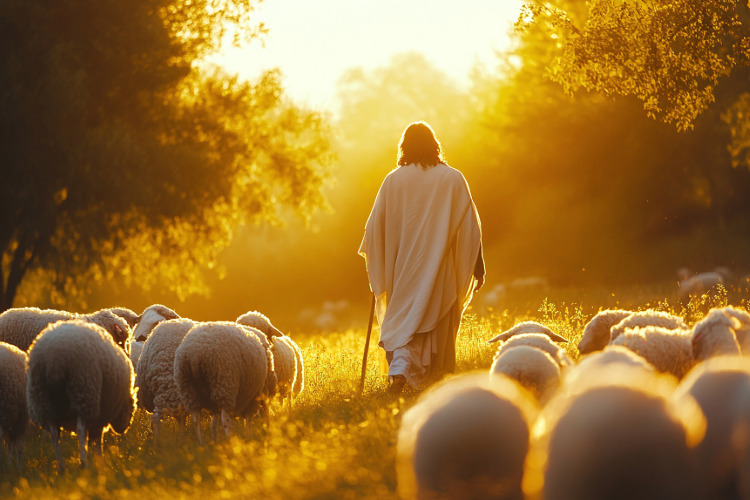
Scripture repeatedly describes leaders as shepherds.
A shepherd does not measure success by speed. Shepherds walk at the pace of the flock. They protect the vulnerable. They seek the lost. They nurture growth patiently.
David was a shepherd before he became a king.
Moses was a shepherd before he led Israel.
The prophets criticised Israel’s leaders when they shepherded poorly.
Jesus described Himself as the Good Shepherd.
The shepherd image reveals a fundamentally different understanding of power. The shepherd exists for the sheep. Leadership is not self-promotion but stewardship.
This has profound implications for Christian leaders.
The question is not whether a church, school, business, or ministry can expand rapidly. The question is whether growth strengthens those entrusted to our care.
Growth that damages people is not kingdom growth.
Progress that sacrifices character is not Christian progress.
Success that leaves wounded lives behind is ultimately failure.
Building People Takes Time
Christian leadership focuses primarily on building people.
Buildings can be constructed quickly. Character cannot.
Strategies can be implemented rapidly. Wisdom cannot.
Structures can be reorganised in weeks. Trust cannot.
Every experienced leader eventually discovers that the hardest and most important work involves people. Encouraging a struggling employee, mentoring a young leader, resolving conflict, rebuilding morale, strengthening culture, and nurturing faith all require patience.
These tasks often feel frustratingly slow.
Yet this is precisely where Christian leadership differs from worldly leadership. The Christian leader understands that people are eternal. Investing in their growth is never wasted effort.
The Apostle Paul exemplified this mindset. He frequently described ministry using parental language. He spoke of nurturing believers, encouraging them, and labouring for their maturity. His concern extended beyond organisational success to spiritual formation.
In many ways, Christian leaders are gardeners rather than mechanics.
Mechanics fix problems.
Gardeners cultivate life.
The difference is significant. Life develops according to God’s timetable, not ours.
The Danger of Breaking Things
The world’s admiration for disruption often overlooks the cost.
Churches can grow rapidly while neglecting discipleship.
Businesses can increase profits while damaging culture.
Schools can pursue expansion while exhausting staff.
Governments can announce reforms while weakening institutions.
The immediate results may appear impressive, but hidden consequences eventually emerge.
Christian leaders must resist the temptation to pursue outcomes at any cost.
The means are as important as the ends.
God rarely calls His people to choose between truth and love, between effectiveness and integrity, or between growth and faithfulness. Instead, He calls leaders to achieve the right goals through the right methods.
When leaders move too quickly, they often leave behind people who need time to understand, adapt, heal, or contribute.
The result is often unnecessary division.
Many organisations have suffered not because change was wrong, but because leaders introduced it without sufficient patience, consultation, or care.
Christian leadership recognises that preserving unity is itself an important objective.
The Strength of Gentleness
Modern culture often mistakes gentleness for weakness.
Scripture does the opposite.
Gentleness is repeatedly presented as a mark of spiritual maturity. Jesus described Himself as “gentle and humble in heart.” Paul instructed leaders to correct others with gentleness. The fruit of the Spirit includes gentleness.
Gentleness is not passivity.
It is strength under control.
It is the capacity to exercise authority without domination.
It is the willingness to influence without coercion.
The gentle leader understands that lasting change cannot be forced. People are not transformed through pressure alone. They are transformed through truth applied with grace.
This requires patience, humility, and love.
These virtues seldom produce dramatic headlines, but they build resilient organisations and healthy communities.
The Long View of Eternity
Perhaps the greatest difference between worldly leadership and Christian leadership is perspective.
The world often focuses on immediate outcomes.
God focuses on eternal outcomes.
A leader who thinks only about the next quarter will lead differently from one who thinks about the next generation.
Many of the most significant achievements in Christian history were accomplished slowly.
Cathedrals took decades or centuries to build.
Mission movements often developed over generations.
Christian schools, hospitals, and charitable institutions grew through sustained faithfulness rather than sudden disruption.
The leaders who built them understood something our culture frequently forgets: lasting things take time.
God is in no hurry, yet His purposes are always fulfilled.
Christian leaders are invited to share this confidence. They do not need to force outcomes through frantic activity because they trust that God is at work.
Faithfulness becomes more important than speed.
Obedience becomes more important than recognition.
Stewardship becomes more important than achievement.
Conclusion
The contrast between “move fast and break things” and Christian leadership ultimately reflects two competing visions of success.
One prioritises disruption, speed, and measurable accomplishment. The other prioritises formation, patience, and faithful stewardship.
This does not mean Christian leaders must be cautious to the point of paralysis. Scripture honours courage, initiative, and decisive action. But these qualities are always tempered by love, wisdom, humility, and concern for people.
Jesus never rushed people. He never treated them as expendable. He never sacrificed relationships for efficiency. Instead, He invested deeply in individuals, patiently formed disciples, and built a kingdom that continues to transform the world two thousand years later.
Christian leaders are called to follow His example.
The temptation of every generation is to seek quick results. God’s invitation is to pursue lasting fruit.
The world says, “Move fast and break things.”
Christ says, “Abide in me.”
The world celebrates disruption.
Christ cultivates restoration.
The world asks, “How quickly can we grow?”
Christ asks, “What kind of people are we becoming?”
In the end, what is built with love, truth, patience, and faithfulness will outlast every achievement produced by urgency alone. Christian leadership is therefore not fundamentally about moving fast. It is about walking faithfully with God, loving people well, and building something so grounded in His purposes that it endures long after the excitement of rapid success has faded.
God’s way is rarely the fastest way.
But it is always the deepest, the wisest, and ultimately the most enduring.
Recent Articles:

31 August 2026
7.8 MINS
Tasmania's Parliament is moving to treat ordinary Christian parenting and pastoral care as a problem to be regulated, and in the Greens’ bill, as a crime.
31 August 2026
7.8 MINS
While evangelicals rally politically behind Israel, few schools teach why. The King's University builds Jewish studies, anti-supersessionist theology, and antisemitism scholarship into its academic core.
28 August 2026
5 MINS
Dolly Parton has died at 80, leaving behind a legacy of faith, generosity, and music. Tributes are pouring in from celebrities, politicians, and everyday fans she touched.
28 August 2026
2.6 MINS
Thomas Aquinas questioned Muhammad’s credentials to speak for God. His question remains uncomfortably relevant.
28 August 2026
5 MINS
Politics feels exhausting and toxic, but William Wilberforce's story shows why Christians shouldn't retreat from public life. His crisis of faith and calling offers a model for today.

27 August 2026
4.8 MINS
Bishop Fulton Sheen argued Communism and capitalism share a common root—materialism divorced from morality. That affinity, this piece argues, explains China's persecution of Christians today.

27 August 2026
2.6 MINS
Religious leaders are urging Labor to exempt faith-based charities from its new 30 per cent discretionary trust tax, warning the reform could severely cut philanthropic funding for vulnerable Australians.


