


UK MPs Reject Assisted Suicide — And Dignity in Dying’s Dark History Explains Why They Were Right
Before it was ‘Dignity in Dying’, the euthanasia lobby was founded by a medical eugenicist who called the sick a “useless burden”. That dark history didn’t disappear — it was just rebranded.
Last week, the UK House of Commons voted against the assisted suicide bill.
We can rejoice, for now, that the vulnerable and the elderly have been protected from this sinister proposal.
The arguments against this appalling legalisation have been well rehearsed.
But what is not so well known is the dark history of the main lobby group pushing for change.
She’s literally a hero.
Reports from the inside saying her speech killed the Kill Bill.
Against all odds, today the UK echoed the teaching of the Church:
Suffering does not cause people to lose their dignity.
Death must be welcomed, but never administered.… https://t.co/SdRmnwkRoJ
— Will Anselm (@willanselme) September 11, 2026
The Troubling Origins of Dignity in Dying
The so-called ‘Dignity in Dying’ campaign has had more rebranding exercises than Prince Harry has had job titles. The movement has had various monikers over the years. But Daniel Friery, who works in public affairs at The Christian Institute, has done us all a favour by digging into the history of the movement. And it turns out, its history is very dark indeed.
He has recently examined the archives of Dignity in Dying, held at the Wellcome Collection in London. His findings raise uncomfortable questions about the organisation’s origins and the philosophy which has driven the euthanasia movement in Britain.
Dignity in Dying was originally founded in 1935 as the Voluntary Euthanasia Legalisation Society (VELS) by Dr C. Killick Millard, a medical eugenicist. Its stated aim was to legalise voluntary euthanasia for incurably ill patients. Yet Millard’s arguments went beyond compassion for those facing suffering. In 1936 he described voluntary euthanasia of the sick, “a last service to society by relieving it of a useless burden.”
A “useless burden”? That language matters.
One of the central objections to assisted suicide today is that vulnerable people may eventually feel pressure to end their lives because they believe themselves to be a burden on their families or on society.
Friery’s research suggests that this concern is not merely a modern fear about an unintended consequence. The idea that someone might reasonably choose death because their continued existence places a burden on others was present in the thinking of the movement’s early advocates.
The Society’s own literature referred to people being distressed that their survival placed a strain on those caring for them and depleted family finances.
Research commissioned by the Society in 1982 found that 20 per cent of its members gave a desire “not to be a burden to others” as a reason for joining the campaign, compared with only six per cent who cited fear of unnecessary suffering or pain.
Eugenics, Suicide, and Safeguards
The movement’s history also has an uncomfortable relationship with eugenics. Millard himself supported eugenic policies, including the sterilisation of people regarded as “feeble-minded”.
And the Society’s first chairman, C.J. Bond, spoke of mankind taking greater control over human evolution and human destiny, including responsibility for “entrance into and exit from life”.
There was also a strikingly open attitude towards suicide itself. In 1970 the Society’s chairman, the Rev A.B. Downing, spoke of educating the public towards “the rightness of suicide and assisted suicide”. In 1981 the Society published a controversial suicide manual, A Guide to Self-Deliverance, and its former general secretary Nicholas Reed was jailed after becoming involved in an underground service supplying lethal drugs.
The organisation’s historical attitude towards safeguards is equally revealing.
Earlier campaigners sometimes argued that safeguards were unnecessary or cumbersome. None of this proves that every modern supporter of assisted dying shares the beliefs of the movement’s founders. Nor does it mean that every argument for changing the law is motivated by eugenics.
But history matters. It can reveal assumptions which fashionable language conceals.
What Christianity Offers Instead
Today’s debate is presented in terms of compassion, dignity and choice.
Christians should certainly care about compassion, dignity and the suffering of the dying. But biblical Christianity begins with a different understanding of human worth.
Human beings do not possess value because they are healthy, independent, productive or free from suffering. They possess value because they are made in the image of God.
The danger is that once society accepts the principle that some lives may be better ended than continued, the language of choice can gradually become the pressure of expectation.
The dark and sinister past of the euthanasia movement should therefore make us ask what view of human life lies beneath it.
Read Daniel Friery’s article on Dignity in Dying’s Park Past
Daniel Friery’s article on the dark past of the Dignity in Dying movement was first published by The Critic, and you can read it in full here.
___
This article first appeared in Evangelical Times, a UK Christian publication. You can try ET Premium membership free here.
Originally titled, “MPs reject assisted suicide – thank God, given the movement’s dark history”. Image via Adobe.
Recent Articles:
16 September 2026
4.7 MINS
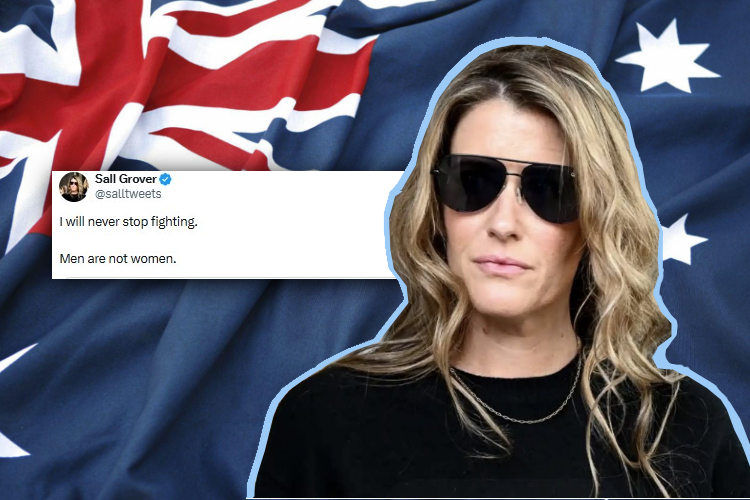
Sall Grover is leaving Australia, but not the fight. Following the High Court's refusal to hear her appeal in Giggle v. Tickle, Grover declared she will not call a man a woman — whatever the law says. She won't stop fighting until the law changes.

16 September 2026
3.8 MINS
Adelaide-based pop artist LILLI has been named Australian Emerging Artist of the Year at the 2026 People’s Choice Awards, capping a landmark year of chart success, her debut album Anthropology and songwriting work in Nashville. The South Australian Christian artist was one of three finalists represented by Adelaide independent label Australian Christian Records.
16 September 2026
6.7 MINS
When Dr Paul Tyson hand-delivered a letter opposing the Digital Duty of Care bill to his local MP's office, he expected a brief exchange. Instead, he left feeling patronised, unheard, and more alarmed than ever.
16 September 2026
2.2 MINS
Thirty-seven years after the Berlin Wall fell, socialism is gaining popularity among Americans with no memory of life behind the Iron Curtain. History, however, tells a very different story.
15 September 2026
5.1 MINS
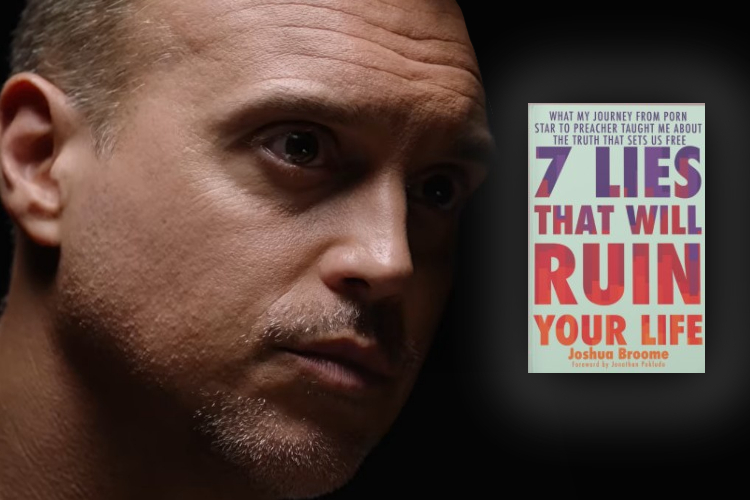
Joshua Broome was a porn star with fame, money, and a drug overdose planned. Trapped in deep shame and guilt, he found forgiveness and his true identity in Jesus Christ, and is now a husband, father, author and pastor.

15 September 2026
3.2 MINS
Many Christians avoid J. K. Rowling's Harry Potter series due to a perceived conflict between its themes and Biblical Christianity. Yet according to the author of a recent biography of J. K. Rowling, there is much more to the picture.

15 September 2026
1.7 MINS
The temptation to believe we have special knowledge others don’t is as old as Eden. But Christians must pursue what's true, and stop mistaking suspicion for wisdom and conspiracy for courage.


