


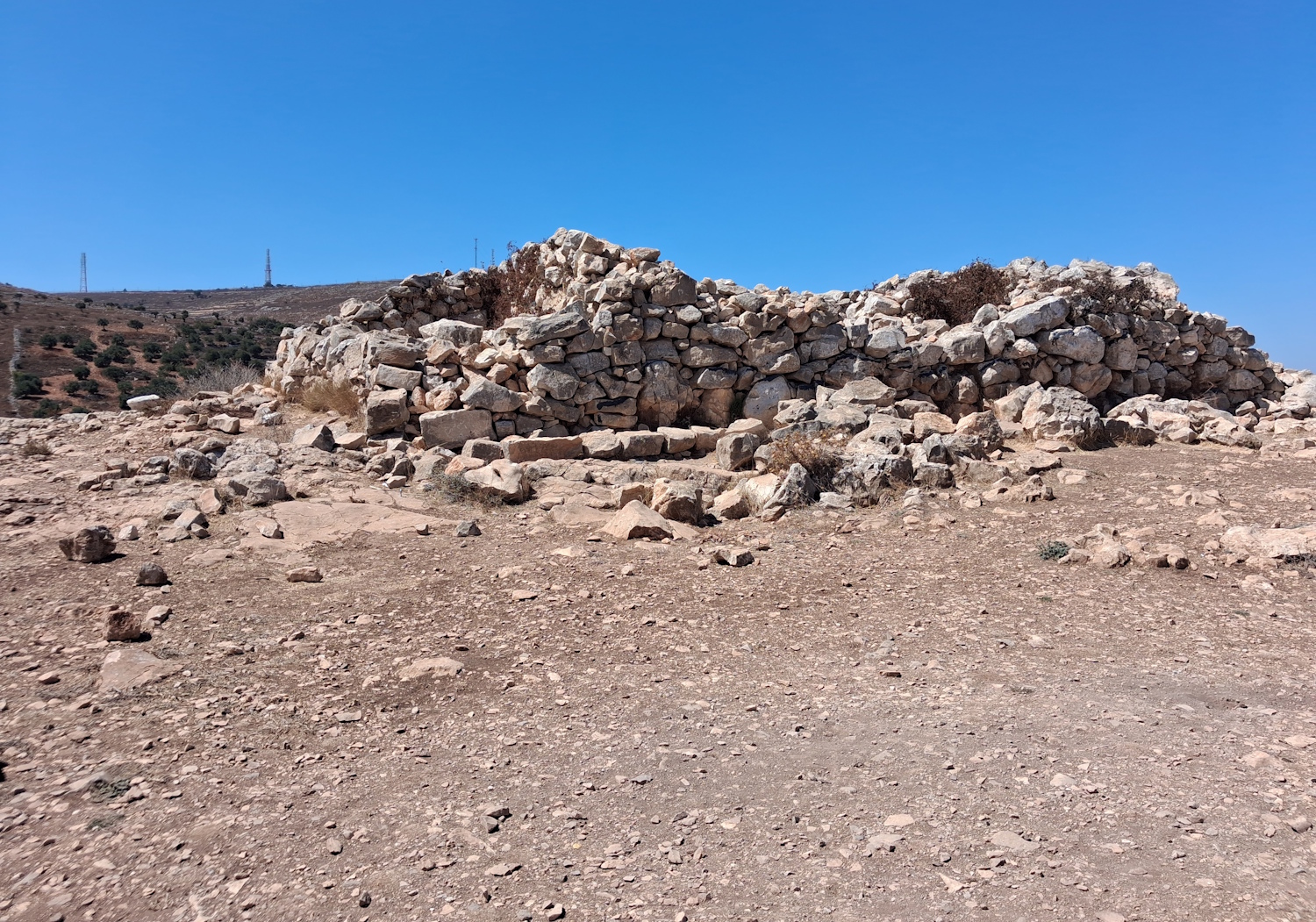
3,400-Year-Old Altar of Sacrifice Validates Biblical Account
A remarkable journey to Mount Ebal explores Joshua’s altar, fascinating archaeological discoveries and the enduring biblical significance of Samaria and Israel’s ancient heritage.
We (my wife, Nel, and I) toured Shomron, a.k.a. Samaria, in Israel on 17th September 2026. We were hosted by Nofar Wizmann-Berman (Shomron Director of Foreign Relations) and our guide Boaz Haetzni. They both provided so much information as we got an understanding of the land. This region is also referred to as the West Bank.
We also thank the Governor of Shomron, Yossi Dagan, and the Israeli ambassador to Australia, His Excellency Hillel Newman, for helping us arrange this incredible tour.
One of the most amazing things we saw was Joshua’s altar of worship at Mt Ebal, which was the first act of sacrificial worship in the Promised Land after crossing the Jordan. This location is not on general tourist itineraries and is somewhat difficult to get to.
Archaeology Background
Adam Zertal is one of the most interesting and controversial figures in the archaeology of early Israel. His work on Mount Ebal is particularly important because he identified a previously unknown complex that he believed could be connected with the altar Joshua built in Joshua 8:30–35. Zertal was an atheist.
The biblical account says:
“Then Joshua built an altar to the LORD God of Israel on Mount Ebal.”
— Joshua 8:30
The context is striking. Joshua 8:30–35 describes Israel building an altar on Mount Ebal, offering sacrifices, writing the Law on stones, and conducting a covenant-renewal ceremony involving the blessings from Mount Gerizim and curses from Mount Ebal. This follows the command given by Moses in Deuteronomy 27:1–8.
Who Was Adam Zertal?
Adam Zertal (1936–2015) was an Israeli archaeologist at the University of Haifa. Beginning in 1978, he directed an extensive archaeological survey of the Manasseh Hill Country.
In April 1980, while surveying Mount Ebal, Zertal and his team discovered what initially looked like an ordinary heap of stones. The site was known locally as el-Burnat, meaning roughly “the hat.” Excavations subsequently took place from 1982 through 1989.
What They Uncovered Was Extraordinary.
1. A large stone structure
At the centre was a substantial rectangular structure made from large, unhewn stones. It measured approximately 7–9 metres across, with substantial walls.
Initially, the excavators considered possibilities such as a farmhouse or watchtower. But the structure had characteristics that made those explanations problematic: it had no normal entrance or floor, and it was built directly on bedrock.
More importantly, the fill contained:
- ashes
- animal bones, including many burned bones
- bones shown forensically to be animals of about one year of age
- pottery
- storage vessels
- small vessels apparently associated with ritual activity
- installations containing ash and animal remains.
The combination led Zertal to interpret the complex as a cultic centre#¹, with the principal structure functioning as an altar.
#¹ This, of course, is from his view as an atheist and in this context cultic has an specific archeological meaning, i.e. pertaining to a religious group.
2. The structure’s date is remarkably interesting
The archaeological material places the complex broadly in the Late Bronze Age / early Iron Age transition, with the major rectangular structure generally dated around the 13th century BCE / early Iron Age I.
Zertal pointed particularly to an Egyptian-style scarab found in the sealed fill, along with distinctive pottery, as evidence for a 13th–12th-century BCE date.
That is significant because it falls within the chronological period traditionally associated with the emergence of early Israel in Canaan, having left Egypt 40 years earlier.
3. The altar’s construction is interesting in light of Deuteronomy
Deuteronomy 27:5–6 says:
“And there you shall build an altar to the LORD your God, an altar of stones. You shall not use an iron tool on them. You shall build with whole stones the altar of the LORD your God.”
Zertal argued that the use of large, unhewn stones at Mount Ebal was consistent with this description.
The site also contained a ramp leading toward the large structure. The excavated remains have therefore been compared with ancient Israelite altar traditions.
There is an interesting archaeological detail here: the site appears to contain two successive structures—an earlier, smaller, roughly circular installation beneath the later, larger rectangular one. The earlier feature has also been interpreted as an altar.
4. Why Mount Ebal is so important biblically
The geography is not incidental. Mount Ebal stands opposite Mount Gerizim, with ancient Shechem lying between them.
Deuteronomy specifically designates:
- Mount Gerizim — blessing
- Mount Ebal — curse
Joshua 8 then describes Israel carrying out this ceremony. So, the archaeological discovery occurred in precisely the geographical location associated by the biblical text with Israel’s covenant ceremony.
That is why Zertal proposed that the structure wasn’t simply an ancient Israelite altar, but that it is the altar described in Joshua 8:30.
A fascinating later discovery: the Mount Ebal lead object
The story became even more interesting decades later. In 2019, archaeologists associated with the Associates for Biblical Research (Scott Stripling) wet-sifted material from one of Zertal’s old excavation dump piles. They recovered a small, folded lead object.
Using X-ray tomography, researchers (particularly Gershon Galil and Pieter Gert van der Veen) reported seeing writing inside the folded object. A 2023 paper in npj Heritage Science proposed that it contained a very early Hebrew/proto-alphabetic curse formula including the divine name YHWH. The researchers dated it broadly to the Late Bronze Age II.
Their published reading is approximately:
“You are cursed by the God YHWH.”
“You will die, cursed.”
“Cursed you will surely die.”
“Cursed by YHWH—cursed, cursed, cursed.”
The proposed connection with Joshua 8 is tantalising:
Joshua 8
- Israel builds an altar on Mount Ebal.
- Sacrifices are offered.
- The Law is written.
- Blessings and curses are proclaimed.
Mount Ebal archaeology
- An ancient cultic installation.
- Animal bones and ash.
- Evidence of ritual activity.
- A possible ancient written curse found in material from the site.
The parallels are certainly compelling, and having been to the site and prayed, I personally sense it is correct.
Why the Discovery Matters
From a biblical-archaeological perspective, the Mount Ebal site is particularly intriguing because three independent categories of evidence converge:
- Location
The structure is on Mount Ebal – the precise mountain specified in Deuteronomy and Joshua. - Function
The archaeological evidence points toward a cultic/ritual installation, including ash and animal remains. - Chronology
The principal remains belong broadly to the period associated with early Israel’s emergence in Canaan having come from Egypt.
Why This Matters Today
First, the discovery of Joshua’s altar on Mt Ebal confirms biblical truth. The overwhelming evidence shows an event from nearly 3,400 years ago to be as recorded in the Word of God.
Secondly, it also validates Israel’s rights to the land given by God. Jewish indigenous identity is part of the fight against anti-Zionism and antisemitism. This article helps with hard evidence of God’s truth.
The Stones Still Speak
Standing on Mount Ebal, it is difficult not to be moved by the extraordinary convergence of Scripture, geography, archaeology and history. More than three thousand years ago, Joshua led Israel into the Promised Land, and according to the biblical record, one of their first acts was to build an altar to the LORD on this very mountain.
Joshua 8:30 declares:
“Then Joshua built an altar to the LORD, the God of Israel, on Mount Ebal.”
The remarkable combination of location, ancient sacrificial remains, an altar-like structure, chronology, and the possible written curse formula makes Mount Ebal one of the most fascinating archaeological sites associated with the biblical account of early Israel.
And there is something even more important. The Bible does not need archaeology to become the Word of God. Archaeology does not create biblical truth; at its best, it provides tangible evidence that illuminates the world in which the biblical events took place.
The God of the Bible is not a God of mythology detached from history. He acts in real places, among real people, at real moments in history. He called Abraham. He brought Israel out of Egypt. He established His covenant with His people. He gave them a land. He commanded Joshua to proclaim His Law at Mount Ebal and Mount Gerizim.
And today, the stones of that ancient land still bear witness.
Jesus said:
“If they keep quiet, the stones will cry out.”
— Luke 19:40
Whether we are standing at Mount Ebal, reading Joshua 8, examining ancient pottery, or studying the archaeological remains of early Israel, we are reminded that biblical faith is rooted in history. The significance of Mount Ebal therefore goes far beyond an archaeological debate. It points us back to the covenant-making God who keeps His promises.
Israel was commanded to remember the blessings of obedience and the consequences of rebellion. The altar was a place of sacrifice. The Law was proclaimed. So let us not merely marvel at ancient stones. Let us worship the God who spoke through them.
The land of Israel is filled with reminders that the biblical story is not an invented fairy tale. Its mountains, valleys, cities, roads and archaeological remains continually bring us face-to-face with the world described in Scripture.
And Mount Ebal stands as a powerful reminder:
- God keeps His Word.
- God keeps His covenant.
- God keeps His promises.
The stones may be thousands of years old, but the message is still alive.
“The grass withers, the flower fades, but the word of our God stands forever.”
– Isaiah 40:8
The stones of Mount Ebal still speak. And their testimony should cause us to open the Bible, believe the Word of God, and worship the One who remains faithful forever.
Short Videos of the Altar
We spent some time at this location, listening to Boaz our guide who was very knowledgeable. There was something very spiritually tangible at this site. It is a place of worship and needs to be preserved.
Pray
We are in difficult days. Please pray for Israel, pray especially for the Jews living in Samaria, and pray continually for the peace of Jerusalem.
Pray for the peace of Jerusalem:
“May they prosper who love You. Peace be within your walls, Prosperity within your palaces.”
— Psalm 122:6
Recent Articles:

22 September 2026
2.9 MINS
A downed US airman credits God, training and teamwork after surviving a devastating fall over Iran and enduring a remarkable rescue mission.

22 September 2026
6.9 MINS
Ed Sheeran’s attempt to keep politics off his stadium tour unravelled when supporting acts turned concerts into political platforms, exposing tensions over music, activism and free speech.

21 September 2026
4.4 MINS
Forgiveness is a choice, not a feeling. That was the message Danny Abdullah brought to London's ARC conference, sharing how he and his wife chose to forgive the man who killed three of their children.
21 September 2026
4.4 MINS
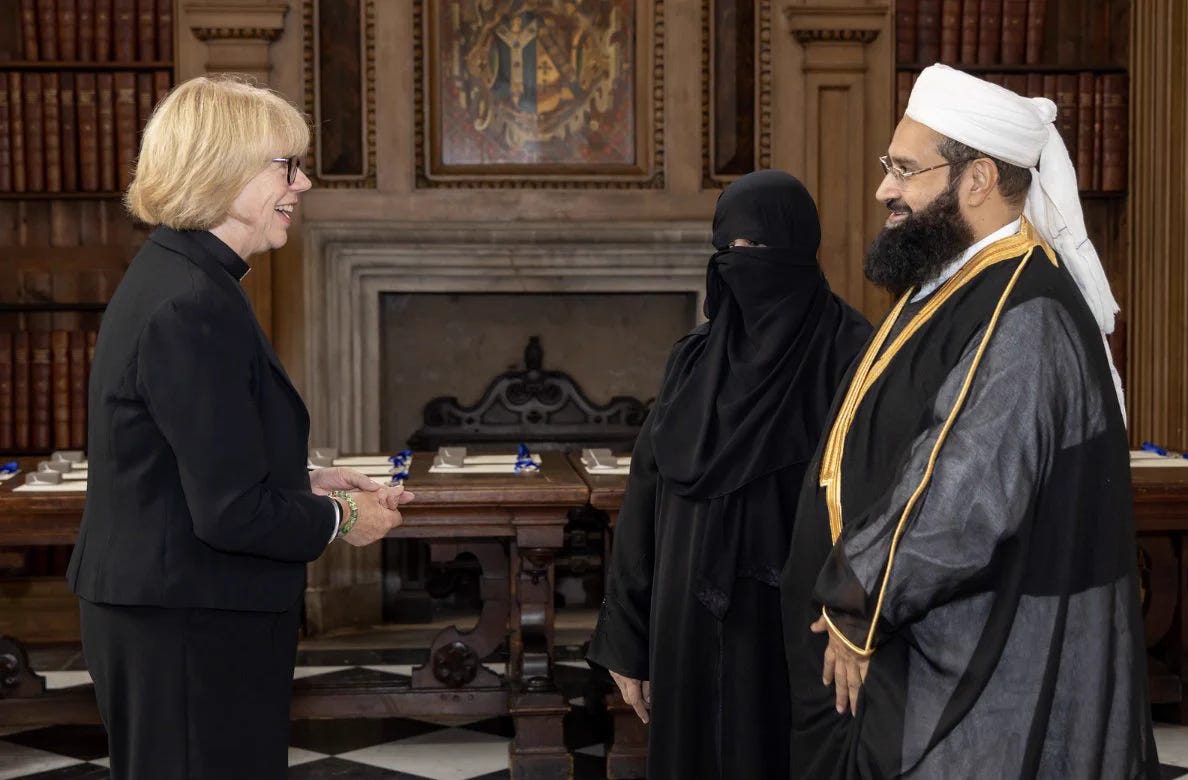
On September 11, the Archbishop of Canterbury gave an interfaith award to a man who called Osama bin Laden the "Sword of God" and blames Jews and Christians for the war on Iran. The award was rescinded after public backlash.

21 September 2026
8.5 MINS
After a 20-week scan revealed possible heart abnormalities and genetic concerns, medical staff twice offered to abort a Christian couple's baby. Six weeks of fervent prayer later, the heart defect was gone — and their son is nearly ready to be born.
21 September 2026
3.2 MINS
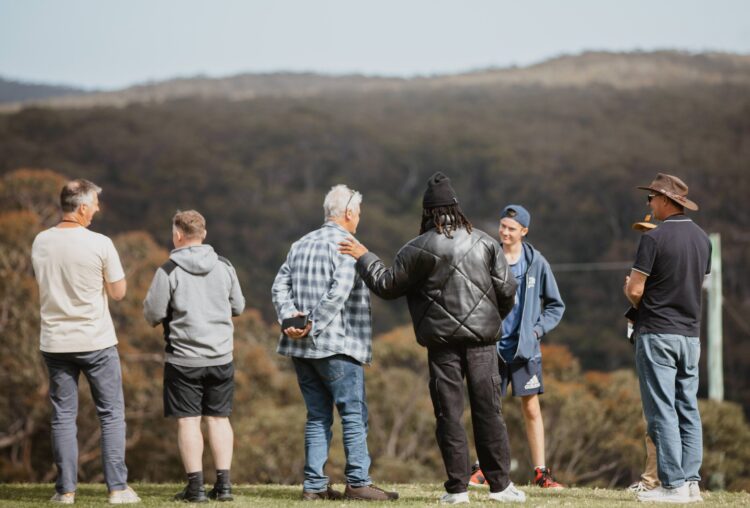
Something special happens when men step out of the everyday and focus on being fully present. Dads4Kids recent Men’s Summit and the upcoming Courageous Online Fathering Course create space for presence.

18 September 2026
4.5 MINS
Up to 10,000 rallied in Sydney for a ban on sex-selective abortion. Twenty-four hours later, the NSW Legislative Council defeated John Ruddick's bill 21–16. The fight, says Dr Joanna Howe, is just beginning.


