


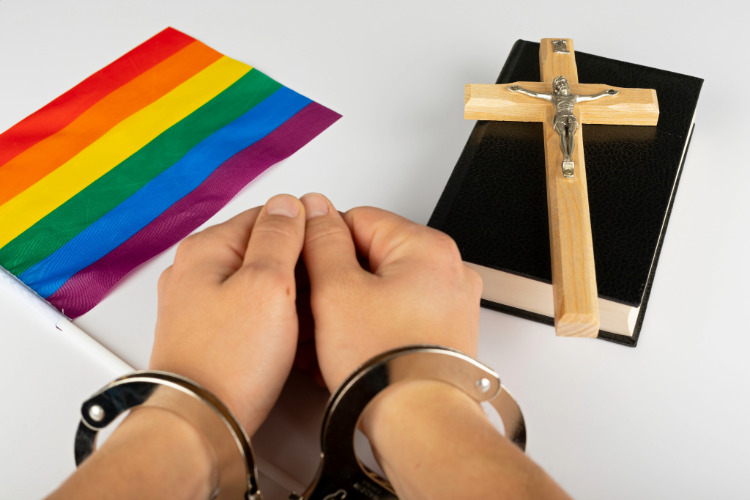
Conversion Therapy Bans: Who Protects the Freedom to Follow Christ on the Highway of Holiness?
As Tasmania and Western Australia consider conversion therapy bans, a former LGBT+ ministry leader warns of threats to religious freedom, personal choice and Christian discipleship.
The erroneous drive to ban gay conversion therapy is back in the news, as activists work hard to push through laws in Tasmania and Western Australia. These introduced laws are draconian and even more harmful than the law in Victoria. It is well-known amongst many Christians in the world that the Victorian law is one of the most restrictive in place. Much of it was influenced by a similar law in Malta.
Several years ago, a young man called Matthew Grech was taken to court in Malta for violating the conversion therapy ban law there. His crime? Sharing his own personal story on a Christian radio show, of leaving a gay life. The case dragged on for three years; however, it was a welcome victory when he did win it this year. Surely, Australia does not need to be so slow to recognise the foolishness of these laws?
When Conversion Therapy Laws Silence Christians
When the law came into place in Victoria, ministries that had been simply supporting fellow believers who wanted to live according to their own interpretation of Scripture were forced to close down. The risk to those who offered talk counselling, or who provided fellowship and encouragement, was too great.
Most people are aware of how far this law extends, even into the private lives of people who may ask their pastor for prayer. Churches in general had already been very quiet on this subject for around two decades. Where some may have spoken out, now, like former LGBT+ adherents, they were bullied into total silence.
It is abysmal that hundreds of former LGBT+ people, or those who do not want to follow through on their feelings, are disrespected. This small minority of people can be the most suppressed and beleaguered members of our communities. Some churches, by taking the easy way, have adopted weak theology, and have swiftly agreed that the Christian church has got this subject wrong for 2,000 years, and God is fine with people being actively LGBT+. The message of the fear of God is discarded, which is sad, as it is said in Proverbs 9:10 to be the beginning of wisdom.
Even within churches where people continue to hold to stronger theology, some will challenge former LGBT+ people, telling them that they cannot expect any change as they were “born that way”, or that God has created them LGBT+. The “born that way” mantra is almost universally believed today, despite there being no valid scientific or theological base for it.
Christians, of course, are not the only people who leave LGBT+ identities or lives. Many secular people give up their identities, especially as they get older. This article does not have enough space to cite the dozens of research studies that have shown this to be true.
One lesbian feminist researcher at Cornell University upset her lobbying friends by collating studies, and her conclusion was that sexual feelings are fluid. She said that we have to stop saying it is innate. This advice has been ignored. Of course, if opinion disagrees with facts, then feelings and hard-held stances trump truth.
Christians tend to be targeted more than those who are outside of the church, and who perhaps leave a same-sex life to marry or partner with someone of the opposite sex. Christians are usually motivated by their careful examination and understanding of what the Bible actually does say on this subject. For those who do decide to take this “narrow way”, it can be a hard journey indeed (Matthew 7:13-14). Their feelings may not change; however, there are many who refuse to let their feelings define their identities.
Increasingly, people who are swimming against the currents of today find that few people are willing to support them and encourage them. Some struggle to find anyone brave enough to even pray with them. They often become isolated within their churches. They are the true heroes who are determined to continue in their difficult choices, and their understanding of obedience to Christ. Some may marry, but this is certainly not a cure, nor a goal. Many remain single and dwell in churches that are predominantly family-oriented.
The Costly Call to Christian Discipleship
We should never underestimate the power of God to transform people. Why would we trust that God can take a drug addict or an alcoholic, or even a consummately selfish person, and that he can turn their lives around? What is the difference?
We are all called to “die to ourselves” (Galatians 5:24). It is described as “crucifying our sinful natures.” This is more than simply suppressing feelings and gives the picture of radical death to our sinful inclinations. Not that many, whether they be gay or straight, embrace the kind of process that this can involve. Yet often those who walk away from their old lives or thoughts discover that to find true life, the old life has to die.
We have to become aware of what we are entertaining in our minds. This is hard work, but in Romans 12:2, we are told that by doing this, with the help of the Holy Spirit, we can be renewed, as we bring every thought into the captivity of Christ. If a person has come from an LGBT+ identity or has spent many years cultivating the narratives that are all too common in our sexual era, working on every thought is hard work.
Former LGBT+ people will often willingly submit to retraining their minds to agree with Scripture, despite the cost. Other Christians may not have the same motivation, as their sins are easier to excuse. Truly, all discipleship is costly discipleship, but we rarely hear that now.
For a former LGBT+ person, if they make the goal to “go straight”, they are potentially doomed to failure. Many have done this and then thrown their arms in the air and said that none of the earlier beliefs they held worked. They quickly either leave to return to their old lives or become opponents of those who have not gone down that path.
Some ex-ex-gays and lesbians hang around the church trying to persuade believers that their new position is far more gracious than God. They missed the mark completely by making heterosexuality their goal. Some say that they do not need to be concerned about sin or their behaviour, since grace covers them past, present and future.
Rediscovering Grace, Holiness and True Freedom
Speaking of grace, this is indeed the powerful key to give all of us hope. If God has asked us to do the impossible, then His grace will surely help us, as the Scriptures claim, to say no to sin (Titus 2:12). Grace is a powerful gift from God to help us to pursue holiness and that old-fashioned word, “sanctification”.
The first key to a strong life living outside of any temptation or inclination to push God’s boundaries is to make Jesus the only goal. Those who ignore the pressure to try to better themselves in their own strength, or be ‘cured’, and who make Jesus everything, find they have built on something far stronger. They build their lives founded on the rock that is Christ.
In seeking Jesus with all of our hearts, we stumble into a revelation of grace that is deeply and fully understood. It is not a licence to sin. Far from it! Grace is understanding the mercy and the expansive generosity of our God who sent Jesus to die for us. When we fully see this, we surely have the natural response of wanting to pursue this loving God with everything we have. We want to exchange the things that trip us up, and we want God to dig deep into us and heal every wound that has caused us to search for other ways to find life.
For some, this is giving up drink, or making the decision to be done with porn, or even leaving whole communities that have kept us bound to our sin. It can mean letting Jesus be our constant companion, so that we see our foibles through His eyes. This is not cumbersome; it is knowing that the one who loves your soul more than any human could, is interested in every day of your life, ready to bring correction where needed, and comfort when required.
In 2013, the largest chapter of Exodus Ministries in the USA shut down, with the head of this ministry claiming that no one really could change and that God’s grace is so incredible that this does not even matter! Exodus was the most well-known ministry to LGBT+ people and had chapters affiliated around the world.
The director of the American chapter stated that it would not matter if you were in adultery, had a thousand lovers or failed in any other way; God’s grace would cover that. This distorted theology was the beginning of the end for hope and help for hundreds of people.
Fortunately, it was only the head office that actually closed. The 250 ministries in the USA continued either in another new group called Restored Hope, or they remained independent or joined smaller groups such as Transformation Ministries Alliance. Within the USA, there are still many people willing to walk with those who desire to follow their faith and not their feelings.
Many here in Australia are in churches that have no such ministries to connect to. Some go online and find help in the USA. Others sometimes do it tough in their local fellowships. They have made the hard choice to live according to their personal decisions. We need to recognise that they have often needed to submit to long years of God’s readjustment. It is important to these people because they take the pursuit of holiness seriously.
These former LGBT+ people often have a far deeper appreciation for the beauty of holiness and how that if they continue walking on ‘the highway of holiness’ (Isaiah 35:8-10), they can be secure. They know that by staying on this path, they are on track toward knowing life in its fullness both here and in the next life. They cannot be budged. They have often done far more work in understanding repentance, the power of the cross and how to deal with shame and pride. They are like gold threads in churches, but too often remain unseen.
Former LGBT+ people have a unique role to play in churches. They can teach believers what holiness means. They know that it does not comprise a long list of rules. You cannot legislate holiness. It has to be discovered. If following with a costly set of choices is your only way to pursue God, you reach out and grasp both the kindness and the seriousness of God (Romans 11:22). Not many general Christians do this today.
In any church, we are told by those who research these things that large percentages of church attendees are indulging in porn. It can be hard to avoid in a time when even adverts are soft porn; however, many override the guilt from following down this track. On Sunday, they get it right before God, but by early in the week, they are trapped again. This problem extends to leaders and pastors sometimes, as well. No wonder we are struggling to see revival in our churches!
The bar has been lowered over the past decades, so that we accept with a shrug that people have broken their marriages because they were not compatible, or that they have sexual relationships outside of a faithful marriage. Sadly, too many pastors fall into these traps, too, making it harder to model biblical purity.
One of the hallmarks of the earlier former LGBT+ ministries was the testimonies that were raw and transparent. Because no one had to hide their stories, others could gain strength and be encouraged in their own journeys. Being in these kinds of ministries gave a true sense of what church should be. The times when people converged to share their stories, their struggles and their triumphs knitted many former gay people into a sense of family.
Simply going to church on a Sunday to hear an uplifting message, then heading home to continue on, untouched by the possibilities of the Spirit’s work in a person’s life, is a shallow and weak thing. Many never read their Bibles, hearing only a few select Scriptures on Sundays. They are ignorant of the Bible’s instruction.
Some churches fall prey to being more like social clubs. Instead of examining their hearts and submitting to the work of the Spirit, they examine everyone else, especially the pastor. If this leader is not complying with their oft-selfish ambitions, church becomes a battleground, or worse. The focus becomes needless mini coups, detracting from the mission to make Christ known in our land and to call all to submission to Christ in every area of their lives.
The church is a place to be confronted with both our need to change, to be more like Christ, and to encounter the power of God to make this happen. When pastors can let down their guards and be transparent about their own weaknesses, God’s strength is seen. Former LGBT+ people know this. They long for their churches to be places of healing and humility.
Many non-believers or nominal believers come to our churches, not even aware that they need to let God examine their hearts on these things. Church has become more a pursuit of happiness than a pursuit of holiness. In fact, that word holiness sounds restrictive and antiquated to our liberated ears. True freedom is found in Christ. He is the life. One former gay man put it this way: “Sex is not life, Jesus is life!”
Protecting Religious Freedom and Personal Choice
No one is saying that LGBT+ people should be censored or coerced into having to deny their rights to identify and live as they desire. Yet a smaller group who also want to have their rights respected are being ignored. A former gay man is disturbed by the push to bring these harmful laws into place that affect a significant but small segment of our society. He says:
The most important question we should be asking is this: Who is truly being harmed? What happens when the very laws intended to protect vulnerable individuals end up marginalising those who freely desire change in their own lives? What protection is being offered when a person’s right to seek faith-based guidance, spiritual transformation, and personal change becomes restricted in the name of protecting them?
The freedom to live according to one’s convictions must also include the freedom to pursue change according to those same convictions. Religious liberty should not become collateral damage in the debate over sexuality and identity. Nor should individuals who voluntarily seek spiritual counsel be denied access to the religious communities and institutions they trust.
There is a fundamental distinction between protecting individuals from coercion and preventing them from freely pursuing their own deeply held beliefs. That distinction deserves careful consideration. For Christians, the concern extends beyond any single piece of legislation. It raises a profound question about the future of religious freedom in a society increasingly divided over matters of faith, sexuality, and personal identity.
When government authority begins to determine which expressions of faith and personal transformation are permissible, where does that authority end? And perhaps the most unsettling question of all is this: If the government can restrict an individual’s freedom to pursue change today, what other deeply held freedoms might be called into question tomorrow?
— Former gay man, Philip Latislaw
For those who are Christians, the single person who may never marry can still find a full and fruitful life as they are more available to God. This can include being a beacon of witness to other Christians, teaching the church the joy of being fully committed to the costly call to discipleship. There is a unique call on former LGBT+ people, and it is a missionary calling to teach the church what holiness really is, and that it is not something to run from, but something to run towards.
___
Image courtesy of Adobe.
Recent Articles:

27 October 2026
1.5 MINS
Labor’s Digital Duty of Care Bill threatens free speech, empowers covert online surveillance, and imposes potentially burdensome regulations on Australian businesses.

27 October 2026
4.9 MINS
Nine Christians have been killed in a terrorist attack on a Jordanian church, prompting fierce condemnation, demands for justice and renewed concerns about religious persecution.
27 October 2026
3.6 MINS
For 25 years, the Mount Moriah Trust has supported struggling Christians across the Holy Land, bringing practical assistance, encouragement and hope to believers facing hardship and persecution.

27 October 2026
1.3 MINS
Moira Deeming’s re-election campaign has energised Family First supporters, raising $90,000 as the party prepares for a crucial Victorian election and a potential breakthrough.
27 October 2026
3.1 MINS
As the disciples discovered through a huge haul of fish, we can trust Jesus for a net-breaking, boat-sinking catch of people.

26 October 2026
4.5 MINS
OECD chief Mathias Cormann warns Australia is losing its competitive edge, as excessive regulation, housing pressures, immigration challenges and declining public trust threaten national prosperity.
26 October 2026
2.5 MINS
Nation First exposes the rush to weaponise the Haines attack against Pauline Hanson, conservative voices and men before investigators established a motive.


