


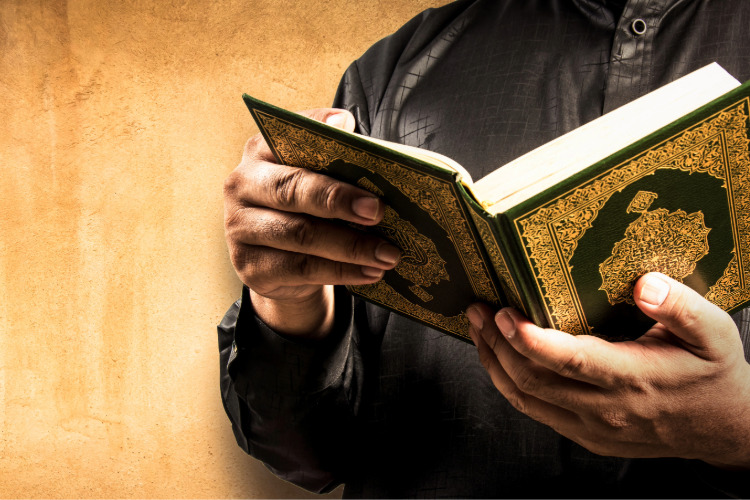
How Should We View Islam?
A historical examination of Islam’s expansion, the three jihads and the rise of political Islam, drawing on Michael Youssef’s analysis and implications for Western civilisation.
Earlier on 19 July 2026, we wrestled with Neo-Marxism, in an essay comparing Marxism with Neo-Marxism; setting the stage for the performance of present-day actors to sell their dreams and ideology.
The Neo-Marxist performance is being delivered to us daily. We cannot miss their agenda. It has become an unavoidable way of life. But what about Islam and the Muslims — how do they and their culture mix with Neo-Marxism? Is Islam compatible with the Judeo-Christian roots of our Western civilisation and culture?
This is the first of two reflections on how we should view Islam. This part focusses on the history; part two looks at Islam today.
Michael Youssef’s Perspective
I owe much of my understanding of Islam, which is very limited, to Michael Youssef, a prolific writer of over 50 books. Here is an extract from his bio on his website:
Against doctors’ recommendations to terminate the at-risk pregnancy, his parents chose life after God intervened, sending the family pastor to reassure them that this child would be “born to serve the Lord.” His mother gave birth and lived to see him surrender his life to the Lord in 1964 at age 16.
Dr. Michael Youssef was born in Egypt and lived in Lebanon and Australia before coming to the United States and fulfilling a childhood dream of becoming an American citizen. He holds degrees from Moore College in Sydney, Australia, and Fuller Theological Seminary in California, with a Ph.D. in cultural anthropology from Emory University.
He and his wife reside in Atlanta and have four grown children and 15 grandchildren.[1]
Youssef identifies two threats to America, and by extension the rest of the West; firstly ‘aggressive secularism’ that has opened the door to ‘radical Islam.’[2] Vibrant Neo-Marxism has built a platform upon which aggressive secularism is played out. Secularism might have been managed, but when it’s ‘aggressive’ with the mass of society firmly applauding every move, it has become a real adversary to the Judaeo-Christian foundations of Western Civilisation and thus a potential ally of Islam.
Secondly, Islam is tolerated and even embraced by the aggressive secularists under the umbrella of tolerance for diversity, as being critical of any race or culture would be seen as racist. However, the inclusion of the word ‘radical’ adds a dimension that the aggressive secularists can’t accept, so they deny that Islam is radical. Are they correct?
Returning to Youssef’s book, subtitled Overcoming Radical Islam’s Plan for the West, the author examines Islam’s history of ‘Jihad.’
The internet describes Jihad as a struggle that Muslims experience as they seek to live lives more closely aligned with the will of Allah. I failed to find any alternative perspectives. If this is true, I am sure Jews and Christians can empathise with Muslims, as Jihad is simply the Muslim word for the struggle with their faith. However, Michael Youssef offers a powerful history lesson.
At the birth of Islam, the prophet Muhammad received his revelation from Allah in a cave just north of Mecca, AD 610[3]. This revelation was then taught to his followers in Mecca for about twelve years, with the emphasis being on their inner struggle to live a righteous spiritual life. During this time, he attracted about two hundred converts, but most Meccans rejected his revelation and ministry.
Muhammad’s response to this rejection was to migrate north with his followers to Yathrib, modern-day Medina, a distance of 440 kilometres. There, his message changed from the inner struggle to an outward struggle against unbelievers. Islam became an aggressive, warlike religion which attracted followers in their droves, numbers quickly swelling to 10,000, as Muhammad set out to conquer the world with his Islamic army. The goal of fundamentalist Islam is still the same: total control of every Muslim’s life and the establishment of a theocratic world empire.[4]
The Qur’an — Surat At-Tawbah (The Repentance 9:29–30)
I am hesitant to quote from the Qur’an on account of my ignorance of the context, the original audience, and the vagaries of translation. But in the interests of debate, it would be partisan to omit this as evidence; it speaks for itself:
Sahih International
Fight those who do not believe in Allah or in the Last Day and who do not consider unlawful what Allah and His Messenger have made unlawful and who do not adopt the religion of truth from those who were given the Scripture – [fight] until they give the jizyah willingly (submission to Allah) while they are humbled.
The Jews say, “Ezra is the son of Allah;” and the Christians say, “The Messiah is the son of Allah.” That is their statement from their mouths; they imitate the saying of those who disbelieved [before them]. May Allah destroy them; how are they deluded? (my emphasis)[5]
This extract aimed at Jews and Christians for their disbelief, and it calls upon Muslims to fight all who do not submit to Allah, while they pray for their destruction. No freedom here, no option for non-Muslims to peacefully reject conversion. Submit to Allah or be destroyed!
The Eight Conquests of the First Jihad: AD 622–751
The first Jihad lasted nearly 130 years, the initial spread of Islam through modern-day Israel, Lebanon, Jordan, and Syria, then progressing through Egypt, modern-day Iraq, Iran, and as far east as India. This was followed by the conquest of most of North Africa and what is now Spain and Portugal.
The final stages of the First Jihad brought Islam to Uzbekistan, Tajikistan, and southern Kazakhstan and Afghanistan. This military campaign created the largest empire the world had ever known.[6]
This empire was described as a califate, an Islamic state led by a supreme religious and political leader known as a caliph, which means ‘successor’ in Arabic, that is, the political and religious successor to the Prophet Muhammad. Totalitarian rule.
The Second Jihad – The Ottoman Empire: AD 1299–1922
The second Jihad began with the dawn of the Ottoman Empire, initially focused on the destruction of the Byzantine Kingdom, which was centred on the region of north-central Turkey called Bithynia, previously populated by Christians.
Earlier, the Apostle Paul had tried to reach Bithynia. ‘After they had come to Mysia, they tried to go into Bithynia, but the Spirit did not permit them’ (Acts 16:7). During his second missionary journey, Paul and his team were redirected instead toward Troas and into Europe. However, ‘Peter, an apostle of Jesus Christ, to the pilgrims of the Dispersion in Pontus, Galatia, Cappadocia, Asia, and Bithynia’ (1 Peter 1:1), indicates they did convert to Christianity and that they had thrived there for twelve centuries.
In response to this Jihad, the Christians fled westwards and crossed the Bosporus and settled in Greece and other parts of Europe. The rise of Osman I and his Ottoman army sparked a resurgence of militant, political Islam across Turkey. This culminated in the siege and conquest of Constantinople, including the Hagia Sophia, the largest Christian church in the world at the time, where both Roman and Eastern Orthodox Christians held services.
The Ottoman troops randomly slaughtered men, women and children and took others as slaves. A Venetian doctor who survived later wrote, ‘the blood flowed in the city like rainwater in the gutters after a sudden storm, and the corpses of Turks and Christians were thrown into the Dardanelles, where they floated out to sea like melons on a canal.’
The Hagia Sophia was declared an Islamic Mosque May 29, 1453. The fall of Constantinople to Islam sparked the Crusader Wars under the initiative of Pope Eugenius IV, as a just war against the invaders. The Ottoman Empire was crumbling by 1899 and was finally defeated in 1924, when its territories were partitioned after World War I by the Treaty of Sèvres.
Of the Muslim Ottoman Empire, Winston Churchill wrote:
The fact that in Mohammedan law every woman must belong to some man as his absolute property — either as a child, a wife, or a concubine — must delay the final extinction of slavery until the faith of Islam has ceased to be a great power among men. Individual Moslems may show splendid qualities … but the influence of the religion paralyses the social development of those that follow it.
No stronger retrograde force exists in the world. Far from being moribund, Mohammedanism is a militant and proselytising faith. It has already spread throughout Central Africa, raising fearless warriors at every step; and were it not that Christianity is sheltered in the strong arms of science — the science against which it had vainly struggled — the civilisation of modern Europe might fall, as fell the civilisation of ancient Rome. (my emphasis)[7]
The Ottoman Empire was a military demonstration of Islamic Jihad. The rivers of blood were not a reflection of the inner faith struggles of devout Muslims. This does not condone the Crusaders, but pause for a moment and consider their motivation. Did Pope Eugenius IV initiate a just war?
We Are Now Experiencing the Third Jihad
On Sunday morning, May 13, 2018, a Muslim family in Surabaya, Indonesia, went on a murderous jihad against their Christian neighbours. A father, a mother and their four children divided up into teams and suicide-bombed three separate churches for no other reason than to kill Christians…The father drove an explosives-laden van to the Pentecost Central Church and detonated the bomb out front. The mother walked into the Indonesian Christian Church with her two daughters, ages nine and twelve, and set off a hidden suicide vest…The couple’s two teenage sons rode a pair of motorcycles up to Santa Maria Catholic Church and simultaneously triggered their suicide vests.[8][9]
This is just one account of hundreds across the world. To see this atrocity as an isolated deadly terror attack by crazed fanatics who do not represent the core of Islam is to buy into one of Jihad’s most powerful weapons, the concept of Islamophobia. What sort of religion turns a family of six into a team of jihadist mass murderers?
Youssef describes Muslims today as one of three types.
- Moderate Muslims. This is a hard category to define. Some moderates believe that Muslims and non-Muslims should be subject to Sharia law (74 percent of Egyptian Muslims made this claim in 2013, compared with 29 percent in the same survey in Morocco). Youssef believed moderates comprise a minority in our cities and neighbourhoods; they are our mission field.
- Militant Muslims. They seek the full implementation of Sharia law and a global Islamic caliphate (an Islamic dictatorship led by a supreme religious and political leader called a caliph). They are willing to use all means necessary, including violence and terrorism to achieve their goals. Youssef’s estimate again is that truly militant Muslims are still a minority of Muslims, particularly within Western nations.
- Political Muslims. Like the militant group, they believe Islam is in a struggle for world domination, the same goal, a global caliphate ruled by the Qur’an and Sharia Law. However, they differ markedly from the militant, who work within the democratic political system, putting Islamists into positions of influence and power. This is the heart of the Third Jihad, a holy war of words, stealth and lies. Youssef implies that political Muslims are the majority within Muslim communities in the West.[10]
Interestingly, Youssef concludes his chapter on the Third Jihad with an examination of modern-day Turkey under Recep Tayyip Erdoğan, who has been in power since 2014. As a known supporter of the Muslim Brotherhood, he has made himself both head of state and head of government since 2018. Totalitarian rule.
There were 450 Islamic schools in Turkey when Erdoğan came to power, and by 2019, there were 4,500. He has been systematically cementing the Islamification of Turkey’s future generations. With Turkey’s support for Islamic terrorist organisations eroding earlier friendship with Israel in the 1990s and early 2000s, Erdoğan was clear on his primary goal to re-establish Turkey as the leader of a revived Ottoman Islamic Empire.
Many biblical scholars regard Ezekiel 38:2 prophecy’s reference to Magog, Meshech and Tubal as regions within modern Turkey, namely Lydia and central and eastern Anatolia, and as early as December of 2017, the state-run Turkish newspaper Yeni Safak ran an article calling for a united ‘army of Islam’ to invade Israel.[11]
Time passed, and Turkish eyes toward Israel have grown ever more committed to their objective. Fronts.co’s editor-in-chief Morris Micklewhaite has published an in-depth analysis of the 2026 state of play between the two nations. Here, he claims the ‘cold war’ between the two countries could become a ‘hot war’ at any time.[12]
~~~~~~~~~~~~~~
In Part Two of How Should We View Islam, I will look at Islam as a religion compared to Christianity, the alliance between Islam and the Woke Left, and conclude with the legitimate debate as to whether we should be suspicious of Islam.
___
[1] Leading the Way with Dr. Michael Youssef (n.d.). A Unique Calling. Retrieved 2 August 2026.
[2] Youssef, Michael (2018). The Hidden Enemy: Aggressive Secularism, Radical Islam, and the Fight for Our Future. Tyndale Momentum (Tyndale House Publishers). p viii.
[3] Ibid, p. 36.
[4] Ibid, p. 39.
[5] The Nobel Qu’ran (n.d.). Repentance. Retrieved 9 August 2026.
[6] Ibid, p. 47.
[7] Churchill, Winston S. (2013). The River War: An Historical Account of the Reconquest of the Sudan (F. Rhodes, Ed.). Longmans, Green, and Co., pp 245-250.
[8] Ibid, pp. 89-90.
[9] Deutsche Welle (2018, May 13). Deadly Indonesia attacks committed by one family.
[10] Ibid, pp. 97-104.
[11] Jewish Voice (2020, February 11). The Rise of Turkey and Ezekiel 38-39. Jewish Voice Ministries International.
[12] WarFronts (2026, August 27). Is War Between Turkey and Israel Inevitable? [Video]. YouTube.
___
Image courtesy of Adobe.
Recent Articles:

6 November 2026
4.1 MINS
Sophie Cunningham has drawn attention over her stance against men in women's sports. But behind the basketball star's tenacity is her Christian faith. Baptised in April, she has spoken openly about it, saying, "I just love Jesus."
6 November 2026
9.7 MINS
Australia is confronting something far greater than an economic crisis. We are facing a crisis of national leadership, responsibility and spiritual direction. To the Australian Government, I say: Wake up. To the Australian Church, I say: Rise up.
6 November 2026
3.7 MINS
Trump's MAGA movement made serious inroads in the culture war despite the mistakes that led to the Midterms electoral wipeout. Protesting against fuel prices and an ongoing war in Iran, most people are oblivious to the all-out assault on Western civilisation.

5 November 2026
2.5 MINS
On Tuesday, 10 November, beginning at 6 pm, a public rally will be held outside Victoria's Parliament House to show support for the unborn, after Victorian Premier Ben Carroll has committed to forcing taxpayers to foot the entire bill for abortions up to 16 weeks' gestation.
5 November 2026
4.5 MINS
Donald Trump’s historic Reformation Day message puts Jesus Christ, Scripture and America’s Christian heritage centre stage, prompting praise from Christians and criticism from secular commentators.

5 November 2026
2.9 MINS
Nearly 5,000 Christians were killed in Nigeria in 2025, as allegations mount that government officials are funding efforts to conceal the escalating persecution.
4 November 2026
4 MINS
George Barna’s new book challenges Christians to examine their foundational beliefs, exposing the dangers of syncretism and identifying seven essential cornerstones of a truly biblical worldview.


