


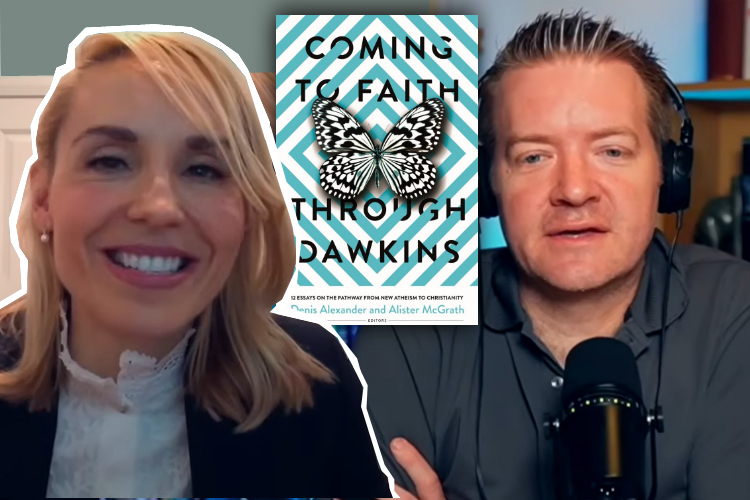
How New Atheism and Peter Singer Led an Australian Historian to Christ
Australian historian Sarah Irving-Stonebraker’s journey from atheism to Christianity reveals an unexpected twist: the New Atheists’ arguments helped lead some of their fiercest critics towards Christ.
New atheism peaked in the 2000s.
Richard Dawkins’s The God Delusion hit bestseller lists. Dan Brown’s The Da Vinci Code was outselling anything from Oprah, as its historical revisionism mixed with the imagination to create the Christian-hating conspiracy genre.
Riding that wave was Peter Singer, whose philosophical tendency to ram his permissive — ethical if it’s pleasurable or ends suffering — morality like a tank into 2000 years of Christian love and responsibility gained fresh traction.
New atheism set the tone for the decade. It also made those of us who witnessed the frenzy all the more sympathetic to those who famously consumed Orson Welles’ 1938 War of the Worlds as if it were happening.
An Atheist Confronts Christianity’s Scientific Foundations
While the world seemed to be drowning itself in Brown’s conspiratorial anti-Christian hype and in what Alister McGrath once called The Dawkins Delusion, God was moving an Australian academic and atheist back to Christ.
Recounting her conversion story, historian Sarah Irving-Stonebraker recently told United Kingdom broadcaster, writer and speaker Justin Brierley, “Some of my first encounters with Christianity actually happened at Cambridge, and they actually happened through encountering the very people that I was studying for my PhD thesis.”
Stonebraker defined herself as an atheist and thought that way. She was raised in a loving secular home in Sydney by academic parents who Stonebraker said encouraged truth-seeking and asking hard questions.
“I definitely thought of myself as an atheist,” she said, “and this was partly because I think growing up in that very cosmopolitan city like Sydney, and also somebody for whom academic pursuits were very important, thinking about atheism and defining oneself as a sort of critic of religion seemed to be particularly important to me.”
“One of the things that I assumed as an atheist and never really delved into was this idea that Christianity was in some kind of fundamental opposition with science.”
Her PhD took her on an unexpected journey. Stonebraker said that it soon became apparent that scientists like Francis Bacon, Robert Boyle (Chemistry), and Isaac Newton took their Christian faith very seriously.
That faith, she said, “was really at the very core of what they were doing.”
What Stonebraker said she had dismissed as intellectual window dressing was something far deeper.
“The more I read, for example, of Robert Boyle, the more I found him a man of deep Christian faith, and this was a kind of pebble in my shoe, as it were. It made me; it was a kind of stumbling block to my atheism.
“It by no means made me a Christian right then and there or anything,” she explained, “but it made me really need to take seriously this idea that one would be a true — deep intellect committed to what then is the foundation of modern science and yet also a deeply theological thinker and a profoundly committed Christian. In Boyle’s case in particular.”
Peter Singer’s Philosophy Triggers an Intellectual Crisis
Her real turning point came after attending a series of lectures by Peter Singer. He was giving a series of lectures at Oxford, and some friends were going, so Stonebraker decided to attend.
Those lectures, she explained, gave her intellectual vertigo.
Paraphrasing Singer, Stonebraker said he advocated that “There’s no inherent value to human life. That’s something of a kind of religious myth, a Christian fiction.”
The statement was at odds with what she says she had always assumed: human life being of equal worth, inherently precious and valuable.
“I’d always thought that was simply the case, and I’d also always really kind of assumed that that was something all reasonable people would agree upon.”
“I went away from those lectures and read more about Singer and read, of course, Singer’s work, and that is, of course, not a position which is sustained by atheism whatsoever.”
“So, this really, in many ways, was a kind of turning point in the sense that it made me rethink whether or not atheism could actually sustain my deepest ethical convictions.”
Singer had taken atheism to its logical conclusion.
The Singer encounter, alongside self-examination about success and self-worth, started a slow and steady quest to grapple with theology and the Bible that Stonebraker says she knew little about and didn’t understand.
A Restless Heart Finds Its Answer in the Gospel
Taking advantage of her desk always facing the theology section of the Oxford library, she began by reading sermons.
The Gospel gradually won her over.
“That story,” she said, “very, I mean very slowly, made not only intellectual sense to me but was profoundly personally compelling because it was abundantly clear that I was yearning for something that only God himself could satisfy.
Stonebraker affirmed, “I later learned that famous line from St. Augustine that talks about our hearts being restless until they find their rest in you, Lord.”
“That kind of sense of yearning was exactly what I was experiencing.”
Leaving Oxford for a role in the US, the Australian academic said she didn’t step into a church earnestly seeking God until she moved to Florida State University.
Baptised in Tallahassee at age 28, Stonebraker said that what she yearned for in life, seeks after and pursues, even the way she spends her time, has changed.
To this she added,
“I am still called to be well many things apart from a child of God, but I still have this, I think this vocation that God has given me as a historian pursuing historical truth and teaching students; that’s incredibly important, it’s an important calling.
“It’s not for one moment as if God devalues the mind or anything like that. In fact, we are to love God with all of our minds. It is no longer for me the ultimate thing. It is now part of a story of somebody who’s created in God’s image and called to live a life in which I want to serve Him.”
How the New Atheists Unexpectedly Led Critics to Christ
Academia’s loathing for Christians hasn’t swayed the historian.
In 2023, Stonebraker contributed to Coming to Faith Through Dawkins, an Alistair McGrath and Denis Alexander initiative sharing the unexpected road from critic to Christ some academics have experienced.
This was a surprising discovery. So much so that McGrath and Alexander wrote in the book’s preface,
“Both editors, who have been involved in the academic field of science and religion for many decades, were somewhat surprised when we started meeting people who told us that their pathway to Christian faith began with, or was highly influenced by, the so-called New Atheists.
“Richard Dawkins was at the top of the list of those mentioned, but the late Christopher Hitchens also played an important role.”
This unexpected fact triggered their curiosity, and after networking, they found out that stories like Sarah Irving-Stonebraker’s were not one-offs. There were plenty like it.
Richard Dawkins is currently in Australia, marking 50 years since the release of his book, The Selfish Gene.
Recent Articles:

3 November 2026
7.7 MINS
In partnership with Australian Christian Records, The Daily Declaration shares a monthly Christian music column featuring the official OZ 5 Top Tunes chart, artist stories, new releases, upcoming music events, and local Christian music news. If you have something to contribute, send it to news@ozchristianrecords.com.au. Recommended [...]

29 October 2026
5.3 MINS
George Christensen’s frightening hospital visit with his six-year-old daughter offers a powerful reminder that protecting children, born and unborn, begins with love, presence and sacrifice.

27 October 2026
10.3 MINS
As Tasmania and Western Australia consider conversion therapy bans, a former LGBT+ ministry leader warns of threats to religious freedom, personal choice and Christian discipleship.

27 October 2026
3.6 MINS
For 25 years, the Mount Moriah Trust has supported struggling Christians across the Holy Land, bringing practical assistance, encouragement and hope to believers facing hardship and persecution.
23 October 2026
6.8 MINS
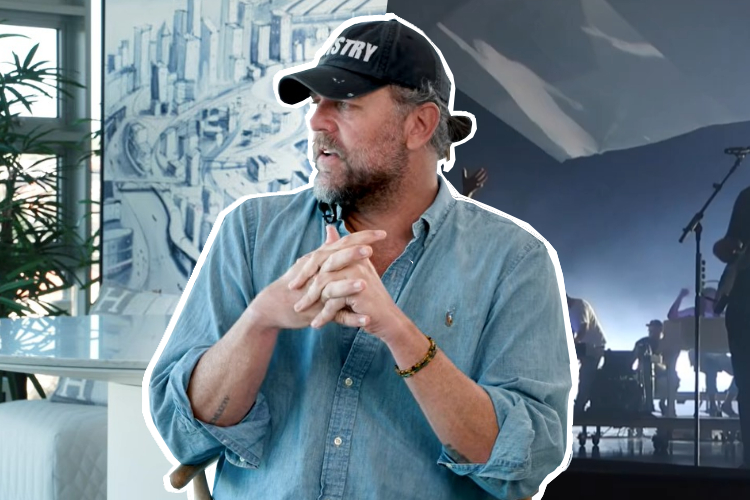
Hillsong UNITED’s Joel Houston reflects on fame, faith and the burden of ministry, questioning performative Christianity as he seeks a more authentic walk with God.
21 October 2026
3.9 MINS
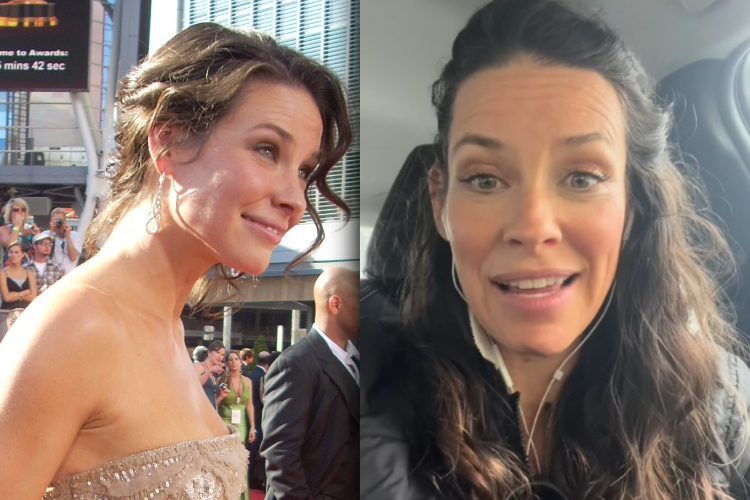
Evangeline Lilly walked away from Hollywood to pursue a deeper purpose. Today, her Christian faith, humanitarian calling and passion for human creativity shape her next chapter.

20 October 2026
4 MINS
Olympic champion Stephanie Rice has faced a wave of online ridicule after revealing she resigned from her dream job following what she believes was God’s direction.


