



4 Disturbing Ways Euthanasia Laws Will Shape Our Children
Euthanasia laws are sweeping across Australia and much of the West.
This so-called ‘right to die‘ is now asserted as a natural human right with passionate zeal. It’s framed as an individual’s independent decision about their own life (and death). To this end, gut-wrenching stories of people suffering in the final stages of life are brought forward as evidence that assisted suicide is not only rational but merciful.
And yet, there’s a side to this issue that I’ve yet to hear about: how legalised euthanasia will impact the values of wider society, and especially children.
As journalist Paul Kelly argued recently:
Advocates pretend that euthanasia is just an issue of individual rights… [but] the legalising of killing under conditions is a public interest, society-wide and ethical determinant of the community values… Laws create expectations and change behaviour.
Laws create expectations and change behaviour.
Laws signal what’s acceptable, and what’s not. They explicitly (as well as implicitly) mould the moral viewpoints of society. Think of laws around discrimination, racism and same-sex marriage: these laws shape societal practices, attitudes and values.
And so, here are four ways that I think society — including children — will be shaped by these laws:
1) Human Life Will No Longer Be Considered Sacred
In large part, thanks to the Judeo-Christian view of human beings being made in the image of God, the West has believed that human life is sacred. (Albeit this belief was not always practised consistently, especially toward certain minorities.)
The taking of human life has been forbidden, barring exceptional circumstances (e.g. by the State in defence of our nation or the pursuit of justice; see Gen 9:5-6, Rom 13:1-6). Thus here in the West, something like suicide was seen as wrong and an unspeakable tragedy.
But euthanasia laws put an end to that sacred view of human life. As Kelly points out:
A society is never the same after passage of euthanasia laws. Once this bridge is crossed, the extent of cultural change is fundamental — in the ethics of doctors, hospitals and family relationships.
If it’s legally (and thus culturally) acceptable for people to kill themselves for no other reason than to end their suffering, then a significant bridge has indeed been crossed. Human life has moved from the ‘sacred’ category to the ‘optional’ category. And all dependent on how a person feels about their life.
2) Not Everyone Should Live: Some People are Better Off Dead
If we start viewing euthanasia as a merciful and rational choice for some people, what does that do to our view of those people?
In other words, if it’s acceptable for someone with a terminal diagnosis to kill themselves, it’s not long before what is ‘acceptable‘ shifts to becoming ‘good‘, and even ‘right‘. And before long, instead of doing everything we can do to save and care for life (even those with terminal conditions, etc.), we start expecting them to euthanise themselves (after all, it’s a rational choice).
Especially if we think those people are a burden on us, or on society.
3) Life Only Has Meaning If You’re Not Suffering
When euthanasia is accepted and even celebrated, it will signal that life has less meaning if you’re suffering. After all, if it’s acceptable to kill yourself in the face of suffering, then by logical extension, a meaningful and fulfilled life is the absence of suffering.
4) If You’re Suffering, Killing Yourself is a Legitimate Response
Following on from the previous point, euthanasia signals that killing yourself is a legitimate response to suffering.
Of course, advocates of euthanasia say that killing yourself should only ever be legal in the most extreme circumstances. But if killing yourself is a legitimate action in response to some forms of suffering, why can’t it be a legitimate response to other forms of suffering?
After all, we now live in a therapeutic age, where psychological suffering is taken as seriously (if not more seriously) than physical suffering. Indeed, psychologists tell us that most people who are suicidal and end up taking their lives do so because of psychological and emotional pain, not physical pain.
Thus, as Catholic Archbishop Anthony Fisher argues:
If the suffering of some people is to be resolved by killing them or assisting them to kill themselves, why not the chronically but not terminally ill, the mentally but not physically ill, those unable to consent because they are unconscious, too disabled, or infants? Why restrict the mercy to dying consenting adults?
Now this concern isn’t scaremongering: it’s already happening in other parts of the world.
As Professor Haydn Walters and Associate Professor Marion Harris show:
Overseas jurisdictions demonstrate that while initially legalised for the terminally ill, [euthanasia] numbers and eligibility criteria expand with time, as it becomes normalised and socially acceptable.
They continue:
Canada after just four years has just legalised [euthanasia] for those with years to live and for mental illness alone. In Holland and Belgium euthanasia of children is now possible, as it is for mental illness alone, including for “unbearable psychological suffering”. Even in Oregon where laws were unchanged for 20 years, the 15-day waiting period can now be waived.
They conclude:
The trajectory for [euthanasia] once legalised is always expansion. Already, activists in Victoria want safeguards relaxed.
If it’s acceptable to kill yourself in the face of some forms of suffering, then inevitably it will become acceptable to kill yourself in response to other forms of suffering.
Losing Our Humanity
Euthanasia is a revolutionary change in our view of humanity.
Of course, these laws aren’t being introduced in a vacuum: we’re now a post-Christian society that worships at the altar of human autonomy, not to mention human authenticity. Even when such authenticity involves the taking of our own lives. And yet, introducing euthanasia will itself shape the way society — including children — view their lives.
Even in disturbing and unexpected ways.
___
Originally published at AkosBalogh.com
Photo by Rod Long on Unsplash.
Recent Articles:
20 October 2026
4 MINS
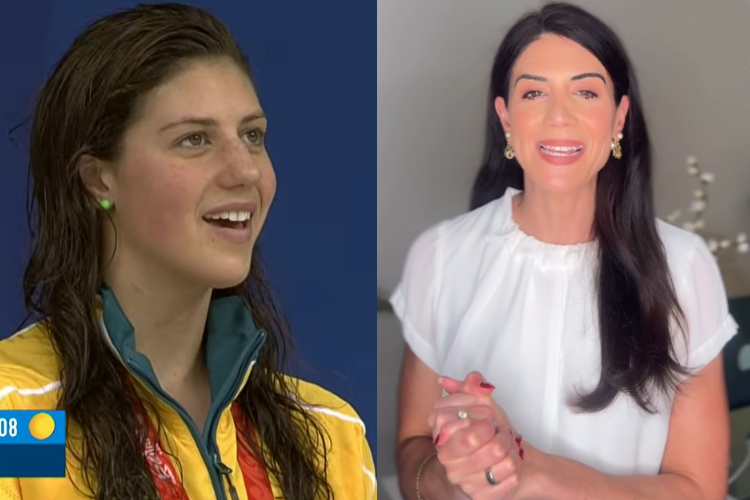
Olympic champion Stephanie Rice has faced a wave of online ridicule after revealing she resigned from her dream job following what she believes was God’s direction.

20 October 2026
7.7 MINS
France and Europe are burning — is it too late to save them from the barbarians?
20 October 2026
4.6 MINS
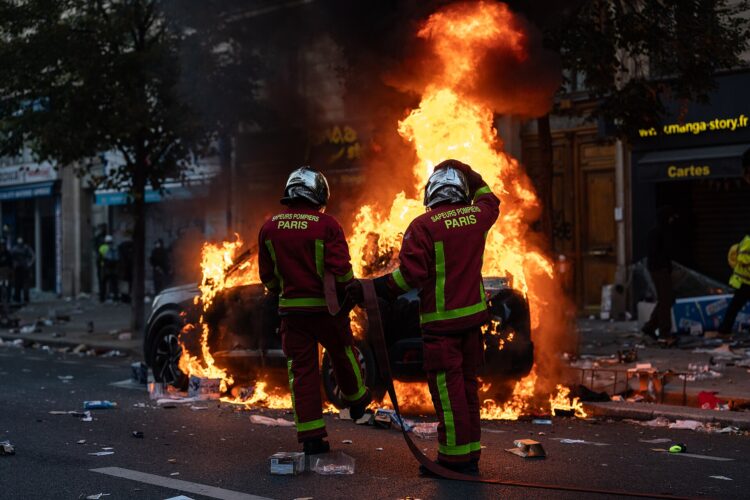
As rioters burn cars and historical buildings, celebrating the destruction of France’s inheritance, the West confronts an uncomfortable question: what happens when a civilisation loses the will to defend itself?
20 October 2026
4.9 MINS
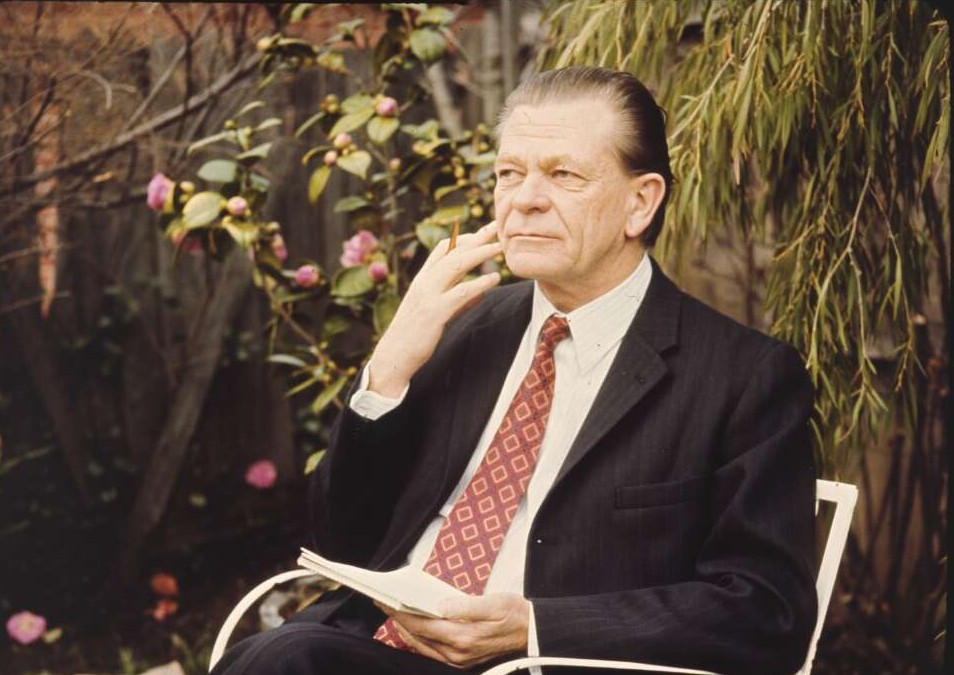
James McAuley’s legacy reaches far beyond Australia’s Catholic hymnals. Poet, convert and cultural warrior, he defended beauty, truth and faith in an age of changing values.

20 October 2026
4.9 MINS
A federal investigation has exposed how America’s biggest banks shut out conservative and Christian clients, relying on subjective reputation risks and controversial ideological watchdogs.
20 October 2026
3 MINS
Scripture teaches us to pray the "prayer of faith", because without faith it is impossible to please God.
19 October 2026
6.7 MINS
Europe’s escalating unrest raises urgent questions about immigration, national identity, secularism and the decline of Christian influence, prompting calls for repentance, prayer and renewed leadership.


