



The Cross is Not a Safe Path
We must repudiate the new religion of safeism. Christ promised us that as Christians, we will be persecuted, just as He was. Through our suffering, God moulds us into the image and likeness of His Son, that we may one day join Him in glory.
If the world hate you, know ye, that it hath hated Me before you. …
Remember My word that I said to you:
The servant is not greater than his master.
If they have persecuted Me, they will also persecute you:
if they have kept My word, they will keep yours also.
~ John 15:18,20
‘Safeism’ is our new religion. Everyone wants to be kept safe, whatever that may entail. For most folks that means being willing to trade away all our freedoms and basic human rights if the Nanny State can ‘promise’ to protect us and keep us safe.
Countless Christians have bought right into this. They have become fully cultic about these things. They live in fear and terror, and have fully succumbed to the media-generated panic porn. They are just as hysterical, paranoid and terrified as any non-Christian is. Instead of having a strong faith in a great God, they have a strong fear of a passing virus.
A Futile Idol
The bottom line is this: Safeism is idolatry. This overwhelming desire and fixation on being safe at all costs and living a risk-free life is not only a fool’s errand, but it is not something anyone claiming to be a Christian should be running with. Since when should believers be driven solely by the desire to stay alive and never get ill?
Since when is the sum and substance of Christianity to be spared any difficulty in life, be it an illness or any other trial or hardship? Sure, we do not go out of our way looking for problems and troubles, but we are never promised a risk-free and trouble-free life in Scripture.
Of course, I am NOT saying Christians should not be sensible and practical when it comes to health and safety. I am not saying a believer can stand in the middle of a busy freeway with impunity. Sensible steps to keep healthy are of course fully warranted.
What I am talking about here is all the madness we see from folks willing to do anything to stay “safe” from the Rona. For some that means never leaving their homes, wearing two or three masks at a time, and getting a never-ending series of jabs — even if all this is highly questionable.
Worse yet, these folks are willing to let the State do anything to supposedly keep them safe. They have been quite happy to trade away all their freedoms for this idol of safety. And as I say, Christians are not immune from this idolatry.
Christianity is Not “Safe”
My main title comes from a phrase suggested to me by a friend (thanks Kevin). He was speaking of how believers have been responding to the Rona, and how so many live in fear instead of faith. I told him I had been saying the same thing for two years now, and his phrase would make for a good article. So here it is!
The truth is, there is nothing “safe” about the Christian life, just as the life and ministry of Jesus and the disciples can hardly be called safe. If you want a risk-free and totally safe life, you best not consider becoming a Christian. Jesus Himself spent much of His adult life in harsh, dangerous conditions, culminating in a horrible and cruel death on a wooden cross.
If His main Gospel was one of safeism, He never would have headed down that path. Indeed, the cross is the last thing people would think of when contemplating safety and security. It was a dreadful punishment back then that no one would seek out.
The disciples also knew all about the cross. They championed it. Paul, for example, said he delights in nothing other than the cross. Consider just a few of his clarion remarks about his priority in life, as found in 1 Corinthians:
- 1 Corinthians 1:18 ~ For the word of the cross is folly to those who are perishing,
but to us who are being saved, it is the power of God. - 1 Corinthians 1:23 ~ We preach Christ crucified, a stumbling block to Jews and folly to Gentiles.
- 1 Corinthians 2:2 ~ For I decided to know nothing among you except Jesus Christ and him crucified.
Even death was not something Paul was fixated on or worried about. Quite the contrary. For Paul — because of the resurrection of Christ — death had lost its sting (1 Corinthians 15:54-56). He could even say this in Philippians 1:20-24:
It is my eager expectation and hope that I will not be at all ashamed, but that with full courage now as always Christ will be honoured in my body, whether by life or by death. For to me to live is Christ, and to die is gain. If I am to live in the flesh, that means fruitful labour for me. Yet which I shall choose I cannot tell. I am hard pressed between the two. My desire is to depart and be with Christ, for that is far better. But to remain in the flesh is more necessary on your account.
Paul was not afraid of dying. He could laugh at death, as he was not bound in fear over it. And Paul’s sufferings and hardships prove how wedded he was to the cross, and how much he wanted nothing to do with personal peace and safety. He has a number of hardship lists that he writes about. Here is just one of them (2 Corinthians 11:23-33):
Are they servants of Christ? I am a better one — I am talking like a madman — with far greater labors, far more imprisonments, with countless beatings, and often near death. Five times I received at the hands of the Jews the forty lashes less one. Three times I was beaten with rods. Once I was stoned.
Three times I was shipwrecked; a night and a day I was adrift at sea; on frequent journeys, in danger from rivers, danger from robbers, danger from my own people, danger from Gentiles, danger in the city, danger in the wilderness, danger at sea, danger from false brothers; in toil and hardship, through many a sleepless night, in hunger and thirst, often without food, in cold and exposure.
And, apart from other things, there is the daily pressure on me of my anxiety for all the churches. Who is weak, and I am not weak? Who is made to fall, and I am not indignant? If I must boast, I will boast of the things that show my weakness. The God and Father of the Lord Jesus, He who is blessed forever, knows that I am not lying. At Damascus, the governor under King Aretas was guarding the city of Damascus in order to seize me, but I was let down in a basket through a window in the wall and escaped his hands.
Or as he simply put it in 2 Corinthians 12:10:
“That is why, for Christ’s sake, I delight in weaknesses, in insults, in hardships, in persecutions, in difficulties. For when I am weak, then I am strong.”
This does NOT sound like a guy who was obsessed with safety. This does not sound like a guy who refused to take risks. This does not sound like a guy who would do anything to save his own skin.
We cannot accuse Paul of being guilty of the sin of safeism. Indeed, quite the opposite: some might accuse him of almost being reckless for Christ, of not caring a bit about his own personal safety and comfort. If Paul was looking for safety and a risk-free life, he picked the wrong faith to commit himself to.
Conformed to Christ
It is the same for us — or should be the same. If we come to Christ, we come knowing that we must die to self and to all that goes with it. When we sign up for a life of Christian discipleship, we sign away any rights we might have to safety, longevity, comfort, and the good life.
The God we serve is not a celestial nanny who works to keep us safe and coddled and pampered and happy. He is more loving than that: His aim is to make us like Christ. And if that means putting us through hardships and trials and persecution and suffering and want, then so be it. That is far more important than promising us a safe and problem-free life.
Indeed, God himself is hardly safe. As the author of Hebrews put it, “It is a fearful thing to fall into the hands of the living God” (Hebrews 10:31). Or as C. S. Lewis famously put it in his The Lion, the Witch and the Wardrobe:
“Aslan is a lion — the Lion, the great Lion.”
“Ooh” said Susan. “I’d thought he was a man. Is he — quite safe? I shall feel rather nervous about meeting a lion.”
… “Safe?” said Mr Beaver … “Who said anything about safe?
‘Course he isn’t safe. But he’s good. He’s the King, I tell you.”
Folks, the bottom line is this: if you want to live some magical life free of any and all danger, risk and trouble, you need to give Christianity a wide berth. If your number one goal is to be “safe” and stay alive for as long as possible, you are not into Christianity but into Safeism. And that, my friends, is idolatry.
The only proper option for idolaters is to repent of their idolatry, to renounce it, and to turn from it. May God give us grace to do so.
___
Originally published at CultureWatch. Photo by cottonbro from Pexels.
One Comment
Leave A Comment
Recent Articles:

24 October 2026
3.3 MINS
When we ask God, "What is in my hand?", and see our possessions, money and time as seed that God asks us to sow, life becomes simpler.

23 October 2026
6.8 MINS
Hillsong UNITED’s Joel Houston reflects on fame, faith and the burden of ministry, questioning performative Christianity as he seeks a more authentic walk with God.

23 October 2026
13.1 MINS
Tasmania’s proposed conversion practices legislation raises serious questions about religious freedom, pastoral care and whether Christians can freely pray with those seeking to live according to their faith.

23 October 2026
3.1 MINS
As Western societies grow more hostile, could abandoning Christianity’s moral foundations be contributing to the rise of ideological extremism, political intolerance and violence?
23 October 2026
5.1 MINS
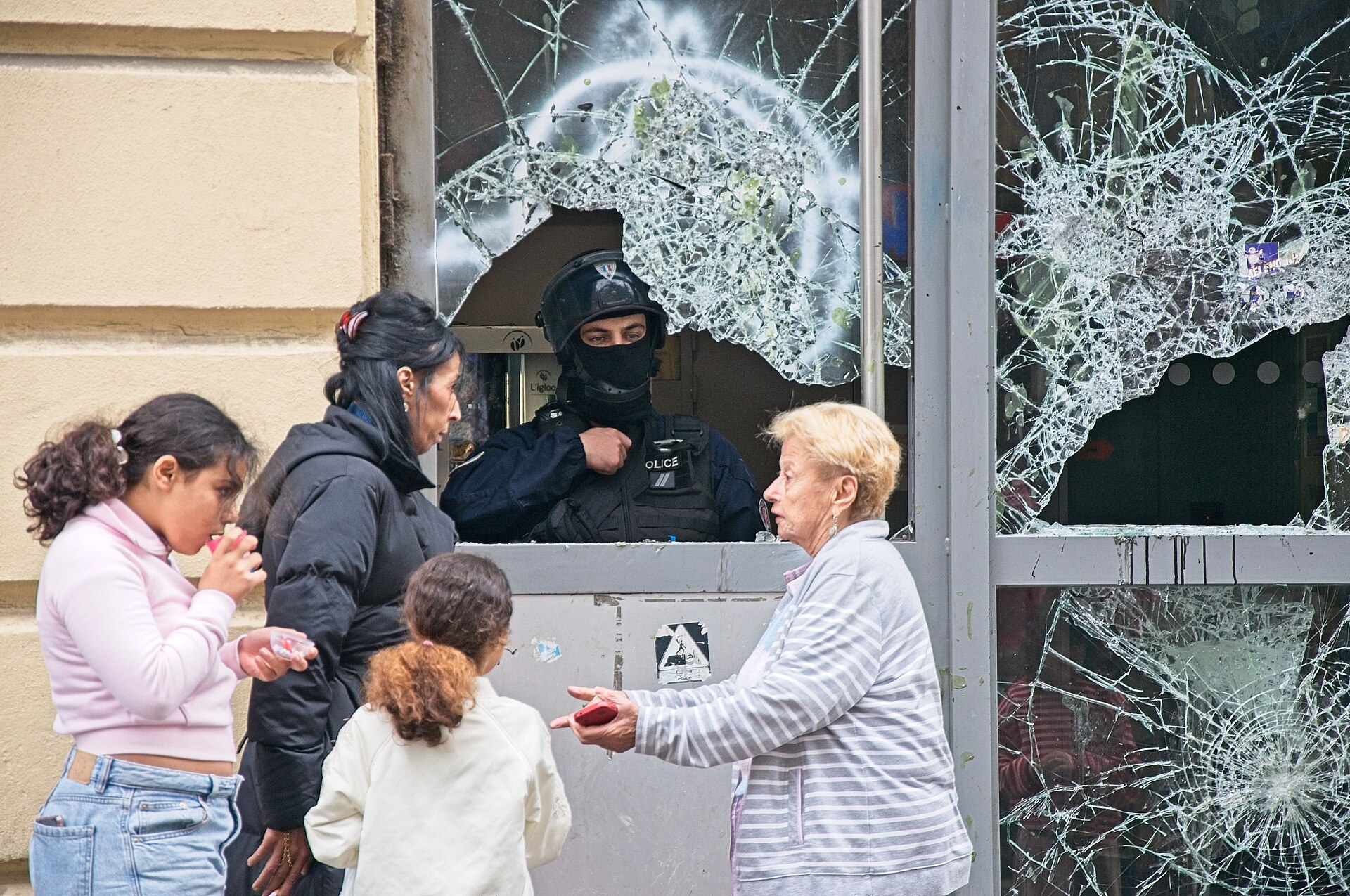
France’s escalating riots expose the dangers of political extremism, antisemitism and radical alliances, offering America a stark warning about the future of Western democracy.
23 October 2026
3.1 MINS
The one who is worthy of it all is awakening his Church to be captivated by him, so that we will honour one another and share his gospel with humility and courage.
22 October 2026
2.9 MINS
Victoria Labor’s promise to fund free abortions has drawn a forceful response from Presbyterian leaders, raising profound questions about unborn life, government priorities and Australia’s moral direction.



Thank you Mr. Muehlenberg for this article. You have made everything so clear. Thank you!