



Two Unvaccinated Canadians, Denied Organ Transplants, Have Died
Canada’s human rights record is in the spotlight following the deaths of two unvaccinated Canadians who were denied organ transplants.
Two Canadians have died in recent months after being refused organ transplants due to their COVID-19 vaccination status.
Garnet Harper, 35, from Ontario, passed away on May 22 of this year from a stroke induced by kidney failure, leaving behind his wife and five children. More recently, 58-year-old grandmother Sheila Annette Lewis of Alberta died on August 24 from a terminal condition requiring a transplant.
Their two tragic stories put the spotlight on a strained Canadian health system, and even more so on the human rights violations seen in Canada during the COVID years.
Garnet and Sheila’s stories deserve to be told.
Garnet Harper’s Story
Garnet Harper had suffered from Type 1 diabetes since childhood. In February of last year, he began experiencing abnormally high blood pressure, prompting health tests that yielded a grim diagnosis: stage five kidney disease, also known as end-stage renal disease (ESRD).
Garnet was soon referred to a kidney specialist who advised dialysis. The specialist also suggested Garnet was a “prime candidate for a transplant” due to his otherwise good health and young age.
Having strong convictions about natural remedies, Garnet initially declined dialysis. But he did follow through on the transplant referral, hoping to initiate the kidney transplant process at a prominent hospital in London, Ontario.
Sadly, two months later, Garnet received an email from the hospital’s kidney unit, advising that he was ineligible to be considered for a place on the organ donation list due to his refusal to take a COVID-19 vaccine.
Two of Garnet’s brothers indicated their willingness to be living donors. Even then, however, the Harper family could not find a surgeon or a hospital willing to undertake the transplant surgery due to unyielding vaccine mandates.
Garnet soon began dialysis but experienced complications during the surgery. He became septic and experienced a serious heart problem, along with a collapsed lung and temporary paralysis. Courageously, Garnet fought his way back to health and taught himself to walk again. But a transplant would never be granted: He died just over a year after his ESRD diagnosis.
Adding insult to injury, when Garnet was placed on life support, his wife Meghan received a phone call from the Trillium Gift of Life Network asking if she was willing to donate his organs. The same program that had denied her husband a kidney was now asking for his.
Since Garnet’s passing, Meghan has described him as “a real voice for freedom in our community.” She added, “He firmly believed that coercion is not a choice, and stood beside that in all cases, and we modeled that for our kids.”
Garnet’s family is now raising money to “cover costs to pursue legal action, as well as to replace the income he would have otherwise provided for his family.”
Sheila Lewis’ Story
Sheila Annette Lewis was diagnosed with idiopathic pulmonary fibrosis, a terminal disease, in 2018 and was told her only chance of survival was an organ transplant. On applying, she was approved, and by late 2020, she became the next in line on the transplant waiting list.
The next year, however, Sheila was told she could only retain her spot on the list by taking a COVID-19 vaccine.
Sheila had done everything else required of her, including having all of her childhood vaccines re-administered in preparation for the transplant surgery. But she drew the line at the COVID-19 vaccine, due to concerns over the shot’s safety and how hastily it was rolled out. She also had concerns about how the product might impact her pulmonary fibrosis.
Sheila’s simple plea was that it was a violation of her conscience to be forced to take the vaccine to maintain her long-standing place on the waiting list. Specifically, she argued that the mandate represented an infringement of the Canadian Charter of Rights and Freedoms.
Unwilling to hear her concerns, Sheila’s doctors removed her from the priority organ transplant waiting list and placed her at the bottom of the list in November 2022.
Sheila filed a lawsuit against Alberta Health Services, an Alberta hospital, and six doctors who were involved in removing her from the waiting list. The names of the doctors, the location of the transplant program, and which organ Sheila needed are not being publicly disclosed as the court has issued a publication ban.
The Alberta court dismissed her case, saying the Charter has no application to clinical treatment decisions. Sheila then took the suit to the Court of Appeal of Alberta, which upheld the lower court’s decision. Finally, she appealed to Canada’s Supreme Court, which turned down her application for a hearing.
At the time of her death, Sheila was exploring her options for transplant surgery outside of Canada, which was estimated to cost hundreds of thousands of dollars.
In the wake of Sheila’s death, her former lawyer told the Canadian Broadcasting Corporation (CBC), “Ms. Lewis was a real true believer in fighting for personal rights and freedoms.”
Was the Vaccine About Health or Control?
Sheila’s fight is over. Like Garnet’s, it ended in a tragic double defeat.
What remains are some serious questions:
Was the vaccine about health or control?
If it was about health, why are two Canadians—whose lives could easily have been spared—now dead?
If it was about health, why was the Trillium Gift of Life Network, an agency of the government of Alberta, so eager to collect the organs of an unvaccinated patient?
And now that even corporate news outlets are reporting on previously unacknowledged risks associated with the COVID-19 vaccines, what do Canada’s health authorities have to say to the Harper and Lewis families?
Their blood cries out.
___
Image via Pexels. Originally published at Intellectual Takeout.
2 Comments
Leave A Comment
Recent Articles:

16 October 2026
4 MINS
A desperate Victorian Labor Party is peddling taxpayer-funded abortions as free “healthcare”. In a shameless attempt to stay in power, they're willing to do anything — including killing the unborn and forcing taxpayers to pay for it.

16 October 2026
4 MINS
Katie Zacharia’s first days as White House Press Secretary have sparked fierce media criticism, but her remarkable testimony of surviving an abortion attempt tells a deeper story.

16 October 2026
3.4 MINS
Australia’s proposed digital duty of care laws promise greater online safety and increased user control by switching off algorithms, but critics warn they could give ministers sweeping powers to restrict lawful content and threaten free speech.
A Million Women Movement Marks Second Anniversary: “Look What the Lord Has Done! Ishtar Has Fallen!”
16 October 2026
2.8 MINS
Two years after A Million Women gathered in Washington for ten hours of prayer and fasting, organisers point to victories they believe reflect God’s answers to intercession.

16 October 2026
2.6 MINS
Euthanasia accounted for 4% of all deaths in Belgium in 2025, with growing numbers involving people who were not terminally ill, dementia patients and psychiatric conditions.

16 October 2026
5.2 MINS
Christa Pike’s botched execution has sparked outrage across America, but critics argue that the same concern for human dignity is denied to abortion survivors.
15 October 2026
3.6 MINS
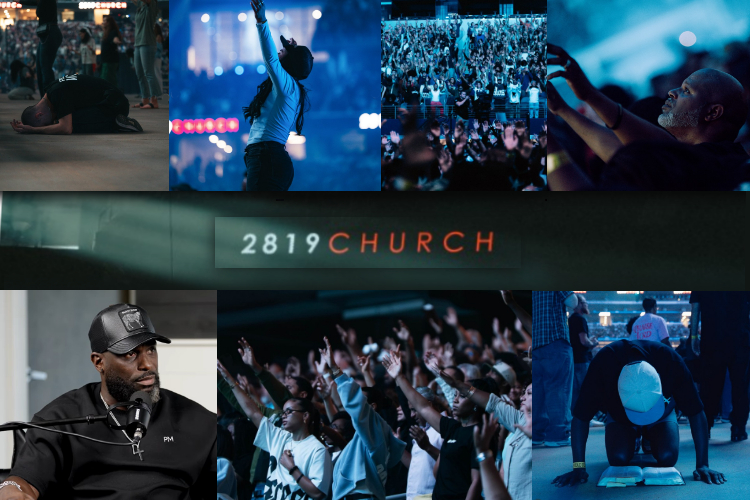
An 80,000-strong gathering in Texas signals a hunger for revival, as Pastor Philip Anthony Mitchell warns that Christian indifference could leave future generations without the faith.



Thank you Kurt for highlighting this. Sadly, lifesaving organ transplants are being denied to the unvaccinated HERE in Australia, one being a 16 yr old girl.
This is a vexed issue, and actually one with particular complexities not dealt with here, which highlight the whole issue regarding validity or necessity of treatments or otherwise, and one that deserves a sober assessment.
I found one here at https://www.ncbi.nlm.nih.gov/pmc/articles/PMC8894498/, “COVID-19 Vaccine Refusal and Organ Transplantation”.
It gives “Four arguments [which] are advanced to exclude COVID-19 vaccine refusers from transplant waitlists”, and then explains how “Each claim can be refuted”.
This is how such vexed issues need to be critiqued.
The article goes into great detail regarding all of the challenges that this issue presents for surgical staff and hospitals, and does so with considerable compassion for them AND their patients. It needs to be read in conjunction with the article here.