



How Children Are Conceived
No, I am not talking about how two viable human cells from opposite genders combine to create a new living being; that might be a good future topic in these days of gender fluidity.
Rather, I am talking about how parents “view” their children and how children “view” themselves. Following on from this question: when do children cease to be children and become adults?
Child Supervision
Child-minding, baby-sitting, having the kids. There are many phrases, but they all mean that an adult is responsible for the child. It seems that this is almost a sacred duty, the whole weight of the responsibility is on the adult, while there is none on the child.
Why can’t we conceive (that word again) of a shared responsibility? Yes, there are some responsibilities that are purely adult in nature, but there is a whole suite of responsibilities that are the child’s, that the adult doesn’t have to and shouldn’t have to carry.
- The responsibility to treat others as they would wish to be treated.
- The responsibility to be curious, constructive and creative.
- The responsibility to treat themselves well, with food and drink and personal security.
- The responsibility to be a good example for others in all matters of behaviour.
- The responsibility for adventure and joy.
But sadly, we have become a society modelled from above, the nanny-state. Have you noticed that our governments believe that they must tell us that gambling can be addictive, just after they have advertised gambling? Have you noticed the epidemic of knife crime and domestic violence that the media pump our way, seeking to make us too scared to breathe? Have you noticed how the education system is now seeking to clamp down on students having mobile phones in school, as it is fuelling bullying and violence against teachers?
This nanny-state philosophy springs from the principle that the government knows best, and everyone needs to be told what to do as only the government has the responsibility. Adults love it; they don’t have to think, they don’t have to take responsibility for themselves. The result: their attitude to children means that they must take full responsibility for the child. The child simply becomes a zombie, with no personal responsibility, their every whim being met by their benevolent adult.
Wouldn’t it be great if each child were on a personal journey of growth towards maturity? Taking on, step by step, ever-increasing responsibility, so that when they become a man or a woman, they can carry personal responsibility for themselves and be responsible for others too. I suggest that an adult ought to be mortified to be told what to do in matters of personal responsibility.
Adventure Trumps Entertainment
Examine children. What percentage of their day is filled with entertainment? What percentage of every day can be characterised by adventure?
My definition of entertainment is something that captivates the entertained, leaving them passive but with a growing appetite for more entertainment.
My definition of adventure is something that thrills and stimulates the adventurer for more, but leaves them energised, and eager to explore with their creativity renewed, bigger and better, ready for more adventure.
Some examples. Watching a thriller movie at the cinema: entertainment. Climbing a mountain: adventure. Playing video games at home: entertainment. Reading a spy, or romance novel at home: adventure.
Another take. If the child needs the adult to supply something, it is entertainment. If the child creates it themselves, it is adventure.
Consider this quote from The Chronicles of Narnia:
“I am [in your world].” said Aslan. “But there I have another name. You must learn to know me by that name. This was the very reason why you were brought to Narnia, that by knowing me here for a little, you may know me better there.”
Books like this are designed to take the reader on an adventure. And in the process, many lessons are to be learned.
When the entertainment stops, the child needs a new fix. But when adventure absorbs, the adult needs to collect the child and bring them back to earth!
Screen Addiction: the Digital Pacifier
Let’s call it out: this is an epidemic; no, I would go further — it’s a pandemic, certainly in the Western world.
To my mind, the screen to a child, is first and foremost, entertainment. We kid ourselves, and our young, to say, “It is opening up the world to them like no other time in history.” Yes, it is, but it’s opening up the world in an unfiltered way and through the lens of entertainment, that is designed to be addictive.
How did we get here? I would argue that the multinational media conglomerates saw an untapped market, our children, who, when addicted, would be hooked for life. It was brilliant!
Add to this the pervasive agenda of emasculating men and removing personal responsibility. The result: a lethal cocktail that leaves the children addicted zombies and the adults, frustrated, angry and depressed, not wanting to bring any more children into this sorry world.
Have a listen to Lindey’s story as she diagnosed the impact of screen addiction on her children.
I think the adults amongst us must push back and push back hard. The tide is extremely hard against us, but if we give in, I predict this scenario will only get worse. We need to swim out sideways to get away from the rip, or we will have no hope.
Denmark’s Forest Kindergartens
Ideally start when they are very young, kindergartens. I am not saying that if you have teenagers, they are a lost cause — certainly not. However, let’s consider the little ones first.
The Danish Forest Kindergartens are becoming more and more popular and have for many years been culturally accepted in Denmark, where they originated in the 1950s. There are now over 500 forest kindergartens in Denmark. They are available in Australia, too.
A study on children’s everyday lives from Roskilde University (RUC) showed that kindergarten children as young as three years old, collecting shrubs, flowers and grass, “feel good”!
The research indicated that children with access to daily outdoor life and green areas are more physically active, move more freely – and are less ill. It seems that children spending time outdoors have better concentration and are more ready to learn (also in the classroom). Besides, they are much better socially and are more creative and innovative.
Children in forest kindergartens are often allowed to use real tools, real knives, real saws, and climb trees.
What do you think? These little ones are still under supervision, they are not left to run wild. But, within supervision there seems to be an intangible reward. There is an uptick in creativity, resilience and, in my view, adventure.
How do you see children today?
Now I am asking the question. What do you conceptualise when you see them? How conscious are you of their journey through life? Are you an absent father or an overprotective mom? Are you a disinterested twenty-something with no children?
To round off this reflection, I offer you, my reader, perhaps, some alternative points of view:
- Children are not equal to adults. I see so many adults discussing options with children on an equal basis to themselves. This is comical as the adult is imagining that the child has the same life experience and mental capacity as they have. They don’t. We are hurting them if we do this, not protecting
- Parents are the child’s best teachers. The parent has unconditional love for their child, which ideally positions them to teach, as they most desperately want the best for their child. And that is so rarely what they want, but what they need. The parent-teacher can scaffold a progressive, challenging series of experiences, so that, as the child stretches at each step, they are growing in wisdom and resilience.
- When considering where to settle and grow a family, consider the needs of the children, not just the best-paid jobs for the parents. What is the environment like for children? An apartment in a high-rise, I suggest, is the worst possible environment to raise a family. Does the local community include open spaces and natural landscapes for children to explore and create lifelong memories?
- See adults in the child’s world as conductors of an orchestra rather than a security guard whose sole purpose is to protect with minimal interaction and intervention. A conductor sees and hears every off note or missed beat. They also set the pace and the mood of the piece. Most musicians only look out of the corner of their eye at their conductor, but they know they are being watched all the time. I think there is a great place for taking the orchestra out into nature, the more the better. It improves the musicians’ (children’s) health and wellbeing, as shown by the forest kindergarten studies.
- Develop a mindset to get free from screen addiction ourselves, so that we can model a fulfilled, healthy life to our young. Consider what tasks or relaxations that we habitually turn to the screen for support and fulfilment, might be served by non-digital means. Decide that your digital device will never go into your bedroom; it stays in the office or the kitchen overnight, all on its own. Discuss the biology of screen addiction with your teens and the economics of the global conglomerates intent on their bottom line. Critically evaluate each new application pushed on us by government, media and commerce.
We might say, it is what it is, we can’t change things, it’s too late. I get that. Yes, that’s true if we all say, it is what it is.
However, my call to action is that if someone says enough is enough, and starts to turn the tide in their world, another will see and decide, yes, they can say enough is enough, as well.
___
Image courtesy of Adobe.
2 Comments
Leave A Comment
Recent Articles:

28 October 2026
4 MINS
The assault on Helen Haines highlights Australia’s growing political hostility. Recovering civility requires personal accountability, respectful debate and a renewed commitment to Christian moral foundations.

28 October 2026
5.1 MINS
Germany’s proposed social media rules would give government-approved news outlets preferential visibility with social media algorithms, raising concerns about state influence over online information and the future of digital freedom.
28 October 2026
4.4 MINS
Christian commentator Samuel Sey’s ICE arrest has sparked fierce controversy, exposing deep divisions among conservatives as supporters call for prayer, compassion and a swift legal resolution.

27 October 2026
25.2 MINS
Labor’s Digital Duty of Care Bill threatens free speech, empowers covert online surveillance, and imposes potentially burdensome regulations on Australian businesses.

27 October 2026
1.3 MINS
Moira Deeming’s re-election campaign has energised Family First supporters, raising $90,000 as the party prepares for a crucial Victorian election and a potential breakthrough.
26 October 2026
2.5 MINS
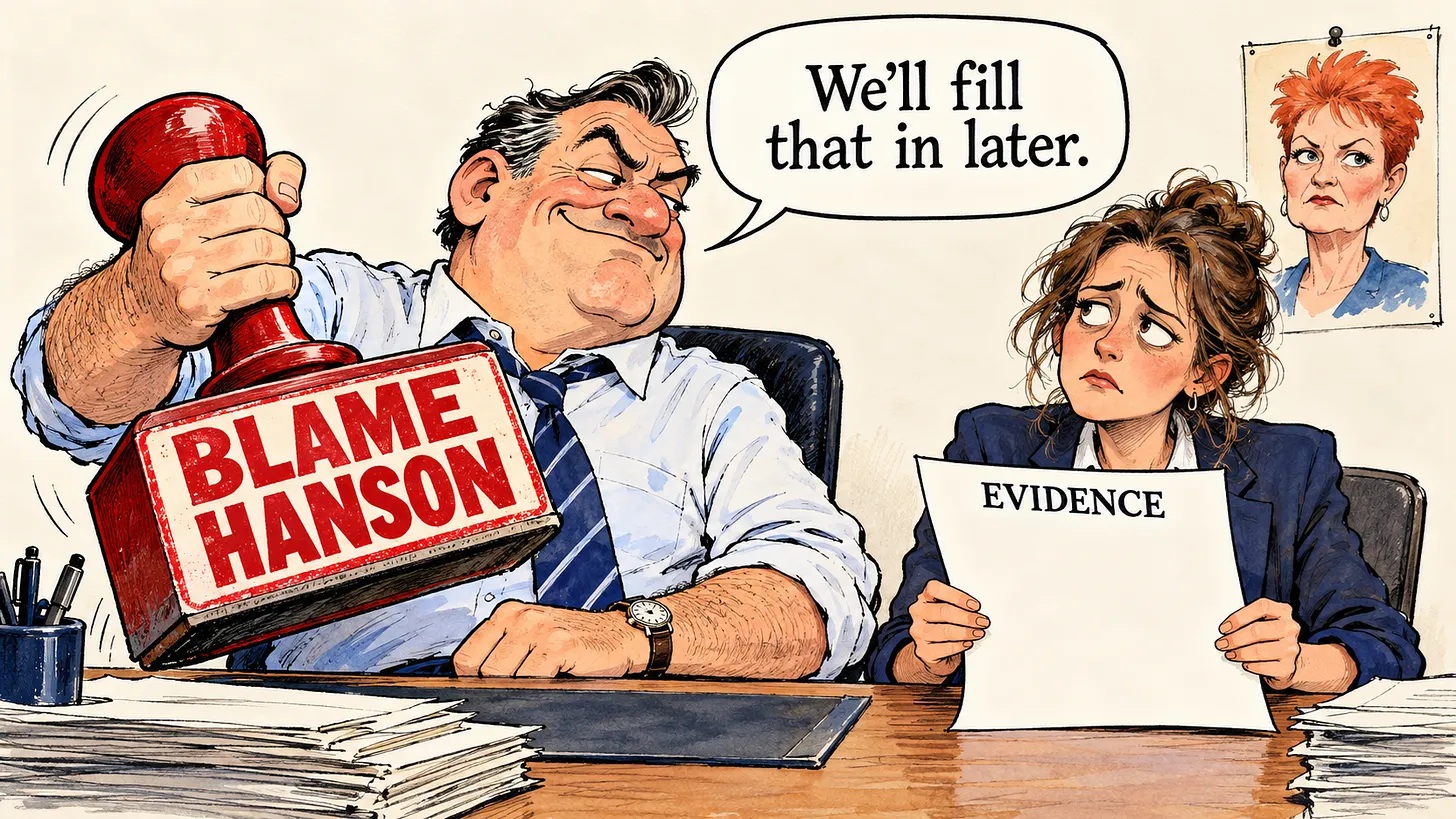
Nation First exposes the rush to weaponise the Haines attack against Pauline Hanson, conservative voices and men before investigators established a motive.
26 October 2026
5.1 MINS
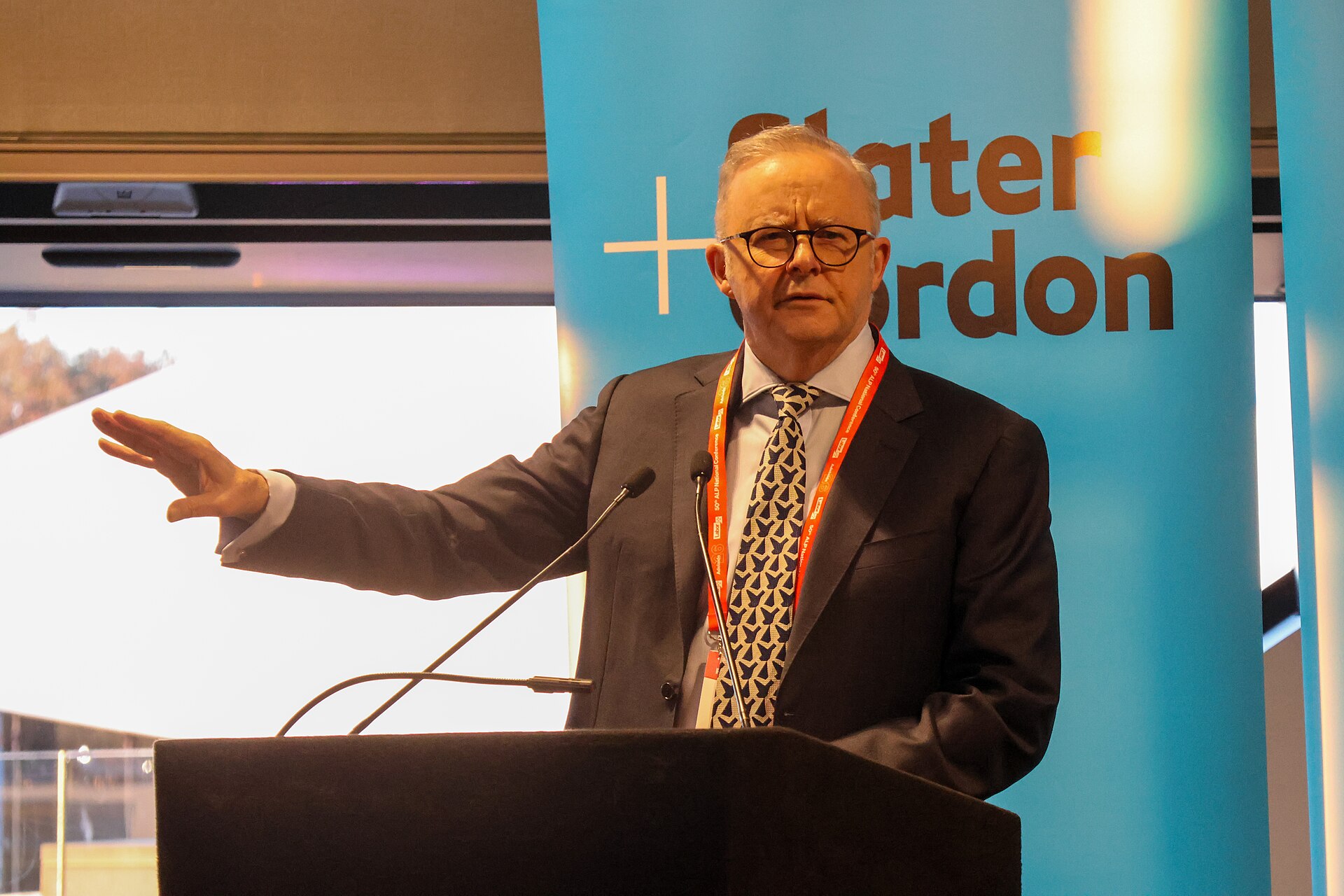
Anthony Albanese calls for civility after the Helen Haines attack, but revelations of a political dirt file raise uncomfortable questions about his government’s own conduct.



Jim,
Keep going… reading this and watching the 60 Minute documentary grips my heart. I wish parents were taught even in the maternity ward about this issue and how to prevent the problems. I laughed when someone mentioned starting kids on devices at 3 years old. It’s way earlier than that. Even mothers with a day old baby are zoned out on their phones while eye contact with their human-connection-hungry infant is being starved.
Thank you for continuing to highlight this issue. The world needs help on this issue.
You make me think of how long it took for ‘the people’ to believe in the evils of smoking and the oh so powerful vested interests that stood in the way. I wonder what it will take to see the dam burst on screen addiction?