



The Science of Happiness with Dr Arthur Brooks at the ARC Conference
“It is the working man who is the happy man. It is the idle man who is the miserable man,” are the wise words of Benjamin Franklin.
Novak Djokovic, arguably the greatest male tennis player of all time, said, “I’m a happy man, because I am successful in what I do, of course; but what makes me most happy is I have people around me that I love and who love me back. This, for me, is the most important thing.”
Dr Arthur Brooks, a professor at Harvard University who spoke at the recent ARC Conference in London on “The Science of Happiness”, would agree with the wise words of both these men. The fact that these men possess a strong faith would leave Dr Arthur Brooks an even happier man. Watch his video below.
Journalist Clay Skipper from GQ wrote a long article called “Does Arthur Brooks Have the Secret to Happiness?” I have condensed his article and added my own thoughts at the bottom. Here we go:
Arthur Brooks has a confession to make: “I’m not a very naturally happy person.” He tells me this one May morning in the lobby of the Ritz-Carlton, Half Moon Bay, thirty miles south of San Francisco, where he’s come to emcee The Atlantic’s two-day “In Pursuit of Happiness” festival.
Brookes teaches a course at Harvard Business School called “Leadership and Happiness.” His book From Strength to Strength: Finding Success, Happiness, and Deep Meaning in the Second Half of Life became a New York Times bestseller. His column in The Atlantic, “How to Build a Life,” reaches over a million people in a good week…
Brooks grew up in Seattle in a lower middle-class family, with a mom who was a professional painter and a college professor father with a Ph.D. in biostatistics who drove a bus during the summers. He describes his parents as “gloomy” and his family history as checkered with mental health issues, including clinical depression. His mom was on anti-psychotic medication from her twenties until she died in her seventies…
As Brooks sees it, our brains mislead us into chasing things that feel good but don’t result in sustained happiness. Those things are often what he calls the four false idols: money, power, pleasure, and fame…
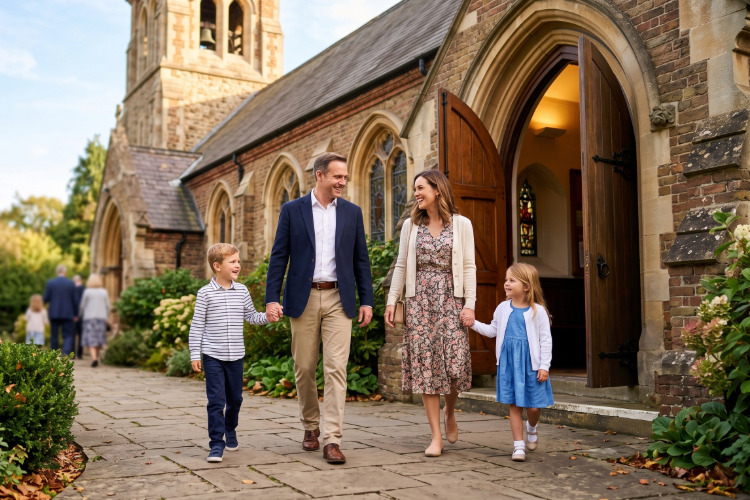
Instead of chasing those idols, Brooks advises that we focus on what he calls the four pillars of our “happiness portfolio”: faith, family, friends, and work. The happiest people, according to Brooks, adhere to a belief system that helps them transcend their narrow perspective and “understand life’s bigger than the boring sitcom that is me, me, me.”
They have deep family ties and strong friendships. And they do work that serves others and allows them to earn their success. Brooks points out that if you go back to the beginning of our national decline in happiness, in the late 1980s, you see that those pillars have generally become less central to people’s lives.
“It’s my field theory of generalized unhappiness,” he says. “If you want to fix it, you’ve to fix it along those four dimensions.”
It’s not that we don’t know the importance of those pillars, necessarily — it’s just that they’re hard to prioritize on a daily basis…
Though fifty percent of your happiness is genetic, Brooks estimates that your circumstances are responsible for another 25 percent, and the remaining quarter is determined by your habits.
This is good news for him and the rest of us who might not come into the world chromosomally laced with high levels of serotonin. “You can raise your happiness,” Brooks says. “And I have raised mine by having good happiness hygiene.” …
Brooks’s approach to physical fitness also informs his approach to his emotional well-being. He believes happiness is made up of three main “macronutrients” — enjoyment, satisfaction, and purpose — which are in turn broken down into 19 micronutrients…
For Brooks, happiness is a matter of awareness. In fact, he’ll say that “the secret” to happiness is metacognition, or the ability to observe your own desires, cravings, emotions, and feelings, without automatically reacting to them.
“You’ve got to ask yourself: Do I want to be managed by my appetites, do I want to be managed by my emotions — or do I want to manage them?” he later asks me. Brooks says that where we often seek relief — numbing bad feelings or satisfying cravings — we should instead seek clarity. It’s the old maxim: Know thyself…
Happiness, Brooks says, is a practice, a discipline. You have to work on it every day, because life pulls you away from it. And so, your pursuit of it must be rigorous, almost technocratic — the way a think tank scholar might approach a matter of economic policy.
Allow me to make a couple of comments.
Firstly, I believe Arthur Brooks is on the money. But I believe the ratios for happiness are more like 50% to do with your habits and attitudes, 40% is your genetic makeup, and 10% is your circumstances.
In other words, the majority of your happiness is within your reach. These calculations are from both my own observations of life and empirical studies.
I am not alone in my dissent. In an empirical article called “What Science Tells Us About Happiness,” their ratios for happiness are more like 50% is your genetic makeup, 40% is to do with your habits and attitudes, and 10% is your circumstances.
Whatever the case, we all agree our habits and attitudes are the only ones we can easily adjust. That’s what we need to work on.
Secondly, I would add a fifth pillar to Brooks’ list of faith, family, friends and work, and that is the habit/pillar of gratitude. Dr Tracy Brower from Forbes agrees with that, along with Melbourne Child Psychology. Many others feel the same way!
SoulPancake’s “Experiment in Gratitude – The Science of Happiness“, with over 7 million views, tells the story well.
Lovework
Start your own study on the Science of Happiness, put it into practice, teach your kids the same and create a very happy family in the process.
Yours for Happy Families,
Warwick Marsh
___
Republished with thanks to Dads4Kids. Image courtesy of Adobe.
Recent Articles:

16 October 2026
4 MINS
A desperate Victorian Labor Party is peddling taxpayer-funded abortions as free “healthcare”. In a shameless attempt to stay in power, they're willing to do anything — including killing the unborn and forcing taxpayers to pay for it.

13 October 2026
3.9 MINS
Tasmania’s proposed conversion practices law raises serious concerns for churches, parents and faith-based schools, with broad definitions, severe penalties and uncertain protections for religious freedom.

12 October 2026
3.2 MINS
Your support has helped us change the world for the better, as Dads4Kids has poured our heart, soul and finance into the global promotion and celebration of International Men’s Day.

8 October 2026
4.1 MINS
Aboriginal communities in Central Australia already know the gospel message. What they need now, Robyn Murray writes, is discipleship, encouragement and Christians willing to pray and participate.

5 October 2026
7.3 MINS
DJ, composer and trance music icon, Tyson Illingworth aka tyDi shares his testimony in coming (back) to Christ in this exclusive interview with Aaron Duff from Australian Christian Records.

5 October 2026
3.2 MINS
We can avoid challenges and, for a while at least, this might feel comfortable. But it has a price. Living courageously is not easy, but it leads to growth, fulfilment and greater sense of joy in your life.
2 October 2026
3.4 MINS
New research highlights the strong links between active Christian faith, marital happiness, sexual satisfaction, family stability and the formation of future generations.


