


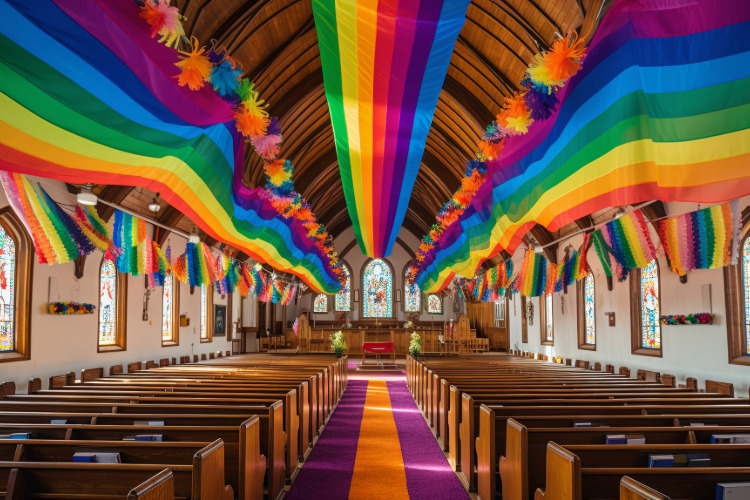
How Foucault Hollowed Out Mainline Christianity — And Why We Must Return to Scripture
Redefining truth, morality, and identity for social justice has hollowed out the church, replacing the Gospel with activism. Let us return to Scripture to restore the church’s mission and vitality.
The Quiet Crisis in the Mainline Church
Walk into many mainline churches today and you may see beautiful stained-glass windows, historic architecture, and organs that once filled sanctuaries with hymns. But often, the pews sit half empty. The decline has been staggering: denominations like the United Methodist Church, Presbyterian Church (USA), and the Episcopal Church have lost millions of members in just a few decades. Some once-thriving congregations now rent out their buildings to yoga studios or host farmers’ markets just to stay open.
What happened? This collapse is not simply about cultural change or demographic shifts. It is rooted in a philosophical earthquake that quietly reshaped mainline Christianity from the inside. White mainline Christianity became, in many ways, the child of the Enlightenment. The Enlightenment enthroned human reason as the supreme judge of truth, relegating divine revelation to the realm of private sentiment or moral inspiration.
Over time, many mainline theologians embraced this shift, treating Scripture less as God’s authoritative Word and more as a human record of religious experience. Rationalism displaced revelation, and the supernatural was often reinterpreted as myth or metaphor to fit modern sensibilities.
This elevation of human reason over divine revelation prepared the soil for postmodernism and the thinking of Foucault. When reason itself eventually came under suspicion, the Enlightenment’s emphasis on autonomous human judgment left mainline churches with no transcendent anchor. Having already loosened their grip on biblical authority, they were especially vulnerable to new philosophies that denied any fixed truth at all.
Into this vacuum stepped a wave of postmodern thinkers who argued that “truth” is not discovered but constructed—and perhaps no figure has shaped this shift more than the French philosopher Michel Foucault. Though he never set out to influence churches, his ideas profoundly reshaped their views on gender, justice, mission, and even truth itself.
Foucault’s Philosophy: Deconstructing Truth, Morality, and Identity
Michel Foucault (1926–1984) rejected the idea that truth is something objective that we discover. He argued instead that what we call “truth” is created by those in power to preserve their control. Knowledge, in his view, is not neutral; it’s manufactured by institutions to maintain their dominance. He denied the existence of universal moral laws, claiming that morality is only a cultural invention enforced by the powerful.
Foucault also viewed social institutions—churches, families, schools, even medicine—not as bearers of truth, but as systems of discipline and control. He treated categories like male and female, sane and insane, or right and wrong, not as fixed realities but as social constructions.
It’s hard to overstate how radically this contradicts the Christian vision of a God who reveals truth, gives moral law, and creates us in His image. Yet these ideas began to seep into mainline churches through their seminaries—subtly at first, then as a flood. Like termites silently hollowing out the beams of a house, Foucault’s scepticism about truth and morality slowly eroded the theological structure that had once held mainline Christianity together.
Gender: From Created Design to Self-Constructed Identity
One of the clearest places where Foucault’s influence reshaped mainline Christianity is in its view of gender. His denial of fixed human nature undermined confidence in biblical teaching about male and female.
Passages such as Genesis 1:27, which once grounded the belief that men and women are created in God’s image with equal worth and distinct roles, were reframed as patriarchal constructs. Many mainline denominations began ordaining LGBTQ+ clergy, affirming same-sex marriage, and embracing gender fluidity, often framing these shifts as acts of justice or inclusion.
An illustration of this shift is visible in many mainline children’s curricula today: lessons once centred on God creating people “male and female” now often use language like “you can discover who you are inside”, presenting identity as self-chosen rather than God-given. When gender becomes self-created, the call to conform our lives to God’s design fades. Affirming all identities becomes the new gospel, while the old gospel quietly slips out the back door.
Social Justice: From Righteousness to Power Struggle
Foucault’s rejection of objective morality also reshaped how mainline churches understood justice. He taught that morality is simply a tool the powerful use to control others.
Under this influence, many churches shifted their definition of sin from personal rebellion against God to primarily systemic oppression—racism, patriarchy, colonialism, and capitalism. Salvation, in turn, was reframed as liberation from unjust systems, not forgiveness and reconciliation through Christ.
This change is reflected in the liturgies of some mainline denominations. Confessions that once said “We have sinned against You in thought, word, and deed” have been rewritten to say “We confess our complicity in systems of injustice.” Sermons increasingly focus on privilege and oppression rather than sin and grace. Justice becomes about dismantling structures, not reconciling people to God.
This subtle shift replaced repentance with activism. The church became less a community of sinners saved by grace and more an engine of social revolution. In doing so, it began to lose its soul.
The Seminary Pipeline: How Foucault Entered the Pulpit
This transformation didn’t happen overnight. It came through the classrooms that form mainline pastors.
Theological liberalism had already loosened confidence in Scripture, leaving a vacuum. Liberation and postcolonial theologies filled that vacuum by adopting Foucault’s suspicion of truth and reframing the Bible as a colonial tool of oppression. Queer theory, rooted in Foucault’s History of Sexuality, taught students to see gender and sexuality as social constructs rather than divine realities.
Seminaries gradually shifted from exegesis to activism, from teaching biblical theology to teaching cultural criticism. Students were trained to read Scripture through identity-based “lenses”—race, class, gender, and sexuality—rather than as God’s revelation.
A telling example is the rise of seminary courses titled things like “Theology from the Margins” or “Deconstructing Empire”, which often focus less on what Scripture says and more on critiquing structures of power. As these students became clergy, they carried this postmodern lens into the pulpits, and their congregations followed their lead. Doctrine became fluid, and theology became little more than politics by other means.
Mission Drift: From Evangelism to Activism
Foucault’s suspicion of truth claims also made evangelism itself look like cultural imperialism. If all truth is just a power play, then claiming the Gospel as the one true message sounds oppressive. So the mission of the church quietly changed.
Evangelism was increasingly sidelined as coercive. Churches poured their energy into political advocacy, structural reform, and identity affirmation. Preaching the cross and resurrection was often downplayed or reinterpreted as a metaphor for liberation from social oppression.
This shift is visible in mainline mission statements that no longer mention Jesus or the gospel at all, but instead speak of “transforming the world”, “seeking equity”, or “dismantling oppression”. The result was that churches became culturally busy but spiritually empty. They talked much about justice but little about Jesus. They fought passionately for social change but offered little hope for personal transformation.
The New Heresy: Why Christian Nationalism Became the Ultimate Enemy
One striking feature of today’s mainline landscape is how often the term “Christian nationalism” surfaces—not just as a concern, but as the centrepiece of their moral vision. In many mainline circles, it has become the great heresy, the root of nearly every societal ill, and the primary threat to be opposed. Sermons, seminary conferences, and denominational statements often frame it as the fountainhead of racism, sexism, homophobia, xenophobia, and even climate denial.
Why this near obsession? The answer, in large part, traces back to Foucault’s lens. Because he taught that truth claims are veiled bids for power, many mainline theologians trained in his wake came to see any confident or exclusive Christian belief as inherently oppressive. Christianity, in their eyes, is safe only when it renounces its authority claims and becomes purely a tool for social reform.
Within that framework, Christian nationalism functions as the perfect villain. It embodies, for them, the idea that Christian faith is being used as a cover for cultural and political dominance. It becomes a catch-all explanation for the brokenness of society. Complex problems—whether political polarisation, racial division, or cultural decline—are flattened into a single cause: the lingering power of Christian moral norms, especially as they intersect with political conservatism.
This narrative also serves another purpose. By defining themselves against Christian nationalism, many mainline leaders can position their churches as morally virtuous without affirming historic Christian doctrines. It allows them to retain a religious identity while embracing Foucault’s suspicion of truth, authority, and moral absolutes. The fight against Christian nationalism becomes, in effect, a substitute gospel—a way to signal righteousness apart from repentance and faith in Christ.
But here’s the danger: when Christian nationalism becomes the primary enemy, sin is redefined as holding the wrong political loyalties rather than resisting the flesh, the world, and the devil. The church’s prophetic voice is redirected away from calling all people to repent and believe, and toward shaming those who still believe historic Christian teachings. Instead of confronting the world’s rebellion, the church ends up rebuking its own faithful for believing too firmly.
This dynamic explains why so many mainline leaders speak more about dismantling Christian nationalism than about proclaiming Christ. Foucault’s logic taught them to see power where previous generations saw truth—and to tear down where previous generations sought to build up. The gospel gets replaced by suspicion, and mission gets replaced by policing ideological boundaries.
The Fruit: Institutional Collapse
The numbers tell the story. Mainline churches have fallen from over 30% of U.S. Christians to under 10% today. Membership rolls are shrinking, churches are closing, and seminaries are merging or disappearing.
Consider the Episcopal Church, which now has fewer Sunday worshipers than some large megachurches. Or Andover Newton Theological School, one of America’s oldest seminaries, which shut down its campus and merged after years of declining enrollment.
Many congregations have become indistinguishable from secular nonprofits—and people see little reason to stay. And at the heart of this collapse lies a hard truth: if there is no truth to proclaim, no sin to repent from, and no Saviour to trust in, then the church has nothing unique left to offer.
When the Gospel is reduced to activism, the power that once fuelled the church’s life is lost. The form remains, but the fire is gone.
The Way Back: Returning to God’s Word
Foucault promised freedom from oppression, but his ideas have left mainline Christianity hollowed out and exhausted. The path to renewal is not more cultural relevance, but repentance—a return to God’s unchanging Word.
Biblical authority gives the church back its message. Biblical morality gives the church back its integrity. Biblical mission gives the church back its purpose: to proclaim Christ crucified and risen for the forgiveness of sins.
Where Scripture is treated as optional, the church withers. Where Scripture is treasured, the church comes alive—even under cultural pressure. This is not about nostalgia. It’s about recovering what is timeless.
A Final Word
The mainline church does not need to become more modern; it needs to become more faithful. The world does not need another political movement with stained glass windows. It needs a church that stands on truth, speaks with grace, and points to a Saviour who still saves.
Only when the church reclaims the Word of God as its authority will it recover the life it has lost. That is the path back—not to the past, but to Christ.
A Call to Courage for Pastors and Seminary Leaders
To pastors and seminary leaders in the mainline tradition: the path ahead requires courage. It is far easier to drift with the cultural tide than to anchor again in the Word of God. But the church does not need more cultural critics; it needs shepherds who will feed the sheep with truth, not theory.
Your people do not need another political platform; they need the Gospel of Jesus Christ in all its life-giving power. Recover the Scriptures as your final authority. Preach the cross without apology. Form future leaders not to deconstruct the faith, but to contend for it with humility and love. If you do, you may be mocked by the world—but you will revive the church. And that is worth everything.
“Stand firm, and hold fast to the traditions that you were taught by us, either by our spoken word or by our letter.”
— 2 Thessalonians 2:15 (ESV)
___
References
Foucault, M. (1977). Discipline and punish: The birth of the prison. Pantheon Books.
Foucault, M. (1978). The history of sexuality, Vol. 1: An introduction. Pantheon Books.
Trueman, C. (2020). The rise and triumph of the modern self: Cultural amnesia, expressive individualism, and the road to sexual revolution. Crossway.
Wells, D. F. (1994). God in the wasteland: The reality of truth in a world of fading dreams. Eerdmans.
Noll, M. A. (1992). A history of Christianity in the United States and Canada. Eerdmans.
___
Image courtesy of Adobe.
5 Comments
Leave A Comment
Recent Articles:

27 October 2026
10.3 MINS
As Tasmania and Western Australia consider conversion therapy bans, a former LGBT+ ministry leader warns of threats to religious freedom, personal choice and Christian discipleship.

27 October 2026
4.9 MINS
Nine Christians have been killed in a terrorist attack on a Jordanian church, prompting fierce condemnation, demands for justice and renewed concerns about religious persecution.

27 October 2026
3.6 MINS
For 25 years, the Mount Moriah Trust has supported struggling Christians across the Holy Land, bringing practical assistance, encouragement and hope to believers facing hardship and persecution.

27 October 2026
3.1 MINS
As the disciples discovered through a huge haul of fish, we can trust Jesus for a net-breaking, boat-sinking catch of people.
26 October 2026
4.5 MINS
OECD chief Mathias Cormann warns Australia is losing its competitive edge, as excessive regulation, housing pressures, immigration challenges and declining public trust threaten national prosperity.

26 October 2026
3 MINS
Australia’s national resilience inquiry overlooks a critical weakness: decades of deindustrialisation have left the nation dangerously dependent on imports, unprepared for compounding threats and strategic disruption.
26 October 2026
2.9 MINS
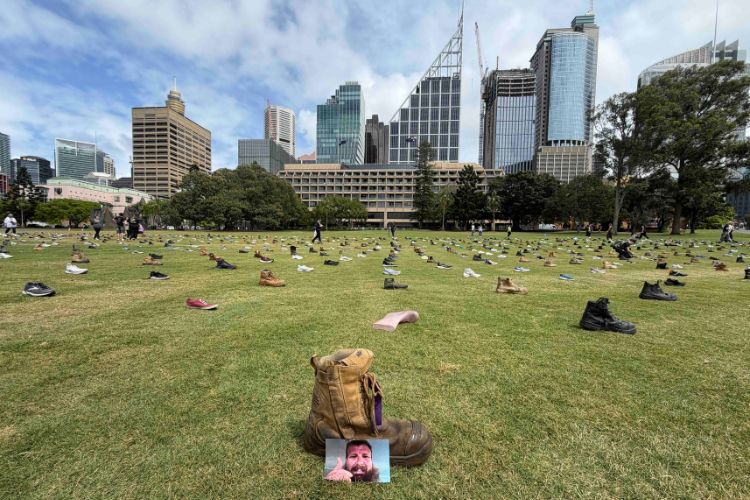
A powerful display of thousands of shoes highlights Australia’s escalating male suicide crisis, while Dads4Kids celebrates fatherhood, family connections and practical action to strengthen generations.



What a brilliant article
This is an incredibly insightful piece Tim, thank you!
shows how a thin end of a wedge cause such damage
Amen! We need to know the Truth, who is Jesus, in the times that are fast coming upon us! He alone is our steadfast and sure foundation, a very present help in time of need! The Body of Christ, those who are anchored in Him, will stand as a Lighthouse in the darkness and the storm!
An awesome article!Answers all the questions we have asked….’How could this have happened?’ Now we know.