



‘They Took Everything Except His Faith’: The Ongoing Persecution of Egyptian Influencer Said Mansour Rezk
Sophie, the fiancée of Egyptian Christian social media influencer Said Mansour Rezk, opens up about his imprisonment, ongoing persecution, and her tireless fight to win him asylum in Australia.
An extended interview with Kurt Mahlburg for the Daily Declaration.
Kurt (K): Sophie, thank you for joining me. To begin, could you tell our readers who you are?
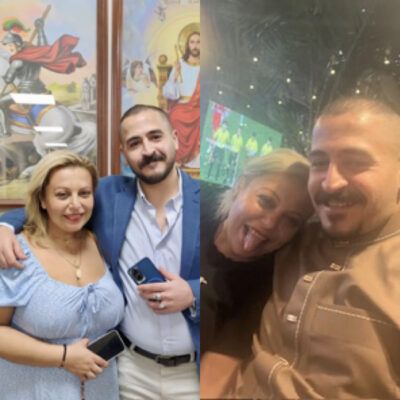
Sophie (S): My name is Sophie and I live in Sydney. I connected with Said through social media. We were both creators — I was in comedy, he was a Christian apologist. Over time, we became close. Now I am his fiancée, and I’ve been advocating for him ever since his ordeal began.
K: For those who don’t know, who is Said?
S: Said’s full name is Said Mansour Rezk Abdelrazek, but in Egypt they call him Sa’id Abu Mustafa — which just means “Said, the father of Mustafa,” after his son. Said is Egyptian but his family is originally from Libya. He grew up Muslim, and he wasn’t the kind of person to just accept things blindly. He studied every sect of Islam, he asked a lot of questions, but something never felt right to him.
Then in 2016, Said saw a Bible in one of the shops nearby. His eye fell on a verse and it just caught him. He’s very much a reader, so he asked for a copy, and once he had it, he didn’t stop. He read and read, and he began to see the truth. Two years later, in 2018, he was baptised in a Baptist church in Alexandria.
That was the real turning point and also the start of all his troubles. His father had passed away in 2017, which actually drew him closer to Christ. But his mum noticed the change in him and reported him to Egyptian State Security. From there, the authorities and local sheikhs closed in. They took everything — his wife, his little boy Mustafa, his shop, his money. State Security harassed him relentlessly.
At that point, Said realised he had no future in Egypt unless he could get out. His only option was to try and leave.
K: Was he able to?
S: His first attempt to leave ended at the airport. National Security officers pulled him aside, insulted him and humiliated him — the same treatment many Christians face when trying to leave. He had no choice but to return and try again later.
In 2019, he finally managed to leave Egypt. He got out on a tourist visa into Russia, which was one of the few options available to someone with an Egyptian passport. Once there, he applied for asylum and joined the Russian Orthodox Church. For the first time in years, he felt like he could breathe a little, away from the constant pressure of State Security.
But Said isn’t someone who can just sit quietly. He had lost his wife, his son, his shop — his whole life — simply because he followed Christ. So he spoke up. He began posting online, debating, explaining what the Quran itself says about Christians and Jews, and why that fuels the persecution in Egypt. He wasn’t inventing things or making them up. He was quoting directly from their own books. At the same time, he was speaking out for persecuted Christians in Egypt, including Coptic girls who are kidnapped and forced into marriages.
K: Was that when he faced trouble again?
S: Yes. In June 2023, he made a satirical video with the Quran. It was around three in the morning, nobody around, and he filmed himself giving the Quran a drink, having a glass of champagne, doing a little dance with it, and then tossing it into the river. It wasn’t meant as a big public stunt; he only shared it privately on his own profile for his followers.
But Muslims copied it and spread it everywhere — on TikTok, YouTube and X. Overnight it became a worldwide sensation but not in a good way. The comments were full of death threats. People said he needed to be beheaded.
Then, almost by chance, he went live on TikTok with Salwan Momika — the Iraqi in Sweden who had made headlines for burning Qurans. The stream lasted less than an hour, but it was enough to draw attention. Given Salwan’s high-profile targeting — he was assassinated in January during a livestream — even a brief link to him made Said’s situation extremely dangerous.
The Russians came down hard on Said. They arrested him and charged him with “hooliganism.” They even removed his Christian lawyer and replaced him with a Muslim one. Advocacy groups inside Russia like the Sova Center said what he did wasn’t a criminal act at all, only an administrative matter. The US Commission on International Religious Freedom (USCIRF) listed him as a prisoner of conscience and declared the charges illegal. Still, Russia pressed ahead and moved to deport him.
K: And that’s how he was returned to Egypt?
S: Yes. By May 2024, Said had served his time in Russia and was let out of prison, but he wasn’t free. They moved him to a deportation centre, where he stayed for weeks. During that time, I was in constant contact with the United Nations High Commissioner for Refugees (UNHCR), pushing for them to resettle him somewhere safe, issue travel papers, and protect him from being sent back to Egypt. But despite our efforts, they did nothing during the full six weeks he was detained. We had to chase them every step of the way. UNHCR refused to intervene on his behalf. Then, literally one hour before his deportation flight, they issued a stop order — but it was useless. Said had already gone through immigration.
On 17 July 2024, he landed back in Cairo. For half an hour, things seemed normal. He was messaging me, telling me what was happening. Then, all of a sudden, he stopped replying. Messages were being read but not answered. Within an hour, Egyptian State Security had him.
He completely disappeared for ten days with no contact or sign of life. Then on 29 July he reappeared, but he was not the same person. He was clearly traumatised. Slowly, he told me what had happened. They tortured him, suspending him with his arms tied in a crucified position for hours. They pressured him to recant his faith and return to Islam.
The only reason he survived was because he said, “I need time to think. I’ll study the Quran again and maybe come back to Islam the right way.” That bought him enough time to go back to his family. From then on, they had him under control.
K: What happened next?
S: After ten days, they released him to his family home — but it wasn’t freedom. His sister was fully cooperating with State Security, waking him at five every morning to force him to pray.
Meanwhile, Security was pressuring him to become an informer. They wanted him to spy on Christian priests and organisations and report back, and go online in front of his followers and say that Christianity was false and Islam was true. They wanted to turn him into a propaganda tool.
One of their biggest demands was about his tattoo. He had a huge Russian Orthodox cross tattooed on his arm as a bold statement of his new faith. They ordered it removed. The doctors tried, but the ink was too deep. When they tried to remove it, he was left with raw, infected burns. Said’s response was defiance. Instead of giving in, he tattooed ten more crosses on his body — Jerusalem, Russian and Lebanese crosses. It was his way of saying, “You cannot erase my faith.”
K: Did that defiance put him at greater risk?
S: Yes. Early this year, Said began to spiral. He told me, “I’m not going to live. Prepare yourself.” He isolated himself, spoke openly of death, and spent long hours online, often in the middle of the night. He also returned to activism, speaking up for Syrian Christians and planning to legally change his ID from “Muslim” to “Christian.” In Egypt, if someone converts to Islam, their ID is updated immediately. But for converts to Christianity, the process is treated as a crime, with authorities blocking or delaying it at every turn. Said knew the risk, but he had reached rock bottom and chose to stand firm in his faith.
K: And then came his arrest this July.
S: On 15 July 2025, a white van pulled up outside Said’s home in Matariya. Ten plainclothes men stormed the street, and they even tortured his friend in front of neighbours to try to lure Said out. Said then disappeared completely for another full week. When he finally reappeared, it was via video before the State Security prosecutors. He was charged with joining a terrorist group, spreading false news, disturbing public order, and contempt of Islam — the same baseless accusations often used against Christian converts in Egypt to intimidate and silence them.
Said’s detention is renewed every 15 days without fail. There is no trial or formal case files, and his lawyer, Saeed Fayaz, is effectively blocked from properly representing him. Fayaz is one of the few lawyers in Egypt experienced in these religious persecution cases — he also represented the Christian activist Ramy Kamel. Because of this, he has faced repeated threats and harassment. The system is designed to intimidate everyone involved — the detainee, the family and anyone trying to help.
K: How are Said’s conditions in prison?
S: He’s being held in Al-‘Ashir Prison, also known as the “10th of Ramadan” prison, in Section 6 — right alongside actual terrorists and members of the Muslim Brotherhood. But he’s not treated like a regular prisoner — he’s in near-total isolation, denied basic necessities like food, clothing and even light. He has been wearing the same clothes for weeks. Other prisoners are normally allowed one hour outside a day but Said gets none.
At his last hearing, he begged for the simplest things — food, coffee, even clean clothes — and they refused everything. Recently, a provocateur linked to State Security posted a photo of him beaten and bloodied online. His mental health is crumbling under the pressure. He even asked his lawyer twice who had sent him — despite already being told it was me — and that confusion shows how extreme the psychological manipulation has become. It’s not just physical torture. They’re trying to erase his sense of reality and crush his spirit.
K: Who is this provocateur?
S: His name is Osama. He’s part of the “Triangle of Horror” — a network of extremists who deliberately target Christians online. For four years, he and his collaborators have tormented both Said and me. Osama goes to extremes — dressing as a monk, burning Bibles, posting upside-down crosses. One of his allies, nicknamed “Dr Death,” even built a fake church in his bathroom, put a cross in the toilet, and hung an icon of Said’s face on the wall. These aren’t random pranks — they’re psychological attacks meant to provoke fear and humiliation.
Osama has admitted working with State Security. He has threatened to kill us, accused me of burning Qurans, and gone so far as to threaten the Pope of Egypt and the Coptic Church itself. One of his collaborators is an Australian citizen, though he mostly communicates online.
@dr.death.7.7.7.7 #foryou #explore #fyp #مسيحيين_الشرق_الاوسط #قبطي #قبطيه #الكنيسه_القبطيه_الارثوذوكسيه #الكنيسه_القبطيه_الارثوذوكسيه @🇵🇸البرنس المصري🇪🇬 @🦅 النِّسْر الغَاضِب 🦅 @🦅 النِّسْر الغَاضِب 🦅 @ابو سيرو @🇸🇾🆂🅰🅸🅵🇸🇾 @🇹 🇦 🇳 🇾 🇦 @⚜ الناصر لدين الله⚜ @🇫🇷The LEGEND🇫🇷 @⚡تاتش⚡ @🌺❤🌄❤🌄❤🌄❤🌺 @❤ @👑💎❤《*~ “☆Muslim☆“~*》❤💎👑 @Adam_ Abraham 22 @Abu __kefah @البہۣۗرنہۣۗسہۣۗيس🤍 نيفـ༈ين🌺 @أبوجعفر @آلَدُمِـآرَ آلَــشّـآمِـخٌ ـ @القديس يعبيص @alkabws12 @Amershaheen013 @جورج حداد @Asem massage @مامو جيجو @خالد قدسي (داعس الصليب) @kurdstan______midima_____kurdm @القسيس احاا البرنس المصري @🎀isra🎀 @may________8m @mahmoudhussein047@خادم الرب @Abu __kefah @🇫🇷The LEGEND🇫🇷 @🦅 النِّسْر الغَاضِب 🦅 @⚜ الناصر لدين الله⚜ @فخامة الامام يوسف ال 19 @أبوجعفر @siraaloohgfdt
K: How typical is Said’s case in Egypt?
S: Sadly, it’s part of a pattern. These same charges — terrorism, false news, contempt of Islam — are used constantly against Christian converts. Ramy Kamel spent 26 months in solitary confinement under similar accusations. Mohamed Hegazy, another ex-Muslim, was charged with apostasy just for trying to change his ID. Abdulbaqi Said Abdo and Maher El-Ghary also faced the same kinds of fabricated charges.
Said is unique because he’s an apologist with a platform — someone who engages online, debates, and explains his faith. But the underlying pattern is the same: if you’re a Christian convert in Egypt, especially from Islam, the authorities are going to target you. They exploit vague, overly broad laws to harass, intimidate, and attempt to destroy anyone who refuses to conform.
K: What international support have you had?
S: Said’s lawyer has been pressing as hard as possible, but it’s been an uphill battle. A number of non-profit organisations are advocating for him, and USCIRF listed him as a prisoner of conscience. But Egypt mostly ignores international pressure and continues to act with impunity.
The UNHCR has been frustratingly unhelpful. It took me a full year of emails, calls and follow-up just to get them to issue Said’s refugee attestation in March 2025. Even then, they refused to refer his case to Australia, claiming they “cannot ascertain his circumstances,” despite all the evidence. It’s exhausting, but we’ve had no choice but to keep fighting.
K: And what about Australia?
S: I lodged a humanitarian visa for Said in May 2024. By August, we got an application number, which at first seemed like progress, but then we heard nothing. I begged for ministerial intervention and even spoke with my local MP, Matthew Thistlethwaite, who is also Assistant Minister for Immigration. He admitted that ex-Muslims are genuinely at risk in Egypt — even that some “get killed” — but said he could not intervene in humanitarian visas.
I’m now applying for another type of visa that is meant to be faster and more responsive. The bureaucracy is exhausting. Every day that passes without action is another day that Said is in danger.
K: How are you holding up?
S: It’s hard. I can’t return to Egypt — if I go back, I risk immediate arrest, and my Australian passport won’t protect me. All my energy goes into fighting for Said from Sydney: making calls, sending emails, sharing updates, and doing everything I can. My faith in God keeps me going; without it, I don’t know how I would survive this.
K: What can Australians and Christians worldwide do to help?
S: Please pray for Said and for others like him who are persecuted. Also, share his story and contact your MPs.
K: Sophie, thank you for your courage and for sharing this story.
S: Thank you for giving us a voice.
This interview transcript was compiled from multiple conversations with Sophie and edited for flow and clarity.
3 Comments
Leave A Comment
Recent Articles:

24 October 2026
3.3 MINS
When we ask God, "What is in my hand?", and see our possessions, money and time as seed that God asks us to sow, life becomes simpler.
23 October 2026
6.8 MINS
Hillsong UNITED’s Joel Houston reflects on fame, faith and the burden of ministry, questioning performative Christianity as he seeks a more authentic walk with God.
23 October 2026
13.1 MINS
Tasmania’s proposed conversion practices legislation raises serious questions about religious freedom, pastoral care and whether Christians can freely pray with those seeking to live according to their faith.

23 October 2026
7.7 MINS
Melbourne Catholic Archbishop Peter Comensoli has spoken out clearly against the deadly promises by both major parties in Victoria ahead of the election, drawing a comparison between abortion and capital punishment.
23 October 2026
3.1 MINS
As Western societies grow more hostile, could abandoning Christianity’s moral foundations be contributing to the rise of ideological extremism, political intolerance and violence?
23 October 2026
5.1 MINS
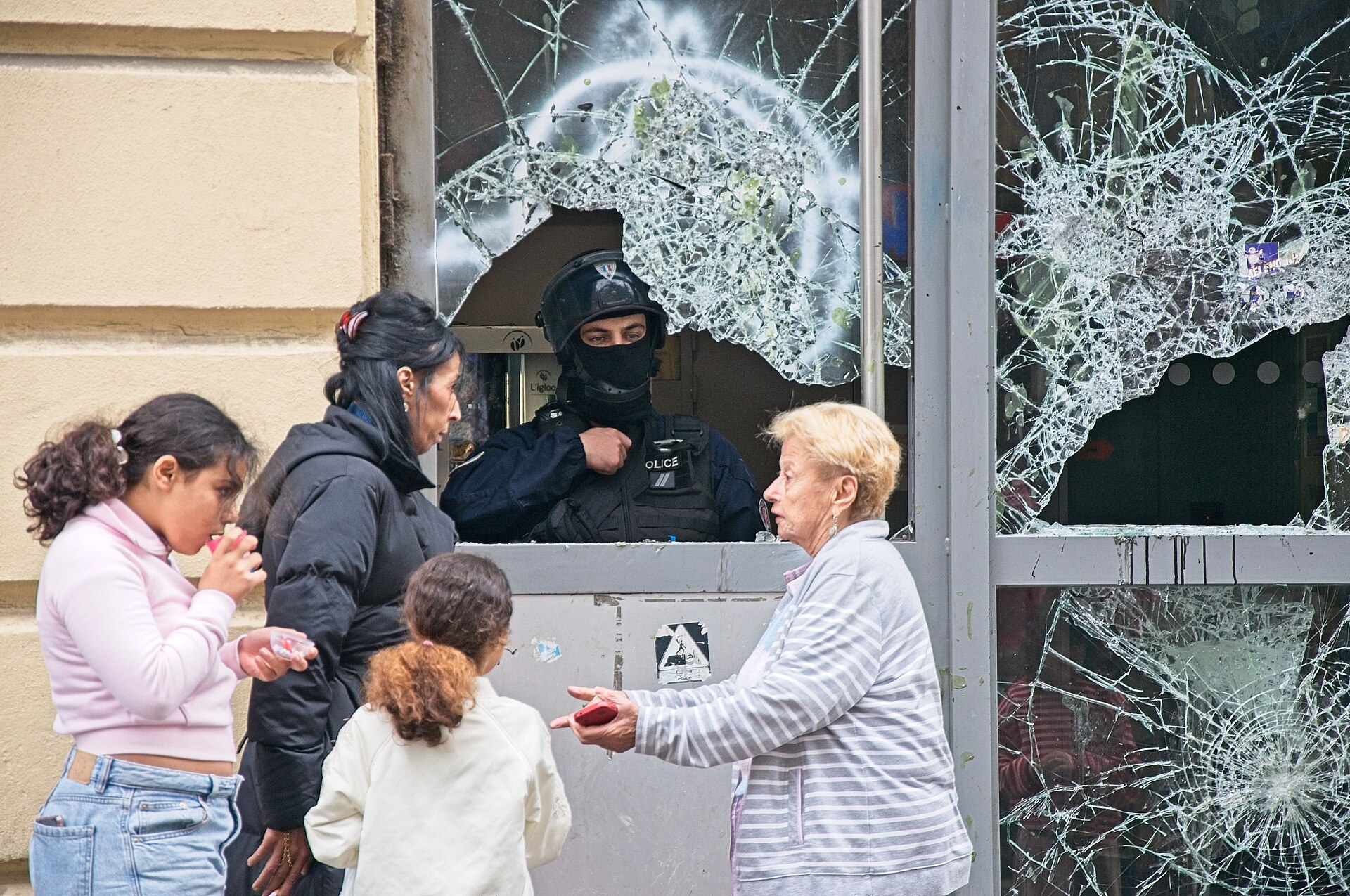
France’s escalating riots expose the dangers of political extremism, antisemitism and radical alliances, offering America a stark warning about the future of Western democracy.
23 October 2026
3.1 MINS
The one who is worthy of it all is awakening his Church to be captivated by him, so that we will honour one another and share his gospel with humility and courage.



Thank you Kurt for highlighting the ongoing persecution of Said and the difficulties in gaining a visa from Egypt
I wonder why the Immigration Dept brings in a lot of people without screening them properly but won’t bring in Said who is being tortured and obviously needs asylum.
Great article dear brother!!!!