


The Right-Wing Turn to Critical Theory
Contrasting Ben Shapiro’s principled realism with Tucker Carlson’s conspiratorial lens, this essay reveals how the right’s embrace of exposure over conviction threatens conservatism’s moral foundation and the culture of truth.
Every age tells itself a story about how truth is found and how lies are exposed. In ours, that story has turned inside out. The methods once used by the cultural left to deconstruct power have been adopted by some on the populist right, and suspicion has become the new virtue. What began as an academic style of critique has evolved into a public mood—a way of seeing the world in which every institution hides an agenda and every claim to truth conceals domination. But when moral judgment is replaced by exposure, and conviction gives way to irony, something essential is lost. The old conservative faith in transcendent truth has been replaced by a populist instinct for revelation without redemption.
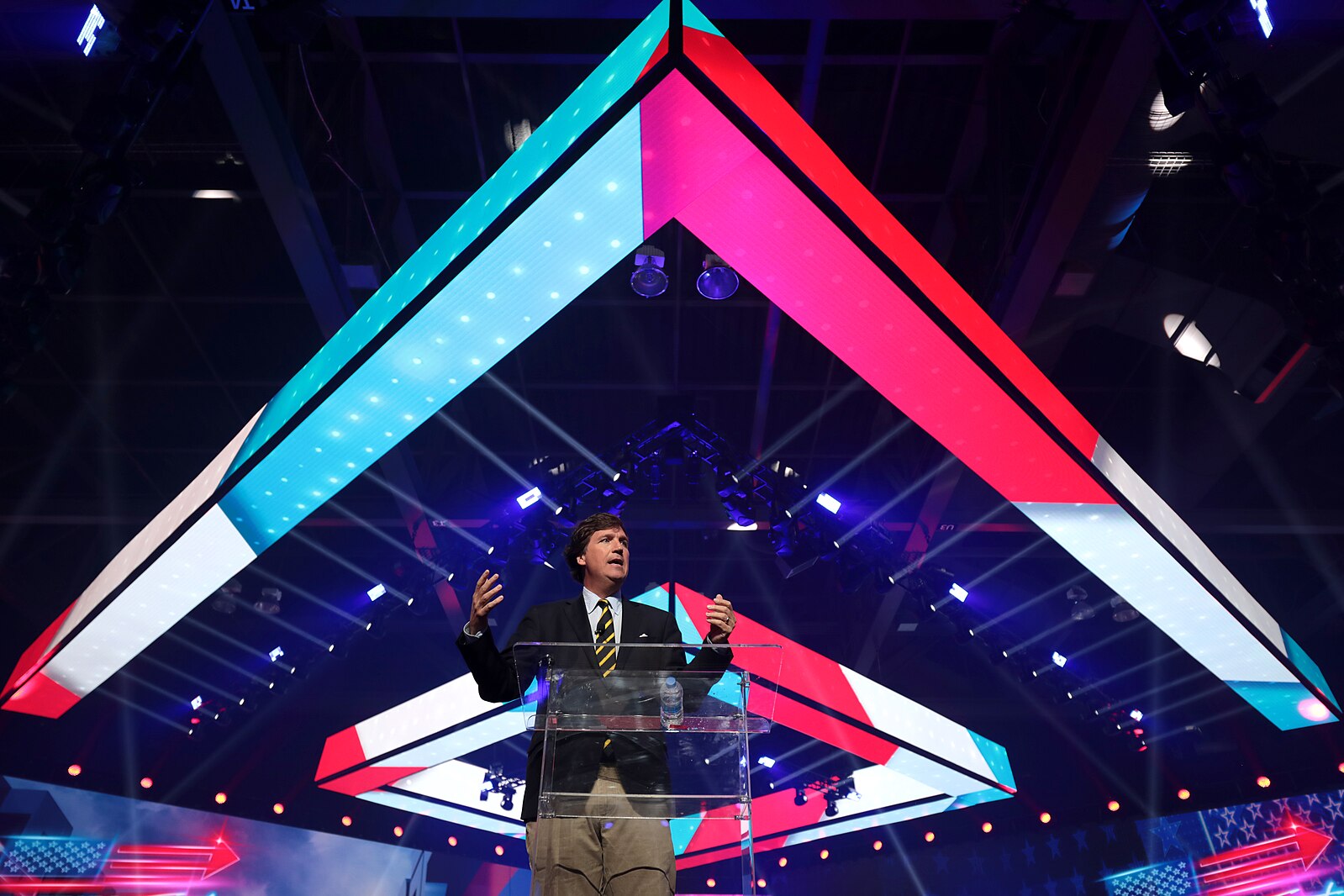
This essay explores that transformation through two of its clearest exemplars: Ben Shapiro and Tucker Carlson. Shapiro, heir to the classical and Buckleyan tradition, still speaks the language of moral clarity and objective truth. Carlson, shaped by the new spirit of suspicion, embodies what might be called right-wing critical theory—a populist inversion of the very philosophies conservatives once opposed. Right-wing critical theory is the practice of using the tools of leftist critique—suspicion of institutions, exposure of power, and rejection of authority—to attack the cultural elite while abandoning the moral realism that once gave conservative thought coherence.
Between Shapiro’s metaphysical confidence and Carlson’s conspiratorial hermeneutic lies the story of a movement that has traded conviction for exposure. This exchange has not only hollowed out conservatism’s moral vocabulary but also blurred the boundary between truth-seeking and narrative warfare. What emerges is a culture fluent in accusation but silent about meaning—a civilisation in which critique has replaced belief and revelation no longer leads to repentance.
The Collapse of Moral Clarity
Critical theory was born in the left-wing academies of the twentieth century as a weapon against the perceived injustices of capitalism, colonialism, and bourgeois morality. It taught generations of intellectuals to see social life as a network of power relations rather than a moral order grounded in truth. From the Frankfurt School to Michel Foucault, its prophets urged the “unmasking” of ideology—to reveal that claims to truth or virtue are usually camouflage for domination. What began as Marxist social critique gradually became a posture of suspicion toward all authority, all tradition, and all claims to universality. It was, as Paul Ricoeur famously called it, a hermeneutics of suspicion—a way of interpreting the world that assumes hypocrisy as the baseline and sincerity as illusion.
Today, that posture has migrated into the populist right. The slogans that once defined radical professors—“It’s all about power,” “The system is corrupt,” “Everything you’ve been told is a lie”—are now shouted from conservative airwaves. Tucker Carlson himself has said on-air that “the people in charge lie to you constantly,” and that “truth is whatever they say it is.” These are not simply media provocations; they are the axioms of a worldview. Carlson’s suspicion of official narratives, once a healthy form of scepticism, has hardened into a total critique—a belief that public truth itself has become a conspiracy. The tools of the left’s critical theory have been recast as weapons of the populist right.
To grasp how profound this transformation is, one must first contrast it with the older moral confidence that once defined conservative thought—a confidence still embodied by figures like Ben Shapiro.
Where Carlson’s conservatism is marked by doubt and suspicion, Ben Shapiro’s is anchored in conviction. Shapiro represents a fading but still vital species of conservatism—one grounded in the belief that reason can apprehend moral truth as surely as the mind can apprehend mathematics. His worldview flows from the classical and Judeo-Christian traditions that affirm the existence of natural law: the idea that human beings, by virtue of their rational nature, can discern universal moral principles. For Shapiro, facts precede feelings, and truth exists independently of power. His debates and commentaries, often sharp-edged to the point of abrasiveness, reflect his faith in argumentation as a path to moral clarity.
This moral realism situates Shapiro within a long lineage stretching from Aristotle to Aquinas to the American Founders. But in a more modern sense, he stands in continuity with William F. Buckley Jr., the architect of post-war intellectual conservatism. Like Buckley, Shapiro sees his role not merely as polemicist but as custodian of a moral tradition under siege. Both share a conviction that culture is ultimately a battle of ideas rather than of tribes, and that victory requires articulation, not merely outrage. Buckley faced down the nihilism of the New Left; Shapiro faces its postmodern descendants. Each sought to rescue conservatism from both anti-intellectual populism and moral relativism, insisting that truth must govern temperament.
Shapiro’s confidence in reason, like Buckley’s, is not naïve but disciplined. It rests on the conviction that civilisation is upheld by words rightly ordered—by the ability to argue from principle rather than passion. He believes that reason and revelation are allies in defence of the human person, and that clarity in speech reflects clarity in being. When Shapiro condemns relativism, he does so not merely as an academic failure but as a betrayal of the human soul’s orientation toward truth. His moral arguments about Israel’s defence of Western values or his insistence on biological reality in the gender debate are not merely policy positions; they are moral affirmations of a created order intelligible to reason.
That order is theological as well as rational. In the classical and biblical imagination Shapiro draws upon—though he seldom makes it explicit—human beings are not autonomous truth-makers but imago Dei, bearers of divine reason. To know truth is to participate, however imperfectly, in God’s own rationality. The loss of this conviction—the belief that reason mirrors the divine Logos—is what makes postmodern suspicion so corrosive. When truth is no longer grounded in the moral structure of creation, every argument becomes an act of will.
Shapiro’s worldview thus represents the final stand of metaphysical realism in American political discourse. In a culture that has psychologised truth—treating moral conviction as personal narrative—his insistence that truth is public, objective, and binding is revolutionary precisely because it is pre-modern. He is not merely conservative; he is the last heir of the classical and Buckleyan confidence that the universe has meaning before we interpret it.
The Rise of Right-Wing Critical Theory
Carlson’s moral universe, by contrast, is animated by suspicion. Over the past few years, he has moved from a traditional conservative framework toward what might be called a populist epistemology: a conviction that truth itself is suspect because it is spoken by the powerful. The journalist, the scientist, and the bureaucrat are not neutral authorities, but actors in a grand deception. He has said that “the news media’s job is not to inform you; it’s to control you,” a sentiment that captures his moral posture toward institutions. Here, Carlson’s reasoning begins to mirror that of the very thinkers conservatives once opposed. Like Foucault, he views knowledge as a tool of domination; like the Frankfurt School, he sees institutions as self-justifying structures of control.
This shift represents the emergence of what could be called right-wing critical theory. Its essence is not moral conviction but unmasking. The act of exposing hypocrisy becomes the highest moral act, even when no alternative vision of truth is offered. Carlson’s nightly monologues are less sermons than genealogies—tracing the corrupt lineage of every elite consensus. In this worldview, sincerity is suspect, authority is inherently deceitful, and meaning is always political.
Carl R. Trueman’s commentary on the Carlson–Fuentes exchange captures this moral shift with precision. As Trueman observed, the conversation was not an exploration of truth but an exercise in performance—a ritual of shared grievance rather than an act of inquiry. Carlson presented himself and Fuentes as victims of elite persecution, crafting a narrative of mutual alienation. But what was striking was not what was said but what was not said: no moral challenge to Fuentes’s antisemitism, no discomfort with his admiration for Stalin, no effort to clarify or refute evil. Carlson’s silence was itself the message.
Trueman interprets this as a symptom of a deeper philosophical malaise. In the critical-theory mindset, moral dialogue ceases to be about truth and becomes about signalling authenticity. The goal is not understanding but vibe. By avoiding confrontation, Carlson transformed the interview into a shared performance of rebellion—an aesthetic of transgression divorced from ethical substance. In doing so, he replicated the logic of the anti-humanism he should have opposed.
The Carlson–Fuentes encounter reveals the transformation of evil from a moral to an aesthetic category. When morality collapses into performance, evil no longer horrifies—it fascinates. The moral order once judged by truth is now judged by style, and transgression becomes virtue’s counterfeit. This is not mere hypocrisy; it is the moral psychology of nihilism made televisual.
At the root of this crisis lies anti-humanism—the denial that there is a given human nature with moral significance. Both left and right versions of critical theory treat “humanity” as a construct of power, not a reality. Once that assumption takes hold, every claim to dignity or justice dissolves into language games. Without a stable concept of the human person, there can be no universal ethics, only competing narratives of grievance.
Trueman identifies this as the underlying pathology of the modern world: the abandonment of the idea that truth transcends history. In such a world, persuasion becomes impossible because there is no common measure of reason; all that remains is power and affect. When Carlson refuses to challenge Fuentes, it is not only a moral lapse—it is the enactment of this metaphysical despair.
The crisis of truth in our politics is ultimately a crisis of anthropology. The death of moral clarity follows the death of man as a metaphysical category. Once the self replaces the soul, discourse loses its reference point, and the moral imagination collapses inward. The right’s flirtation with critical theory is therefore not a betrayal of conservatism—it is the culmination of modernity’s disintegration of the human.
This divergence between Shapiro and Carlson thus mirrors the fault line running through conservatism itself. Shapiro’s realism still believes that truth is a structure of the cosmos; Carlson’s populism believes that truth is a function of power. The one operates with moral grammar; the other with moral suspicion. In Shapiro’s world, reason orders the soul. In Carlson’s, resentment orders the crowd.
This division is not merely generational or tactical; it is metaphysical. Shapiro defends the classical synthesis of truth and virtue; Carlson dramatises the postmodern synthesis of victimhood and authenticity. Together, they reveal a movement at war with its own philosophical inheritance.
The true crisis of the right is not political disunity but epistemic disinheritance. Having lost faith in truth as a transcendent good, conservatism has become a mood rather than a moral vision—a coalition of grievances sustained by nostalgia for the certainty it can no longer justify. This is why Carlson’s suspicion feels more authentic than Shapiro’s reasoned arguments: in a post-truth culture, emotion feels truer than truth itself.
The Endgame of Suspicion and the Path to Renewal
The migration of critical theory to the right does not stop at suspicion; it metastasises into conspiracy. Once truth itself is treated as a mask for power, every event begins to demand an ulterior explanation. What used to be political analysis becomes a hermeneutics of paranoia. Institutions can no longer be wrong—they must be lying. Leaders cannot be mistaken—they must be plotting. The logic of suspicion, untethered from moral realism, inevitably descends into a cosmology of deceit.
This is why the new right finds conspiracy theories not as intrusions but as logical conclusions. A worldview that rejects transcendent truth must still explain coherence somewhere, and so it manufactures it from below. Conspiracy becomes a counterfeit providence—a way to restore meaning in a disenchanted moral universe. When God disappears, someone must be in charge, and the “they” of the conspiracy supplies the missing sovereignty. Suspicion of power, without belief in truth, creates its own theology: the invisible cabal replaces the divine Logos.
In the moral universe of critical theory, evil is systemic; in the populist inversion, it becomes personalised. Both forms reject moral responsibility and dissolve agency into structure. For the left, “the system” explains everything; for the right, “the elites” explain everything. What disappears in both is the concept of sin as a universal human condition. When human fallenness is replaced by institutional malice, the world divides neatly into victims and villains—each side convinced that the other is orchestrating history.
This is the most dangerous inheritance of critical theory: it gives moral suspicion the authority of revelation. The conspiratorial mind sees itself as virtuous precisely because it doubts. To question is to purify; to expose is to redeem. In this way, conspiracy becomes a form of moral theatre, a substitute for faith. And because it operates without the disciplines of evidence or humility, it cannot be corrected—only intensified.
The paradox is tragic. What began as a defence against deception becomes a machinery of self-deception. In rejecting transcendent order, the new right inherits the chaos it fears. Without a doctrine of truth, suspicion becomes its own idol, and the mind once committed to critique ends in captivity to its own imagination.
The migration of critical theory from the left to the right signals the exhaustion of modernity’s faith in reason. Carlson’s right-wing critical theory exposes corruption but cannot articulate goodness. Shapiro’s moral realism retains coherence but feels antiquated in a world addicted to irony. Between them lies the space where moral culture once lived.
If the conservative movement continues to exalt transgression over truth, it will inherit the world of Foucault rather than of Burke. The task is not to perfect critique but to recover conviction—to believe again that truth exists, that human beings can know it, and that freedom depends on fidelity to it. The endgame of suspicion is despair; the beginning of renewal is wonder.
The West will be saved, if at all, not by new ideologies but by the re-enchantment of truth. The final rebellion is not against power but against nihilism itself—the rediscovery that to know the truth is to participate in the divine order of being. Only when conservatives remember that will moral clarity cease to be a slogan and become, once more, a way of life.
___
Republished with thanks to The Times of Israel. Image courtesy of Gage Skidmore/Wikimedia Commons.
3 Comments
Leave A Comment
Recent Articles:

27 October 2026
1.5 MINS
Labor’s Digital Duty of Care Bill threatens free speech, empowers covert online surveillance, and imposes potentially burdensome regulations on Australian businesses.

27 October 2026
10.3 MINS
As Tasmania and Western Australia consider conversion therapy bans, a former LGBT+ ministry leader warns of threats to religious freedom, personal choice and Christian discipleship.

27 October 2026
4.9 MINS
Nine Christians have been killed in a terrorist attack on a Jordanian church, prompting fierce condemnation, demands for justice and renewed concerns about religious persecution.

27 October 2026
3.6 MINS
For 25 years, the Mount Moriah Trust has supported struggling Christians across the Holy Land, bringing practical assistance, encouragement and hope to believers facing hardship and persecution.

27 October 2026
1.3 MINS
Moira Deeming’s re-election campaign has energised Family First supporters, raising $90,000 as the party prepares for a crucial Victorian election and a potential breakthrough.

27 October 2026
3.1 MINS
As the disciples discovered through a huge haul of fish, we can trust Jesus for a net-breaking, boat-sinking catch of people.
26 October 2026
4.5 MINS
OECD chief Mathias Cormann warns Australia is losing its competitive edge, as excessive regulation, housing pressures, immigration challenges and declining public trust threaten national prosperity.



How very interesting. Will ponder this. I attended CPAC a couple of years ago with an interest in finding what common thread Conservatives have that could hold them together. I came away thinking not much…… and it was somewhat confusing.
Another great piece Tim. Well done again.
As a believer in Yeshua who keeps His commandments I have been flabbergasted by the accusations against believers. Lucy Hamilton wrote an article in AIMN warning of right wing extremism of Australian believers! Apparently we are fascists, chauvinistic racists according to comments in 2022 by an unnamed opposition political staffers. The intellectual elitist language in her article would not be understood by many.
The article referred alot to American think tanks and lobbyists. Most Australians would have little knowledge or interest in what was written.
Why is Canberra Declaration so disconnected to the Australian Christian landscape? What is happening in Australia is rarely investigated, analysed or explored.
The truth is that Australian believers are starved of solid relevant timely spiritual content. at least this is what has been reported by visiting international ministries.