


The Moment the Illusion Broke: America’s Blindspots and the Battle for Legitimacy
Trump’s terrorism filing exposes America’s overlooked vulnerability: institutions that grant legitimacy too easily. This article reveals how ideological influence exploits structural gaps in open societies—and why transparency now matters most.
The moment President Trump filed the paperwork to designate the Muslim Brotherhood as terrorists — and possibly groups some officials see as similar — the conversation in Washington shifted. What had long been an uneasy whisper among analysts finally surfaced into daylight: America’s deepest vulnerabilities are not at its borders, but inside its institutions.
For years, the Brotherhood’s strategy in the West operated in the unlit spaces between civil society, law, academia, and media—spaces Western liberals treat as sacred and therefore untouched. Trump’s filing forced the United States to look directly at something it preferred to rationalise away: an ideological movement that understands open societies more intimately than the people who built them. The confrontation, after decades of evasion, has finally begun.
People talk about the Brotherhood’s influence in policy, law, institutions, and public messaging, but that list misses what’s actually happening. These aren’t separate lanes. Instead, they feed each other. When they get access to policymakers, they gain legitimacy. That legitimacy helps them in court. Court wins open the door to institutions. Then, once they’re inside, they shape the narrative to make themselves look even more legitimate. It happens fast. This is how influence moves from the margins to the centre without most people noticing. It’s not a straight line; it’s a circle that keeps strengthening itself. And unless you see how that system works, you won’t understand why the Brotherhood’s influence is so difficult to root out. It’s built to last.
Leveraging Legitimacy
A case study illustrates this far better than theory. In 2011, during the federal review of counter-extremism training materials, advocacy organisations and civil-rights groups raised concerns that some government training conflated mainstream Islam with extremism and used biased or inaccurate terminology to describe Muslim communities.
Their pressure led to a lot of terms being stripped out of official documents, not because the government decided the ideas were wrong, but because agencies were more afraid of looking biased than of being clear. That change in language ended up shaping how several departments looked at threats for years. No single group planned it, and it wasn’t some grand conspiracy. It happened because the system favoured safe-sounding language over honest accuracy.
What makes this model particularly effective in the United States is not ideology but structure. America’s First Amendment creates a nearly limitless space for advocacy, an extraordinary achievement, but also a wide-open terrain for actors skilled at framing political agendas as civil rights. American philanthropy is wide open. It’s decentralised, and there’s no real ideological screening, which makes it easy for groups to present themselves as cultural or humanitarian and tap into serious resources. In a system like ours, legitimacy isn’t handed out from the top—it spreads through networks and relationships.
Europe works differently. France can shut down organisations under laïcité. Germany can put movements under domestic intelligence watch. Britain’s PREVENT program has tools the U.S. doesn’t. America’s openness is one of its strengths—and one of its vulnerabilities.
The harder truth is that Western institutions didn’t just allow this ecosystem to grow—they played a part in creating it. Universities took money without asking many questions about what came with it. But the most disturbing part is not what the Brotherhood built—it is what Western institutions helped them build. Universities took money with no curiosity about strings attached. Philanthropies gave out grants without taking a serious look at how these groups were actually set up. DEI offices put certain people forward as “representative” simply because they fit the system, not because anyone chose them.
They weren’t infiltrated. They weren’t coerced. Stunningly, they simply opened the door and handed out authority because it felt morally safe. And the media echoed smooth, Western-sounding narratives without realising that speaking that language is part of the strategy. It all created the illusion of organic legitimacy, when in reality, much of it was institutional projection and fear.
Nothing clandestine was required. Institutional vanity, risk-aversion, and moral confusion created the perfect runway. These weren’t lapses in security; they were lapses in imagination. Our institutions assumed everyone played by the same rules. They never stopped to consider that legitimacy could be used as a tool.
Seen through the wider geopolitical lens, the pattern becomes unmistakable. The Brotherhood is not an outlier. It is an early model of a new kind of transnational ideological movement: decentralised, adaptive, fluent in the soft-power tools of modern liberalism. In the 20th century, power meant territory. In the 21st, power means legitimacy. The actors who understand this shift—state or non-state—are the ones most capable of shaping the century ahead.
The designation debate, mistakenly framed as a Trump-era controversy, is actually the first major test of whether America has the conceptual capacity to understand the ideological contest it is already inside.
Which brings us to the real subject of this moment: America’s own structural fault lines. Not political factions. Not cultural disagreements. But the deep, often invisible vulnerabilities that ideological actors can exploit with a sophistication democratic institutions never anticipated.
The Four Fault Lines of Open Societies
1. The Legitimacy Gap
Open societies often grant trust faster than they check what’s behind it. If someone speaks the language of rights and representation well, they’re treated as credible long before anyone looks at their actual beliefs.
2. The Transparency Paradox
Democracies expect transparency from governments, but almost never from civil-society groups. That leaves huge open spaces where influence can operate with little public scrutiny.
3. The Philanthropy Loophole
Billions in donor money flow into NGOs, universities, and cultural groups with almost no ideological checks. That lets influence take root through funding pipelines, not persuasion.
4. The Representation Trap
Bureaucracies end up elevating certain people as the “official voices” of whole communities, giving them authority through shortcuts rather than through any real democratic process.
These are the structural openings the Brotherhood’s model has illuminated, not through coercion, but through an intelligent reading of Western incentives.
The real issue isn’t just whether Trump’s proposed designation is justified. The real issue is what a democracy does once it realises it hasn’t been watching its weak spots. And the answer is actually simple: open societies have to expect transparency from any institution that holds influence, government or not, ideological or civic, if they want to stay open.
Transparency without turning everything into a crime. Scrutiny without assuming the worst about everyone. And a basic understanding of how institutions work—seen as a civic skill, not a partisan tool.
Because the deeper truth, the one that carries moral weight, is that a free society can survive disagreement, dissent, even radicalism. What it cannot survive is blindness. The real danger is not an ideological movement, but a democracy that no longer recognises how its own openness can be used against it.
Trump’s filing did not create that danger. It revealed it. And now the country must decide whether it has the courage to see what has been there all along.
___
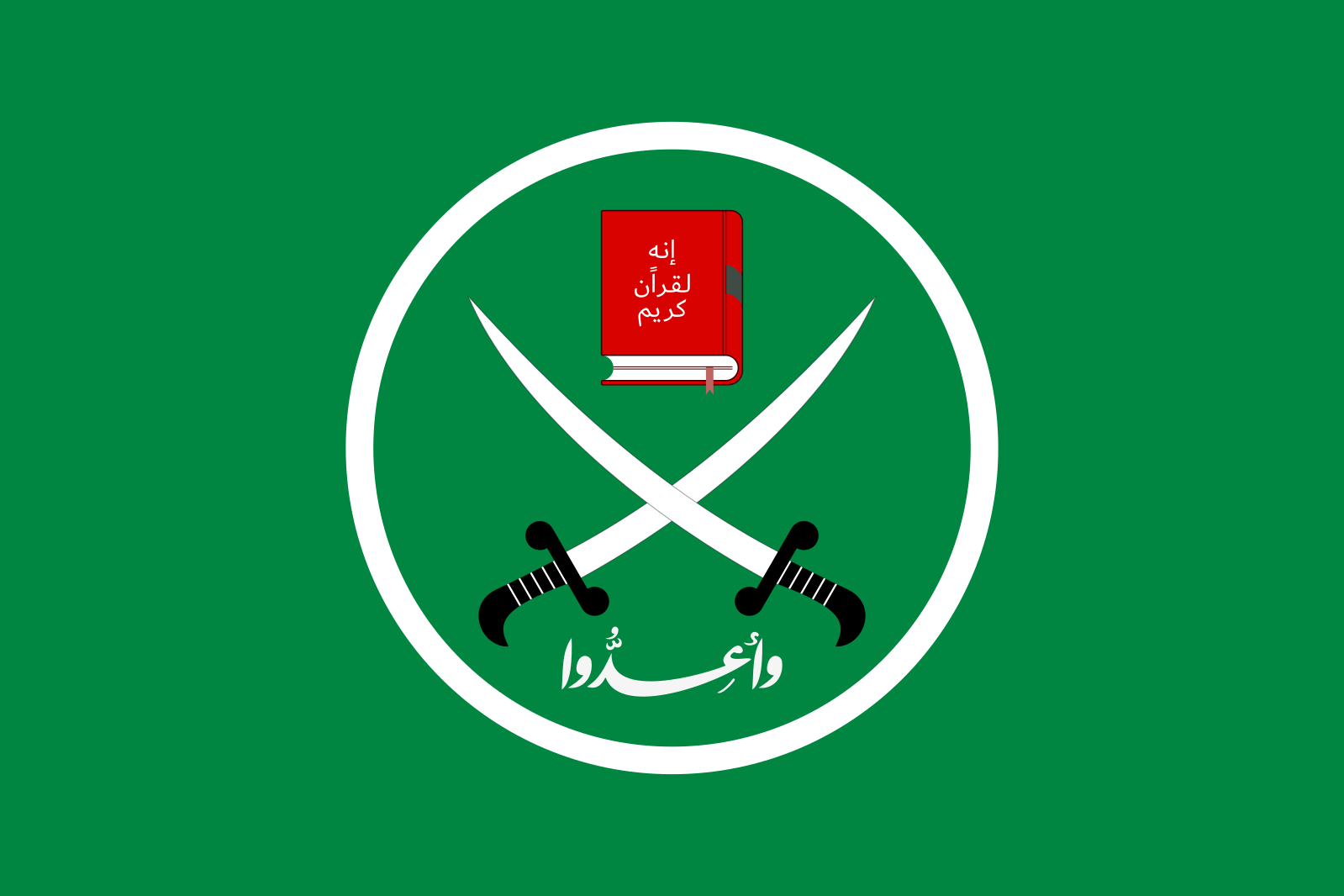
Image courtesy of Wikimedia Commons.
Recent Articles:

27 October 2026
1.5 MINS
Labor’s Digital Duty of Care Bill threatens free speech, empowers covert online surveillance, and imposes potentially burdensome regulations on Australian businesses.
27 October 2026
10.3 MINS
As Tasmania and Western Australia consider conversion therapy bans, a former LGBT+ ministry leader warns of threats to religious freedom, personal choice and Christian discipleship.

27 October 2026
4.9 MINS
Nine Christians have been killed in a terrorist attack on a Jordanian church, prompting fierce condemnation, demands for justice and renewed concerns about religious persecution.
27 October 2026
3.6 MINS
For 25 years, the Mount Moriah Trust has supported struggling Christians across the Holy Land, bringing practical assistance, encouragement and hope to believers facing hardship and persecution.
27 October 2026
1.3 MINS
Moira Deeming’s re-election campaign has energised Family First supporters, raising $90,000 as the party prepares for a crucial Victorian election and a potential breakthrough.
26 October 2026
4.5 MINS
OECD chief Mathias Cormann warns Australia is losing its competitive edge, as excessive regulation, housing pressures, immigration challenges and declining public trust threaten national prosperity.
26 October 2026
2.5 MINS
Nation First exposes the rush to weaponise the Haines attack against Pauline Hanson, conservative voices and men before investigators established a motive.


