


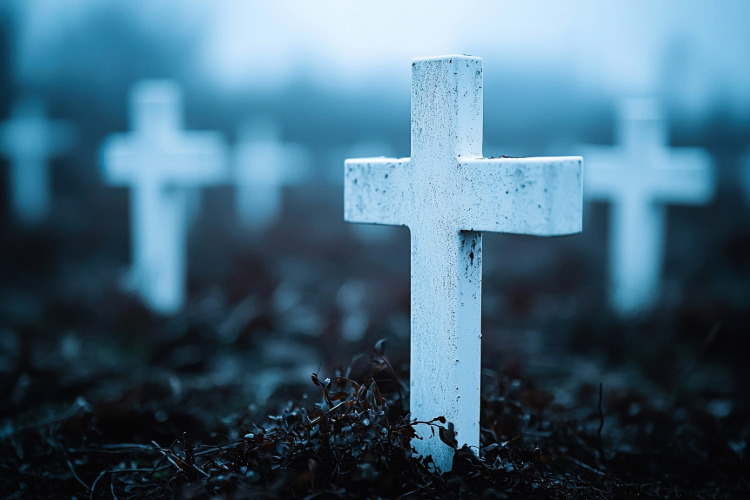
The Forgotten Genocide: Why the World Ignores the Most Persecuted People
While the world proclaims “never again,” Christian persecution is ignored. This article exposes the ideological silence surrounding global anti-Christian violence — and calls the church to remember, speak, and remain faithful.
The modern world prides itself on moral vigilance. Political leaders, international institutions, and media organisations often speak of human rights and the promise of “never again.” Genocide is publicly condemned as the ultimate evil. Yet one of the most widespread and persistent forms of mass persecution in the world today is met not with outrage, but with indifference. Christians are imprisoned, displaced, and killed in vast numbers — and the world largely refuses to remember.
This silence is not born of ignorance. It is ideological.
Across the Middle East, Africa, and Asia, Christians face sustained and often brutal persecution. In Nigeria, Christian villages are attacked and erased by Islamist militias. In China, churches are monitored, demolished, and brought under state control. In North Korea, Christianity is treated as a crime against the regime itself. Ancient Christian communities in Iraq and Syria have been driven from lands they inhabited for centuries. These facts are not hidden. They are simply ignored.
Against the Narrative
The reason is uncomfortable. Christianity does not fit the modern hierarchy of victimhood. In a moral climate shaped by political narratives rather than truth, some suffering is amplified while other suffering is dismissed. Christians are often viewed as representatives of a faith that the modern West considers regressive or obstructive. Their persecution is therefore reframed as cultural conflict, extremism, or unfortunate instability — anything except targeted religious hatred.
History reinforces this pattern. The twentieth century saw unprecedented levels of Christian persecution under explicitly atheistic regimes. Millions were imprisoned, tortured, or executed in the name of progress, unity, or revolution. Yet these atrocities rarely occupy the same moral space in public memory as other genocides. The difference is not the scale of suffering, but the identity of the victims. Christianity stands in direct opposition to any system that demands ultimate allegiance to the state.
Scripture prepares believers for this reality. Christ warned His followers that they would be hated for His name’s sake. The hostility directed toward Christians is not merely political or cultural; it is spiritual. It is resistance to the authority of Christ and to the truth His church proclaims.
The Western church is particularly vulnerable to forgetting. Comfort and distance dull moral responsibility. Hebrews exhorts believers to remember those who are imprisoned as though they themselves were bound. This is not a call to sympathy alone, but to identification. Forgetting the persecuted church is not neutral; it reflects a quiet accommodation to the values of the world.
Governments choose diplomacy over truth. Media outlets avoid stories that disrupt preferred narratives. Churches retreat into private faith to avoid controversy. In each case, silence allows persecution to continue. Evil is not only committed by those who wield violence, but by those who refuse to name it.
An example of this horrific violence perpetrated upon Christians was in 2015, where the world briefly glimpsed this reality on a Libyan shoreline. Twenty-one Coptic Christian migrant workers were forced to kneel in the sand by ISIS militants. They were dressed in orange, marked for death, and given a final chance to deny Christ. They did not.
As the knives were raised, many whispered the name of Jesus. Their blood flowed into the sea, and their final testimony was not one of terror, but of faithfulness. They were ordinary men — fathers, sons, labourers — murdered not for politics or war, but for the simple confession that Christ is Lord. The world watched, recoiled, and then moved on.
What Then Must Christians Do?
The mass killing of Christians is not merely a humanitarian tragedy; it is a theological reality. Scripture does not treat persecution as an aberration, but as an expected mark of faithfulness in a world opposed to Christ. While believers are warned against speculation about times and seasons, they are commanded to remain watchful and steadfast.
Christians are called, first, to remember — deliberately and publicly. Second, to speak truthfully, naming persecution as persecution even when it is inconvenient. Third, to pray and to support the suffering church in tangible ways. Above all, persecution must not drive fear or silence, but faithfulness. The suffering of the church testifies not to Christ’s weakness, but to His authority.
The blood of Christians has never been wasted. It has always borne witness.
The world may choose to forget Christian blood, but the church must not. To forget those who suffer for Christ is to forget Christ Himself. Faithfulness demands memory, courage, and clarity.
“Remember the prisoners, as though in prison with them, and those who are mistreated, since you also are in the body.”
— Hebrews 13:3
History will record not only acts of violence, but the silence that allowed them to continue. May the church be found faithful in remembering what the world refuses to see.
8 Comments
Leave A Comment
Recent Articles:
8 October 2026
3.6 MINS
John Anderson warns that Australia’s decline is rooted in spiritual and cultural disintegration, calling for a recovery of Christian foundations, social cohesion and national purpose.
8 October 2026
1.6 MINS
A blackout at Australia’s $150 million Pre-COP climate summit in Fiji delivered an awkward lesson in energy reliability to delegates preaching the renewable transition.
8 October 2026
4.1 MINS
Aboriginal communities in Central Australia already know the gospel message. What they need now, Robyn Murray writes, is discipleship, encouragement and Christians willing to pray and participate.
8 October 2026
4.1 MINS
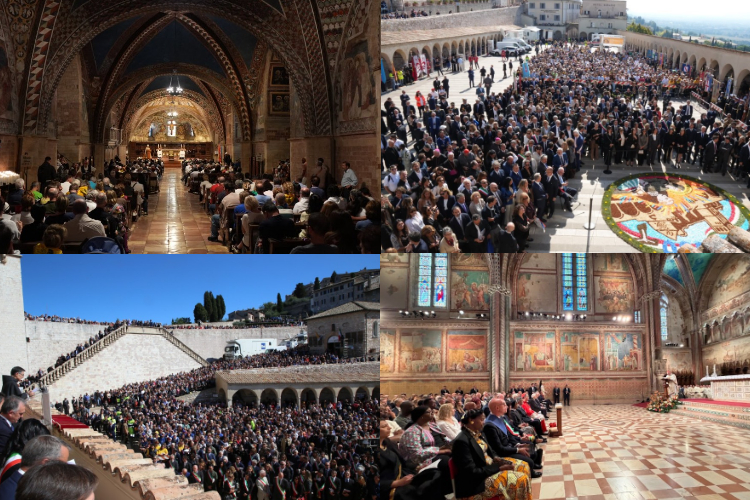
Italy honours St Francis of Assisi 800 years after his death, celebrating a saint whose devotion to Christ, radical simplicity and message of peace continue to shape generations.
8 October 2026
4 MINS
Christ’s authority and concern is not limited to the four walls of the church. They extend to the life of the nation, and we are called to take up our part in seeking its righteousness.
7 October 2026
3.6 MINS
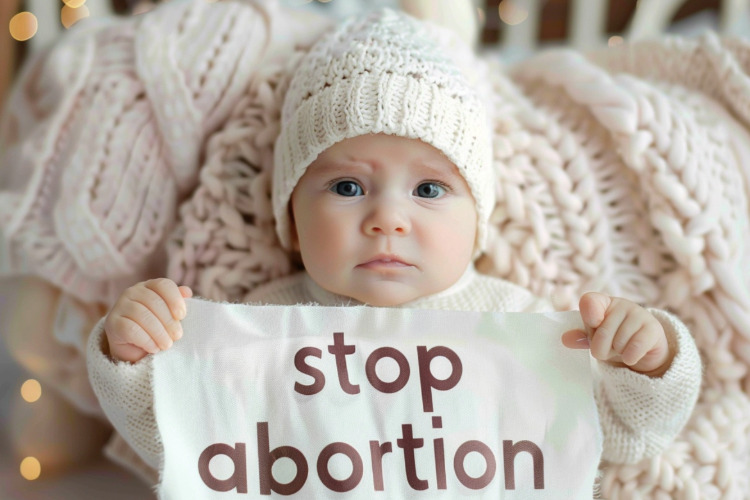
Victoria’s 18th March for the Babies will bring families together to peacefully affirm the value of every human life and call for a cultural change towards life.
7 October 2026
1.5 MINS
Across the Middle East, North Africa and Anatolia, Christianity once shaped entire civilisations. Could Britain’s Christian heritage likewise become a memory rather than a reality?



Thank you Riley for this timely and shocking reminder. Tears ….
Previous in the sight of the LORD is the death of His saints.
Thank you for writing this article Riley!
Christians are very much the forgotten people. While the whole ‘never again’ narrative is all very flavor of the month, and Christians are going around wearing kippahs and donning tzitzits and blowing shofars, it’s great that someone actually has the fortitude to go against all that and write something that focuses our attention on Christ Jesus and the plight of fellow believers, those who believe in Christ the Messiah, our risen Lord!
Thankyou to Daily Declaration for publishing this. Hopefully you don’t get into too much trouble from your donors!
‘Praying for the Persecuted Church’, published by BarnabasAid shows the breadth and depth of what our brethren in so many parts of the world – beginning with Afghanistan and ending with Yemen – experience for their faith in the Lord Jesus. How can we forget them?
It’s been a rough couple of days for Zionists.
First they had their wishes overturned at the Adelaide Festival. While they’d originally been successful in bullying someone off the program, that decision was overturned, due to grassroots everyday people saying we don’t want the Zionists running our society.
Second, their anti-Semitism bill no longer had bi-partisan support. A coalition of Christians and people from every other faith are opposing the bill, while the Zionists are left as the only faith group supporting it.
Third, we now finally have articles like this published, which must irk the Zionists untold. Finally it’s not just all this ‘never again’ Zionist stuff where we are told to unconditionally support the nation of Israel and Netanyahu.
They’ve successfully infiltrated our churches and our organisations and grabbed the agenda. At my church we even had someone drape an Israeli flag over the pulpit and he preached about how we had to pray for Israel while his star of David covered the Cross. And all he did was preach from the OT and talk about covenants and the Jews right to the land.
Meantime Jesus wasn’t mentioned once.
So thankyou Riley for being a part of turning the tide. As Christians we need to remain strong and not let Zionists take us over.
We all know who wants to destroy Christianity but my lips are sealed because I can face jail, etc. Free debate is not allowed because you may receive (like me ) and like Ayaan Hirsi Ali, a Death Threat. Like Charlie Kirk , Christians are to be exterminated—even Trump has received more death threats just the other day from the Iranian Regime. I wear with pride the Coptic Cross a driver gave me. We must stand up for our Right to practise Christianity.
*crickets*
Good on you Riley. While other new writers on here always receive a heap of supportive comments from the Mahlburg & Muehlenberg crowd (backed up by the likes of Farnik and Marsh) please don’t feel down that you haven’t received the same accolades.
You have done the right thing by writing this article. You have tread on their toes. The fact that you have actually been able to get this published is a credit you you and your fortitude.
You came out all guns a blazing:
While the world proclaims “never again,” Christian persecution is ignored.
Right there! Five words into your article, a direct swipe at the Leaches and their crowd.
Sadly so many of these people like Leach and Pellowe and that guy from freedom has a voice (I forget his name) have derailed Christianity.
Hang in there Riley! We need to fight back against their evil agenda.
Not quite…
https://dailydeclaration.org.au/2025/12/23/propaganda-nigerian-genocide/
https://dailydeclaration.org.au/2025/12/24/persecuted-church-red-november/
https://dailydeclaration.org.au/2025/11/05/trump-islamic-terrorists-nigeria/
https://dailydeclaration.org.au/2025/10/16/chinese-communist-party-arrests-pastors/
https://dailydeclaration.org.au/2025/10/03/bill-maher-nigeria/
https://dailydeclaration.org.au/2025/09/17/escalating-attacks-nigeria/
https://dailydeclaration.org.au/2025/06/17/100-christians-slain-nigeria/
And yet still no show of support for young Riley and his excellent article.
As someone who grew up in a dispensationalist church, I know what it’s like be be indoctrinated with the ‘Israel first’ rhetoric. But young people aren’t buying the diabolical dispensational diatribe anymore.
As one Gen Z uni student asked me last year after attending a ‘freedom has a voice’ rally: ‘So they want us to believe that God had plan A – that Jesus would be accepted by all the Jews, and because that didn’t happen, God hit pause and went to plan B – us, the Gentiles – we’re just a parenthesis?’
Now I know that Kym always suggests that anyone who critiques dispensationalism is calling God a liar (which I’m not by the way) and always engages in the strawman of labelling us as proponents of ‘replacement theology’… which is not the case either – but a nice little debating tactic – the trouble with dispensationalism is it severely limits the sovereignty of God.
It’s a ‘weak’ god theology.
They’re desperate to rebuild the temple so that sacrifices can recommence, because the nasty Romans destroyed the 2nd Temple and that was never God’s intent.
No wonder young people are rejecting this theology.