


As U.S. Officials Race to Intervene, the Nigerian Nightmare Continues
Militants storm a Nigerian church, abducting dozens and shattering families, as survivors plead for help. With government denial and rising terror, faith and international pressure become desperate lifelines.
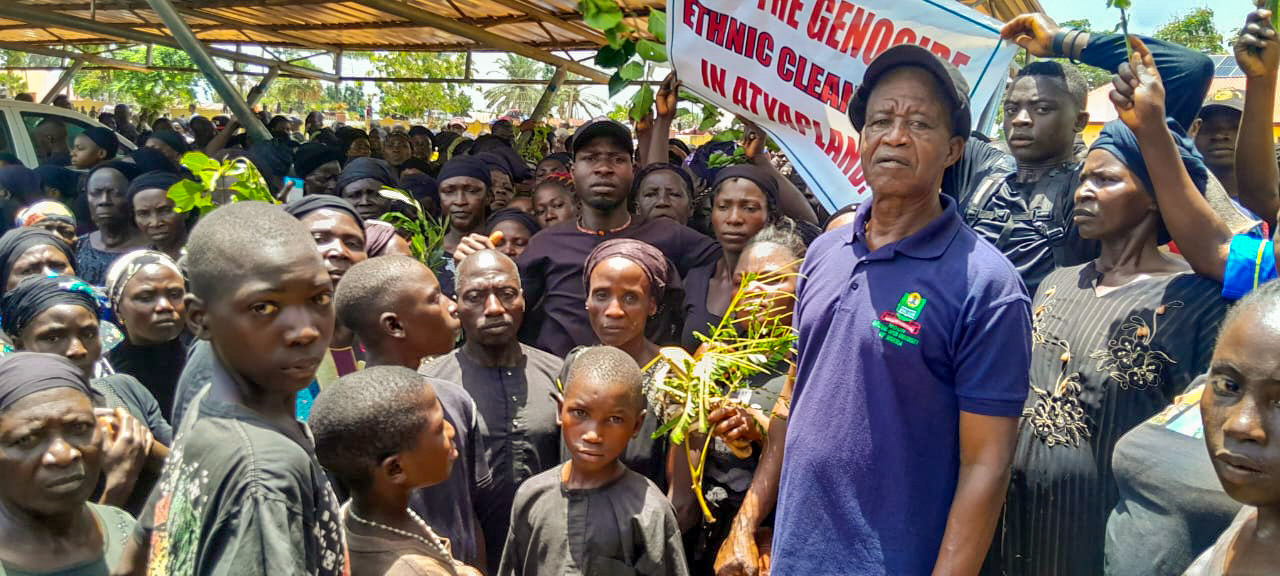
“We’ve been told not to cry,” Alice Joseph explained as the tears ran down her face. Her arms, at points waving emphatically above her head, were a sign of just how distressed she and the other Nigerian women were. A quarter of their village had vanished into the bush days earlier, hostages of the black-robed terrorists who stormed their church in a chaotic scene this month. Inside the simple sanctuary, chairs are still overturned — frozen in time, like so many parents, wives, and husbands, waiting anxiously for the people to return.
“Everyone is on edge,” Kumiwali’s village chief admits to the few reporters brave enough to visit. “People are confused and don’t know what to do. Some haven’t eaten. There are entire families who are missing.” As many as 160 are unaccounted for, members of multiple churches, the locals say.
“They first kidnapped people from another village, then came to us,” Alice cried. “People who couldn’t run, like the elderly women, were beaten. They took away the youngest. They took them to the bush. For the past four years, they [came] and kidnap[ped] my husband and children. And now this year, my parents.” An agonised expression crosses her face before she adds, “… I’m from this village. I married in this village. I now have no solace but God.”
The attack, the first on a grand scale since the Trump administration pounded ISIS forces in Nigeria at Christmas, has rattled the southern part of the country, which had hoped, after America’s involvement, that the roaming Fulani and Boko Haram murderers were finally on the run.
Ishaku Kurmin, who was one of the dozen fortunate enough to escape his captors, described a horrific scene of men on motorcycles creating an armed and impassable barricade. “They surrounded the village entirely. If you run to one side, they’ll be there. If you run to another side, they’ll be there. They took us to another church. There they beat us and took us to the bush.”
Families Vanish as Officials Deny Reality
Complicating matters — and enraging the victims’ families in Kumiwali — the Nigerian police initially denied the reports. Days later, in international damage control, officials backtracked, saying their comments were “misinterpreted” and were only meant to “prevent unnecessary panic while facts were being confirmed.”
The disturbing response only stoked fears that the nation is once again turning its back on the evil stalking Christians in Nigeria’s remotest areas. Kenneth Ononeze, a Kaduna state pastor, was livid. “What’s federal and state government doing to rescue them?” he demanded to know. “Are they still living in denial that Christian genocide is not going on?”
The Trump administration certainly isn’t. In Davos, the president made it clear that these massacres and abductions were still very much on his radar. “In Nigeria, we’re annihilating terrorists who are killing Christians. We’ve hit them very hard. They’ve killed thousands and thousands of Christians.” If they continue to slaughter believers, he reiterated to The New York Times this month, “it will be a many-time strike.”
As if to prove that point, the White House sent the second-highest ranking officer of the U.S. Africa Command, Lt. General John Brennan, to Nigeria to work with the local government to hunt down the radical Islamists preying on innocents. The U.S. military, he told Fox News, is becoming “more aggressive” in stopping the bloodshed — not just in Nigeria but in Burkina Faso, Niger, and Mali. The joint security meeting last week zeroed in on the jihadists who’ve been terrorising villages for years. Some of that involves increased intelligence sharing, Brennan pointed out, so that they can “attack key terrorist targets.”
“From Somalia to Nigeria, the problem set is connected. So we’re trying to take it apart and then provide partners with the information they need. … It’s been about … providing them equipment and capabilities with less restrictions so that they can be more successful.”
The special forces leader underscored, “We’re all about enabling Nigerians to solve Nigerian problems. We want to ensure that they remain a security anchor for all of West Africa, and they do too. And so it’s in our mutual interest that we work together.”
Pressed on whether this latest brutality could trigger a U.S. response, defence officials have been coy. “That’s a question for the White House. But I can tell you our Nigerian partners are asking for more of our help. And so we’re going to give it to them.”
U.S. Pressure Mounts Against Jihadist Violence
On the ground, there is some sense that the American involvement is at least making the armed gangs think twice. “I definitely have a good reason to believe that the target was hit,” Open Doors’ sub-Saharan expert Illia Djadi insisted recently. “And [when] I say target, I mean these armed men, people or groups, their camps have been hit, and eventually [inflicting] damage to them. They are on the run now. Fleeing in different directions,” he believes.
“Some sources say some have fled, maybe to neighbouring Niger and others south and in different locations across Nigeria.” Like most Africans, he was encouraged by the response. “All these years, they have been acting and attacking with relative total impunity. But this has changed now. They are scared now. They are hit, and they realise they can be hit again. So this is the symbolism.”
And not a moment too soon, Across Nigeria Founder Brad Brandon agreed on Friday’s Washington Watch. Spelling out how dire the situation really is, he shared, “If you take all the Christians in the entire world [who] were killed in 2025, 72% of them were killed in northern Nigeria. So this is a serious problem.
“More Christians are killed in northern Nigeria than anywhere else in the world. Sixty thousand Christians have been killed since 2009,” he wanted people to know, “and there [are] 3.5 million people in IDP camps, internally displaced persons camps. [That] means that their homes have been destroyed by the violence. Their villages have been burned by the violence.”
But their nightmare doesn’t end there, Brad added, because then they’re forced into dirty and miserable refugee camps. “They’ve been left with nowhere to go but to be thrust into the horrible conditions of these [internationally displaced persons] camps, where there’s a shortage of food, shortage of clean drinking water, medical care, and the essentials for life.
“The camps are horrible. I’ve been to thousands of these camps, and conditions are horrendous,” he shakes his head, “and [yet, those are] the conditions that the Christians [who] survive the attacks are often thrust into…” They may be alive, Brad says sadly, but now, “they’re second-class citizens.”
The Deeper Battle: Faith in the Face of Genocide
Of course, since the Trump administration’s involvement, Nigeria claims to be committed to ending this religious persecution. But one of the biggest questions after years of the government’s indifference is whether they’re finally taking this crisis seriously.
Brad doubts it. “I question [their] commitment,” he said frankly. “I don’t see any areas where they are striving to do anything. I’ve been working in these conditions for 10 years. … They don’t even admit that there’s a genocide or a targeting of Christians happening in northern Nigeria.
“In fact, it was the Foreign Affairs Minister of Nigeria who just recently said that nothing could be further from the truth that Christians are being targeted. Well, I’ve seen it, I’ve lived it. I’ve stood at the mass graves of friends of mine who have been buried,” he paused.
“I’ve carried the bodies of friends of mine who’ve been killed, pastors who work for our organisation. … [T]hey deny that there is a Christian persecution. And if you can’t admit it, then you can’t condemn it. And how can you help Christians in northern Nigeria when you’re not even willing to admit that they’re being targeted? So I strongly question this commitment that they have to helping Christian communities.”
Honestly, he said, “I think the Nigerian government is very good at knowing people and making them think something is happening when it’s not. … I’ve seen it time and time again. … And they’re trying to clean up their image right now because foreign investors are running from them as fast as they can. So they need to clean up their image so that they can attract foreign investors back into the country.” In the meantime, Brad argues, “They’re not actually trying to do anything on the ground, at least anything of substance that I’ve ever seen.”
At the end of the day, though, the government can only do so much. The real transformation has to start at a deeper, more personal level. Without spiritual revival turning the hearts of these jihadists, the massacres will never end.
“We go into areas that are controlled by Boko Haram and ISWA, which is the ISIS of West Africa. And one of the tenets of our organisation is to bring the gospel into those areas. So I always encourage people [and] pray that God would open the hearts of Muslims in that region.
“The gospel of Jesus Christ is the answer. That is the solution to the problem. Government intervention by the U.S. can help,” Brad acknowledged. “Certainly, institutions can help. All of that can help. But the ultimate solution is the gospel of Jesus Christ,” he emphasised. “So I encourage Christians in the U.S. to pray that God would open the heart. And only God can open a heart.”
___
Republished with thanks to The Washington Stand. Image courtesy of Wikimedia Commons.
One Comment
Leave A Comment
Recent Articles:

27 October 2026
25.3 MINS
Labor’s Digital Duty of Care Bill threatens free speech, empowers covert online surveillance, and imposes potentially burdensome regulations on Australian businesses.
27 October 2026
10.3 MINS
As Tasmania and Western Australia consider conversion therapy bans, a former LGBT+ ministry leader warns of threats to religious freedom, personal choice and Christian discipleship.
27 October 2026
4.9 MINS
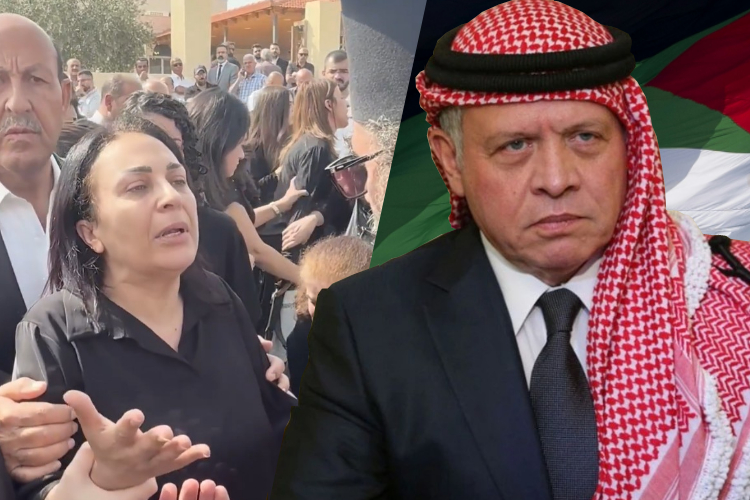
Nine Christians have been killed in a terrorist attack on a Jordanian church, prompting fierce condemnation, demands for justice and renewed concerns about religious persecution.
27 October 2026
3.6 MINS
For 25 years, the Mount Moriah Trust has supported struggling Christians across the Holy Land, bringing practical assistance, encouragement and hope to believers facing hardship and persecution.
27 October 2026
1.3 MINS
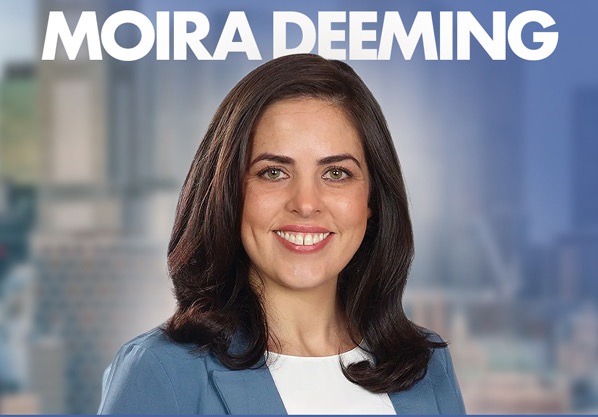
Moira Deeming’s re-election campaign has energised Family First supporters, raising $90,000 as the party prepares for a crucial Victorian election and a potential breakthrough.
27 October 2026
3.1 MINS
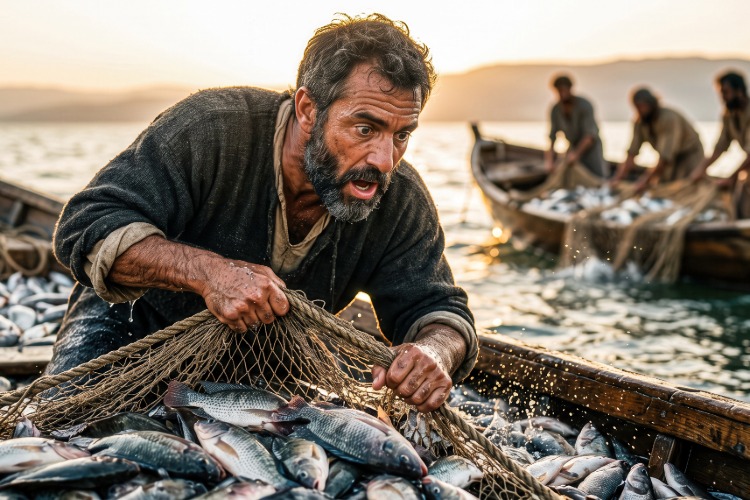
As the disciples discovered through a huge haul of fish, we can trust Jesus for a net-breaking, boat-sinking catch of people.
26 October 2026
4.5 MINS
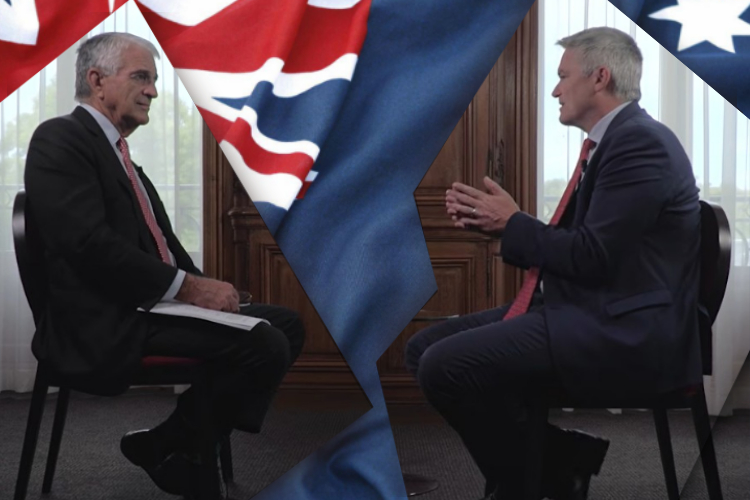
OECD chief Mathias Cormann warns Australia is losing its competitive edge, as excessive regulation, housing pressures, immigration challenges and declining public trust threaten national prosperity.



Yes for years we have been reading about the repeated killings and atrocities against Christians in Nigeria and praying for breakthrough. Oh Lord you are close to the broken hearted.
May your kingdom come, your will be done in Nigeria as it is in heaven dear Lord.