


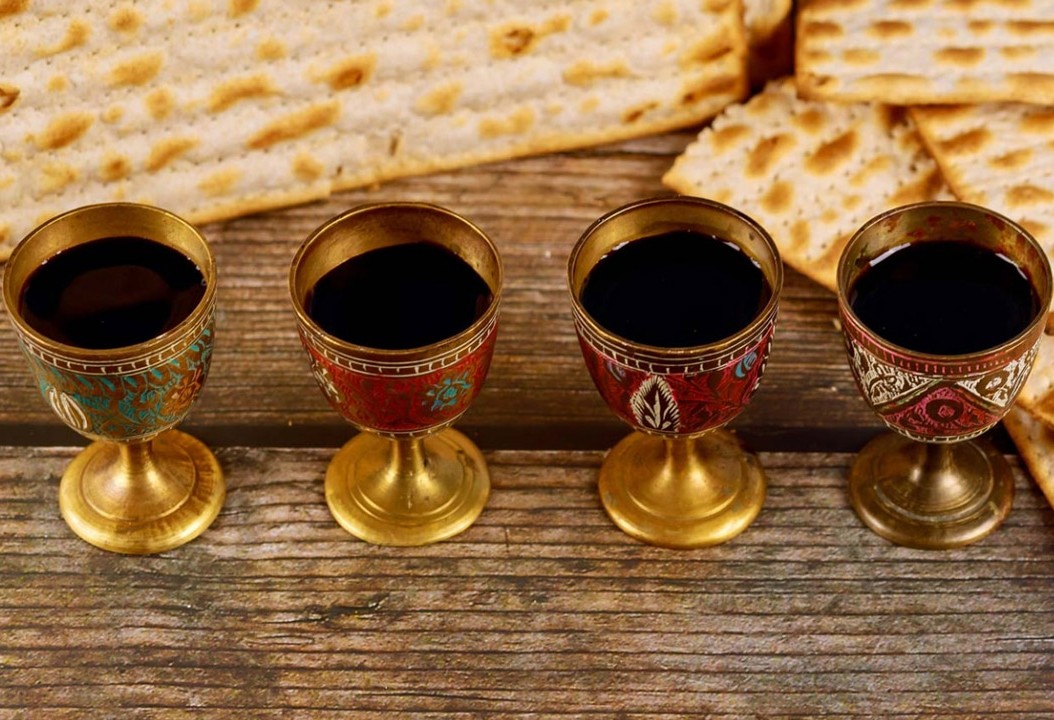
Passover and The Last Supper – Understanding the Parallels
Jesus never celebrated Easter! Now I have your attention… The Last Supper was a Passover meal. Tonight, 1st April 2026 (Hebrew 15th of Nissan, 5786) is the start of the Passover feast. So, let’s explore the awesome parallels between Passover and the Last Supper.
The Passover feast described in Exodus 12 stands as one of the most pivotal events in the Bible, marking God’s dramatic deliverance of Israel from Egyptian slavery. Centuries later, during the same festival, Jesus Christ gathered His disciples for the Last Supper before His crucifixion, resurrection, and ascension.
Parallel and Linked Accounts
Recorded in Luke 22, Matthew 26, and Mark 14, this meal reinterprets ancient symbols in light of His impending death. Both occasions involve a sacrificial lamb, protective blood, unleavened bread, and a commanded remembrance. Jewish tradition views Passover as an enduring commemoration of physical liberation and national identity, while we know the Last Supper as the fulfilment of Passover in the new covenant through Christ. Examining these accounts reveals striking parallels that bridge Old Testament shadow and New Testament substance.
Exodus 12 details the original Passover with precise instructions. On the tenth day of the first month, each Israelite household was to select “a lamb for his family, one for each household” (Exodus 12:3 NIV). The animal had to be “year-old males without defect” (Exodus 12:5). At twilight on the fourteenth day, the community slaughtered the lambs. Blood was applied “on the sides and tops of the doorframes” (Exodus 12:7).
That night, families ate the roasted meat “along with bitter herbs, and bread made without yeast” (Exodus 12:8), dressed for travel and “in haste” (Exodus 12:11). The blood served as a sign: “When I see the blood, I will pass over you. No destructive plague will touch you” (Exodus 12:13). God struck Egypt’s firstborn, but spared Israel.
The chapter closes with a lasting command: “This is a day you are to commemorate; for the generations to come you shall celebrate it as a festival to the Lord—a lasting ordinance” (Exodus 12:14). Additional rules included eating inside the house and leaving “none of the bones” broken (Exodus 12:46). Thus, Passover became an annual reminder of redemption from bondage, God’s deliverance, and God’s covenants.
New Testament Understanding
The Gospels place Jesus’ final meal squarely within this same festival. Luke records: “Then came the day of Unleavened Bread on which the Passover lamb had to be sacrificed” (Luke 22:7 NIV). Jesus sent Peter and John to prepare “the Passover” in an upper room (Luke 22:8-13).
During the meal He declared, “I have eagerly desired to eat this Passover with you before I suffer” (Luke 22:15). Matthew and Mark echo the timing: “On the first day of the Festival of Unleavened Bread… the disciples… asked, ‘Where do you want us to make preparations for you to eat the Passover?’” (Matthew 26:17; cf. Mark 14:12). The setting is unmistakably the traditional Jewish Passover seder (order of service).
At the table, Jesus transformed two central elements. In all three accounts He took bread, gave thanks, broke it, and said, “This is My body” (Matthew 26:26; Mark 14:22; Luke 22:19). Luke adds the command, “Do this in remembrance of Me” (Luke 22:19).
Then He took the cup: “This is My blood of the covenant, which is poured out for many for the forgiveness of sins” (Matthew 26:28); “This is My blood of the covenant, which is poured out for many” (Mark 14:24); and in Luke, “This cup is the new covenant in My blood, which is poured out for you” (Luke 22:20). The language deliberately echoes the Exodus deliverance while pointing forward to Jesus’ crucifixion the next day.
Clear Parallels
Six clear parallels emerge when the texts are set side by side.
- First, the sacrificial lamb. Exodus required an unblemished male lamb slain at twilight; Jesus is crucified at the hour Passover lambs were killed. Christian readers note the unbroken bones (Exodus 12:46; fulfilled in John 19:36) and the title “Lamb of God” applied to Jesus elsewhere.
- Second, protective blood. Israelite doorposts marked with lamb’s blood spared families from death. Jesus explicitly links the cup to “forgiveness of sins” and the “new covenant”, portraying His blood as the ultimate sign that averts divine judgment on sin.
- Third, unleavened bread. Matzah symbolised haste and affliction in Egypt. Jesus breaks the bread and declares it His body “given for you,” inviting ongoing participation as a memorial of His broken body.
- Fourth, the shared meal of remembrance. Passover is usually eaten in family groups as a perpetual ordinance. Jesus commands, “Do this in remembrance of me,” shifting the focus from Egypt to Calvary while retaining the communal and ritual character. God wants us in His family.
- Fifth, deliverance from bondage. Passover celebrated freedom from Pharaoh’s slavery. The Last Supper announces liberation from sin and death through the “new covenant”, echoing Jeremiah 31:31-34.
- Sixth, future hope. Exodus 12 points to the Promised Land; Jesus speaks of fulfilment “in the kingdom of God” (Luke 22:16, 18), anticipating His messianic banquet.
Jewish Tradition
Jewish tradition continues to celebrate Passover as a living link to the Exodus. The holiday, called Pesach (“to pass over”), commemorates emancipation from Egyptian slavery. Families gather for the Seder—a fifteen-step ritual meal guided by the Haggadah. Central elements include four cups of wine (symbolising stages of redemption), matzah, bitter herbs (maror) recalling slavery, and the retelling of the Exodus story.
The youngest child asks the Four Questions, and the door is opened for the prophet Elijah, expressing hope for future redemption. Scripture commands parents to explain the ceremony to their children (Exodus 12:26-27). For Jews, Passover remains a festival of freedom (Hag ha-Herut), national identity, and divine mercy, observed annually without reference to any later messianic figure.
Christian Understanding
Christian theology, by contrast, sees the Last Supper as the deliberate fulfilment of Passover. Jesus, celebrating the ancient rite, reorients its symbols toward Himself. The apostle Paul later writes, “Christ, our Passover lamb, has been sacrificed” (1 Corinthians 5:7).
Theologians describe the event as a “new exodus”, where Jesus enacts the ultimate substitutionary sacrifice. The command to “do this in remembrance” birthed the Christian practice of Communion or the Eucharist, celebrated regularly (we take Communion almost daily) rather than once a year.
While Protestants typically view the bread and cup as symbolic or spiritually present, Catholics and Orthodox traditions speak of real presence. Yet across all denominations, the Last Supper is understood as instituting the new covenant promised in Jeremiah, where God’s people are freed not from earthly tyrants but from the power of sin.
Summary
The two communities, therefore, interpret the same biblical roots differently. Judaism treasures Passover as an unchanging memorial of the Exodus, reinforcing covenant faithfulness and hope for final redemption. Christianity regards the Last Supper as the moment when the old Passover reached its telos in Christ’s death and resurrection, transforming an annual shadow into a perpetual sacrament of grace. Believers in both faiths eat, drink, and remember deliverance, but Christians know Jesus Himself as the Lamb whose blood secures eternal passage from death to life.
Finally, Exodus 12 and the Gospel accounts of the Last Supper stand in profound continuity. The ancient ritual of lamb, blood, bread, and haste becomes, in Jesus’ hands, the announcement of a greater exodus. Jewish observance keeps alive the story of national birth; Christian observance proclaims the story of universal redemption. Together they testify to a God who delivers His people through sacrifice and calls every generation to remember.
Through Jesus’ sacrifice, we have God’s love, deliverance, healing, salvation, forgiveness, and eternal life. This is why we celebrate communion.
Here is Barry McGuire’s beautiful communion song. You can take communion whilst playing this and allow God to help you grasp the awesomeness of Jesus’ sacrifice.
___
Image courtesy of Freepik.
4 Comments
Leave A Comment
Recent Articles:

20 October 2026
4 MINS
Olympic champion Stephanie Rice has faced a wave of online ridicule after revealing she resigned from her dream job following what she believes was God’s direction.

20 October 2026
7.7 MINS
France and Europe are burning — is it too late to save them from the barbarians?
20 October 2026
4.9 MINS
James McAuley’s legacy reaches far beyond Australia’s Catholic hymnals. Poet, convert and cultural warrior, he defended beauty, truth and faith in an age of changing values.
20 October 2026
3 MINS
Scripture teaches us to pray the "prayer of faith", because without faith it is impossible to please God.

19 October 2026
12.4 MINS
Greta Gerwig’s "Narnia: The Magician’s Nephew" trailer raises questions about C. S. Lewis’s Christian vision and the faithfulness of the new Netflix adaptation. Here are my initial impressions and concerns.

19 October 2026
3 MINS
Paul prayed that we would be awakened to a deeper revelation of the Father and who we are in Christ, so that we will make Jesus known to others more passionately.
18 October 2026
2.7 MINS
Every season of life belongs to Christ, and we don't retire from discipleship as we grow older. In fact, our older years hold unique gifts for the younger generations.



Thank you Kym.
Thank you Kym
Beautifully written with this year’s celebration of Passover with family.
Happy Passover with Nel family others .
love you much family, Mishpochah
Thank you Kym ….it should a very significant Passover this year
So well researched and presented, as needs be for this highlight of the Christian calendar.