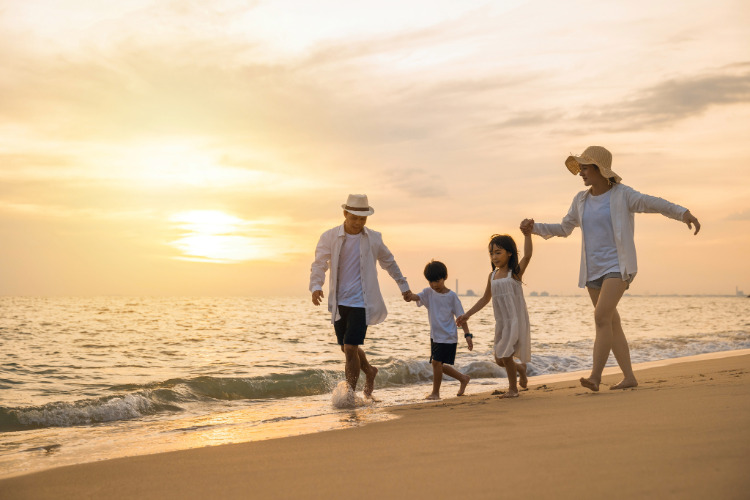
I’m Leaving Australia
Why our family is swapping Perth for Bali.
This year, we sold our house and nearly everything in it, put the rest in storage, and made the leap — we left Australia.
We did a reccy in Lombok, Indonesia, thinking it would be ideal for us, found that it was not, then landed on its more developed neighbour island, Bali, where we are currently searching for a villa to call home.
I’m not leaving because I hate Australia, the country. I’m leaving because I want to live a great life, but the people in charge are making that increasingly difficult to achieve.
If you’re on social media, you’ll be aware that Aussies leaving the Lucky Country to live a luckier life elsewhere is a major meme, mainly due to increased cost of living, tax-scavenging,1 over-regulation, and an oppressive malaise arising from incompetent governance by venal and stunningly mediocre politicians.2
This rings true for me.
Specifically, this is why I’m leaving Australia:
1. Cost of Living
Since the pandemic, prices have risen about 25% while real wages have fallen 4-5%. That means if you held $1,000 in cash since late 2019, you can now only buy $800 worth of stuff with it. Interest rates have increased five times this year, and one in three households has experienced food insecurity. Nationally, nearly a third of renting households are experiencing rental stress, where more than 30% of gross household income is spent on rent.
Especially since having Poppy and with me no longer bringing in my usual income, we have been feeling the pinch in every area: from the grocery shop, to electricity, services and fuel. For our family, the biggest issue, however, was the cost of housing.
Our plan was to rent for a couple of years, but when we started viewing rentals and realised how much it was going to cost, we had two choices. We could either move into a tiny house in a far-out area we didn’t want to live in, and work hard to maintain the necessities. Or, we could get creative…
2. Time
This is actually the most important thing for us. The increased cost of living means working harder for less. It means longer hours at work, putting our baby in daycare, and less time together. We don’t want to do that, and we are blessed to have the choice. Moving to a place where the cost of living is cheaper affords us time as a family that we can never get back, especially while our little girl is so young (almost 16 months old).
3. Values-Aligned Childcare Options
This might not be on everyone’s list, but a big factor in our decision-making process was being able to access care for Poppy that aligns with our values. Some families may easily manage without much help, but truthfully, we found it challenging in our first year.
While my extended family is wonderful and supportive, they are not able to support with childcare assistance. That leaves two other options: private nannies or daycare. Having a nanny is unaffordable in Australia ($35-40 per hour ).
Daycare is also unaffordable if your child is not vaccinated: under the national No Jab No Pay policy, families that do not give their children every shot on the schedule cannot receive the childcare subsidy, which covers up to 95% of childcare fees. And under No Jab, No Play, daycare is not accessible at all in some states (including WA) to unvaccinated children.3
But even if you can access daycare, you may not want to if you have opted for a ‘being there’ parenting style (as we have), or if you are leery of the many daycare abuse scandals that populate news feeds.
In Bali, we can afford to pay a private nanny above a living wage to help with childcare around the home, and we can do it on our terms, rather than spending long stretches of time apart from our daughter. This will enable me to ease back into working more consistently, as well as affording us time to do things that we couldn’t manage in Perth, like regular exercise and date nights!
4. Less Surveillance and Regulation
Australia is looking more and more like the setting of a Black Mirror episode. In my hometown of Perth, you can barely drive or walk anywhere without being surveilled. Some street poles have six-plus cameras angled in all directions. There are cameras for speeding, for number plates (which would be most useful for Smart-City style regulations if they were to eventuate…), for AI-assisted facial recognition, and zooming into your lap to catch illicit phone touching while waiting at traffic lights. Just last week, the WA Police Force announced it is introducing surveillance drones to assist with on-the-ground policing.
Couple this with overregulation in Australia generally. Australia went off the rails on Covid, with the world’s longest lockdown (Melbourne), and the toughest vaccine mandates in the world (WA). Tax rules become increasingly complex year on year, compliance costs continue to balloon, and barriers to conducting business abound. Plus, you can and will be fined for just about anything, be it riding your bike with no hands (QLD) or honking your car horn to say goodbye (NSW).
The feeling is of being surveilled and micromanaged at every turn, which might be a little less problematic if our governments were good at micromanaging — alas, they are incompetent. While Indonesians are also closely managed by their government in some respects, as expats on an off-mainland island, we have much more freedom to live and do business without the constant government surveillance and interference that we experience back in Australia.
5. Renting to Invest
We were fortunate to sell our home the week before Albo announced the 2026 budget capital gains changes, just as the housing market began to turn. With the market still close to its peak and interest rates rising, we don’t believe it’s good timing for us to buy back in right now. Bali gives us a cheaper place to live and work while we put our money to better use. Bali is also an attractive place for investing in property if done carefully. Being on the ground and meeting the right people helps with the ‘carefully’ part.
6. Fewer Sharks
Seriously, this is major! Ryan loves to surf, but it’s risky off Perth beaches. Twenty-six years ago, the shark-attack death of a man named Ken Crew made international news because it was such a rare event — his was the first shark-attack death off metropolitan beaches in 30 years. Things have changed since then.
This year alone, there have been three fatalities off WA shores, plus two other brutal maulings. Ryan has been bitten by a shark once already and has sighted sharks several other times while surfing off WA beaches. He feels that, especially now he is a dad, it’s just not worth rolling the dice anymore. Thankfully, there are multiple spots in Bali where you can surf without fear of being mauled by a Great White or other deadly shark.
And why Bali, out of all the possible places? It’s an affordable happy middle ground between highly developed Australia with its above-described problems, and less developed places like Lombok, which we found to be much dustier and less safe, and where basic amenities can be harder to access.
Being from Perth, we’ve been here a lot on holidays and working trips, so it’s familiar to us, and it’s only a 3-4 hour flight home to see family and friends. There is a very good international-standard hospital here (a post I did about that went viral), fantastic schools if we end up staying longer, and there is a well-established network of like-minded expats. Plus, we like the warm and friendly culture, and it’s never winter.
Ultimately, we’re leaving home because we have a vision of the life we want to create for our family, and we can’t achieve that in Australia. I feel sad to leave (for now), but I am comforted by two thoughts. First, that I’m just one of about 35 million people who move between countries every year in the hope of creating the best life possible for themselves and their families. And second, gratitude that we are in the position to be able to make the move at all.
I’ll be sharing more as we go along. What else would you like to know?
___
___
Republished with thanks to Dystopian Down Under. Image courtesy of Adobe.
Recent Articles:
10 November 2026
14.4 MINS
As Victorians prepare to vote on 28 November, this election guide examines Labor’s record and the competing policies on the economy, infrastructure, housing, crime, agriculture and social issues.

10 November 2026
3.4 MINS
Questions surround the National Redress Scheme’s assessment process, with credible institutional evidence being ignored, undermining trust and fairness.
9 November 2026
3.1 MINS
John Anderson has repeatedly called for Australians to confront our cultural and moral decline and put courage over complacency.

9 November 2026
6.6 MINS
Americans made it clear that if they have to choose between a nuclear-armed Iran and high fuel prices, they'll accept a nuclear-armed Iran, along with some supporters of the Iranian regime in their own halls of power. Our own government is just as short-sighted.

9 November 2026
12.5 MINS
The election of transgender candidates and Tasmania’s sweeping conversion-practices ban illustrate a civilisational crisis. While the 'anti-conversion' bill has already passed the lower house, one MP's opposing speech was a clarion call for sanity in a time when people had sadly lost their minds.

9 November 2026
1.3 MINS
NSW Health has apologised after admitting 20,000 Year 12 students were not given sufficient information for informed consent before receiving Covid vaccinations.

9 November 2026
3.7 MINS
Encouragement can be a lifeline for men and boys. Through International Men’s Day, Dads4Kids and its supporters are bringing people together worldwide to offer hope, strengthen connections and make a difference, one man at a time.