



Abortion, Compromise and the Ethics of Saving Some
Does saving some lives from abortion now—while leaving others unprotected—constitute faithfulness or compromise? Can love afford to wait for perfect justice? Inside the debate between incrementalism and abolitionism.
There are some issues where the temperature rises the moment you name them. Abortion is one of them. Not only because of what’s at stake, though that would be enough, but because of how quickly the conversation hardens. Positions calcify. Motives get assigned. Words sharpen. And before long, what began as a moral question becomes a test of loyalty, language, and tribe.
I’ve felt that myself. Of the more than one thousand posts on this page, the handful on abortion have drawn some of the strongest reactions from friend and foe alike.
That tells me something. Not that people feel strongly about abortion — of course they do. But that they feel strongly about it for very different reasons. For pro-choice people, the centre of gravity is usually autonomy, bodily integrity, and protection from coercion. For pro-life people, it’s usually the sanctity of human life, especially the life of the vulnerable unborn.
But within the broader anti-abortion movement, there is another disagreement. Not over whether unborn life matters, but over what faithfulness requires when you cannot save everyone at once.
Welcome to the “Incrementalism” versus “Abolitionism” debate.
I had not heard of “Abortion Abolitionism” until some months ago, after I gave a talk on Artificial Intelligence and somehow found myself being challenged during the Q&A about whether supporting laws that restrict abortion, but refuse to call it murder, makes me complicit in the thing I am trying to oppose. I was caught off-guard — not only because it had nothing to do with my presentation on AI — but also because I wasn’t familiar with the abolitionist position.
Nevertheless, at the time, I realised quickly enough that I wasn’t just being asked about a piece of legislation. I was being asked about moral responsibility. About complicity. About whether supporting a partial restriction on abortion means accepting the deaths that restriction does not prevent.
The Incrementalism versus Abolitionism debate is not asking whether abortion is wrong. For Christians committed to historic moral teaching, that answer is already settled: unreservedly, yes. Human life is not disposable. The unborn are not potential life, as if they become human only when we decide they count. They are human life in its earliest and most vulnerable form. And the deliberate taking of unborn human life is not morally neutral. It is a moral tragedy.
The more nuanced dispute here is what we do about abortion in a world where we cannot end it all at once. That’s where the pro-life, or perhaps more broadly anti-abortion, disagreements begin to emerge.
Yet beneath all the arguments about bills, amendments, political capital, biblical texts, and moral language sits a sharper question: if you can save some lives now, though not all, what does faithfulness require?
That, it seems to me, is where the debate really bites. Because this is not only a question about abortion law. It is a question about what faithfulness to God looks like in a broken world where full justice is not immediately achievable.
And that question doesn’t belong to abortion alone. It shows up anywhere moral clarity meets political reality. The ideal might be plain, but the path toward it rarely is. Which is exactly where Christian wisdom is needed most. Not to make peace with evil. Not to baptise compromise. But to resist evil truthfully in the moment we have actually been given, not the one we wish we had.
The Abolitionist Instinct
The abolitionist instinct, recently championed by Elijah Harris, is morally serious. It says God requires justice. Not symbolic concern. Real justice. And there is something right in that.
In a culture that has become very skilled at softening moral language with words like “choice,” “healthcare,” “reproductive autonomy,” “termination,” and so on, we need people who refuse euphemism. We need people who insist that unborn life is human life. That abortion is not merely unfortunate, but a deep transgression of the sanctity of human life.
So, I can totally appreciate the instinct. Because at its best, it is trying to protect the holiness of God, the equal dignity of every human life, and the danger of moral compromise. Those are not small things. I don’t want to sneer at that instinct. I share a lot of it.
Abolitionists are also right to worry that partial restrictions can sometimes become a substitute for the full moral claim. They are right to worry that politicians can learn to sound brave while avoiding the harder question. They are right to worry that the unborn can be functionally divided into categories: some protected, some not. Some recognised, some ignored. Some treated as victims, others left outside the law’s concern. Those concerns should not be waved away. They deserve an answer.
But I think this is where the Abolitionist framework begins to break.
It is one thing to say, “We must never call evil good.” It is another thing to say, “We must never support a law that restrains evil if that law leaves some victims unprotected, contains unjust exceptions, or fails to treat abortion as murder.”
That second claim deserves to be taken seriously. But I do not think it follows from the first. Those are not the same claim. And when we treat them as if they are, I think moral clarity starts to turn into moral confusion.
Where the Abolitionist Framework Breaks Down
As I see it, the first problem is that Abolitionism tends to collapse moral purity into moral responsibility.
The argument often sounds like this: “If something isn’t perfectly just, then participating in it must be unjust.”
But that’s not how moral responsibility works in a fallen world. Scripture repeatedly shows faithful people acting within imperfect systems without being guilty of everything those systems fail to do:
– Joseph serves in Egypt.
– Daniel serves in Babylon.
– Esther works within a corrupt empire.
And none of them says, “Unless I can fix everything, I must do nothing.” Instead, they act faithfully within limits. That’s not compromise — it’s wisdom. And I think it’s the kind of wisdom we need when the choices in front of us aren’t between perfect justice and obvious wickedness, but between imperfect action and continued harm.
The second problem is that abolitionist rhetoric can misunderstand complicity.
The claim seems to be that if you support a partial law, you are responsible for the abortions that continue under that law. But there’s a real moral difference between causing evil, permitting evil, and reducing evil where you can.
If a firefighter cannot reach every room but can open one door, they are not necessarily complicit in the fire by rescuing only those they can reach.
If a doctor cannot save every patient but saves one, he or she is not necessarily guilty of the deaths they couldn’t prevent. They’re quite possibly just being faithful in what they could do.
In the same way, if a law saves some children while not yet saving all, it is not therefore guilty of killing the children still unprotected. It is resisting death at the point where resistance is actually possible.
The distinction matters. Without it, almost every act of partial good in human history becomes morally suspect.
The third problem, though, is perhaps the most serious.
Abolitionism can unintentionally make legislative inaction appear morally cleaner than imperfect rescue. The language sounds bold: “We will accept nothing less than total justice.” Good. That’s what we should want. But in practice, where total justice isn’t politically achievable, that can mean nothing changes. No bill passes. No life is saved. No boundary is moved.
Here’s the hard truth: refusing an actual rescue because it is not a total rescue may feel morally cleaner. But if lives really can be saved, that cleanliness is not faithfulness. It is a failure of love.
Does that sting a little? Perhaps it should. I don’t write it casually. But if the issue really is human life, then we cannot treat inaction as morally cleaner simply because it keeps our hands away from imperfect legislation. Love does not wait for perfect conditions before doing real good. It acts, truthfully and humbly, within the limits of the moment.
The Incrementalist Instinct
Incrementalism, the position of Dr Joanna Howe and others, begins from a different place. It looks at the same moral reality and asks: What can be done now?
At its worst, incrementalism can become a way of managing abortion rather than resisting it. That’s a real danger, and abolitionists are right to warn against it. Partial victories can become comfortable. Politicians can learn to sound pro-life while spending most of their energy avoiding the full moral claim. Movements can drift. Language can soften. Everyone can start congratulating themselves for taking a step while quietly forgetting the destination.
So, yes, incrementalism has dangers.
But at its best, its instinct is not, “Let’s make peace with abortion.” Its instinct is, “Let’s save who we can now, and keep fighting for the rest.”
That is not compromise. It is moral responsibility in real time.
Saving one life is not injustice to another. A law that saves some unborn children is not unjust because it doesn’t save all. It is good because it saves those it can. Partial rescue is still rescue. Partial restraint is still restraint. Partial justice is not complete justice, but it isn’t therefore injustice.
Matthew 19 has helped me here. When Jesus is asked about divorce, He points back to creation: “from the beginning it was not so.” In other words, the ideal remains clear. But He also says Moses permitted divorce because of the hardness of human hearts. That does not mean divorce was good. It means biblical law sometimes meets people east of Eden and restrains damage inside a broken world.
Now, I am not saying divorce and abortion are morally identical. They are not. Nor am I pretending Matthew 19 settles the abortion debate by itself. It doesn’t. But it does show that Scripture has at least a category for law operating in a fallen world. A law may restrain damage without fully embodying the creational ideal. A law can fall short of the ideal without endorsing the evil it restrains. It can be a concession to hard hearts without being a capitulation to them.
What Does Love Do When It Cannot Do Everything?
One thing I learnt early in my philosophy studies is that if a moral theory only works in the abstract, but collapses the moment it touches real life, something is probably wrong with it.
Not always, of course. Reality is messy, and sometimes truth is hard to live. But if a theory consistently requires us to ignore the person in front of us, the suffering in front of us, or the good we could actually do, then we should at least pause.
Because Christian ethics is not meant to float above the world. It has to touch the ground.
Incrementalism versus Abolitionism is a debate about the world we actually live in.
And when it comes to Abolitionism, I think, at some point, the issue has to become painfully simple. If you could stop one child from being killed tomorrow, would you? Not every child. Just one…
If the answer is yes, then the moral logic is already in front of you. You may still debate the bill. You may still ask whether it is well drafted, whether it creates bad precedent, whether it weakens future reform, whether it genuinely saves lives.
Those are not small questions. They matter. Prudence is not cowardice. But at that point, the basic abolitionist claim does not hold: that a partial law is sinful because it restrains abortion only partially, while leaving other unborn children legally unprotected and guilty parties unpunished. Not biblically. Not morally. Not pastorally.
Love doesn’t say, “If I can’t save all, I’ll save none.”
Love says, “I’ll save who I can, and then I’ll go back.”
We Do What We Can…
In Mark 14:8, Jesus defends a woman who anoints him with expensive perfume, saying, “She did what she could.” So, too, in a world where we cannot do everything, we do what we can.
We tell the truth. We refuse euphemism. We protect life where protection is possible. We keep the horizon clear. And we refuse to let either purity or pragmatism make us forget the child in front of us.
Because the truth is, one day, justice will not come in increments. But until that day, our faithfulness will often look costly, patient, and even imperfect as we seek to navigate the fault lines of a groaning creation. And perhaps that is the shape of faithfulness for now: clear-eyed about sin, honest about the limits, and ready to reach for every life we can.
___
Republished with thanks to Dave Deane. Image courtesy of Adobe.
2 Comments
Leave A Comment
Recent Articles:
12 October 2026
4.6 MINS
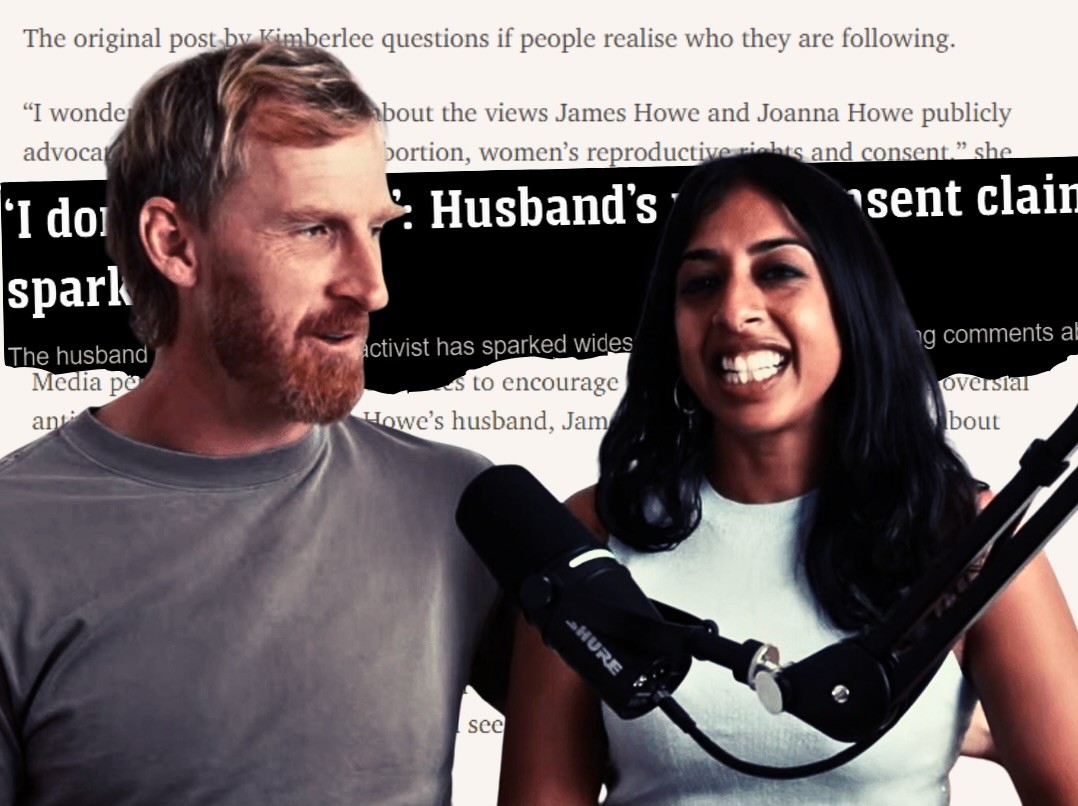
Learn how journalists use loaded language, selective quotes and misleading headlines to shape public opinion, using a controversial report about James and Joanna Howe as a case study.

12 October 2026
12.9 MINS
God’s judgement can seem difficult to reconcile with His goodness. But Scripture presents God’s perfect justice as something we can celebrate — and His present offer of mercy through Jesus as the good news.

12 October 2026
3.1 MINS
The proposed livestream of Nidal Hasan’s execution has reignited debate over justice, deterrence and public accountability, with critics comparing American justice to ISIS propaganda.
12 October 2026
3.7 MINS
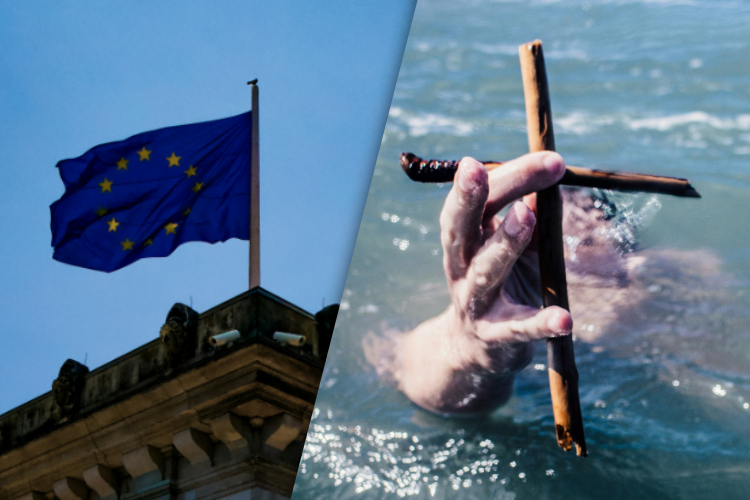
An EU court case over baptismal records could pit data protection laws against religious freedom, raising serious questions about whether governments can compel churches to erase sacramental history.

12 October 2026
3.3 MINS
In the week leading up to Christ’s crucifixion, Jesus' soul was troubled. He responded with a bold prayer, and his example challenges us to that same boldness.
11 October 2026
2.6 MINS
Jesus offers us intimate friendship, which produces great joy as we walk closely with him.
10 October 2026
4.1 MINS
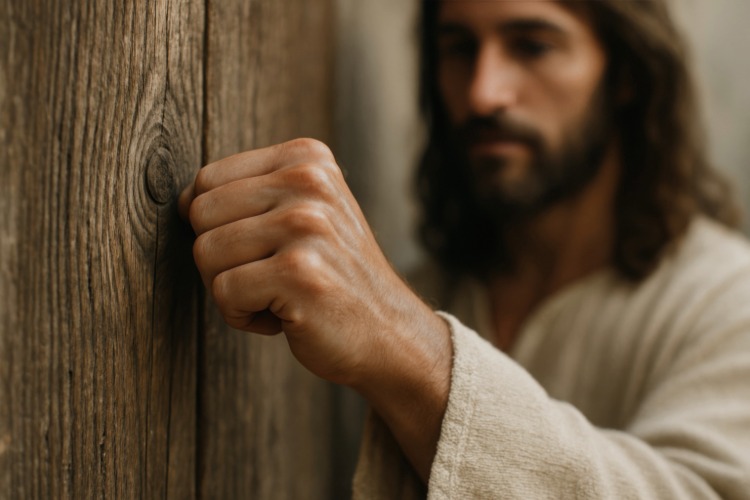
When Jesus rebuked the Laodicean church, this was not a sign of his lack of love, but proof of it and how greatly he longs to reward and bless us. He is knocking — will we answer?



This is a good article thank you for it
At its worst, incrementalism can become a way of managing abortion rather than resisting it. That’s a real danger, and abolitionists are right to warn against it. Partial victories can become comfortable.
Joanna Howe show us what incrementalism really is and you described that — save who you can now and keep going for the next step. The abortionists got here by incrementalism they planned and executed their strategy perfectly. We as Christians are very poor at politics and strategy.
The issue is we are not trying to convince other Christians that abortion is Molech in action but we are trying to convince a pagan society of that fact and that will not happen in one big bill in parliament. As Christians we are called to be innocent as doves and as wise as serpents instead we are often as dumb as stumps. Partly because we do not understand politics. I certainly did not till about a decade ago when I started to take an interest when I recognised that even though I was not interested in politics, politics was interested in [controlling] me. Controlling what I could think, what I could say, and perhaps in the future when and whom I can meet with for worship. We had a taste of that in COVID.
So trying to wait till we get everything that we want is a failed idea. The first step is abolishing late term abortion then push on from there. I know non-Christians who are pro-choice but very uncomfortable with late term abortion and I think that there is a large number of people in society that are the same. Lets get them on board and continue on from there.
Given the absolute horror of what abortion is – the deliberate ending of the life of one’s own child, and this being done by huge numbers of mothers/couples – this should make us pause and come to recognise that to stop such an absolute horror will cost those who seek to stop it, an incredible price.
I believe that we are kidding ourselves if we do not openly and fully acknowledge that to actually stop abortion, that will cost us everything. (And, more challenging still, even if we pay that price, I do not believe that that would guarantee that we would be successful. I think we have to be willing to pay that price just because it is right to do so.)
It is at this point that I think that virtually all anti-abortionists, be they called “pro-lifers” or “abolitionists” stumble and fall: we, myself included, are not willing to pay that price.
We can think (perhaps quite rightly) that most of the German Christians during the Nazi era failed to take a sufficient stand against the evils of Nazism and for the persecuted Jews. It is easy to think that – from our present position of safety – but we know that many (all?) Christians would have lost everything, quite likely even their lives, if they had made such an uncompromising stand. Yet, surely it would have been right for them to have done so? Right?
Is it any less incumbent on us to make such a stand in our day?
If we came across a child being beaten to death in the street, we would probably like to think that we would intervene to rescue that child, even if that intervention cost us a great deal.
We actually do know where young children are being killed every day – at abortion “clinics”, yet, for all sorts of reasons, we all choose not to directly intervene – putting ourselves between the abortionist and the child that is intended to be killed. (And as a Christian pacifist I would argue that this intervention must be non-violent.)
No, I don’t think it matters what we call ourselves, be it pro-lifers or abolitionists. What matters is, if we believe that abortion is murder, we must decide if we are willing to pay the price that will come if we act truly consistently with that belief.