


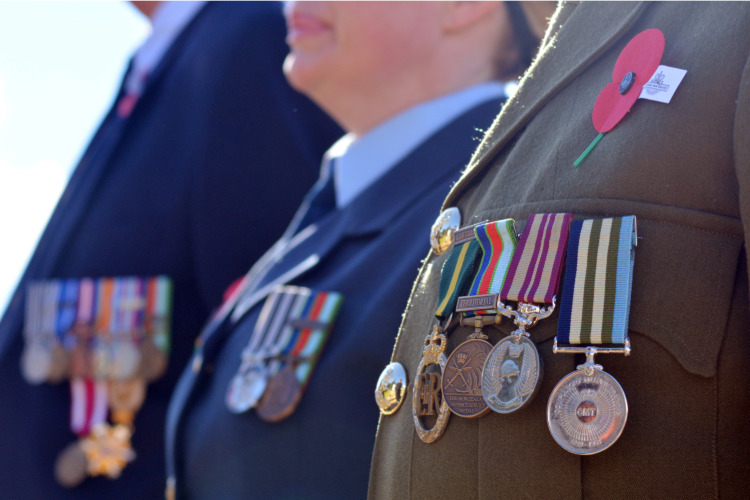
Administering Courage: The Failure of Australian Honours
In August 2025, it was reported that an independent review of the Office of the Official Secretary to the Governor-General, provided to the government in November 2024, had identified serious deficiencies in staffing, performance, information technology and communications.
The review examined the Australian Honours and Awards system and drew particular attention to the large and growing backlog in processing Order of Australia nominations.
Although the review did not expressly mention the decline in the number of Australian Bravery Decorations over the past five years, it is reasonable to ask whether similar administrative weaknesses may also have contributed to that contraction.
In February 1975, Prime Minister Gough Whitlam announced the establishment of Australian honours, including the Order of Australia, the Australian Bravery Decorations and the National Medal.
The Australian Bravery Decorations comprise three decorations – the Cross of Valour, the Star of Courage and the Bravery Medal – as well as the Commendation for Brave Conduct. There is also a Group Bravery Citation, which recognises a collective act of bravery.
The Cross of Valour has been awarded only twice this century, both in 2003 for acts associated with the Bali bombings the previous year. The first three awards were for incidents in Australia between 1988 and 1996, now three decades ago. In more than 50 years, the decoration has been awarded only five times.
From 1976 to 2021, at least one Star of Courage was awarded in every financial year, with the highest number (12) in a 12-month period granted in 2018–19. Over that period, the award averaged four recipients per year.
The third decoration, the Bravery Medal, has been awarded 1,587 times, including three second awards. In the 50 years from 1976 to 2026, an average of about 32 Bravery Medals were awarded each year. In the last five financial years, however, that figure has fallen to 16 awards per year, and for the last three years it has dropped further to 12 per year.
In 2025, the Governor-General’s website was updated to state that “the Australian Bravery Decorations Honours List is released annually on National Wattle Day (September 1). Additional announcements may be made at other times as required.”
This marks a departure from 50 years of established practice, during which two Australian Bravery Decorations Honours Lists were typically published each year, in March and August, and suggests a notable change in the administration of these honours.
Evolution of Australian Awards
In 1918, the ALP Triennial Conference held in Perth adopted what might be described as a nationalistic agenda, a position later reaffirmed at the 2021 Triennial Conference in Brisbane.
Most ALP federal and state governments, with a few exceptions, boycotted the New Year and King’s or Queen’s Birthday honours. The principal exceptions were wartime awards for active service by federal ALP governments and civilian bravery awards recommended by both federal and state governments.
A little over two years after the Whitlam government was elected in 1972, the first ALP government not burdened by depression, war, or post-war reconstruction established Australian honours in February 1975. Liberal and National state governments continued recommending British awards until Queen’s Birthday in 1989.
Administration of the Australian honours system was centralised in Canberra. Politicians were excluded from the process and the states were left with presentation ceremonies only. This seems to have narrowed media coverage to investitures and a few specific issues, such as “no gongs for diggers”, the Long Tan awards, and the Victoria Cross for Australia awarded to Teddy Sheean.
Until last August, there was little discussion of the growing backlog in processing Order of Australia nominations, and none about the decline in Australian Bravery Decorations.
After the Coalition under Liberal leader Malcolm Fraser was elected government in December 1975, British awards for meritorious service were restored, while the Order of Australia remained in place. Although the Fraser government did not recommend British non-combat awards, Liberal and National state governments continued to do so.
In 1983, the new Labor Hawke government ceased federal government recommendations for British honours.
Following the 1990 British New Year Honours, in which there was no supplement listing awards to Australia, Queen Elizabeth II signalled her view that Australia should in future rely on the Australian honours system.
After consultation with political parties and the states, Labor Prime Minister Paul Keating announced on October 5, 1992, that Australia would henceforth recommend Australian honours only. Future British awards to Australians would be treated as foreign awards.
Howard and Rudd Governments
The Coalition Howard government was elected in 1996 with a policy of reviewing Vietnam awards.
Although the process became known as the Vietnam End of War List, the review focused on about 80 recommendations approved at the highest Australian command level in Vietnam but downgraded in Canberra.
Because the review of the Vietnam End of War List took place after 1992, it resulted in recommendations for Australian rather than British awards.
An Interdepartmental Committee considered the matter on November 11, 1997, and recommended medals for officers and commendations for other ranks.
The story broke in the media; the headlines declared, “No gongs for diggers”. Former senior public servant Noel Tanzer later conducted an inquiry, which resulted in six soldiers finally receiving gallantry medals for Vietnam.
The inquiry also revealed that nearly four times as many members of the Australian Army served in Vietnam as served in Korea, yet Vietnam service resulted in only three times as many awards.
Other unresolved Vietnam War medal issues remained in the background, particularly those concerning awards for Long Tan. For the 40th anniversary of the battle in 2006, the Howard government invited Vietnam veterans who had been at Long Tan, or who had been in support on the day of the battle, to a commemoration at Parliament House.
Howard spoke with Harry Smith, who as a major had commanded D Company, 6RAR, during the battle. Further investigation into awards for Long Tan was undertaken and continued under the Rudd government after it came to power in 2007.
On July 23, 2008, the Rudd government created a non-statutory administrative body to examine Defence medal issues. On January 5, 2011, under the Gillard government, that body became the independent statutory Defence Honours and Awards Appeals Tribunal (DHAAT).
The Non-Duplication or Double-Medalling Issue
In 2020, Teddy Sheean was awarded the Victoria Cross for Australia. The award generated considerable publicity, but when I later downloaded the Commonwealth Gazette notice, I was surprised to read that the Mention in Despatches (MID) awarded by the King in 1943 had been cancelled. I later checked the London Gazette, which had a similar cancellation notice.
The MID cancellation was surprising because Teddy Sheean was the 22nd recipient of a late award who had previously received the MID. In most of the other cases, the MID had been awarded for the same action that, many years later, led to an Australian decoration. Why, then, was the MID of a deceased sailor cancelled when there was no published policy or protocol supporting such a step?
I have asked Defence for documentation, but I have received neither a copy of any relevant British protocol nor an explanation of why such a British protocol would apply, given that British practice concerns the upgrade of one British award to a higher British award.
In the seven British cases in which Distinguished Service Orders and Distinguished Conduct Medals were upgraded or corrected to the Victoria Cross, the cancellation occurred within a period ranging from one month to 18 months.
The King’s Speech of 1920
Comments about the Victoria Cross for Australia and the Medal for Gallantry awarded to Ben Roberts-Smith suggest public unawareness of King George V’s view on the forfeiture of gallantry awards.
Canadian soldier Filip Konowal VC was charged with murder in 1919 and was still awaiting trial when the King’s private secretary, Lord Stamfordham, wrote on July 26, 1920:
“The King feels so strongly that, no matter the crime committed by anyone on whom the VC has been conferred, the decoration should not be forfeited. Even were a VC to be sentenced to be hanged for murder, he should be allowed to wear the VC on the scaffold.”
In 1991, former Queensland police commissioner Terence Lewis was jailed for corruption and was stripped of his Knight Bachelor, Officer of the Order of the British Empire, and Queen’s Police Medal for Merit.
However, he retained the George Medal, which had been awarded for gallantry, and the National Medal, which had been awarded for service. The cancellations are recorded in the Queensland Government Gazette.
Filip Konowal VC
The King’s statement is known in military history circles, but the name of the soldier involved was not revealed until 2017, with the publication of A Canadian Hero: Corporal Filip Konowal, VC and the Battle of Hill 70 by Lubomyr Y. Luciuk.
Filip Konowal, who was born in Ukraine, was awarded the Victoria Cross on the Western Front in 1917. On 19 July 1919, Konowal went to the aid of a friend who was being viciously beaten by a knife-wielding Austrian, seized the weapon, and killed the man. Konowal waited for the police and reportedly said: “I’ve killed 52 of them; that makes the 53rd.”
At the trial in 1921, medical experts agreed that Konowal was mentally unstable because of war-related head injuries. Found not guilty by reason of insanity, he was institutionalised for seven years.
When released in 1928, after his condition had improved, he found work as a caretaker at the Parliament Buildings in Ottawa. Prime Minister William Lyon Mackenzie King noticed the Victoria Cross ribbon and arranged for Konowal to be reassigned to a permanent position in his personal office.
In 1998, the Australian Order of Wear was applied to determine the appropriate Australian honours to substitute for the British awards originally recommended during the Vietnam War.
This approach failed to account for a critical feature of the British honours system as it existed before 1993: separate gallantry awards for officers and other ranks, with officer awards placed higher in the Order of Wear.
Although both officers and enlisted personnel were eligible for Australian gallantry decorations, the methodology adopted disadvantaged soldiers and produced the “no gongs for diggers” reaction.
The Tanzer Report corrected an injustice that should never have arisen.
Transparency is Crucial
Australia runs its own honours system and sets its own rules, but those rules should be transparent and open to public scrutiny.
Since 1998, there have been more than two dozen cases in which a recipient of a British MID also later received an Australian decoration. Yet the first cancellation of an MID did not occur until 22 years later – and it concerned the MID of a deceased sailor.
Cancelling an award issued under a different honours system more than 77 years after the fact is extraordinary. More extraordinary still is that the MID is not a medal at all, but an emblem worn on a campaign ribbon, and yet it appears to have been cancelled under Australia’s unwritten double medalling policy.
In the 75 years of Australian division on the issue of honours, one point of agreement remained: wartime honours.
That consensus encompassed the 11 Victoria Crosses recommended by the Curtin and Chifley governments, as well as non-combat honours recommended by both federal and state governments of differing political persuasions.
The Fraser government operated a dual system, but it did not submit British gallantry recommendations.
However, in the last five years, the number of Australian Bravery Decorations have been seriously reduced and from last September are being only awarded once a year.
___
Anthony Staunton is a Fellow of the Military Historical Society of Australia.
Republished with thanks to News Weekly. Image courtesy of Adobe.
10 Comments
Leave A Comment
Recent Articles:

16 October 2026
4 MINS
A desperate Victorian Labor Party is peddling taxpayer-funded abortions as free “healthcare”. In a shameless attempt to stay in power, they're willing to do anything — including killing the unborn and forcing taxpayers to pay for it.

16 October 2026
4 MINS
Katie Zacharia’s first days as White House Press Secretary have sparked fierce media criticism, but her remarkable testimony of surviving an abortion attempt tells a deeper story.

16 October 2026
3.4 MINS
Australia’s proposed digital duty of care laws promise greater online safety and increased user control by switching off algorithms, but critics warn they could give ministers sweeping powers to restrict lawful content and threaten free speech.

16 October 2026
2.6 MINS
Euthanasia accounted for 4% of all deaths in Belgium in 2025, with growing numbers involving people who were not terminally ill, dementia patients and psychiatric conditions.

16 October 2026
5.2 MINS
Christa Pike’s botched execution has sparked outrage across America, but critics argue that the same concern for human dignity is denied to abortion survivors.

16 October 2026
3.3 MINS
Jesus is calling us to love one another “just as I have loved you”. And if the Church does awaken to that agape (love), the world will see a great and powerful witness to Christ and his kingdom.

15 October 2026
4.2 MINS
Many Australian Christians don’t know a single Aboriginal person. Robyn Murray argues that reconciliation begins with honest history, prayer and a shared life in Christ.



Individual courage, bravery, honour, faithfulness, strength, sacrifice, etc. are eschewed by the maxists statist agenda. So it no surprise these attributes are not recognised.
One word –Shameful !
The current military system has stayed the same as the old Imperial system but just another name.
Many, Many, Many Army officers have received the Conspicuous Service Cross (CSC) for some type a great service and have also received the Conspicuous Service Medal (CSM), However NO Other Rank as far as i have seen has received the CSC (If they have it is extremely RARE) as an Other Rank always (99% of the time) will receive the CSM. Many Senior OR such as Regimental Sergeant Majors have received both an Order of Australia medal (OAM) and a Conspicuous Service Medal (CSM) which both are normally for service. So, what i am trying to say is that Officers are more Honoured in todays Australian System and Other Ranks.
You are correct that CSC to other ranks are rare. On “It’s an Honour” 1482 CSCs are listed with just 92 to other ranks. I noticed one gunner and one private with about half Warrant Officers.
In 1980 HMAS STALWART received mention in dispatches that the crew would receive the ASM for service in the Indian Ocean. The award was approved approximately 10 years after the fact however the area was declared and failed to capture the area of deployment. The Defence Honours system later declared that Stalwart infact only did 9 days in the area of operation which has been fought by members at the Defence tribunal as the ship was deployed for greater than 3 months. Yet another misuse and flawed attempt to deny members honour for service.
The question is not why MiDs are being cancelled, but why they’re being replaced with retrospective awards from a previously non-existent honours system.
Unfortunately Labor created this mess, and then caved in when finally about to remedy granting retrospective awards.
The issue is not pertaining only to bravery awards. The entire “recognition of service” issue is full of political agendas and a belief by Nature of Service Branch (or whatever it is known as today) that they are the final arbiters of what constitutes what, regardless of the facts. History is full of the government spending a fortune in attempts to deny diggers their rightful recognition.
To help resolve the medal back log maybe do away with the BS that Olympic gold medalists get an OAM. It diminishes the whole award, especially in relation to individuals that work so hard, often for many years, and are recognised for their efforts with an OAM.
And there is a whole heap on naval bravery awards besides Sheean’s that should have been given, but likely never will be.
For example Hec Waller died in command of his cruiser HMAS Perth in fierce fight that saw him killed and his ship sunk, as was the case with USS Houston fighting in company. Captain Rooks USN received the Medal of Honor – the VC equivalent – a few months later, but Waller received nothing. It was post war when the RN pointed this out and he was given a MID.
Similarly the CO of HMAS Yarra, Robert Rankin – and one of his gunners, Ron Taylor – should have been awarded the Victoria Cross, for their brave defence of a convoy, as I have argued in my book Teddy Sheean VC.
https://www.bigskypublishing.com.au/teddy-sheean-vc/?srsltid=AfmBOorVVdz4YKWFqRCHqEzizLjlKfB7dsy87w-gqYTm7SFeXmHAaCSM
Great work on your efforts for Teddy Sheean. I have both Honour Denied and Teddy Sheean VC on my shelf and have read or looked at most of your books and some of your many articles. Keep up the good work.