


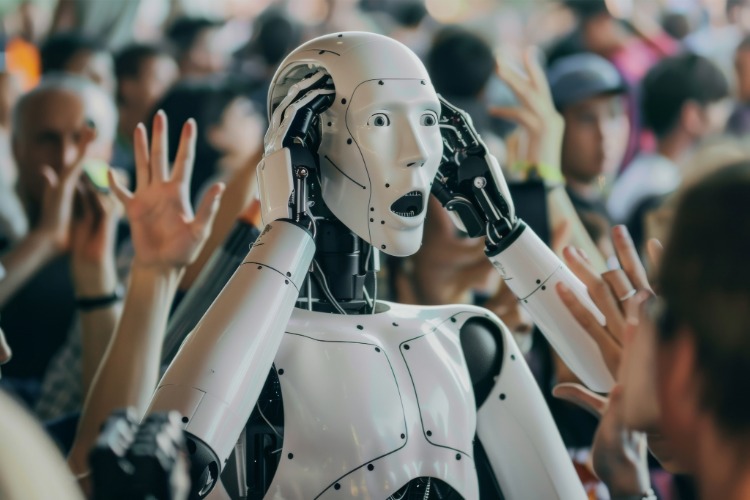
The Church Prepared for AI Ethics — Not AI Theology
For centuries, Christians have spoken of having a personal relationship with Jesus Christ.
Today, for a fee, people can continue conversations with an artificial intelligence version of Jesus. A growing number of AI-powered Bible companions, prayer assistants, and virtual spiritual advisors now promise guidance once sought from pastors, mentors, and Scripture itself.
What seemed unthinkable only a few years ago has quietly become another technology marketplace.
Most Christians naturally ask whether these tools are ethical. Can artificial intelligence strengthen ministry or help people study God’s word?
Those are reasonable questions.
But they are not the most important ones.
Critical Need for a Theology of Technology
Artificial intelligence is not merely forcing Christians to answer new ethical questions. It is forcing the church to revisit much older theological ones: what it means to bear God’s image and which responsibilities can never be delegated to a machine.
In other words, the church has spent years preparing for AI ethics just as artificial intelligence has handed us an examination in AI theology.
That realisation exposes a larger problem.
For generations, Christians have developed rich theologies of work, marriage, government, stewardship, and creation. Yet we have devoted remarkably little attention to a theology of technology. We have treated technology as a morally neutral collection of tools whose value depends entirely upon how they are used.
That assumption made sense when technology simply extended human capabilities.
Artificial intelligence is different.
The printing press multiplied books. The automobile expanded mobility. Television reshaped entertainment. The internet democratised information.
Artificial intelligence reaches beyond what people do into how people think.
We no longer ask machines merely to calculate faster or retrieve information. We now ask them to judge, to create, and to decide — work that once belonged exclusively to human beings.
Every previous technological revolution expanded human capability.
Artificial intelligence invites us to surrender human responsibility.
That distinction is profoundly theological.
Using AI to Do What Only Humans Should Do?
Genesis tells human beings that we are created uniquely in the image of God. We alone possess moral agency, conscience, spiritual awareness, and the capacity to know, worship, and glorify our Creator. Our creativity reflects his creativity. Building sophisticated tools is therefore not sinful in itself. God commanded humanity to cultivate and exercise wise stewardship over his creation.
But Scripture also explains why every human achievement exists within a fallen world.
Genesis 3 reminds us that every gift God gives can also become an occasion for misplaced trust. Human beings repeatedly turn blessings into substitutes for dependence upon God. Every technology therefore reflects both humanity’s creativity and humanity’s rebellion.
Artificial intelligence simply magnifies that timeless pattern.
The deepest danger is not that computers suddenly become conscious. The deeper danger is that people gradually surrender responsibilities God never intended them to delegate — judgment, discernment, wisdom, and moral accountability.
Machines can process astonishing quantities of information.
They cannot possess biblical wisdom.
Unfortunately, our culture treats intelligence as life’s highest virtue. Artificial intelligence only accelerates that temptation. We celebrate systems that optimise, predict, calculate, and outperform human cognition while quietly forgetting that Scripture measures human greatness very differently.
“The fear of the LORD is the beginning of knowledge; fools despise wisdom and instruction” (Proverbs 1:7).
Notice what that verse does not say. It does not say knowledge begins with intelligence, or with data, or with processing power. It says knowledge begins with reverence for God. Fools, however sophisticated their tools, still despise wisdom and instruction.
The Bible consistently elevates qualities no algorithm can reproduce: humility, faithfulness, repentance, and self-sacrifice.
History confirms the point.
Nebuchadnezzar built an empire admired across the ancient world, yet the moment he took credit for his own greatness, God brought him low until he learned who truly rules (Daniel 4:28–33). Herod Agrippa accepted the crowd’s praise as though he were divine and was struck down before he could finish savouring it (Acts 12:21–23). Neither man’s downfall came from a lack of ability. Both came from a heart that outgrew its dependence on God.
Human brilliance has never guaranteed moral wisdom. That explains why artificial intelligence represents such a revealing moment for the church.
Why the Church Must Teach about AI
AI did not create a theological crisis. It exposed one that was already there.
The question is no longer whether Christians should use artificial intelligence. Most already do — often without realising it. The more pressing question is whether Christians possess a biblical framework capable of governing its use.
Can we explain why every person bears unique dignity even if machines someday exceed us in many intellectual tasks? Can we explain why conscience cannot be automated, and why no algorithm can repent of sin, love its neighbour, or stand before a holy God?
Those are not engineering questions. They are discipleship questions.
The church therefore needs more than ethical guidelines for artificial intelligence. It needs a biblical theology of technology.
Pastors should teach not only what AI can accomplish but also what it cannot. Parents should help children distinguish information from wisdom and efficiency from faithfulness. Christian schools should devote as much attention to forming character as they do to teaching digital literacy.
Technology always shapes the people who use it. The only question is whether that formation conforms us more closely to the image of Christ or quietly persuades us to trust the works of our own hands.
The greatest danger facing Christians is not that machines become more like human beings. It is that human beings gradually begin thinking — and eventually living — as though they were machines.
The church prepared for AI ethics.
The time has come to recover something even deeper: a biblical theology of technology that keeps our most powerful inventions in their proper place — as useful servants, never trusted masters.
Artificial intelligence will reshape our economy, our culture, and our daily lives. Whether it strengthens or weakens the church, however, depends less upon the sophistication of our technology than upon the depth of our theology.
___
Republished with thanks to The Washington Stand.
Image via Adobe.
3 Comments
Leave A Comment
Recent Articles:

17 October 2026
3.4 MINS
Seeking the face of God means surrender, laying aside our agenda and wants. Revival begins when we want God himself more than we want the outcome.

16 October 2026
4 MINS
A desperate Victorian Labor Party is peddling taxpayer-funded abortions as free “healthcare”. In a shameless attempt to stay in power, they're willing to do anything — including killing the unborn and forcing taxpayers to pay for it.

16 October 2026
4 MINS
Katie Zacharia’s first days as White House Press Secretary have sparked fierce media criticism, but her remarkable testimony of surviving an abortion attempt tells a deeper story.
16 October 2026
3.4 MINS
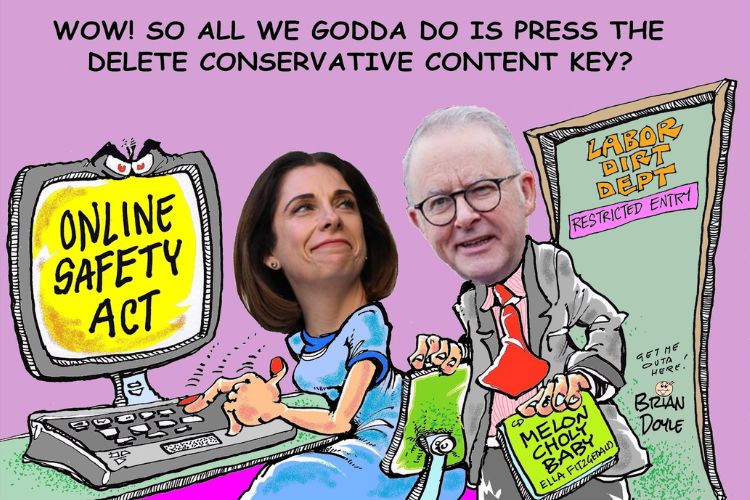
Australia’s proposed digital duty of care laws promise greater online safety and increased user control by switching off algorithms, but critics warn they could give ministers sweeping powers to restrict lawful content and threaten free speech.
A Million Women Movement Marks Second Anniversary: “Look What the Lord Has Done! Ishtar Has Fallen!”
16 October 2026
2.8 MINS
Two years after A Million Women gathered in Washington for ten hours of prayer and fasting, organisers point to victories they believe reflect God’s answers to intercession.

16 October 2026
2.6 MINS
Euthanasia accounted for 4% of all deaths in Belgium in 2025, with growing numbers involving people who were not terminally ill, dementia patients and psychiatric conditions.

16 October 2026
5.2 MINS
Christa Pike’s botched execution has sparked outrage across America, but critics argue that the same concern for human dignity is denied to abortion survivors.



AI =a Denial of Government responsibility for huge , future mistakes which , like Robodebt, destroyed lives. It’s not Robots that are increasingly ruining and controlling our lives , but, the controlling, anonymous people who program them at the behest of Government and Big Business which are motivated by ever greater Profit ,irrespective of the harm they do to ordinary people . These like Pilate, disclaim all responsibility for the lies, mistakes and havoc they cause in people’s lives. We are in for a ” wild ride ” ! For example our Community Transport Scheme ( a charity ) is already being bombarded by angry customers as some employees were replaced on 1 July by automated telephone calls which are difficult to understand, make no allowances for road works, occasional bridge closures, dangerous road conditions, Pick Ups and Set Downs and occasional “Comfort Stops ” on long journeys. Meanwhile, the new CEOs ‘s remuneration and other Benefits probably go through the roof at the expense of Service ? These monoliths demand , like the idols of antiquity , ever more sacrifice , ie of the once peaceful urban and natural environment to produce the enormous amounts of electricity needed to run these monstrous systems, which with their 24 hour huge lighting systems disrupt people’s and animals’ ability to sleep, and blot out the heavens ! Thank God, my water which falls from the sky is free of the poison(Fluoride ) and the nights are DARK and peaceful and I can see the stars which city folk no longer can–but-until WHEN ?
Great comment Robert.
Here’s another fascinating conversation on the topic that may be of interest.
Spiritual formation and AI: A deep dive with Andy Crouch and Jay Kim
https://m.youtube.com/watch?v=K2j8053yxbE
Following Jesus in the digital age is complicated. Technologies like the smartphone and social media have transformed the way we relate to God and to our loved ones. Back in 2007, when the iPhone launched, the church was barely prepared for how this new tech would shape us.
Now, with the rise of AI tools, we might be seeing another 2007 moment. For followers of Jesus, it’s raising new questions: Should I use AI all the time — or not at all? Can I ask chatbots for therapy? Can AI help me grow more like Jesus?
For guidance in this moment, we gathered our friends Andy Crouch and Jay Kim for a conversation. In this long-form discussion, they dive deep into questions around faith and AI, going from the history of AI to what the spiritual disciplines can tell us about tech to some big, philosophical ideas.