


An Australian Bill of Rights? Bad Idea, Says Constitutional Law Expert
During a recent dialogue between high profile legal experts, a top Australian constitutional law expert was asked if Australia should have a Bill of Rights. His answer may surprise you.
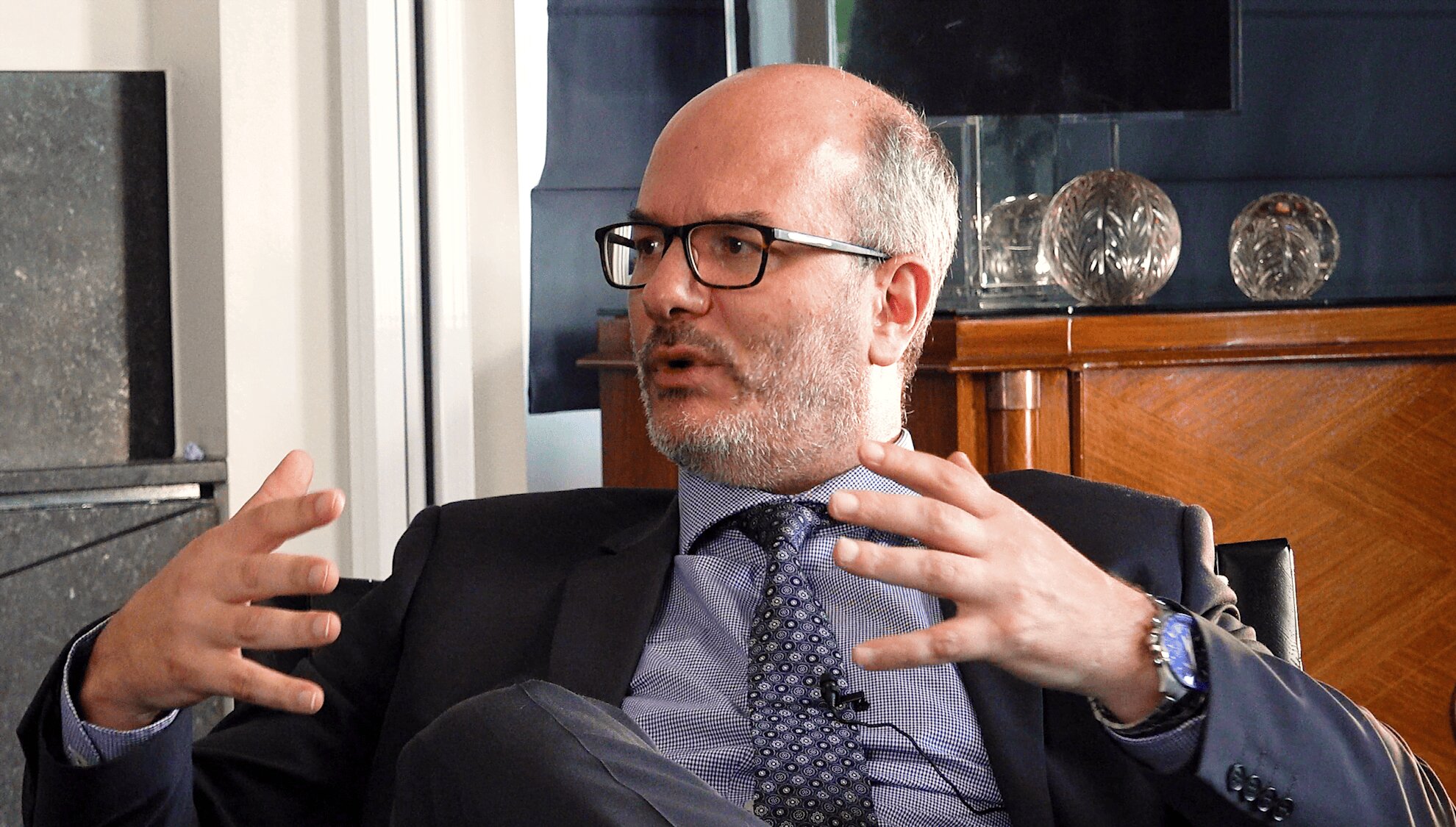
In September this year, John Anderson Media collaborated with the Australian Dialogues to host a high-profile discussion between legal experts on the question “Is the Constitution Alive?”
The dialogue featured the Hon. Michael Kirby AC CMG, Judge Andrew Oldham, Professor Nicholas Aroney, and Professor Rosalind Dixon, and was introduced by the Hon. John Anderson AC.
Mr Kirby is a former Justice of the High Court of Australia (1996–2009). He was previously appointed as President of the New South Wales Court of Appeal and President of the Australian Law Reform Commission (ALRC). He is considered one of Australia’s most influential legal thinkers and has held prominent international roles with the United Nations and the International Commission of Jurists.
Judge Oldham currently serves as a United States Circuit Judge in the Court of Appeals for the Fifth Circuit. He was appointed by President Donald Trump in 2018, prior to which he served as the General Counsel to Governor Greg Abbott of Texas, Deputy Solicitor General of Texas, and an attorney-adviser in the United States Department of Justice.
Dr Aroney currently serves as Professor of Constitutional Law at the University of Queensland (UQ) and is a globally recognised scholar in constitutional theory, comparative federalism, and legal history. In addition to his association with UQ, he has held visiting positions at the likes of Oxford, Cambridge, and Paris — and he has authored over 100 books, chapters, and journal articles.
Dr Dixon is a Professor of Law at the University of New South Wales (UNSW) Sydney and Director of the Gilbert + Tobin Centre of Public Law. She was a former associate to Chief Justice Murray Gleeson and is a graduate of Harvard Law School. Her fields of specialisation include comparative constitutional law, constitutional design, and democratic resilience.
Should Australia Have a Bill of Rights?
Towards the end of the debate, Professor Aroney was asked by Professor Dixon whether Australia would benefit from a Bill of Rights — such as that used by the United States and most other nations around the world:
“In a first-best world, would Australia move further toward adopting a charter of rights that would require judges to do that [deal with constitutional “rights” cases]?”
Professor Aroney responded fairly concisely: “I don’t think so, no.”
When pressed on why he took this view, he provided some context, pointing out that up to this point, the dialogue had been considering “how to interpret the constitution as it is”. Yet the question of a Bill of Rights shifted the conversation to considering what should be in the constitution: “the two are related because what you decide to put into it [the constitution] then has to be interpreted — and all of the debate we’re having about how to interpret that will arise”.
According to Dr Aroney, a Bill of Rights would essentially introduce “a set of standards” that are “expressed in highly abstract terms”. This is unavoidable: “when we speak of human rights, we speak of them at a very high level of abstraction: freedom of speech, freedom of association, freedom of religion, and so forth.”
But this raises the question: what do they mean?
“We recognise that [these rights] can’t be totally absolute,” says Aroney, “So we work into our Bills of Rights language of limitation.” However, the problem is that “those limitation clauses are very abstract as well”.
While the human rights and their respective limitations are both articulated in very abstract terms, the cases where they will be tested are very concrete and specific. Aroney explains:
“So what happens is if you are to ever apply a Bill of Rights to a [particular legal] case, you are taking a very abstract statement of a right, and a very abstract case of limitation, and you’re deciding, ‘Well, if I take those two things [the right and the limitations] into consideration, does this particular law, or this particular action, comply with or interfere with that right as potentially limited?’”
Fundamental to Dr Aroney’s rejection of a Bill of Rights in Australia was the distinction between the decision-making role of a member of parliament and that of a judge.
Although both offices have an important role in a functioning democracy, their roles are distinct.
Less Power, More Respect: Why Australia Shouldn’t Let Judges Decide Human Rights Cases
In the current Australian context, Dr Aroney pointed out, decisions around human rights — for instance, free speech — are debated in parliament, where an MP might ask: “Should we enact this, having regard to what I believe freedom of speech stands for and what ends or purposes one might limit freedom of speech for?”
While this is how human rights debates currently occur in Australia, putting a Bill of Rights into the Australian Constitution would the final decision from the parliament into the judiciary. Instead of MPs having the final say on matters around human rights, judges would have the responsibility of debating the same questions — and the power to overturn decisions that the parliament makes on the basis of human rights violations.
So, according to Aroney, the question to decide when considering a Bill of Rights is “Do we want a system where that decision is made by the elected members of parliament, or by judges?”
Yet he is quick to add that the answer to that question is not “just absolutely obvious”.
To illustrate his point, Aroney turns to Aristotle, who recognised that an effective political system for most countries will include elements of democracy, aristocracy, and monarchy.
“Why do we appoint people as judges?” Aroney asks. “I think it is because we see in them wisdom, character, maturity, good judgement, right?”
“If you read your Aristotle, he will tell you that [this] is called aristocracy, right? That is what aristocracy is. It is the rule of the wise and the virtuous. So, the decision you will be facing is simply this: do you want a form of aristocracy or not? And in our democratic climate, I know that me pressing that button is to press a pretty big button. For some of you, aristocracy is an obviously bad thing. But for some of you, you’ve got to stop and think: actually, we do have aristocracy in our system — and the question is ‘What is the best balance?’”
For Aroney, adding a Bill of Rights to the Australian Constitution would tip the country “too much towards the aristocracy”.
Although he reiterates that he “deeply value[s] the role that judges play in determining questions of guilt — applying the law to particular, concrete cases”, he is hesitant to give judges “the role of determining larger political questions” such as those that they will be forced to consider if Australia had a Bill of Rights.
The reason for this is that he suggests that such a role would “embroil” judges in “political controversy”, leading them to “lose the respect of the people”.
Here, Aroney draws a comparison between Australia and the United States, where the judiciary has taken on a distinctly partisan flavour:
“In the United States, the judiciary is just so hated by either side when they decide against [their political position], whereas in Australia, we tend to respect our judges more because they exercise less power and do so judiciously.”
A higher degree of political involvement by judges will inevitably lead to lower respect for the independent judiciary. On the other hand, less political involvement — as is the case in Australia — helps to maintain a higher degree of respect for the courts.
Hence, according to Nicholas Aroney, adding a Bill of Rights to the Australian Constitution would very likely lead to a higher level of politicisation and reduce public trust in the judiciary.
Image taken from John Anderson Media via Google Images.
Recent Articles:

9 October 2026
1.3 MINS
Season 6 of The Chosen is releasing next month, and until 15 November, your church has the opportunity to host a free pre-release screening of Episode 1. Here's how.

9 October 2026
1.8 MINS
Pen Power Australia has been busy confronting antisemitism and double standards, lodging letters, pursuing accountability and celebrating several important wins along the way.

9 October 2026
3.3 MINS
New South Wales healthcare workers who object to abortion and voluntary assisted dying face growing pressure, raising serious questions about conscience rights, employment and moral injury.

9 October 2026
2.9 MINS
God is intensely relational, and he puts us into a community of believers so we can use our gifts in service of Christ's body.
8 October 2026
3.6 MINS
John Anderson warns that Australia’s decline is rooted in spiritual and cultural disintegration, calling for a recovery of Christian foundations, social cohesion and national purpose.
8 October 2026
1.6 MINS
A blackout at Australia’s $150 million Pre-COP climate summit in Fiji delivered an awkward lesson in energy reliability to delegates preaching the renewable transition.

8 October 2026
4.1 MINS
Aboriginal communities in Central Australia already know the gospel message. What they need now, Robyn Murray writes, is discipleship, encouragement and Christians willing to pray and participate.


