



The Jesus of History
Time Magazine did a story about the ‘Most Significant Person in History’, and concluded after a very comprehensive and detailed research program that Jesus was that person. The results appeared in their December 10th, 2013 edition.
If one googles ‘the most significant person in History’ and searches through the numerous websites claiming this title, you will find that Jesus appears more than any other claimant.
His life story on film has had more than eight billion views and counting. The Jesus film has been translated into 1,800 languages.
His life story is written in the most read and most published book in history. There have been some five billion-plus copies of the Bible distributed in over 340 languages. And at least one book of the Bible is available in over 2,000 languages.
His life story has been translated and recorded, and can be heard in some six thousand, five hundred different languages on the 5 fish app.
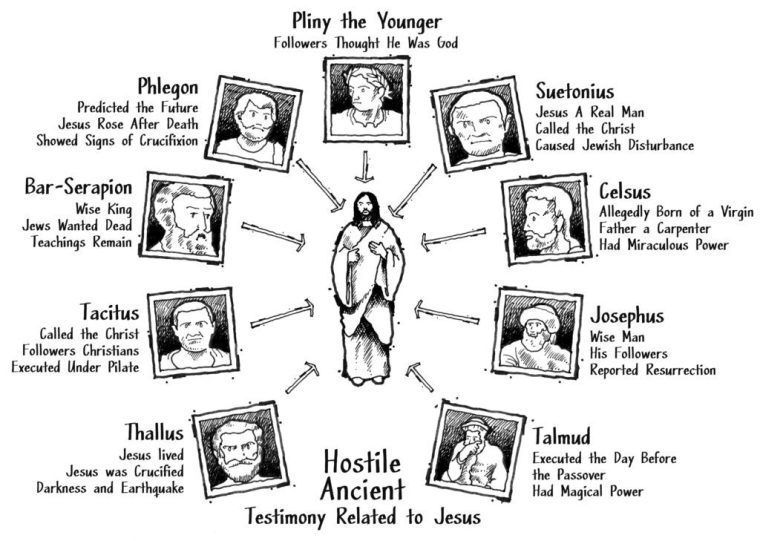
What do we know about Jesus from texts apart from the Bible?
 Jesus is mentioned in the writings of both the Jewish historian Josephus, Antiquities of the Jews (Bk.XVIII.III.3 written about AD 93), and the theologian Origen, in his book Contra Celsum, written about AD 248. See references below.
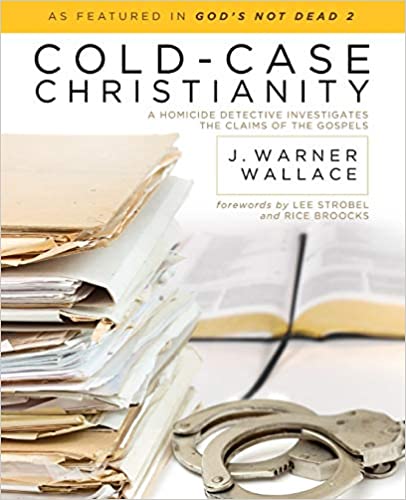
J. Warner Wallace, author of Cold Case Christianity, was a former homicide detective and former atheist. He used his ‘cold case’ skills to verify the reality of the existence of Jesus:
Sir Lionel Luckhoo (1914-1997) is considered one of the greatest lawyers in British history. He’s recorded in the Guinness Book of World Records as the “World’s Most Successful Advocate,” with 245 consecutive murder acquittals. He was knighted by Queen Elizabeth II — twice. Luckhoo declared:
I humbly add I have spent more than 42 years as a defense trial lawyer appearing in many parts of the world and am still in active practice. I have been fortunate to secure a number of successes in jury trials, and I say unequivocally the evidence for the Resurrection of Jesus Christ is so overwhelming that it compels acceptance by proof which leaves absolutely no room for doubt.
It is recorded in the Bible that at least 513 people saw Jesus after His resurrection. These recorded eye-witness accounts happened on at least 8 separate occasions.
The largest volume and most authenticated writings about the teachings of Jesus were recorded by those ‘eyewitnesses’, who actually lived with and were taught by Jesus Himself. The accounts of Matthew, Mark, Luke and John as recorded in the Bible have stood the test of time and the sceptics. Millions of followers of Jesus around the world can attest to the value and transformational nature of His teachings.
One would draw the conclusion that it would beneficial if people could be encouraged to examine and explore the teachings of Jesus.
Might this not help to address racism and violence in our societies?
Consider some other celebrations and events that demonstrate the impact and the significance of this person, Jesus.
- Throughout most of the world, the usual way to refer to the calendar year was by using the abbreviations BC and AD. BC was shorthand for ‘before Christ’, and AD was shorthand for Anno Domini — in the year of our Lord (Latin). Despite being unable to establish the exact date of Jesus’ birth, it was and is still used as the fulcrum for the Western way of marking time.
- In many countries around the world, the events of Christmas and Easter are celebrated. They came to be celebrated because of the significance of Jesus’ birth, death and resurrection.
- There are many phrases attributable to Him, however, the best-known is the famous ‘Golden Rule’, sometimes articulated as, ‘Treat others as you want them to treat you.’ Jesus said it like this: ‘Love your neighbour as yourself.’
- In a time and culture that was almost exclusively patriarchal, Jesus did not shy away from expounding the value of women and children. Would He be the most potent advocate for women and children in history?
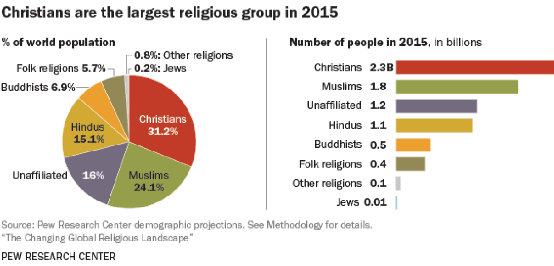
Is it any wonder, then, that Christians are the largest religious group in the world?
___
References:
- Josephus, Flavius. Antiquities of the Jews, Bk. XVIII.3.3, in Josephus, Complete Works. Translated by William Whiston. Foreword by William Sanford LaSor, (Grand Rapids, MI: Kregel Publications, 1981).
- Josephus, Flavius. The Jewish War, translated by G. A. Williamson, revised with a new introduction, by E. Mary Smallwood, (Harmondsworth, UK: 1986), p. 12.
- Josephus, Flavius. Flavii Josephi opera, edidit et apparatu critico instruxit Benedictus Niese, (Berolini: apud Weidmannos, 1955, reprint of 1885-1895 edition), vols. 1- 7.
- “7 Key Changes in the Global Religious Landscape“, The Pew Forum
___
Originally published at Did You Know?
Also published at Australian Prayer Network and Christian Today.
Photo: José Luiz Bernardes Ribeiro, Genealogy of Jesus mosaic at Chora.
Recent Articles:

18 October 2026
2.7 MINS
Every season of life belongs to Christ, and we don't retire from discipleship as we grow older. In fact, our older years hold unique gifts for the younger generations.

17 October 2026
3.4 MINS
Seeking the face of God means surrender, laying aside our agenda and wants. Revival begins when we want God himself more than we want the outcome.
16 October 2026
3.3 MINS
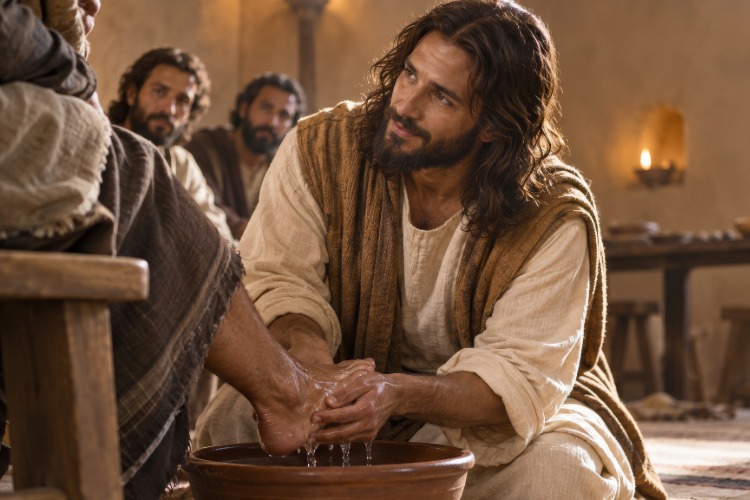
Jesus is calling us to love one another “just as I have loved you”. And if the Church does awaken to that agape (love), the world will see a great and powerful witness to Christ and his kingdom.
15 October 2026
3.6 MINS
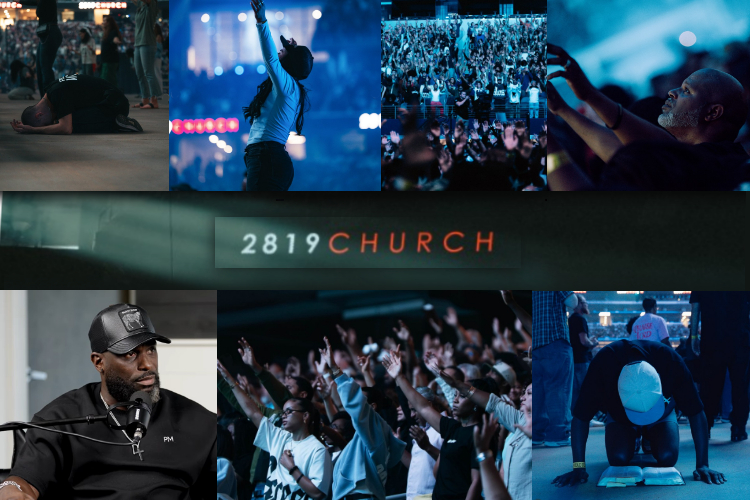
An 80,000-strong gathering in Texas signals a hunger for revival, as Pastor Philip Anthony Mitchell warns that Christian indifference could leave future generations without the faith.

15 October 2026
4.2 MINS
Many Australian Christians don’t know a single Aboriginal person. Robyn Murray argues that reconciliation begins with honest history, prayer and a shared life in Christ.

15 October 2026
6.1 MINS
Historian Frank Furedi warns that the West is waging a war against its own past, censoring books, rewriting history and severing future generations from their heritage.

15 October 2026
7.2 MINS
A man’s death in a tiger enclosure sparks chilling online reactions, exposing a growing willingness to judge human worth by usefulness, behaviour and ideology.


