



The Tiger, the Moron and the Death of Human Dignity
A man is mauled by a tiger, the internet cheers, and human dignity gets thrown to the beasts.
Do you have a pet? A pet you really love?
You do? Oh, good.
A dog? A cat?
A dog?! That’s fantastic.
Winston? Oh, that’s such a great name for a dog. So, tell me all about Winston.
Winston sounds amazing.
Ok, so imagine Winston is drowning in the middle of a lake. You can save Winston, but only if you rush immediately to Winston’s aid.
But before you go wading out to save Winston, I need to tell you there’s an old man also drowning in the middle of the same lake.
I’ve no idea who he is. He might be a good guy. He might be a bad man. I’ve no idea.
All I know is that if you don’t go immediately to the old man’s aid, he will drown.
So…
Who are you saving? Winston? Or the old man? You can’t save both.
Back in the days when I used to fly a lot, I used to ask this question of strangers on domestic flights. I suspect this may explain why cabin crew members sometimes asked me to move seats, although I can’t be certain.
Anyway, the question helped pass the time and, to be honest, the conversations generated by that question were always fascinating … when they didn’t end with me being relocated to seat 31F, I mean.
Conditional Compassion
I was reminded of this question when reading reactions to the death of a man who jumped into a tiger’s enclosure at Yorkshire Wildlife Park on Sunday.
William Chapman, aged his 20s, leapt the barricade and then sat on the grass as the tiger approached him.
The whole thing happened so fast that Chapman was dead by the time wildlife park rangers arrived.
Why he entered the enclosure is not yet known. Mental illness may have played a role. It seems a reasonable possibility, given that people in their right minds generally don’t volunteer to become lunch.
But what followed was perhaps more disturbing than the incident itself.
Online, people didn’t merely withhold sympathy for Chapman. Many appeared positively delighted by his death.
One less moron in the gene pool, was typical of the reaction.
It seems compassion, like so many other things, has become a luxury reserved for people who make good decisions.
Then evolutionary biologist Colin Wright, a senior fellow at the Manhattan Institute, posed a question online, asking,
A person willingly enters a tiger enclosure and approaches the tiger.
The tiger begins mauling the person.
You have a gun and the ability to take a clean shot at the tiger to save the person’s life.
What do you do?
Wright offered two choices:
Shoot tiger. Save person.
Or
Don’t shoot. Person dies.
More than 23,000 people voted in the poll, with 46 percent saying they would kill the tiger to save the person.
The majority — 54 percent — said they would refuse the shot and let the person die.
In the comments beneath the poll, a shocking number of people said they would take a third option — shoot the person.
It’s important to note… shooting the person was not an option given on the survey.
Who Gets to Decide Which Lives Matter?
Let me give you some of the responses that were most liked by others online.
One person wrote:
“Every human life is precious” is an emotional argument, but not a logical one. There are 8 billion of us. Empirically, losing one who is clearly mentally unstable will have no negative impact on society.
That argument works right up until you’re the “one” whom the mob decide won’t be missed by society.
Perhaps you’re mentally ill. Perhaps you’re old. Perhaps you’re disabled, unemployed, depressed, or simply having the worst day of your life.
Perhaps you’ve made a catastrophic mistake.
Never mind. There are eight billion people. The spreadsheet says you’re expendable.
The problem with reducing human worth to social utility is that utility is a notoriously unreliable measure of human value. And the people holding the measuring stick are rarely the people being measured.
Today, the person judged worthless is a stranger who climbed into a tiger enclosure.
Tomorrow, it might be someone who has spent their life caring for others but can no longer care for themselves.
The day after that, it might be you.
Or what about this:
Person willingly entered? Tiger gets fresh meat and I save a bullet. I’m a fan of actions having consequences.
Tough, but fair. I only hope the hundreds of people who liked that comment never need mercy since, by their own reasoning, they should expect none.
I thought this response was telling:
We need to know more about the man in question.
Is he a Labour voter?
If so, don’t shoot. Natural selection is at work and should not be interfered with
This one is interesting for a different reason.
The commenter isn’t simply arguing that some lives are worthless. They’re suggesting that a person’s worth depends on whether they belong to the correct political tribe.
In other words, the value of a human life is determined by a checklist of subjective characteristics.
You’d want to make sure your mum was in charge of the checklist.
Of course, political affiliation is just one possible criterion. Others might include intelligence, wealth, physical fitness, social usefulness, moral character or whether the person has recently said something offensive on social media.
The possibilities are endless.
And that’s precisely the problem.
Once human worth becomes conditional, the only question left is who gets to write the conditions.
Human Dignity Is Not Earned
Finally, consider this response:
A human, however foolish, is worth more than an animal.
Want to know how many ‘likes’ this response got?
Nil. Nada. None.
Now, this was an online poll, not a referendum on the moral character of Western civilisation. Social media is hardly a representative sample of humanity, and a poll cannot tell us precisely what every respondent would do in a real emergency.
But the responses do expose an unsettling idea gaining traction in our supposedly enlightened age: that some human beings are simply not worth saving.
And if you think about it, that is a remarkable conclusion for a civilisation that congratulates itself endlessly on its compassion.
We have elaborate vocabularies for recognising the dignity of animals, protecting the environment and respecting the feelings of people who identify in ways we don’t understand.
Yet when a man appears to have made a profoundly irrational decision, many people suddenly discover that human dignity was never a universal principle at all.
It was a reward for good behaviour.
Which brings us back to Winston.
If your beloved dog and an unknown old man were both drowning, I suspect many people would save the dog. Emotional attachment is powerful, and I’m not suggesting that loving an animal is a moral failing.
But if you chose the dog, would you also argue that the old man had less intrinsic value than a Labrador?
Would you say his life mattered less because he was old, economically unproductive, politically objectionable or simply a stranger?
There is a difference between loving one creature more than another and believing one creature is worth more than another.
And there is a difference between acknowledging that people make terrible decisions and deciding that their lives are no longer worth saving.
The first is an unavoidable fact of life.
The second is a dangerous philosophy.
Because if human beings possess no intrinsic value, then human rights are not rights at all. They are permissions granted by whoever has the power to decide who matters.
And permissions can be withdrawn.
The Christian Foundation of Human Freedom
Christianity argues that human beings possess inherent dignity because they are made in the image of God.
Not because they are clever. Not because they are productive. Not because they are morally admirable, politically acceptable or capable of contributing something useful to the economy.
Their worth precedes their achievements.
It’s not awarded by the state, conferred by society or earned through good behaviour.
Human worth and dignity are grounded in something greater than the shifting preferences of human beings.
That is the foundation of the Christian argument for human dignity. And it has profound consequences for human liberty. So does its loss.
If our worth comes from God rather than the state, then the state does not own us.
If our dignity is intrinsic rather than conditional, then governments cannot legitimately decide that some categories of people are disposable.
And if every human being possesses that dignity, then the strong have obligations towards the weak that cannot be reduced to subjective calculations.
Christianity doesn’t promise that Christians will always defend liberty, or that no other worldview can offer arguments for human rights.
But the Christian worldview offers a coherent foundation for universal human dignity: every person matters because of what they are, not because of what they can do for us.
And we all need that foundation.
Because even if none of us ever suffers the kind of apparent crisis that led Chapman into the tiger enclosure, all of us will one day become old and frail. Some of us will become disabled. Some will lose our memories. Some will become dependent on others for the simplest tasks of daily life.
Eventually, most of us will contribute very little to the economy.
We will consume resources. We will require care. We may become inconvenient, expensive and difficult to love.
But we will still be human.
And if human value depends on productivity, intelligence, independence or good judgement, then our claim to dignity will weaken precisely when we need it the most.
The Christian answer is that our worth does not diminish when our usefulness does.
That’s not merely a comforting religious sentiment, by the way.
It’s a safeguard against the tyranny of those who believe they have the authority to rank human lives according to their perceived value.
Because the moment society decides that some people are worth less, everyone has a reason to wonder whether they might be next.
Today, the mob is laughing at the man in the tiger enclosure.
Tomorrow, it may be laughing at the old man in the nursing home.
And one day, if we live long enough, that old man will be us.
A civilisation that cannot explain why the weak deserve protection will eventually struggle to explain why the strong should be restrained.
Christianity supplies that answer.
Every human being bears the image of God. Every human being possesses dignity. And no human being’s right to exist depends on passing someone else’s test of usefulness.
That is why human freedom needs more than laws, constitutions and declarations of rights. It needs a moral foundation strong enough to protect people even when the majority has decided they are not worth protecting.
Because Winston may be a very good dog.
But the old man is still a man.
And if we forget the difference, we may eventually discover that the tiger isn’t the most dangerous creature in the enclosure.
___
Republished with thanks to The James Macpherson Report. Image courtesy of Adobe.
6 Comments
Leave A Comment
Recent Articles:

5 November 2026
2.5 MINS
On Tuesday, 10 November, beginning at 6 pm, a public rally will be held outside Victoria's Parliament House to show support for the unborn, after Victorian Premier Ben Carroll has committed to forcing taxpayers to foot the entire bill for abortions up to 16 weeks' gestation.

5 November 2026
3.1 MINS
A 60-year-old Victorian man was rushed to Geelong Hospital with bleeding from the brain and multiple fractures to his face. A father and son attacked him for having a One Nation corflute sign in his front yard.

5 November 2026
4.8 MINS
I offer some biblical, spiritual and theological commentary on the midterm elections results. We must avoid being too downhearted, yet avoid giving out false hope. Ultimately, our trust is in God alone, not results, yet we are called to make a difference in this world.
5 November 2026
4.5 MINS
Donald Trump’s historic Reformation Day message puts Jesus Christ, Scripture and America’s Christian heritage centre stage, prompting praise from Christians and criticism from secular commentators.
5 November 2026
2.9 MINS
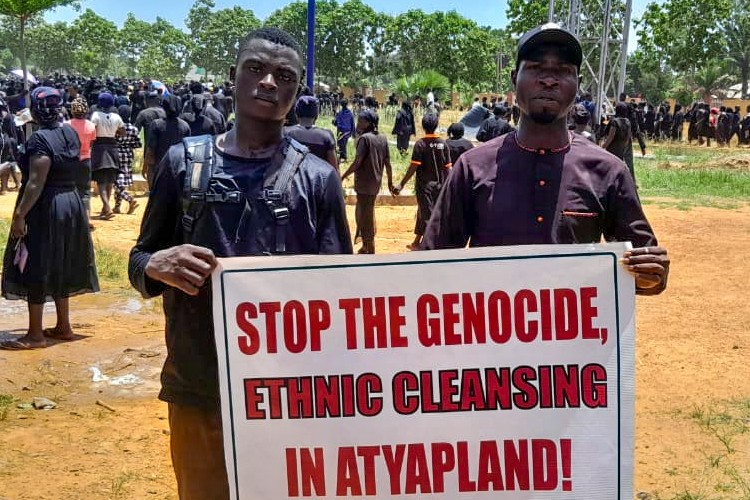
Nearly 5,000 Christians were killed in Nigeria in 2025, as allegations mount that government officials are funding efforts to conceal the escalating persecution.

4 November 2026
6.7 MINS
A New Zealand doctor carried out euthanasia using expired lethal drugs prescribed for another patient, before the legally required compliance review had been completed, official documents obtained by Voice For Life reveal.
4 November 2026
4 MINS
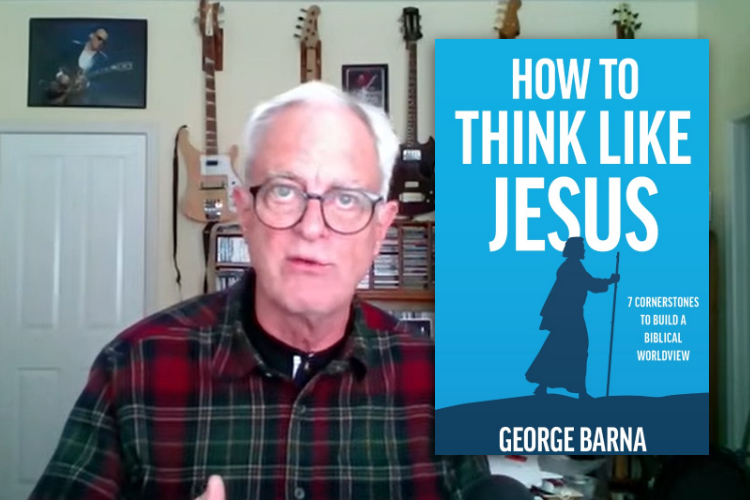
George Barna’s new book challenges Christians to examine their foundational beliefs, exposing the dangers of syncretism and identifying seven essential cornerstones of a truly biblical worldview.



Brilliant!
Outstanding article James. Well done! Thank you!
what is the world coming to.
When I heard the news of the man who jumped into the tiger’s cage I wondered if he had mental illness and thought it so tragic. (Sadly, the comments of the on line viewers you mention James show an incredibly damaged mindset from many )
We so need to keep God’s values and to see Him as the Creator of all the earth, creator of all creatures great and small, and Creator of heaven and earth. Then to remember we are made in God’s image and to love our neighbour as ourself.
The evolution theory was so misguided and blinded many who could no longer see God as Creator -and even Darwin at the end of his life regretted he had formulated that theory.
Since then we have introduced so may films and books about murder, violence and lives of desparation or hedonism, showing values of a depraved life.
We have lost sight of God’s purposes for mankind – to find Him, to serve Him and each other, and how to cherish life but also there isGod’s promise of eternal life to all who believe in Jesus sarifice on the cross.
If only that young man had known more about God’s love and the Bible, or had been ‘of sound mind’, he would have had a reason to not jump into the tiger’s cage.
Ditto to Kathy!
Thanks for this thought provoking article. ALL lives matter. Not only because we are made in the image of God but because He not only created us, but loved us enough to want a relationship with us. He gave us a free will so we are not robots under His control but He longs for us to draw close to Him and loved us enough to take the consequences of our disobedience on His own shoulders, so we can be reconciled to our Creator. Perhaps we shouldn’t put too much emphasis on the thoughtless responses on social media, and instead try to creatively solve the ever growing mental illness virus that is affecting so many.