


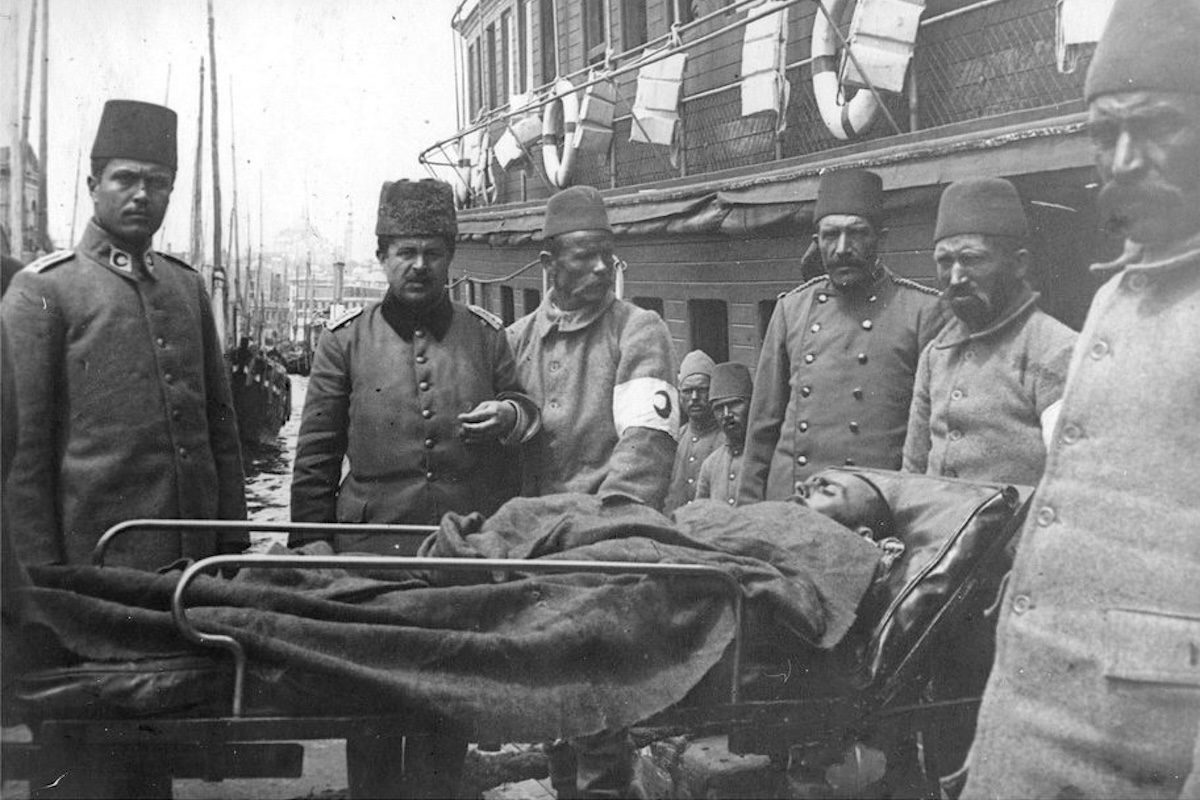
How the Ancient Rivalry Between Isaac and Ishmael Shaped World War One
World War One was more than a geopolitical struggle — it revived an age-old religious conflict between the descendants of Isaac and Ishmael, with lasting global implications.
World War One is often remembered for its trenches, tanks, and tragic loss of life among the great European empires. Yet beneath the surface of this colossal struggle lay deeper, older currents — spiritual and cultural tensions that trace back to the very beginnings of biblical history. The clash between Islam and Judeo-Christianity during World War One was not a new phenomenon; rather, it was a continuation of an ancient conflict that began thousands of years earlier, with the rivalry between the descendants of Isaac and Ishmael.
From a Christian perspective, history is not a series of random events but a divinely woven tapestry, with patterns that repeat according to the will and foreknowledge of God. World War One marked a decisive moment when the ancient struggle between the heirs of Abraham was reignited on a global scale — a clash that has reverberated into the present day and will ultimately culminate in the events foretold in Scripture.
Biblical Foundations: Isaac and Ishmael
The roots of the conflict between the Judeo-Christian and Islamic worlds lie in the book of Genesis. Abraham, the patriarch of both Jews and Arabs, had two sons: Isaac, born of Sarah by God’s miraculous promise (Genesis 21:1-3), and Ishmael, born earlier through Hagar, Sarah’s Egyptian maidservant (Genesis 16:15).
Scripture recounts that Ishmael, though blessed in his own right, was not the child through whom God’s covenant would be fulfilled: “But God said to Abraham, ‘Do not be distressed about the boy and your slave woman. Listen to whatever Sarah tells you, because it is through Isaac that your offspring will be reckoned.’” (Genesis 21:12).
Nevertheless, God promised Hagar that Ishmael would become the father of a great nation: “I will make him into a great nation” (Genesis 21:18).
However, the prophecy concerning Ishmael carried a more ominous tone: “He will be a wild donkey of a man; his hand will be against everyone and everyone’s hand against him, and he will live in hostility toward all his brothers.” (Genesis 16:12).
From the Christian view, these ancient prophecies set the stage for a perpetual conflict — one that manifested politically, culturally, and religiously throughout history.
Islam and the Rise of a Rival Faith
When Islam emerged in the 7th century under the prophet Muhammad, it self-consciously positioned itself as a “correction” to the Judeo-Christian tradition. Muhammad traced his lineage through Ishmael and proclaimed Islam as the true continuation of Abrahamic faith, rejecting critical tenets of Christian doctrine such as the deity of Christ and the Trinity.
The Quran states: “Say (O Muslims), ‘We believe in Allah and that which is revealed to us, and that which was revealed to Abraham, and Ishmael, and Isaac, and Jacob…’” (Quran 2:136).
From its inception, Islam bore an oppositional stance toward both Judaism and Christianity, claiming final authority over the previous revelations.
This theological challenge quickly became a political and military one. Early Islamic empires expanded rapidly through conquest, overtaking Christian lands in the Middle East, North Africa, and parts of Europe. The ensuing centuries saw continual struggles, including the Crusades, the Reconquista, and the ongoing Christian-Islamic confrontations at the borders of Europe and the Ottoman Empire.
Thus, the stage was set: the descendants of Isaac and Ishmael remained locked in a struggle that spanned continents and centuries.
The “Sick Man” and the Coming Storm
By the early 20th century, the Islamic world — once militarily and culturally dominant — had fallen into decline, particularly embodied in the weakened Ottoman Empire, derisively known as “the Sick Man of Europe.” Meanwhile, the Western powers, built on a Judeo-Christian heritage infused with Enlightenment ideals, had risen to global supremacy.
Yet the spirit of rivalry endured. The Ottomans retained religious significance as the custodians of the Islamic caliphate, a title granting them spiritual leadership over Muslims worldwide. The prospect of a European-dominated world order, with Christian empires ruling over Muslim populations, stirred ancient resentments.
World War One thus presented an opportunity for the Muslim world, led by the Ottoman Empire, to reassert itself against the encroaching Judeo-Christian West. The call to jihad in 1914 was a spiritual echo of Ishmael’s hand being “against everyone,” reigniting the ancient hostility prophesied in Genesis.
The Call to Jihad and the Religious Dimension of the War
When Sultan Mehmed V issued a fatwa declaring jihad against the Allies, it was not merely a political manoeuvre but a deeply religious act. Framed as a defence of Islam against Christian oppressors, the jihad call sought to inspire Muslims across British, French, and Russian colonies to rise up.
This was a potent appeal. Vast swaths of Africa, the Middle East, and South Asia were populated by Muslims living under Christian colonial rule. The Ottoman leadership hoped that a wave of Muslim rebellion would topple European control, much like earlier Islamic conquests.
Yet the results were mixed. Some Muslim leaders — such as the Sharif of Mecca, Hussein bin Ali — chose to side with the British against the Ottomans, motivated by promises of Arab independence. This foreshadowed the fragmentation and political rivalries that would plague the Islamic world in the century to come.
Nonetheless, the religious framing of the war was undeniable. It was not merely a clash of empires but of civilizations, of worldviews rooted in profoundly different understandings of God, humanity, and destiny.
A War for Hearts and Minds
Understanding the spiritual undercurrents of the war, both sides employed religious propaganda.
The British worked hard to portray themselves as protectors of Islam. They emphasised the care of Muslim soldiers in their armies and supported Muslim leaders who resisted the Ottoman jihad. Meanwhile, the Ottomans and their German allies framed the Entente powers as enemies of Islam, seeking to destroy Muslim lands and faith.
This was a battle for the hearts and minds of millions, fought with religious imagery as much as with rifles and bayonets.
Another paradox of the war was the service of millions of Muslim soldiers under British and French command. Indian Muslims fought bravely on the Western Front; North African troops served in Europe and the Middle East.
Many of these men fought loyally, but their position highlighted the complexities of the ancient conflict. They were, in a sense, Ishmael’s descendants enlisted in Isaac’s armies — an uneasy alliance brokered by political necessity rather than genuine religious reconciliation.
At times, Muslim soldiers were pitted against fellow Muslims in Ottoman ranks, a bitter irony that reflected the fragmented nature of the Islamic world by 1914.
Post-World War One Tensions
The war also saw the eruption of brutal religious violence. The Armenian Genocide — in which the Ottoman government systematically exterminated up to 1.5 million Armenian Christians — was fuelled not only by political fears but by centuries-old religious animosity.
The Armenians, as Christians, were viewed with suspicion and hatred by an Ottoman regime increasingly paranoid about internal betrayal. This horrific episode underscored the deadly potential of religious hatred when inflamed by war — a sobering reminder of the consequences of the ancient enmity between the sons of Isaac and Ishmael.
The conclusion of World War One did not bring peace between Islam and Judeo-Christianity. Instead, it deepened the divides.
The carving up of the Ottoman Empire by Britain and France, through agreements like Sykes-Picot and declarations like the Balfour Declaration, was seen by many Muslims as a betrayal. Western powers imposed new borders and installed regimes friendly to their interests, often disregarding local identities and aspirations.
Particularly inflammatory was the British promise of a Jewish homeland in Palestine — a move that rekindled Muslim fears of Jewish and Christian domination in lands they considered sacred.
Thus, the postwar period did not resolve the ancient conflict; it merely gave it new forms.
Echoes into the Present Day
The tensions that surfaced during World War One continue to resonate in the modern world. The Israeli-Palestinian conflict, the rise of Islamic extremism, and the broader struggle between Islamic and Western civilizations are all echoes of the ancient rivalry between Isaac and Ishmael.
The Apostle Paul, writing in the New Testament, recognised that the struggle between the “child of the promise” (Isaac) and the “child of the flesh” (Ishmael) symbolised ongoing spiritual conflict: “But as then he that was born after the flesh persecuted him that was born after the Spirit, even so it is now.” (Galatians 4:29).
From the Christian perspective, the conflict will continue until Christ returns to establish His kingdom. In the meantime, the Church is called to proclaim the Gospel to all peoples — Jews, Arabs, and Gentiles alike — offering reconciliation through the blood of Christ.
“For He Himself is our peace, who has made the two groups one and has destroyed the barrier, the dividing wall of hostility.” (Ephesians 2:14).
World War One was not merely a geopolitical contest; it was a reawakening of an ancient, spiritual struggle. The clash between Islam and Judeo-Christianity, rooted in the rivalry between Isaac and Ishmael, was brought to the fore in new and devastating ways.
The war’s religious dimensions — calls to jihad, religious propaganda, the role of Muslim soldiers, and atrocities like the Armenian Genocide — highlight the enduring power of spiritual identity in shaping human history.
Today, the echoes of that ancient conflict continue to shape the world’s political and religious landscape. Yet Christians are reminded that true peace will not come through political manoeuvring or military might but through the reign of the Prince of Peace, Jesus Christ.
Until that day, the ancient struggle foretold in Scripture continues, a testament to the enduring truth of God’s Word and the deep currents of spiritual warfare that underlie human history.
___
Image courtesy of Wikimedia Commons.
4 Comments
Leave A Comment
Recent Articles:

20 October 2026
4 MINS
Olympic champion Stephanie Rice has faced a wave of online ridicule after revealing she resigned from her dream job following what she believes was God’s direction.
20 October 2026
7.7 MINS
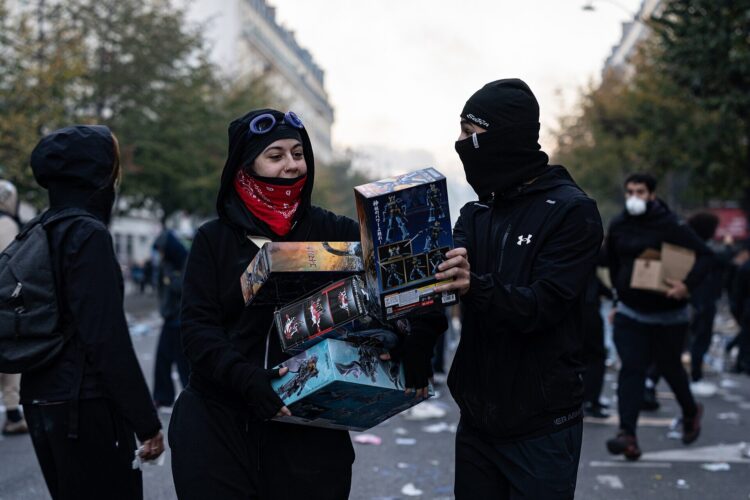
France and Europe are burning — is it too late to save them from the barbarians?
20 October 2026
4.6 MINS
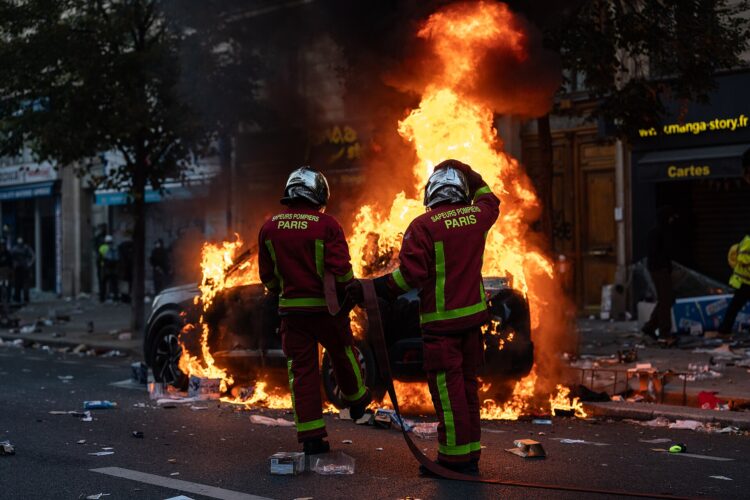
As rioters burn cars and historical buildings, celebrating the destruction of France’s inheritance, the West confronts an uncomfortable question: what happens when a civilisation loses the will to defend itself?
20 October 2026
4.9 MINS
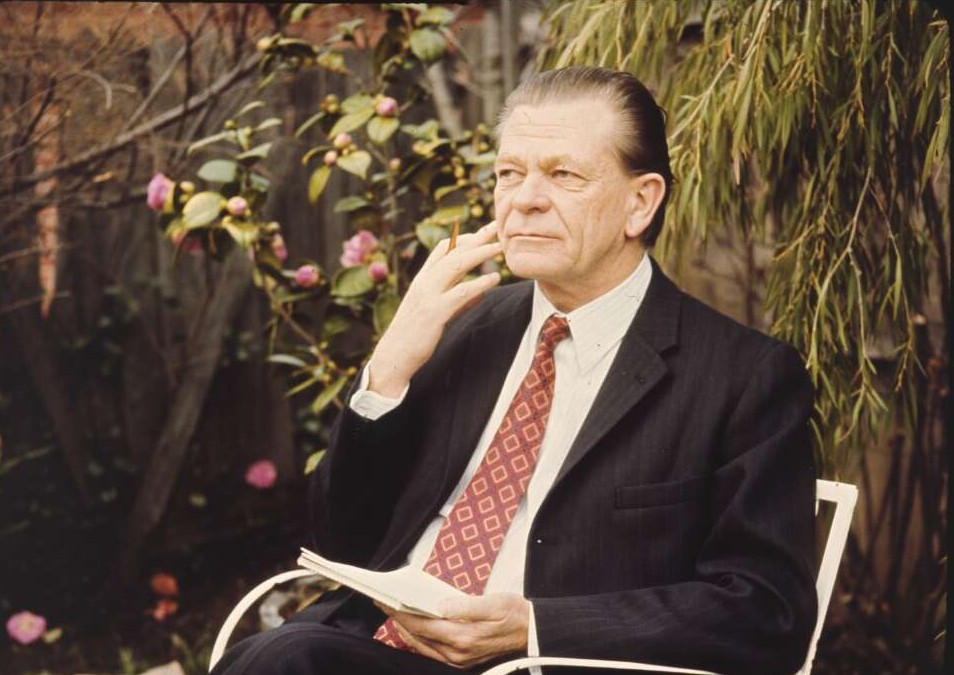
James McAuley’s legacy reaches far beyond Australia’s Catholic hymnals. Poet, convert and cultural warrior, he defended beauty, truth and faith in an age of changing values.

20 October 2026
4.9 MINS
A federal investigation has exposed how America’s biggest banks shut out conservative and Christian clients, relying on subjective reputation risks and controversial ideological watchdogs.
20 October 2026
3 MINS
Scripture teaches us to pray the "prayer of faith", because without faith it is impossible to please God.
19 October 2026
6.7 MINS
Europe’s escalating unrest raises urgent questions about immigration, national identity, secularism and the decline of Christian influence, prompting calls for repentance, prayer and renewed leadership.



Wow! This is, for me, a completely new and illuminating analysis of this terrible event, which had profound consequences even here on the other side of the planet – lest we forget. Thank you.
Same here. Not sure why I am only realizing this now, in 2026. So the war between Christians & Islam is Biblical and cannot be resolved by mankind. Very interesting. I will be reading more about this.
A great recap of the source and ongoing conflict here on earth that affects so many of us. I have heard a lot of this but not in this clear and concise way. Thanks.
My children grew up in Pasadena, CA, which together with next door Glendale comprise the largest Armenian population outside Armenia. Many of their friends were Armenian-Americans. But all people are individuals, first. Stereotyping is destructive, lazy and, unfortunately, natural. Among our closest friends, was an Armenian-American family that was politically split. The son, one of the kindest and gifted individuals I know, has been consumed by vengeance, against the Turks, for the genocide to such an extent that he could not enter into a loving relationship, and has never married. The father, believes that life is too short to spend it in vengeful turmoil. One must move on, and strive to realize their individual potential, the very thing that the genocide perpetrators tried to prevent.