


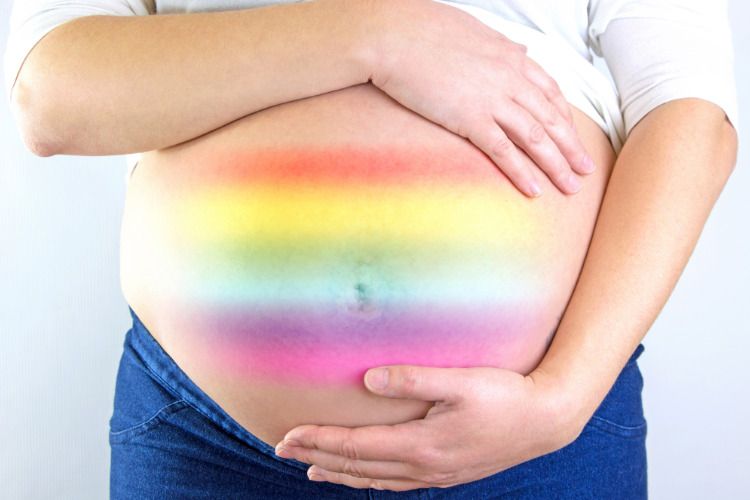
New Frontier of Creation Manipulation
About three and a half years ago, the federal parliament approved changes to our cloning and embryo research laws to allow for mitochondrial donation, a process that involves removing the nucleus of an ovum from one woman and replacing it with a nucleus – fertilised or unfertilised – from another woman.
The point of these changes was to prevent babies being born with mitochondrial disease, a horrible genetic condition contracted via the small amounts of mitochondrial DNA contained in the parts of the ova that surround the nucleus.
Mitochondrial donation avoids affected DNA being passed on to a child by using a donor for the “outer shell” of the ovum.
While preventing such a dreadful disease is a noble aim, the research not only contains all the ethical problems of IVF, but also unknown health risks. At the time the legislation was being considered, the Department of Health admitted that the short and long-term health risks for the child were not understood, nor were the implications for future generations.
Additionally, it opened up new bioethical frontiers because it creates babies with three biological parents: the mother and father who provide the 46 chromosomes contained in the nucleus, but also the ovum donor and the small amounts of mitochondrial DNA that contains. So, the baby would have two biological mothers and one biological father.
Still, the federal parliament went ahead.
Technological Temptation
During the debate, I wrote that once perfected, access to the “three-parent baby” technology would be expanded beyond those affected by mitochondrial disease. In particular, I foreshadowed that, in particular, the research would be immensely attractive to same-sex couples because of the ability to have a baby with two biological mothers. I predicted that there was a greater market of same-sex mothers than there was of the small percentage of the population who are affected by mitochondrial disease and who do not want to adopt, foster or use donor gametes.
When the law changed, I thought we might just have reached the limits of how far we were prepared to manipulate the creation of human life for our own purposes.
But I was wrong.
A new technology was discussed last week that makes the potential misuse of mitochondrial donation seem benign by comparison.
Researchers in the USA have announced that they have now had some success in creating three-parent embryos with only one biological mother, and two biological fathers.
The process involves taking ordinary skin cells from a man, removing the nucleus of the cell that contains 46 chromosomes and placing it into a donor egg that has had its nucleus removed, but which still retains its mitochondrial DNA. This is similar to the cloning method that was used to create Dolly the Sheep and other similar animal clones.
The researchers then took this cloning process a step further, forcing the newly-created cell to split in half so it only contained 23 chromosomes, the same found in an ordinary human egg or sperm, and then fertilised it with sperm from another man, which resulted in an embryo that was the biological child of two men and one woman.
The technology is still a long way off, with the process failing nine times out of ten, but it did work in some instances. In fact, of the 82 “egg-like” cells that were produced and fertilised with sperm, seven of them were still growing like a normal embryo after six days, which is usually the point at which they are inserted into the womb in the IVF process. In this instance, they were destroyed at that point.
Media outlets were quick to report that the technology, if perfected, could be used by male same-sex couples to have a child biologically related to both of them, and also by women who are too old to have children naturally.
It all sounds a bit sci-fi, but the research is happening and will continue, at least in the US. Let’s hope that our MPs are not captivated by this technology in the same way as they were with mitochondrial donation, and instead accept that this is obviously a bridge too far.
___
Republished with thanks to The Catholic Weekly. Image courtesy of Adobe.
2 Comments
Leave A Comment
Recent Articles:

6 October 2026
6.7 MINS
Fresh revelations about the foiled FlyDubai terror plot expose the attacker’s alleged extremist history, while a courageous pilot’s actions prevented an unthinkable catastrophe.

6 October 2026
3.3 MINS
We often talk about church renewal as though we need more people, more programmes, more energy and more resources. But Jesus seems to start somewhere much smaller. With two or three.

5 October 2026
4.9 MINS
Free Speech Union co-founder Reuben Kirkham warns Australia’s proposed Digital Duty of Care could expand censorship powers, undermine free expression and bypass recent legal protections.
5 October 2026
7.3 MINS
DJ, composer and trance music icon, Tyson Illingworth aka tyDi shares his testimony in coming (back) to Christ in this exclusive interview with Aaron Duff from Australian Christian Records.

5 October 2026
3.7 MINS
The Albanese Government promised cheaper coffee by banning card surcharges. Instead, the costs simply moved into higher prices — leaving Australians paying for a saving that never existed.

5 October 2026
3 MINS
The Church is the salt of the earth. But if salt becomes tasteless, it is useless — and thrown out.

4 October 2026
3.5 MINS
As children of the day, let us live freely out of our identity and awaken those around us from spiritual sleep. We carry more than faith for a great awakening — we are the awakeners.



it’s science, that’s not an English word originally its an ancient language which translated into English would be witchcraft.
It’s not about gays except I using them to pay for services providing research into genetics
It’s about science About learning how to be the Creator.
It’s about becoming God’s.
That’s the point .
How has long term testing with these fertilisation methods fared with other animals??
I suspect there’ll be all sorts of issues down the line. Particularly with the versions that use the nucleus of an aged cell.