


Digital ID: When “Optional” Becomes Mandatory
Freedom rarely disappears overnight.
More often, it’s chipped away – one “common-sense reform” at a time.
That’s exactly what we’re seeing in Britain, where the Labour Government’s latest push for digital identification has triggered a storm of public anger and accelerated its collapse in the polls.
Britain’s warning
The UK Government has begun rolling out a national digital ID, supposedly voluntary, but in reality becoming unavoidable.
Under new rules, employers are being urged to verify workers through digital ID apps on their phones. Technically, no one is forced to sign up.
But in practice, the system gives companies strong incentives to adopt digital checks, leaving ordinary people with little choice but to comply.
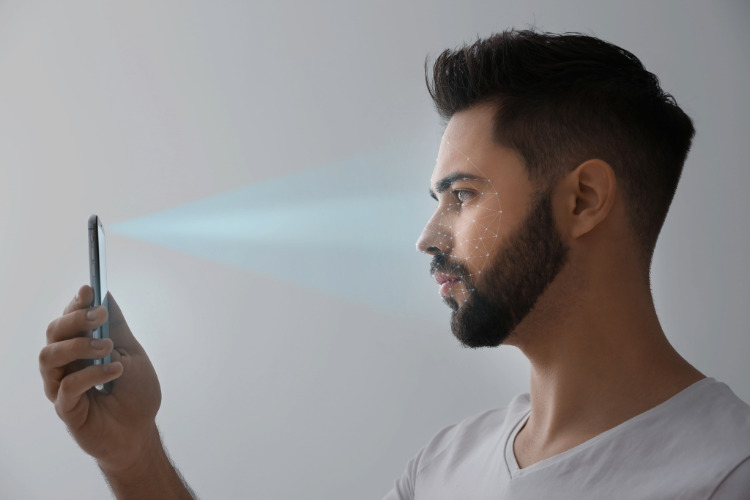
To enrol, British workers must scan their passport or licence and record a live selfie video.
Private “Digital Identity Service Providers” then run facial-recognition software to confirm the match and store a biometric template– a digital map of the person’s face – for future checks.
Critics warn this creates a national ID system by stealth.
Unlike a password, a person’s face or fingerprint can’t be changed if stolen – once breached, it’s compromised for life.
These private databases are prime targets for hackers, and once tied to everyday life – work, travel, banking – the same technology could easily expand into wider surveillance.
Even small errors in facial-matching can wrongly flag people, while citizens have little control over who ultimately accesses their image.
Public reaction has been furious. Even many who once supported the government now see the move as another example of a political class hopelessly out of touch.
Australia is on a similar path
Here at home, our Digital ID framework has already been legislated, with the government now preparing to allow state and private-sector providers to join the system.
According to the official Digital ID roadmap, banks, telcos, and rental agencies could begin using the same ID verification from late 2026.
For now, participation is voluntary – but so it was in Britain.
Just as worrying is the direction of Australia’s eSafety regime.
The eSafety Commissioner already wields sweeping powers to order online content removed, and with the social-media age verification regime now imminent, even more personal ID data is at risk of being collected and stored.
Different policies, same mindset. More surveillance, less freedom.
A line in the sand
Recently, Senator Alex Antic reintroduced his bill to repeal Digital ID legislation, seeking to wind back the government’s framework.
Whatever the makeup of the current Parliament, we must get behind such initiatives until we succeed.
If we roll over on this, what will be legislated tomorrow?
Technology itself isn’t the villain. The danger lies in governments that promise convenience while quietly centralising control.
Families, faith communities, and freedom all depend on a system that, by default, trusts its citizens.
The lesson from Britain
If there’s one takeaway from the UK experience, it’s this: once freedom becomes conditional, it’s no longer freedom at all.
Australia still has time to chart a different course – but only if we remain alert and vocal.
___
Last Friday, I joined Vision Christian Radio to talk about the UK’s new digital-ID rollout – and what it means for families, faith, and freedom here in Australia.
You can listen to the deep dive interview here:
🎧 [CLICK HERE to listen]
___
Republished with thanks to the Australian Family Coalition. Image courtesy of Adobe.
2 Comments
Leave A Comment
Recent Articles:

11 October 2026
2.6 MINS
Jesus offers us intimate friendship, which produces great joy as we walk closely with him.

10 October 2026
4.1 MINS
When Jesus rebuked the Laodicean church, this was not a sign of his lack of love, but proof of it and how greatly he longs to reward and bless us. He is knocking — will we answer?
9 October 2026
5 MINS
During a recent dialogue between high profile legal experts, a top Australian constitutional law expert was asked if Australia should have a Bill of Rights. His answer may surprise you.

9 October 2026
1.3 MINS
Season 6 of The Chosen is releasing next month, and until 15 November, your church has the opportunity to host a free pre-release screening of Episode 1. Here's how.

9 October 2026
1.8 MINS
Pen Power Australia has been busy confronting antisemitism and double standards, lodging letters, pursuing accountability and celebrating several important wins along the way.

9 October 2026
3.3 MINS
New South Wales healthcare workers who object to abortion and voluntary assisted dying face growing pressure, raising serious questions about conscience rights, employment and moral injury.

9 October 2026
2.9 MINS
God is intensely relational, and he puts us into a community of believers so we can use our gifts in service of Christ's body.



well ausposts robot phone line now says something like you must have a account now ,see this link for updated information .
You know the style .Like the members of parliament elected by we the people to act as our representatives now ,many of the more powerful anyway ,include in their robot recording warnings that any inappropriate comments that their moderators detect will be sent to the authorities for policing .
And of course they only let their staff take the calls .
Here in WA the staff are not allowed to listen to it watch read any news whatsoever and are forbidden to even talk about any news whatsoever even with their own spouse siblings children anyone .At all .
Is that permissive liberal freedom from a democratic society .?
Senator Alex Antic reintroduced his bill to repeal Digital ID legislation, seeking to wind back the government’s framework.
Let’s back him in prayer and lobbying.