



The Bullet That Could Put Cuba’s Dictator in the International Court of Justice
Osiris Puerto Terry survived a brutal police shooting during Cuba’s 2021 protests. Now in exile, he fights for justice, exposing the regime’s decades-long repression of his family and dreams.
“I want to thank the Lord for saving my life.” This is how Osiris José Puerto Terry began his speech at the Geneva Summit for Human Rights and Democracy a few months ago. He still had one of the bullets fired at him by the National Revolutionary Police during the anti-socialist demonstrations of 11 July 2021 (11J) lodged in his body.
That day, Puerto Terry went out in Havana like thousands of Cubans across the island, and like thousands of Cubans before 11J, he didn’t consider himself a democracy activist. However, although he only sold ice cream, the socialist system had poisoned his life long before that.
When he was a child, his father disappeared, and at school, his teachers told him he was a bad man. He didn’t understand anything; he was only four years old. His mother, devastated by the atmosphere surrounding that situation, committed suicide. Years passed before Puerto Terry learned that the regime had expelled his father from the island among the 125,000 Cubans who fled in 1980 during the Mariel boatlift.
Lifelong Injustices
During his adolescence, he channelled his frustrations through boxing and discovered he had a natural talent. He was the best in his graduating class and hoped to join the national team. He dreamed of competing in the World Boxing Cup. “But the regime denied me that opportunity because of my connection to my father,” a Cuban living abroad, he recounted.
All of this had happened before he turned 18: the State deprived him of growing up with his father, drove his mother to suicide, and strangled his athletic career. At 49, that same State tried to assassinate him on July 11th.
After a long day selling ice cream, he met up with some friends in the afternoon. And then they saw a crowd in the streets. The protests had begun. “Homeland and life!”, “We are not afraid!”, “Freedom!”, the participants chanted peacefully. “But then the riot police arrived, and it quickly turned into a battlefield,” Puerto Terry recounted. “The police violently attacked the protesters, throwing stones and forcing them to retreat.”
He then thought it was a good idea to go back home. He quickened his pace. There was chaos. On one street, he heard an officer shout to a group of six soldiers: “Fire on everyone!” Terrified, he watched a shootout begin.
Puerto Terry still vividly remembers what happened next. A captain from the Special Police fired at his head but missed, and the bullet hit the wall behind him. “I hid behind a pillar and tried to run to a neighbouring building. The soldier fired a second time, hitting me in the right leg, just below the knee. I fell to the ground, crying in pain. I tried to get up, but I couldn’t. He fired again, hitting me in the back. I screamed for help. Two neighbours dragged me inside the building. The soldier tried to follow me: ‘Where’s the black man? We want to make sure he’s dead.’”
A neighbour and childhood friend from Puerto Terry, who had studied medicine, applied a tourniquet to his leg and covered the wound in his back. Blood covered much of his body. Several hours passed before he arrived at the hospital. And although the doctors rushed to his aid, a policewoman at the entrance began to beat him mercilessly, perhaps suspecting that he had been shot for protesting.
As he lay dying, he heard the officer question: “Are you going to save that counterrevolutionary?” To which a doctor replied, “Yes, we’re going to save his life because that’s our job.” And Puerto Terry lost consciousness.
Cover-Up
When he came to, he was covered in bandages. They had removed the bullet from his leg and another from his abdomen. “But one remained lodged between my ribs.” With that bullet inside him, he gave his speech at the Geneva Summit for Human Rights and Democracy.
The long recovery in the hospital was punctuated by frequent interrogations by the political police. Once discharged, he spent a year and eight months bedridden. His father and stepsister, who lived in the United States, had to regularly send him the medications he needed. “Without my family abroad to help me, I would have died,” he confessed.
Weekly, and with a painful wound in his abdomen, the regime forced him to go to a police station to sign an agreement promising “not to get involved in politics.” Often, without warning, state officials appeared to interrogate him or place him under house arrest.
To make the process even more Orwellian, he learned that his childhood friend, who had given him refuge and saved his life, had been arrested. His name is Yoslien Rodríguez Roa, and a Castro-appointed judge sentenced him to 11 years in prison.
Fight for Justice
Puerto Terry hired a lawyer, hoping for justice and financial compensation for all his medical expenses. But the State offered him a thousand excuses, including the claim that they lost his medical records at the hospital and that the Ballistics Department said they never found any projectiles related to police weapons.
According to activists in exile, the Military Prosecutor’s Office rejected the lawsuit, claiming that the soldiers acted “in the line of duty.” Several people were shot by the socialist police during the protests of July 11 and 12, including a minor. There was at least one fatality. Puerto Terry sometimes thinks that could have been him. “I am living proof of the Cuban regime’s violent repression on July 11 and how willing they were to murder civilians,” he has said.
Now, from his exile in Spain, he continues to push for the justice he did not find on the island.
Sayde Chaling-Chong, a Cuban in Barcelona who presides over the Ibero-American-European Alliance against Communism (AIECC), has accompanied Puerto Terry on his journey denouncing the socialist regime. Last November 6, she was with him in a Spanish hospital where, through surgery, the last bullet lodged in his body was removed.
In Cuba, the political police offered to remove it several times, but Puerto Terry “always refused. Today, finally, we have the bullet that almost killed him,” AIECC confirmed in a statement. In exclusive statements to The Washington Stand, Chaling-Chong asserted that, with this evidence, they will bring dictator Miguel Díaz-Canel to the dock before international justice.
“We have two sessions remaining in 2025 to attend the European Parliament’s Human Rights Committee, where we hope to secure at least a motion of condemnation,” he explained. “With this report, plus a process we will initiate with ballistic experts and an associated legal investigation, we will open a case against Díaz-Canel and police officers Raunel Yannis García and Edisnel García Guerra for crimes against humanity and/or attempted murder.”
The bullet that pierced Puerto Terry’s body and lodged in his insides for 1,579 days now returns in a plastic bottle, but this time against the system that poisoned his family since childhood, cut short his teenage dreams, and tried to extinguish his life when an entire nation cried out for freedom.
___
Republished thanks to The Washington Stand. Image courtesy of Adobe.
One Comment
Leave A Comment
Recent Articles:
1 October 2026
3.1 MINS
Christian schools in Western Australia can currently hire staff who share their faith. Under reforms flagged by the Cook Government, they may lose that protection wherever faith is not deemed an “inherent requirement” of the role.
1 October 2026
6.2 MINS
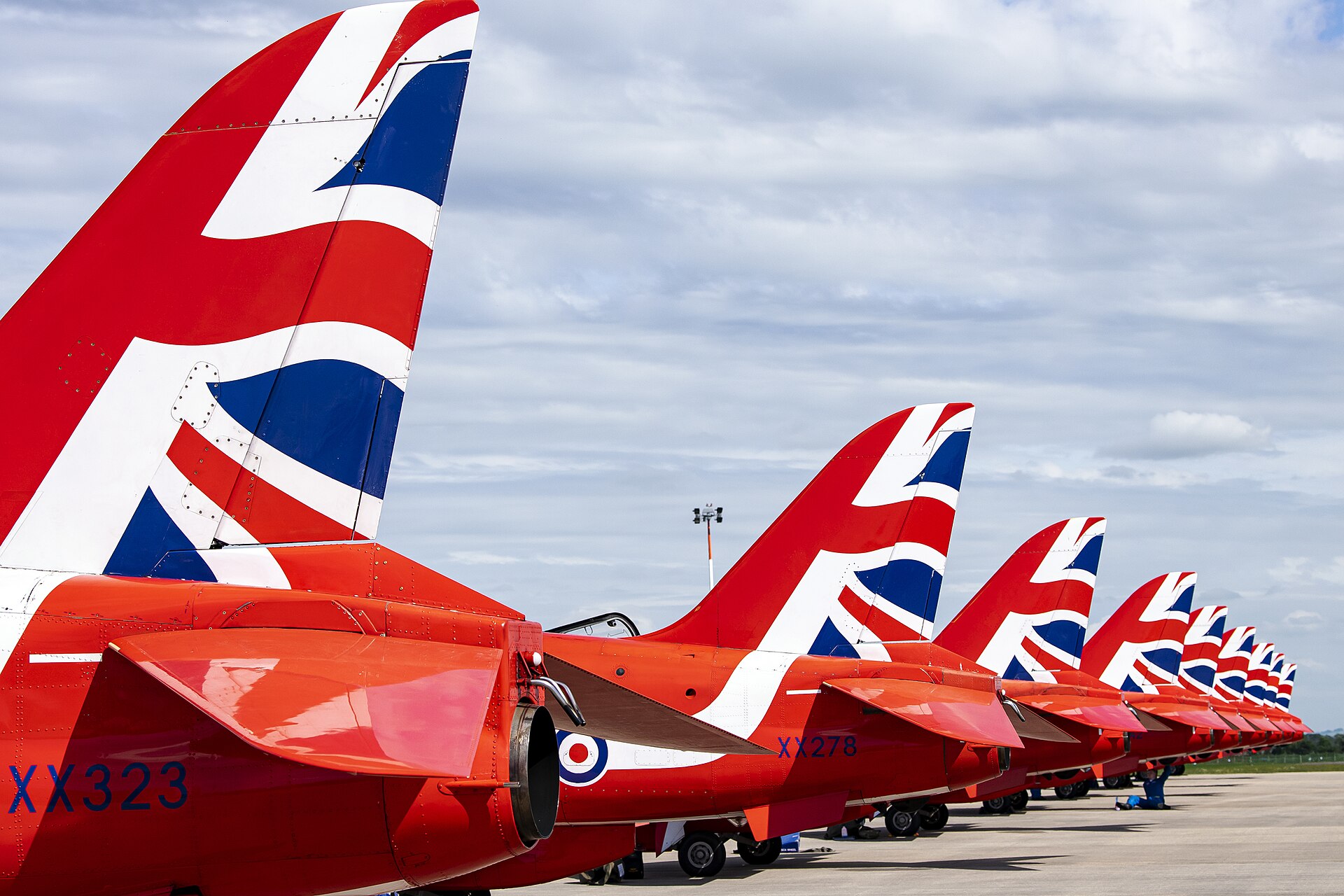
A foiled terror plot at RAF Fairford highlights the vigilance of local residents, heightened threats to Western military bases, and growing concerns over Iran’s role.
1 October 2026
6.2 MINS
Britain’s mounting security failures, immigration pressures and restrictions on public expression raise profound questions about political leadership, national sovereignty and the spiritual state of the West.
1 October 2026
3.2 MINS
A major Australian religious freedom conference has highlighted growing tensions over conscience, faith-based education, speech, public safety and social cohesion.

30 September 2026
3.8 MINS
The Government says online safety requires accountability, yet its proposed powers would let the eSafety Commissioner create anonymous accounts and AI-generated material.

30 September 2026
5.2 MINS
Globalism and nationalism shape how we understand nations, sovereignty and world affairs. But what does Scripture reveal about this tension—and its prophetic significance?

30 September 2026
6.3 MINS
An elderly Christian woman’s disputed death under Canada’s MAiD system raises troubling questions about consent, safeguards, family involvement and the value placed on human life.



Cuba was the typical Communist regime which destroyed the hopes and dreams of an innocent man. For a brief while after the collapse of Communism, Russia operated an open society in which Russians could lead a normal, joyful lives, then came Putin–defenestrations and deadly injections, etc ! Now it’s like the old Soviet era, no criticism allowed, State-control of the Media and long jail periods for anyone who disagrees. In August I shared a train compartment with 3 young men fed up with Russian repression and the endless war against Ukraine trying to become citizens of Georgia. Islam and Communism have much in common- both are repressive societies–the 2 worst things which ever happened to the World . Both want to impose their form of government on the World by suppressing books, etc which may challenge their Power over people’s minds.