


Poll: Over 80% of Teens Have a Negative View of the Media, Citing Bias and Honesty Concerns
A major survey has highlighted growing distrust in modern journalism, with teens questioning media bias, credibility, and truthfulness and turning instead to social platforms for their news.
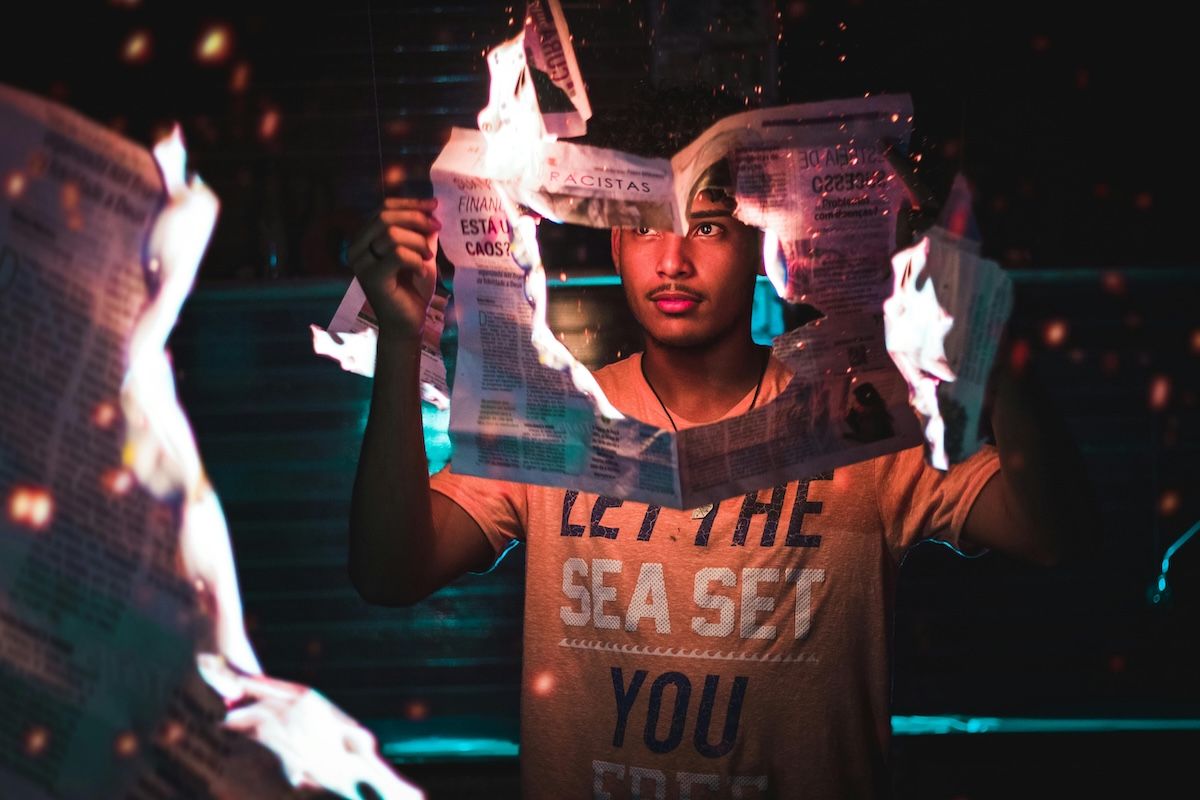
“Biased,” “boring,” and “bad” — according to a 2025 News Literacy Project (NLP) report, these are some words that describe the sentiment many teenagers hold regarding modern media and journalism. When asked, other words included “fake,” “false,” “lies,” “crazy,” “chaotic,” “depressing,” “scary,” “deceptive,” “untrustworthy,” “compromised,” “wild,” and “misleading.” As it turns out, an overwhelming 84% of surveyed teens have a negative view of the media. Only 9% offered a positive view — ranging from saying it’s “great” to only being “okay” or “decent.” Seven percent remained neutral.
This low view of news outlets appears to tie directly to how teens view journalists. For example, the report found many of the respondents believed journalists were more “skilled at lying and deceiving than informing the public.” At least 50% believe journalists “make up details,” with at least 60% stating that photos and videos are taken “out of context.” Forty-five percent of teens “said journalists do more to harm democracy than to protect it.” Eighty percent “said that journalists fail to produce information that is more impartial than other content creators online.” Sixty-nine percent “thought that news organizations intentionally add bias to coverage to advance a specific perspective.”
Positive feedback, though lacking, was present in the report. For example, at least 56% believe those in the news industry do “take journalism standards such as accuracy and fairness seriously in their work.” When asked what journalists do well, at least 62% were able to offer positive feedback, stating that journalists do well at “Informing us,” “Keeping everyone updated,” “Stating the facts,” “Being honest,” and “Exposing truths.” Others acknowledged that journalists are good storytellers, timely in their reporting, and helpful in serving as watchdogs.
At the same time, concerning the same prompt, at least one in 10 teens were unable to provide much of a response, with 37% of teens not having “anything good to say about journalists today.” Regarding areas of improvement, the two most common responses involved “being honest” and “minimising bias.” Others said journalists could work on being more positive, authentic, transparent, and professional. Some noted that reporters have “nothing” to improve on, while others said they need to improve on “everything.” And when journalists do make mistakes, 39% “rarely or never” pursue correction.
As NLP explained, the group aims to teach “students to use the standards of quality journalism to determine what information and sources to trust: verification (including multiple credible sources), fairness, avoidance of bias (impartiality), balance, context, accountability, transparency and independence. Some of these standards can be measured and held as firm rules, while others serve as guiding principles that require thoughtful judgment and discussion to interpret and apply.” The list is not exhaustive, NLP added, but “it helps provide a useful framework for evaluating the credibility of news and other information.”
Guiding Teens Through Media Bias
NLP conducted this survey with a primary goal of “learn[ing] whether teens think journalists and news organisations these days are generally following professional journalism standards and ethical guidelines.” The overarching consensus? “Teens consistently demonstrated the belief that unethical behaviors that overtly violate journalism principles are distinctly more common among journalists and news organizations than even the most fundamental standards-based practices.” With this in mind, NLP offered three main “recommendations for ways that educators, parents, policymakers and media professionals can help foster healthy skepticism and avoid exacerbating harmful cynicism among teens.”
- “Encourage young people to distinguish between standards-based journalism and other types of information.”
- “Teach students verification skills and how standards-based newsrooms operate.”
- “Foster accurate perceptions of journalism by helping teens question unrealistic portrayals or sweeping statements about ‘the media’ and by acknowledging examples of high-quality journalism.”
NLP highlighted the importance of guiding teens through their negative views of the media — much of which came back to developing the skills to fact-check and vet sources, understanding how the newsroom operates, as well as the foundation of journalistic standards. However, a prominent factor NLP did not incorporate into its survey is how many teens are now receiving their information through nontraditional outlets like TikTok, Instagram, YouTube, X, and other social media platforms. In fact, a 2023 poll from the Pew Research Center found one-in-five American adults “regularly get news on TikTok,” noting that at least 63% of teens had reported using the platform — numbers that have likely risen further. According to Pew’s analysis, “no social media platform we’ve studied has experienced faster growth in news consumption” than TikTok.
Katelynn Richardson, investigative reporter for The Daily Caller, offered her insight to The Washington Stand. “Today’s teens are coming of age in an era when the legacy media has largely forfeited its credibility by botching basic facts, building deceptive narratives, and reaching conclusions rather than trusting readers’ ability to reason.” Now more than ever, she added, “Diverse voices are filling the void on new platforms, a development that is both encouraging and challenging.”
Concerning the challenges this survey uncovered, Richardson noted how “impressionable kids are handed smartphones and thrust into a chaotic information environment without the tools to assess the content algorithms pumped into their feed.” And now, “They are craving clarity that cuts through the lies.”
Richardson shared what inspired her to get into the field of reporting. “Seeing the need for reliable information and sharing some of these frustrations is what motivated me to pursue journalism. I feel a huge responsibility to get it right for my readers, and I do believe the standards are higher as a Christian journalist living in the reality that I will one day give an account for ‘every careless word.’ My job is to be firm on the truth, transparent about where my own biases lie, and fair in how I report the stories entrusted to me.”
“If readers can’t trust me to be honest about today’s news,” she concluded, “why would they listen when I tell them about the good news of the gospel?”
___
Republished with thanks to The Washington Stand. Image courtesy of Pexels.
2 Comments
Leave A Comment
Recent Articles:

7 October 2026
3.6 MINS
Victoria’s 18th March for the Babies will bring families together to peacefully affirm the value of every human life and call for a cultural change towards life.
7 October 2026
1.5 MINS
Across the Middle East, North Africa and Anatolia, Christianity once shaped entire civilisations. Could Britain’s Christian heritage likewise become a memory rather than a reality?

7 October 2026
6 MINS
What can Tucker Carlson’s interview with Jacob Rees-Mogg teach us about political disagreement? Their clash over war, Russia and national defence highlights the importance of listening carefully and understanding an opponent’s position before attempting to refute it.

7 October 2026
8.5 MINS
Gerald McDermott’s work challenges Christians to approach Israel through Scripture first, exploring God’s covenant faithfulness, Christian Zionism, Jewish identity and antisemitism.

7 October 2026
4.6 MINS
Medicine was created to heal and preserve life. Yet abortion, euthanasia and gender medicine increasingly redefine death and destruction as care, leaving the vulnerable dangerously exposed.

6 October 2026
3.4 MINS
Christians cannot afford to let headlines and social media shape their view of Israel. Scripture provides a foundation for understanding Israel, God’s promises and our response.

6 October 2026
6.7 MINS
Fresh revelations about the foiled FlyDubai terror plot expose the attacker’s alleged extremist history, while a courageous pilot’s actions prevented an unthinkable catastrophe.



Heartening to read that teens are using their God given love for truth, and the ability to reason, to reject media bias and think rationally.
As if the Internet places they turn to are any better. They’re seeking out those who tell them what they want to hear.
They hear what they want on their chosen platform and tell you they don’t like another. How is this encouraging?
The Internet is as bad or worse than the media they tell you they don’t like.
This generation of youth is the most violent, murderous, theiving, lying, rude and narcissistic generation of youth ever in this country. Whatever platforms they use is clearly not helping them.
Where are the most conspiracies, wack job influencers, fake news, liars, AI fakes, antichristians and frauds in any media you can find?
The Internet. The place of choice for teens.