


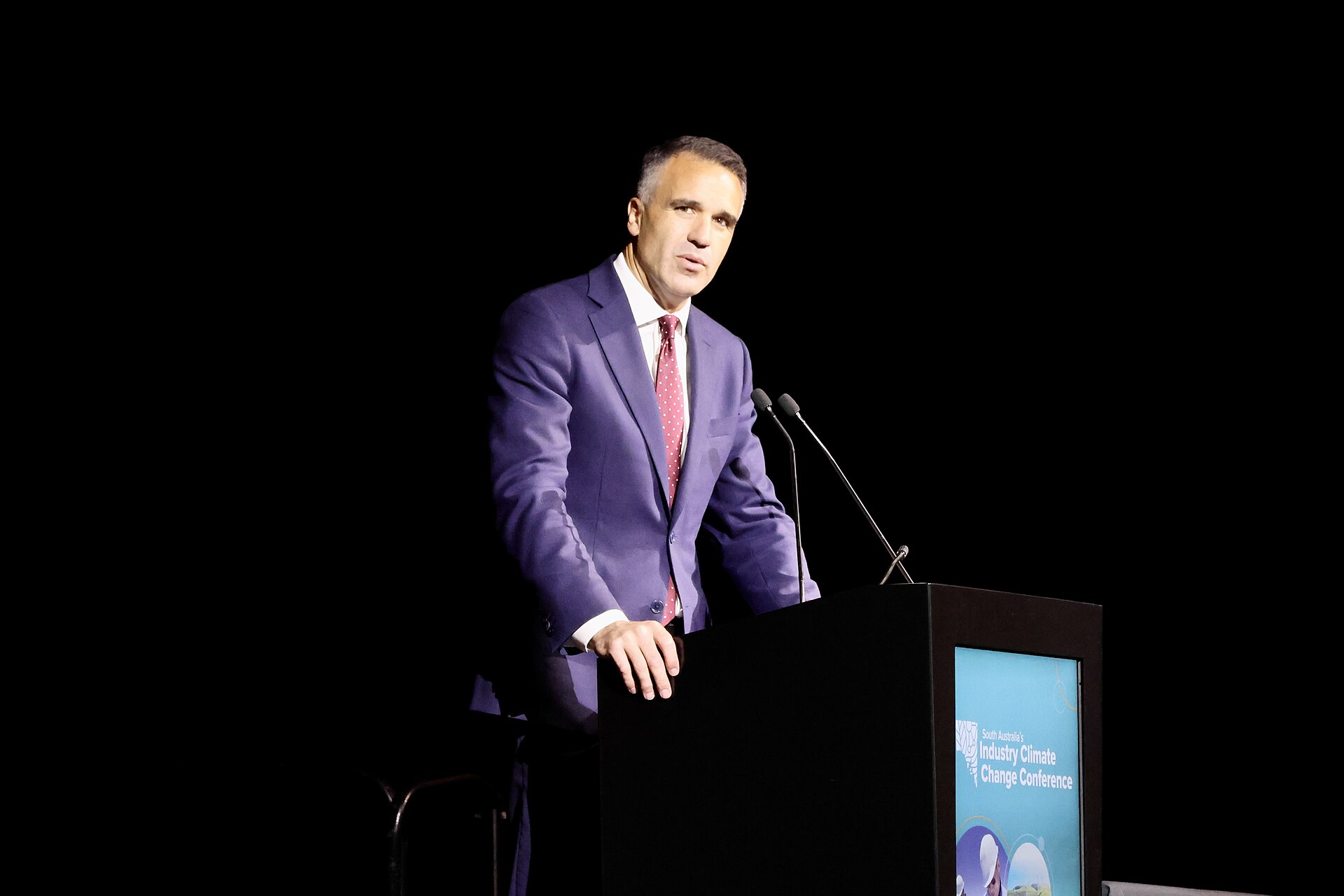
What Just Happened in South Australia
A frank assessment of the Liberal Party’s declining base, the rise of One Nation, and whether Australia’s fragmented centre-right can find the unity needed to govern effectively.
A Reality That Can’t Be Ignored
Let me start with something that needs to be said plainly.
The traditional major party of the centre-right – the Liberal Party – is in the process of losing its base.
It’s happening federally, and now it’s happening in South Australia.
Voters are not drifting because they’ve abandoned their political instincts – not at all – but because they feel abandoned.
Frankly, they are unconvinced, uninspired, or unclear about what is being offered.
Too often, the approach has been a ‘small target’ strategy – saying as little as possible, practising risk management, and hoping the incumbent government makes enough mistakes to lose.
That approach does not inspire confidence.
And it certainly doesn’t win back ground that’s already been lost.
At the same time, there has been a growing disconnect between parts of the political class and the lived experience of ordinary Australians.
Concerns about cost of living, cultural direction, national identity, and the wellbeing of families are not fringe issues.
They are mainstream.
When those concerns are softened, sidestepped, or filtered through focus groups, voters notice.
And when voters feel they’re not being heard, they will look for someone who speaks more directly.
People are not necessarily looking for perfection – but they are looking for clarity, conviction, and someone who appears to understand their concerns.
That’s a big part of the resurgence of One Nation.
One Nation has been speaking to concerns that others have ignored.
And in doing so, they have drawn support from demographics that, not long ago, were firmly within the Liberal Party‘s natural base.
Further, One Nation has garnered a large number of working-class votes from historic Labor voters.
These punters may once have been ‘Howard Battlers’ or Morrison’s ‘Quiet Australians’ – but not this time.
On current figures, One Nation looks likely to win multiple lower house seats and as many as three in the upper house – an impressive result by anyone’s standard.
This election – coming third in primary votes behind Labor and One Nation – should be a massive wake-up call for the Liberals.
If a party cannot hold – or even recognise – its own base, it cannot hope to win, much less govern.
This reality cannot be ignored, and it cannot be spun away.
It must be confronted.
What This Means
Against that backdrop, the South Australian result becomes easier to understand – as do the lessons nationally.
Support for centre-right ideas (a term of political convenience) is not insignificant – but it is increasingly fragmented.
Across a range of parties and candidates, there are many Australians who care deeply about issues like family, faith, freedom, and the direction of our country.
But that support is spread thinly. And when it is, the result is predictable.
Parties of the Left are able to secure power – often with only feeble primary support themselves – while those who might oppose them remain divided.
A Question Worth Asking
This raises an uncomfortable but necessary issue.
I know many good people who are involved in much smaller parties. I respect their conviction and their willingness to stand.
But a great deal of time, resources, energy and goodwill is being poured into efforts that struggle to translate into tangible outcomes.
Five minor centre-right parties in South Australia are currently sitting on a combined 3.8% in the upper house – less than half of what’s needed to elect a single member.
That’s not a criticism of motive. It’s a question of effectiveness.
The striking thing is not a lack of support for these ideas. Clearly, that support exists.
The question is: are we organising it effectively?
What Is to Be Done?
Australian history offers an interesting precedent.
In 1944, Robert Menzies brought together 18 organisations to form the modern Liberal Party, a year after its predecessor (the United Australia Party) was trounced at the polls.
Whatever one’s view of today’s political landscape, or one’s political preference, the underlying principle still holds.
Enduring political success requires more than conviction. It requires organisation, cooperation, and a willingness to build something that can actually carry weight.
Numerous commentators have suggested future coalitions involving combinations of One Nation, the Liberals, and the Nationals.
I can’t help but think, however, that a useful first step would be to see what level of consolidation – or at least cooperation – could be achieved between so many different groups.
I don’t know what the result might look like.
We’re also in need of a modern Menzies figure to transcend differences, egos, and past hurts, and encourage people to consider a cause bigger than all of us.
Maybe it’s all wishful thinking on my part – but I’ll leave the thought here for now.
Where We Fit In
While politics remains fragmented and uncertain, the role of grassroots movements becomes even more important.
Laws are shaped in our parliaments – but culture is shaped long before that.
For nearly a decade, the Australian Family Coalition (AFC) has sought to inform, connect, and mobilise Australians who care about family, faith, and freedom.
That task doesn’t become less important in times like these. It becomes more so.
Before political change can occur, there must be clarity, confidence, and conviction among ordinary Australians.
That’s why the South Australian result is not just a state story.
It’s a snapshot of a broader national challenge – and, potentially, an opportunity.
Where do you think things are heading – and what should be done next?
I’d be interested to hear your thoughts.
___
Republished with thanks to The Australian Family Coalition. Image courtesy of Wikimedia Commons.
4 Comments
Leave A Comment
Recent Articles:

14 October 2026
6.7 MINS
A national poll challenges claims that pro-life Australians are extremists, revealing broad support for abortion restrictions, protections for unborn babies and safeguards for vulnerable women.

14 October 2026
2.8 MINS
Queensland recorded 1,082 assisted suicide and euthanasia deaths in 2025–26, as the review board called for consultation on potentially widening eligibility criteria.

14 October 2026
5.5 MINS
As Christianity fades from public life, Marxism or Communism offers a substitute faith built on oppression, liberation and political salvation — but at what cost?

14 October 2026
5.3 MINS
Marco Rubio’s Athens speech celebrates the Greek, Roman and Christian foundations of Western civilisation, warning that cultural self-loathing and radical ideologies threaten its future.
14 October 2026
2.8 MINS
Australia needs a courageous Church that never separates courage from Christian love — the courage of Peter and John, who, when ordered to cease speaking about Jesus, responded: “We can't stop.”
13 October 2026
2.6 MINS
Allegra Spender’s proposed bill reignites debate over discrimination protections, religious freedom and the right of faith-based schools to uphold their beliefs and values.

13 October 2026
3.9 MINS
Tasmania’s proposed conversion practices law raises serious concerns for churches, parents and faith-based schools, with broad definitions, severe penalties and uncertain protections for religious freedom.



Well said
Well said. Somehow all those small ‘right wing’ parties need to be brought together well away from the gaze of ALL the mainstream media, and find a way to, at the very least, actively co-operate. If some real common sense cannot bring them to see the need to do that urgently, Australia is sunk.
Yes! what you said about Menzies is correct – he gathered all those who had positive solutions for many issues of the day and allowed them to act on tier positive Ideas – making Australia strong in our part of the world
A great write up pitty this was not done months before the S A Election. We were very well represented by Ashton Hurn but not enough time. Des