



The Census Is No Longer Just Counting Us — It’s Shaping Who We Become
The Census used to just count Australia. This year’s gender and sexuality questions suggest it’s being used to help construct the Australia bureaucrats want.
There was a time when the Census was gloriously boring.
It counted us. That was it.
The Census was essentially Australia’s annual stocktake — except, because governments have never managed to count anything quickly, it only happens every five years.
Its purpose was simple: find out what Australia looks like so governments can govern the country that actually exists.
Counting Isn’t the Point Anymore
But these days, thanks to the progressive Left, the Census is acquiring a rather more ambitious role.
It’s pretty clear that the purpose of this year’s Census is not merely to count Australia. It’s going to help decide what Australia becomes.
And that distinction matters.
Because data is never merely data once governments start collecting it.
Data informs policy.
Policy determines priorities.
Priorities determine spending.
And spending changes society.
That is why certain questions on this year’s Census form ought to get our attention — particularly questions about gender and sexuality.
We are told these questions are simply about filling a statistical gap.
Why is it so important for the government to know how many men are currently identifying as women?
Even more curious, why does Canberra want to know the number of people claiming to be non-binary?
And what’s with the question on sexuality?
What many people don’t realise is that these questions haven’t turned up on the Census form as a result of natural curiosity…
From Visibility to Budget Line
Activists have spent years lobbying to get these questions included.
And the answer is obvious. Visibility is not the end of the process. It’s the beginning.
Once a population is counted, it can be quantified.
Once it is quantified, its needs can be measured.
Once its needs are measured, governments can develop policies to address them.
And once governments have policies, governments spend money.
That money funds programs, departments, services, education campaigns, workplace initiatives, health programs, advocacy organisations and a thousand other manifestations of the modern bureaucratic imagination.
And suddenly the Census isn’t only telling us how many people there are. It is helping Canberra decide which parts of Australian life deserve attention, funding and institutional recognition.
That isn’t a conspiracy. It’s how government works.
Which is precisely why it is worth paying attention to.
Not a Mirror, But a Blueprint
We are constantly told the Census is a mirror. It isn’t.
A mirror simply reflects reality.
The Census — by asking specific questions in a specific way — provides activist groups with lobbying power.
And suddenly the government database is being used a blueprint for action.
The number of people identifying as trans or as gay will not sit quietly on a spreadsheet somewhere in Canberra.
The number will acquire political significance.
It become the basis for arguments about representation.
Representation becomes evidence for funding.
Funding becomes justification for new programs.
And new programs start to shape the institutions that govern everyone else.
This is how social engineering arrives without ever announcing itself.
Social engineering arrives as a survey question.
Then a statistic.
Then a report.
Then a policy.
Then a budget allocation.
And eventually you wake up one morning and discover that the country has changed — and nobody can quite remember when they agreed to it.
The important question isn’t simply: How many transgender Australians are there?
The more important question is: What will the government do once it knows?
Because if the answer is “nothing”, there was little point asking.
And if the answer is “quite a lot”, then we should stop pretending the Census is merely counting Australia.
It’s helping to construct it.
___
Republished with thanks to The James Macpherson Report. Image courtesy of Unsplash.
3 Comments
Leave A Comment
Recent Articles:
12 October 2026
4.6 MINS
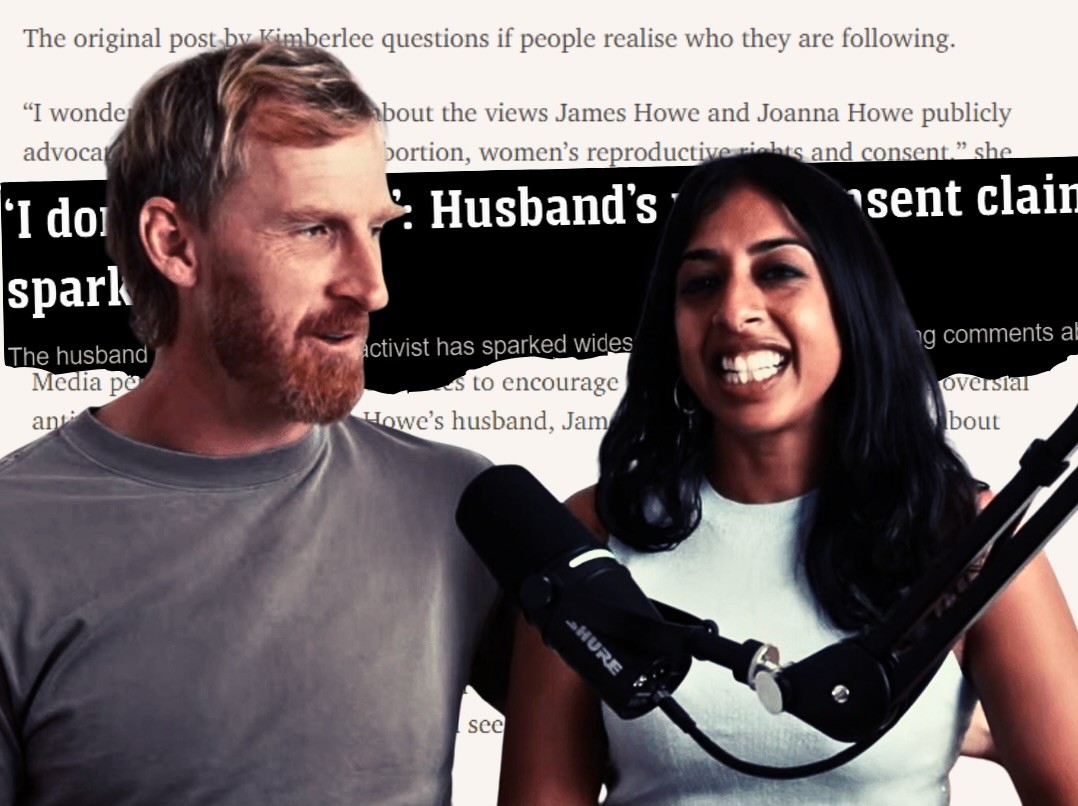
Learn how journalists use loaded language, selective quotes and misleading headlines to shape public opinion, using a controversial report about James and Joanna Howe as a case study.

12 October 2026
3.1 MINS
The proposed livestream of Nidal Hasan’s execution has reignited debate over justice, deterrence and public accountability, with critics comparing American justice to ISIS propaganda.
12 October 2026
3.7 MINS
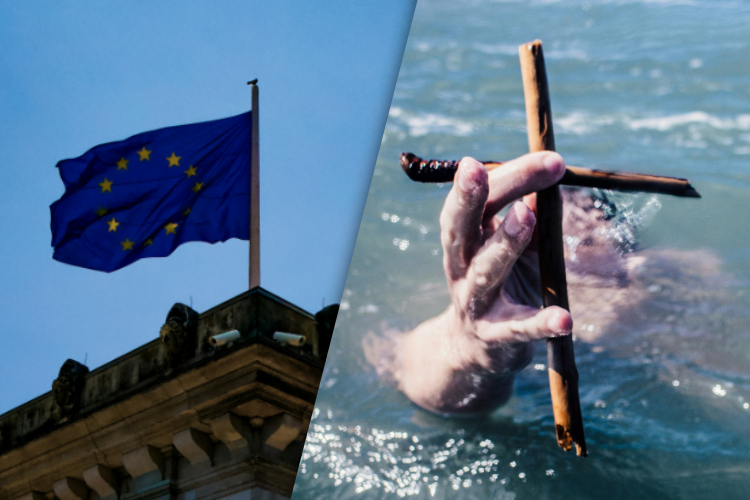
An EU court case over baptismal records could pit data protection laws against religious freedom, raising serious questions about whether governments can compel churches to erase sacramental history.

12 October 2026
3.2 MINS
Your support has helped us change the world for the better, as Dads4Kids has poured our heart, soul and finance into the global promotion and celebration of International Men’s Day.

12 October 2026
3.3 MINS
In the week leading up to Christ’s crucifixion, Jesus' soul was troubled. He responded with a bold prayer, and his example challenges us to that same boldness.
11 October 2026
2.6 MINS
Jesus offers us intimate friendship, which produces great joy as we walk closely with him.
10 October 2026
4.1 MINS
When Jesus rebuked the Laodicean church, this was not a sign of his lack of love, but proof of it and how greatly he longs to reward and bless us. He is knocking — will we answer?



Brilliant!
I find it is illogical as having worked in the Australian Public service that one of the tick answers to sexual orientation is “Straight” rather than “Heterosexual” when the term “Bisexual” is used in the listed options and by listing this option it would be understood to the census participant what this means ..
Thanks James for the report. It’s incredible that such a straight forward document called a census could become so twisted and so ‘political’ in nuture. Normal questions were just so warped.
It was so very odd too that the category of beliefs ommitted the word ‘Christian’ as well.
Overall, I found it a ‘sick’ sort of questionaire