


The Labor Coalition Nobody Talks About: Four Radical Ideologies Intent on Reordering the West
Political arguments have been gloriously mundane throughout Australia’s history.
How much tax? How much welfare? How much should Canberra spend before pretending to balance the budget?
They were family arguments. And nobody doubted what the family looked like.
Today, however, the biggest political question isn’t economic. It’s civilisational.
Because something remarkable has happened inside the modern Labor Party.
It has become the political home of four ideologies that, on paper, ought to despise one another.
Socialism. Islamism. Globalism. And LGBTQ activism.
It’s the sort of alliance that makes less sense than a vegan barbecue hosted by a butcher.
These movements disagree on religion, sexuality, economics, borders and even the nature of freedom itself.
If you locked their philosophers in a room together, you’d soon need riot police.
And yet, in modern politics, they march together with astonishing consistency.
Why?
Because politics isn’t always built on shared beliefs. Sometimes it’s built on shared enemies.
And these four movements have discovered they all object to roughly the same thing — Christianity.
Call it coincidence if you like. I’d call it a coalition.
Socialism
Take socialism.
Karl Marx didn’t merely dislike capitalism. He regarded religion as “the opium of the people” and saw the family as another institution preserving unequal power.
The goal wasn’t to redistribute wealth so much as to redistribute authority.
Modern Labor politicians aren’t quoting Marx over breakfast. I don’t think, anyway. But the instinct survives.
Whenever society encounters a problem, Labor’s first answer is rarely stronger families, healthier communities or more resilient local institutions.
It’s another department. Another regulator. Another taxpayer-funded program. Another government agency explaining why your children now belong to a “stakeholder community”.
Childcare, education, speech regulation, workplace culture — even family life itself gradually becomes something administered by Canberra.
Government grows. Everything else shrinks.
Globalism
Then there’s globalism.
Now, before anyone hyperventilates, international trade has been wonderful for Australia. Selling things to the world is generally preferable to invading it.
But modern globalism goes much further than commerce.
It quietly encourages people to think of themselves less as Australians and more as interchangeable citizens of the planet.
Borders become awkward inconveniences.
National identity becomes vaguely embarrassing.
International bodies acquire moral authority that elected governments increasingly feel obliged to obey.
The assumption shifts from “What do Australians want?” to “What does the international community expect?”
To conservatives, that’s not progress. It’s democracy outsourcing itself.
LGBTQ activism
Then we arrive at LGBTQ activism.
Notice the debate has changed.
Most Australians settled long ago that every individual deserves dignity and equal protection under the law.
That isn’t where today’s arguments lie.
The new expectation is affirmation.
And so from schools and churches to sporting clubs and businesses – everyone is increasingly expected not merely to tolerate contested ideas about sex and gender, but to actively celebrate them.
Disagreement itself becomes evidence of discrimination.
Traditional Christian teaching, once simply another moral viewpoint, increasingly finds itself treated as something requiring correction rather than conversation.
Islamism
And finally, we get to Islamism — that political ideology that seeks to organise society according to Islamic political principles, as opposed to liberal democratic ones.
Many conservatives argue Western governments have become oddly reluctant to confront Islamist extremism with anything approaching confidence.
When rallies glorify terrorist organisations, demonise Jews and attack liberal democratic values… official courage seems to develop an unfortunate scheduling conflict.
But here’s where things become genuinely fascinating…
Islamists and LGBTQ activists profoundly disagree about sexuality.
Socialists have historically opposed organised religion.
Globalists celebrate open societies while many Islamists seek religious particularism.
None of these ‘isms’ are natural allies.
Rather, they’re political flatmates who’d normally fight over everything from theology to pronouns.
Yet they repeatedly end up standing on the same side because they all identify the same obstacle — the traditional West, with its love of the family and the nation state, all informed by Christianity.
It’s that shared hatred of Western culture that binds these four isms together.
Four Isms and the Australian Labor Party
And finally, we come to the vehicle by which these four ideologies can travel together wrecking havoc through our neighbourhood… this is where the Australian Labor Party becomes significant.
Because Labor has increasingly become the institution where these currents converge.
- A larger state.
- Higher immigration.
- Closer alignment with international institutions.
- Expanding activist definitions of rights.
- Growing scepticism toward religious exemptions.
- Increasing discomfort with overt patriotism.
- Greater willingness to accommodate progressive identity politics than to defend Australia’s Christian inheritance.
I could go on.
Labor MPs call all of the above compassionate, inclusive and modern.
I would argue it’s anything but.
What we see isn’t a progressive, enlightened government, but a body — influenced by radicals — steadily shifting away from families, churches, local communities and sovereign nations.
The destination is not difficult to discern. Larger and larger bureaucracies, with greater influence being given to activist groups, tribunals and international organisations.
No single policy changes Australia overnight.
Civilisations almost never collapse in a spectacular explosion.
They drift.
One curriculum revision. One tribunal ruling. One speech code. One bureaucracy. One religious freedom quietly narrowed while another ideology gains fresh legal protection.
Individually, each change seems almost too small to notice. Collectively, they amount to something much larger.
Not simply a different government. A different country.
That’s why the defining political argument over the next generation won’t be about tax brackets or interest rates.
It will be about whether Australia remains a nation shaped primarily by Christianity, liberal democracy and national sovereignty…
… or whether the unlikely coalition now gathering beneath Labor’s banner succeeds in replacing that inheritance with something entirely new.
And if you cast your eye across the West, you’ll see this same drama is being played out right across the world.
___
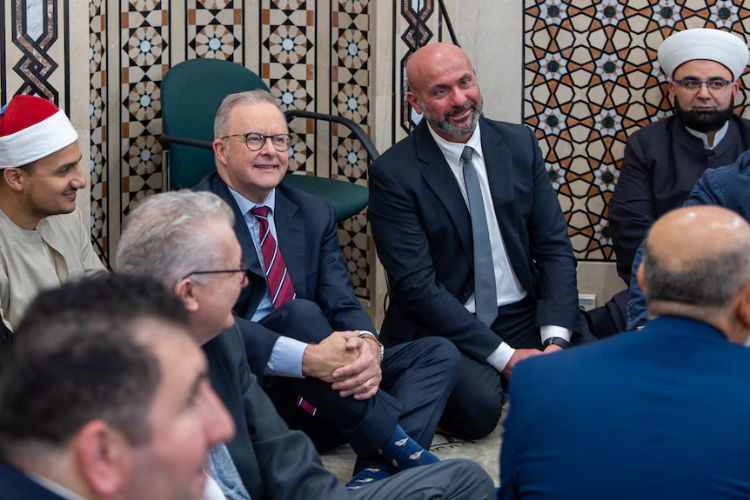
Republished with thanks to The James Macpherson Report. Image via Facebook/Anthony Albanese.
7 Comments
Leave A Comment
Recent Articles:
13 October 2026
2.6 MINS
Allegra Spender’s proposed bill reignites debate over discrimination protections, religious freedom and the right of faith-based schools to uphold their beliefs and values.

13 October 2026
3.9 MINS
Tasmania’s proposed conversion practices law raises serious concerns for churches, parents and faith-based schools, with broad definitions, severe penalties and uncertain protections for religious freedom.
13 October 2026
5.5 MINS
Stephen Baldwin’s journey from drug addiction to sobriety, Christian faith and family life reveals how surrender, daily discipline and renewed hope transformed his life.

13 October 2026
2.1 MINS
Victoria’s assisted dying deaths have surged by 300 per cent since legalisation, while a disturbing case involving a patient’s partner raises urgent questions about safeguards.

13 October 2026
1.8 MINS
Australia faces mounting geopolitical, economic and defence threats, but its political leaders lack the statesmanship, bold vision and decisive communication needed to prepare the nation.
13 October 2026
2.8 MINS
The church in Ephesus had so much going for it. Yet despite their hard work, perseverance, endurance, and discernment, there was something deeply wrong: they had left their first love.
12 October 2026
4.6 MINS
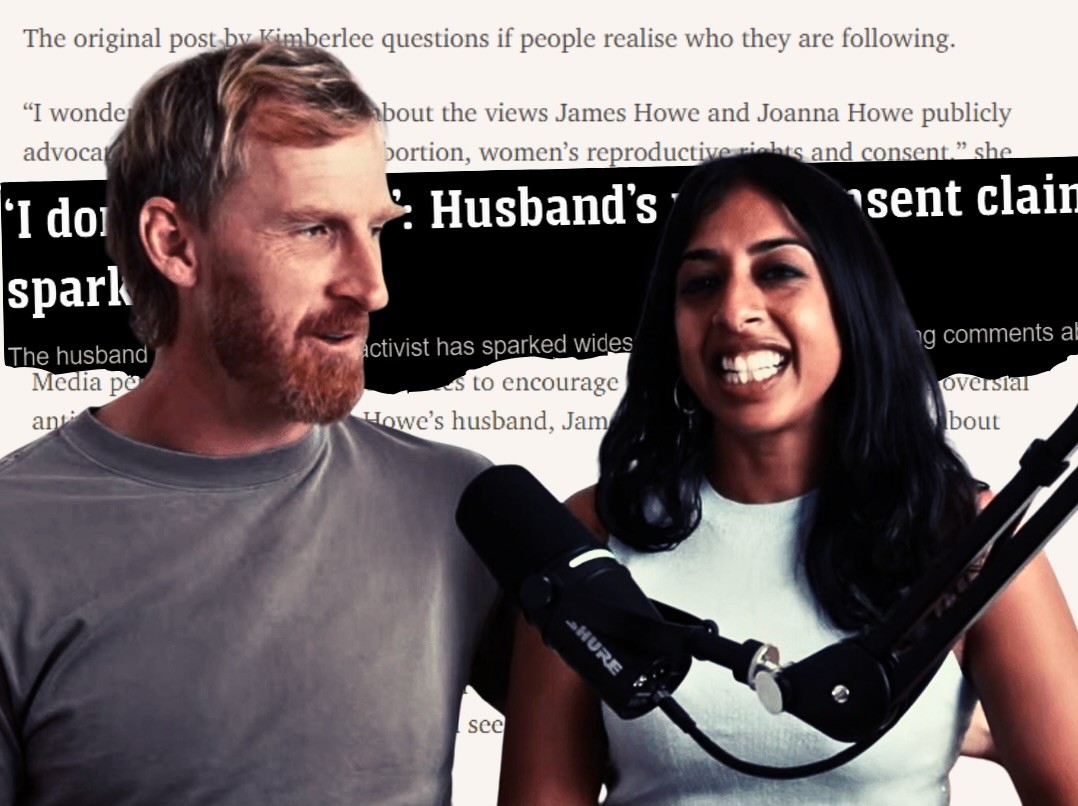
Learn how journalists use loaded language, selective quotes and misleading headlines to shape public opinion, using a controversial report about James and Joanna Howe as a case study.



James, you could have added in somewhere the connivance of the MSM; today’s SMH being a great example.
We must wear the full armour of God. Pray that this axis of evil if thrown out of power. Stand strong, Christians, and speak the Truth. God is with us.
Very cleverly an actual Revolution has not been used to destroy our Nation, Family and Christianity, but, we are , to use your word -Drifting towards total State Control. Wake up Australians , vote ” NO ” to Labor, Greens and Teals.
I only discovered the latest news about Greece from Tousi You Tube. Approx. 60 illegal mosques (in basements, garages, etc) in Athens are being banned . The mostly Bangladeshi (cannot be regarded as “refugees ” ) will be fined and jailed for breaking the Law and deported. Only the one legally approved mosque will remain in Athens. I understand how Greeks feel about Islam .
For over 1, 000 years their Eastern Roman Empire with its capital , Constantinople , was under attack by Islamic forces, which , finally in 1453 conquered and destroyed the wonderful palaces, churches, desecrated the tombs of the Roman Emperors ( including Constantine the Great’s ), the Land Walls, in an orgy of killing .The uncaring West ignored numerous calls for assistance over the years. About 7, 000 people (including the Emperor ) and his friend, John the Dalmatian , died fighting an Islamic army of about 150, 000 or more .
After WW1 the victorious Allies decided , in their WISDOM – (-to ensure a Deal to guarantee France and the UK’s access to Oil in the Middle East ) by gifting to the newly- created country of Turkey, Anatolia and some nearby islands , which had been inhabited since antiquity by Greeks, by authorising the EVICTION of all Greeks from Anatolia, etc, and relocating them to mainland Greece. I understand that these destitute Greeks were not welcomed by the Greeks of Greece, their customs were different, and the Greek they spoke was different. This forcible eviction and loss of their homes is not forgotten in 2026. In 1915 Turkey had approx. 20 or more % of Greeks living inside its borders. Today , it is about 1% and facing discrimination, etc. Some 26 cases have been lodged in 2026 to The European Court of Human Rights. What will it do ? Probably Zero !
Santa Sophia is again a mosque, and another church in Istanbul, with wonderful Christian mosaics , designated a museum, is now “permanently closed for restoration “.Turkey is funding mosque building in Eastern Europe, eg Albania, etc. NATO and the EU turn a blind eye as Erdogan has threatened to “flood Europe with refugees ” . I thought that has been happening? What gutless people are the West who deserve all they are getting! Please stand against the Labor, Islamic, LGBTQ and Globalist combined attack on our Australian Values, Family and Religion before it is too late! Save our Australia because no one else will ! The Globalists want to get their hands on our mineral wealth, uranium, especially our gold, our in- ground oil reserves and our Real Estate.
Thanks for the very clear analysis, James, stating that that Australia ‘ has become the political home of four ideologies that, on paper, ought to despise one another. Socialism. Islamism. Globalism. And LGBTQ activism.’
The younger generation have been so manipulated by social media, political leaders, the educational system favouring LGBT and woke culture, that they have not known or seen what is lost, whereas earlier generations knew the Christian values and enjoyed sound minded democratic right.
Most of the young are struggling to make ends meet or to raise a family or to train in a career. Some have turned to drugs and alcohol and some have joined gangs to do raids on houses and to steal cars or burn down businesses.
Society without Christ and Christian values has become violent and lawless. The older generation have tried to speak up and warn but most of all ages were silenced through COVID and the ‘state control’ came in at a deeper level.
The one thing that stands out is that our prayers matter as we are commanded to pray for those in Government at all levels and also to heed the word of God who says that we will live in ‘perilous times’ as the end draws near, and there will be times of lawlessness (2 Tim 3). There will be much deception, ‘men will be lovers of self and money and haters of God. ‘ We will be delivered up for our faith by evil men but Jesus will give us the words to say at that time.
The dark agenda of globalists, LGBT, socialism/Marxism, Islam with activism will it seem continue till Christ comes again (with aggressive protests, Mosques being used to stir up all Muslims to radicalism, court cases, libel and slander against Christians) but we can stand in the gap and pray many come to know Christ in time, many be plucked from the flames and saved from pagan doctrines and the occult , and some receive dreams and visions to awaken them to God and His truth. We can be light in the darkness and we can show righteousness by the way we live or by helping those in need (the poor, elderly, homeless, sick) and we can point to the Saviour who died on the cross for our sin and who offers eternal life.
Abraham stood in the gap for Sodom but needed more to stand with him and had to leave. Nehemiah stood in the gap for Jerusalem and a was permitted to rebuild the wall. Jesus wept in the garden for ones he came to save yet was betrayed and crucified by one of His own…but conquered death, sin, Satan and all evil at the cross. Amen
Softly softly catchee monkey – The ALP and their companions listed above.
They will not catchee Australians at the next election.
PM Albanese is so popular that there are 20 court cases at present of persons, whom, it is alleged, have threatened to kill him. It was PM Malcolm Fraser (Liberal ) who really started our country’s decline. Multiculturalism really got going when he allowed migration of Lebanese Muslims. Since then we have the preposterous demands of Malik to dominate and change our whole society into an Islamic State of Australia ruled by the Koran and Hadiths. Since 1968, both Labor and Liberal govts have destroyed our economy, wasted taxes, restricted our Freedoms , and shown an anti-Christian Prejudice. In short , these traitors have destroyed our country through their greed for money and power. We are mis- represented on the World Stage by Albanese and his Japanese melons” .
Thanks for all the above comments! On our knees we will contest this siege