


Budget Puts Financial Considerations Ahead of Parental Choice, Child Welfare
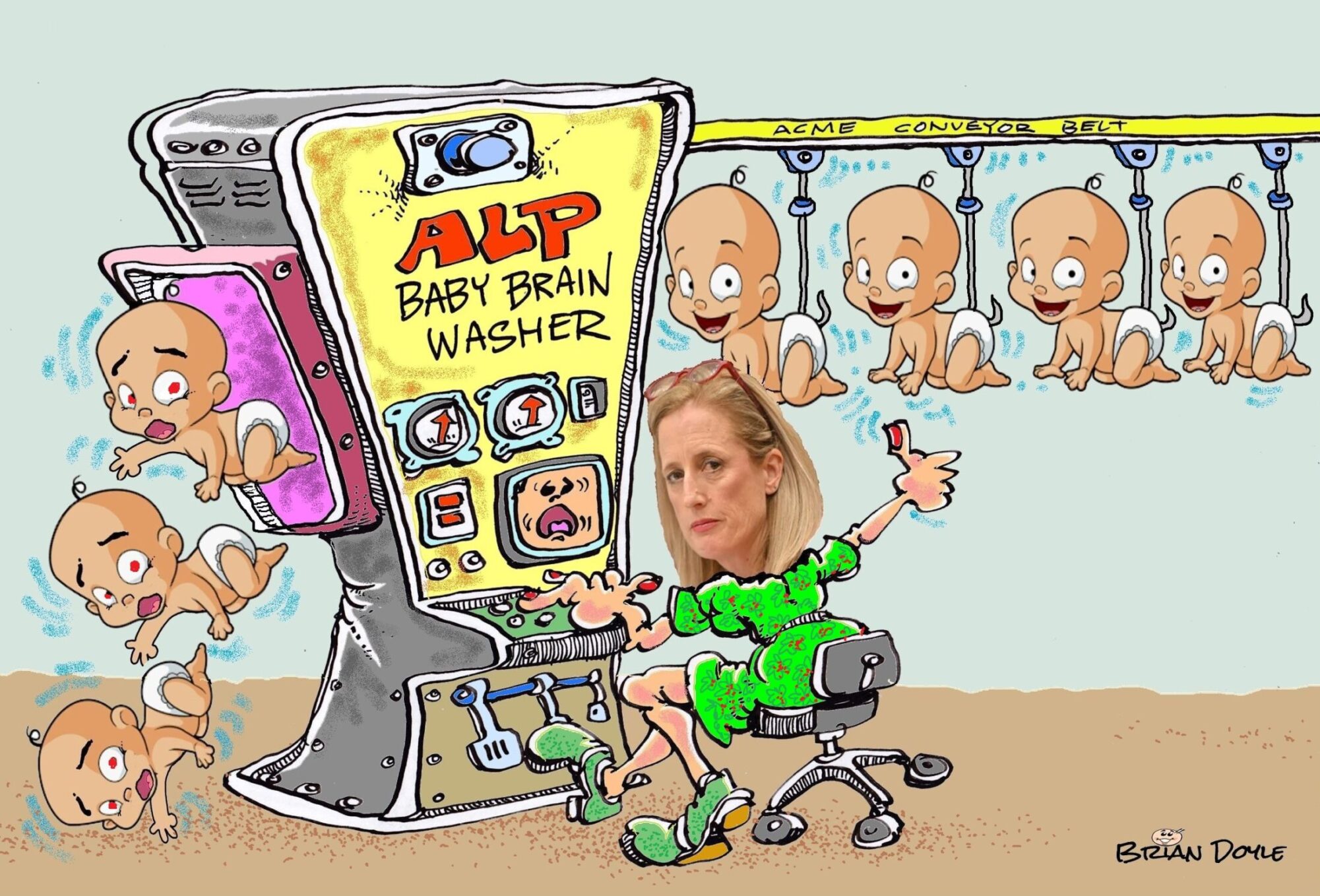
Australia’s 2026-27 Budget prioritises institutional childcare over parental choice, raising questions about whether government policy is truly supporting families or simply driving mothers into the workforce.
The 2026-27 Federal Budget confirms that the Albanese Government’s childcare policy is not merely about helping parents who need formal care. It is about entrenching a universal system in which subsidised institutional care becomes the preferred public model.
The Budget’s “Care and opportunity” theme promotes the Three Day Guarantee for subsidised childcare, six months of government-funded Paid Parental Leave from July, and extra family-services spending. Its Women’s Budget Statement says that the Three Day Guarantee began on 5 January, giving Child Care Subsidy-eligible families at least 72 hours of subsidised care a fortnight, with Indigenous families eligible for 100 hours.
This may sound family-friendly, but it is simply more coercion in one direction. The Budget documents are candid: improving early childhood education and care is treated as a way to enable mothers to enter paid work or increase their hours. Children are discussed in the same breath as labour-force participation, productivity and women’s workforce attachment.
Ignoring the Evidence
Then came Senator Katy Gallagher. The Minister for Women and Finance told The Australian that “the sooner you get a child into early education or care, the better prepared they are” for school, while also ruling out income-splitting proposals that would help parents spend more time at home with newborns. She added that she was not telling parents what to do, but the message nonetheless was unmistakable: government policy increasingly favours only one path.
The controversy deepened because Senator Gallagher’s claim extended to children from birth to three years. That is precisely when the evidence and parents’ own experiences contest the prevailing progressive orthodoxy. A senior United Nations child-development specialist, Ben Perks, rejected the idea that under-threes are generally better off in childcare, arguing that very young children need secure attachment and that governments should help families keep children at home longer where possible.
No serious person denies that good early learning can help some children, especially older preschoolers and children facing disadvantage. The Productivity Commission itself says quality early childhood education can improve outcomes, particularly for vulnerable children, and recommends that every child aged 0-5 whose family chooses childcare should have access to at least 30 hours a week by 2036.
But the same report notes that the children who would benefit most are the least likely to attend, and that its affordability package would lift Child Care Subsidy costs by 37 per cent to about $17.4 billion a year. That is not proof that babies and toddlers should be moved earlier into centres. It is a case for targeted help and high standards for disadvantaged children.
As we know from recent horrific abuse incidents, quality and safety in institutional childcare cannot be assumed.
The Women’s Budget Statement points to $188.5 million over four years for safety and quality measures, including a National Educator Register, child-safety training, better data-sharing, a CCTV assessment and transparency upgrades, plus $39.3 million for Working with Children Check reforms. These are necessary measures. They are also an admission that institutional care carries risks that loving parents instinctively understand.
One-Way Family Policy
For years, News Weekly has warned against one-way family policy: subsidies that flow to centres, not to parents; where paid care is recognised, yet unpaid family care is ignored; where mothers and fathers are praised in speeches but penalised in tax and welfare settings. As News Weekly has argued, public policy has become “one-way to institutionalised daycare”, while the funding model remains “shamelessly focused on outsourced care”.
A humane family policy would begin elsewhere. It would recognise that parents and close relatives are usually the best placed to care for young children, while accepting that some families need centre-based care and some children benefit from it.
It would allow support to follow the child: to a parent at home, a grandparent, family day care, an approved in-home carer, or a quality centre. It would treat the family as an economic unit through income-splitting, family-based taxation, child tax credits or direct child-rearing payments. News Weekly has long argued that family tax and childcare policy should support families themselves, not merely businesses and employers.
Senator Gallagher’s remark was not a mere gaffe. It said aloud the assumption behind the Budget: that children belong in the formal system earlier, and that mothers’ and fathers’ time at home is an obstacle to workforce policy. The Opposition’s policies may do well if they see the light of day, offering more flexibility for parents.
Australia can do better. The state should not draft babies into a productivity agenda. It should back parents, strengthen families and let genuine choice replace subsidised pressure.
___
Republished with thanks to News Weekly. Image courtesy of Adobe.
2 Comments
Leave A Comment
Recent Articles:
12 October 2026
4.6 MINS
Learn how journalists use loaded language, selective quotes and misleading headlines to shape public opinion, using a controversial report about James and Joanna Howe as a case study.

12 October 2026
3.1 MINS
The proposed livestream of Nidal Hasan’s execution has reignited debate over justice, deterrence and public accountability, with critics comparing American justice to ISIS propaganda.

12 October 2026
3.7 MINS
An EU court case over baptismal records could pit data protection laws against religious freedom, raising serious questions about whether governments can compel churches to erase sacramental history.

12 October 2026
3.2 MINS
Your support has helped us change the world for the better, as Dads4Kids has poured our heart, soul and finance into the global promotion and celebration of International Men’s Day.

12 October 2026
3.3 MINS
In the week leading up to Christ’s crucifixion, Jesus' soul was troubled. He responded with a bold prayer, and his example challenges us to that same boldness.

11 October 2026
2.6 MINS
Jesus offers us intimate friendship, which produces great joy as we walk closely with him.

10 October 2026
4.1 MINS
When Jesus rebuked the Laodicean church, this was not a sign of his lack of love, but proof of it and how greatly he longs to reward and bless us. He is knocking — will we answer?



Excellent points raised and need to be heard by parents throughout Australia!
Loving family homes are the BEST place for babies and young children, especially those under 2-3 years of age. It’s time to stop government overreach in this area – children are born into families! Many families would welcome the support of government to care for their babies and young children at home. Mothers/fathers at home deserve the nation’s respect, honour and similar financial support to those who choose institutional care.
Hear hear!
Family and Community to be served by the Economy, not the other way around.