


From Marx’s Dream to Stalin’s Nightmare: The Truth About Soviet Communism
This is Part 1 of a two-part series.
This article compares Marxism with Neo-Marxism. It sets the stage for the performance of our present-day actors to tell their story.
To understand Neo-Marxism, we first need to understand the realities of Marxism. Not the politically cleaned up propaganda version, but the brutal realities of the lives, and deaths, of those who lived and died under it.
Karl Marx’s (1818–1883) life work was to critique capitalism. For example, he saw that work, as it was being mechanised in the industrial revolution, drove the worker into ever increasing alienation and disconnection from what he was making.
Further, Marx saw that capitalism made the human being insecure as they were being made increasingly dispensable with ever increasing mechanisation.
His Communist Manifesto (1848),1 in collaboration with Frederick Engels (1820–1895), envisioned no private property or inherited wealth, a steeply graduated income tax and centralised control of banking, communication, transport, and free public education.2
The Realities of Marxism
Orlando Figes’ The Whisperers: Private Life in Stalin’s Russia,3 chronicles the stories from 450 interviews relating to life and death under Communist Russia from the two revolutions of 1917, through to the 1950s. Figes describes communism through the people’s eyes as opposed to the political and economic systems that were being crafted.
Figes opens with the children’s experience. The Bolsheviks saw education as the key to the creation of their new society; inducting and indoctrinating the next generation in the new collective ways of life. One of their educationalists stated:
“We must make the young into a generation of Communists. Children, like soft wax, are very malleable and they should be moulded into good Communists… We must rescue children from the harmful influence of the family… We must nationalise them.
“From the earliest days of their little lives, they must find themselves under the beneficent influence of Communist schools… To oblige the mother to give her child to the Soviet state — that is our task.”3
Friedrich Fröbel (1782–1852) and Maria Montessori (1870–1952) inspired Soviet educationalists, seeing structured play as an educational experience through which the young would imbibe Soviet values of collectivity, social activism and responsibility.
The result — the highest prize — loyalty to their comrades and the Soviet dream. Children could not tell their parents anything of this out of fear that their teachers, whom they loved, might be attacked.
This was the origins of The Whisperers. The children would not tell their parents about their school, and the parents wouldn’t tell their children of their concerns, for fear their children would report them, leading to their arrest — or worse.
The loving nuclear family was being dismantled. Typically, the father would be drafted to work well away from home on Party business and in many cases never see their children again. Even when he did, he would regularly feign ignorance of any physical, emotional or psychological connection.
The mother would typically be required to work long hours in a factory so that the children would be brought up by a grandparent. Sometimes this grandparent might be the only one left in the family retaining a living faith in God. One of communism’s goals was to eliminate the Christian faith from society, replacing it with faith in the Party and the Soviet dream.
The Great Terror
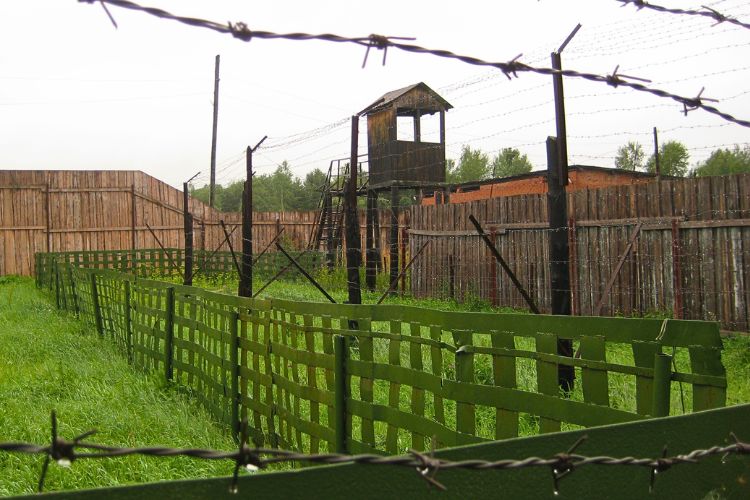
Later in The Whisperers, Figes unpacks the Great Terror (otherwise known as Stalin’s Purge or The Great Fear), when 681,692 people — and probably many more — were shot as “enemies of the people” from 1937–1938. The population of the Gulag labour camps4 grew in the same period from 1.2 million to 1.9 million (this figure excludes at least 140,000 deaths within the camps and on transportation to them).
Imagine living in Russia, when you feared a knock on the door in the dead of night, every night; as the authorities descended on you to take you away, thousands of miles from your family, or to be shot, as one of the ten percent of those arrested. Any wonder it was sometimes called The Great Terror.
You could be arrested for the slimmest of misdemeanours or none, all on the say-so of one of your own family or your neighbour, who may or may not have heard or seen something untoward. Often those who reported you were being paid as informers, and they were only too willing to take the bribe to curry favour and, potentially, save their own skin.
A Failed Dream
The Marx and Engels dream of a communist utopia was coming to pass in the Union of Soviet Socialist Republics (USSR); but at what cost? Yes, these vast people groups, stretching 10,000 km from Europe to Asia, lurched forward from a largely rural agrarian economy to an industrial giant, fed, theoretically, by the huge collective farms known as ‘kolkhoz.’
But let’s never forget the Ukrainian famine, with estimates varying wildly, ranging from three to eleven million dead (most claim that around four million Ukrainians starved to death within this period).5
Beyond the cost in lives lay the misery and deprivation of those left behind. Consider the aims to eradicate the nuclear family, individual responsibility and the Christian faith — all for the cause.
Communism Established What It Was Supposedly Against
One of the ironies of Russian communism was the establishment of a two-tiered society. The ruling classes lived in palatial luxury with special perks that included retail outlets just for them with exotic imports only permitted to the elite.
While everyone else, the proletariat, were crammed into shared apartments, with only a couple of square metres they could call their own. Some were allocated only enough room to sleep on a landing, divided off from others by a curtain or a thin partition through which every word could be heard.
These spartan conditions were made worse by the millions pouring in from the land into the cities in search of work in the factories. They were brain-washed by the Party into believing that these hardships were only temporary and that they must make personal sacrifice for the ‘common good.’
Privacy was a rare commodity and there was nowhere to escape the reality that ‘walls had ears.’ Imagine an existence where your thoughts were no longer your own, and your words were few and heavily self-censored. The few who clung to their old life were usually arrested as ‘enemies of the people,’ deported to the Gulags, executed, or both.
Ruling with an Iron Fist
There were many people who had doubts about the mass arrests, but few spoke up. This story from Altunin, a middle-aged Old Bolshevik in 1939, working as a toolmaker, illustrates the psychological torture inflicted on everyone:
“When it all started in 1937, first this comrade was an enemy, then that one, and we expelled them from the Party, we all raised our hands; and then we killed them all, our own comrades.
“At first, I pretended to be ill. That way I didn’t have to go to the Party meetings and raise my hand. But then I saw that something needed to be done: we could not go on like this, we were destroying the Party, killing good and honest people. I did not believe that they were traitors, I knew these people well.
“One evening I sat down and wrote a letter. I sent one copy to my local Party organisation, one to Stalin, and one to the Party’s Central Control Commission. I wrote that we were killing the Revolution… I poured my whole heart into the letter. I showed it to my wife. She said: ‘This is suicide. The day after you send that letter they will put you in prison.’ But I said: ‘Let them put me in prison. Better to be behind bars than to raise my hand and kill a comrade.’”
Figes’ invaluable research was no sanitised narrative but the reality of those who lived and died for and under communism.
There were certainly manifold faults with capitalism as Marx identified in 1848, but was Joseph Stalin’s transformation of the Soviet Union the best remedy?
Look out for Part 2, which examines present days examples of communism we can all see around us and together they make up Neo-Marxism.
___
Image via Wikimedia Commons.
References
- Marx, Karl & Engels, Friedrich (1848). The Manifesto of the Communist Party. This edition with an introduction by David Harvey (2008). Pluto Press. https://zelalemkibret.wordpress.com/wp-content/uploads/2012/01/the-communist-manifesto.pdf [↩]
- The School of Life (2014, December 19). “Political Theory – Karl Marx”. YouTube Video. https://www.youtube.com/watch?v=fSQgCy_iIcc [↩]
- Figes, Orlando (2007). The Whisperers: Private Life in Stalin’s Russia. Metropolitan Books. [↩] [↩]
- Solzhenitsyn, Aleksandr I. (1973). The Gulag Archipelago: 1918–1956. Harper & Row Publishers;
Slice Who? (2024, July 27). “Gulag Archipelago: How Solzhenitsyn Exposed Soviet Reality – Full Documentary”. YouTube Video. https://www.youtube.com/watch?v=vw6QaYB4Obk [↩] - Hayden, Clara, Ed., Mullins, Devin (2025, November 23). “The Holodomor: Genocide by Famine Against Ukraine, 1932–1933.” Dawn. https://dawnus.org/discover/ [↩]
6 Comments
Leave A Comment
Recent Articles:

7 October 2026
3.6 MINS
Victoria’s 18th March for the Babies will bring families together to peacefully affirm the value of every human life and call for a cultural change towards life.
7 October 2026
1.5 MINS
Across the Middle East, North Africa and Anatolia, Christianity once shaped entire civilisations. Could Britain’s Christian heritage likewise become a memory rather than a reality?

7 October 2026
6 MINS
What can Tucker Carlson’s interview with Jacob Rees-Mogg teach us about political disagreement? Their clash over war, Russia and national defence highlights the importance of listening carefully and understanding an opponent’s position before attempting to refute it.
7 October 2026
8.5 MINS
Gerald McDermott’s work challenges Christians to approach Israel through Scripture first, exploring God’s covenant faithfulness, Christian Zionism, Jewish identity and antisemitism.

7 October 2026
4.6 MINS
Medicine was created to heal and preserve life. Yet abortion, euthanasia and gender medicine increasingly redefine death and destruction as care, leaving the vulnerable dangerously exposed.
7 October 2026
3.7 MINS
Christians have their differences. But those differences should not, and need not, result in us being disconnected from each other in the one body of Christ.

6 October 2026
10 MINS
This powerful testimony recounts a lifetime of hardship, danger, illness and near-death experiences — and the unwavering faith that carried one woman through it all.



Great article Jim!!!!!
A great read. We see it happening in Australia with children being indoctrinated at school that they may have been born in the wrong body, denying the existence of a God who has created each of them beautifully and wonderfully. These children can decide to identify as another gender and start taking puberty blockers without their parent’s consent or knowledge. If the parent’s object or talk to their children about the choice they have made they are accused of “conversion practices” and can be fined heavily or have their child removed for the safety of the child.
I know of churches in Victoria where you need sign a form agreeing to call people by their preferred pronoun if you want to hold any position in that church such as Sunday School teacher, pastor, counsellor, prayer ministry. If you do not sign the form you can not perform these duties. This means that people are forced to lie when using preferred pronoun that is not correct, and rather than exposing the deception and helping the person who may need counselling, the deception or fantasy is allowed to continue.
Several of my friends have refused to sign the form.
We Eastern Europeans know all about Marxism (includes Fabianism ). Solzhenitsyn, my HERO ! The churches were infiltrated many decades ago eg my Pope Leo 14 who believes in Open Borders and excommunicating any traditional Catholics. I thought excommunication was obsolete centuries ago . Who takes notice of Leo any way ! When we are expected to pray for him in the English Mass , I will remain silent because I do not recognise a Communist Pope.
A great article.
We see it happening in Australia with children being indoctrinated at school that they may have been born in the wrong body thereby denying that there is a God who has created each of them beautifully and wonderfully. These children can decide to identify as another gender and start taking puberty blockers without their parent’s consent or knowledge. If the parent’s object or talk to their children about the choice they have made they are accused of “conversion practices” and can be fined heavily or have their child removed for the safety of the child.
I know of churches in Victoria where if you hold any position in that church such as Sunday School teacher, pastor, counsellor, prayer ministry. you need sign a form agreeing to call people by their preferred pronoun. If you do not sign the form you cannot perform these duties. This means that people wanting to remain serving in that church are forced to lie when using a person’s preferred pronoun when it is not correct for the gender they were born with, and rather than exposing the deception and helping the person who may need counselling, the deception or fantasy is allowed to continue.
Several of my friends have refused to sign the form.
Richard, your story is harrowing. I don’t know how to respond – sadness? That doesn’t seem to be right. Anger? Is that right? But what I do know I am applauding your friends for refusing to sign!
This is a great read. I particularly appreciated the inclusion of the videos, especially Gulag Archipelago: How Solzhenitsyn Exposed Soviet Reality. I confess I was completely unaware of the significance of this work.