


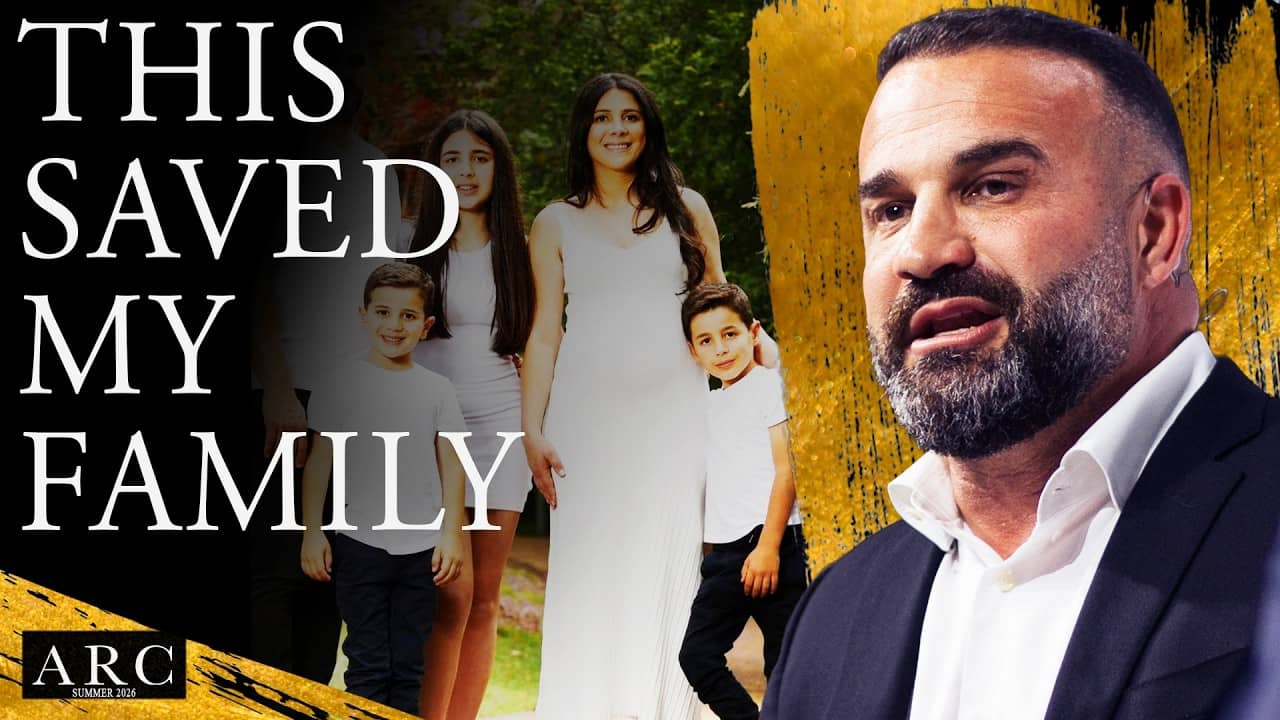
Christian Forgiveness Centre-Stage at the Alliance for Responsible Citizenship: Danny Abdullah
In June, at the Alliance for Responsible Citizenship (ARC) in London, the focus on the renewal of Western Civilisation was not only confined to public policy solutions, or even the revitalisation of culture and art.
There was a wide, if not universal, acknowledgement that spiritual revival was also a part of the picture.
One hint of this recognition was the platform given to Danny Abdullah and the i4Give Foundation, a Christian ministry dedicated to helping people find freedom in forgiveness.
During the ARC 2026 program, following a short video providing background to Danny and his wife Leila’s tragic story, Danny was interviewed on the main stage by former Australian Prime Minister and outspoken Christian Scott Morrison.
The couple also presented at the recent ASPIRE Conference in Sydney.
If you are not familiar with the story of Danny and Leila Abdullah — how their children were killed by the reckless actions of a drunk driver, Samuel Davidson, and how they offered that driver forgiveness through Jesus Christ — I encourage you to watch 7 News Spotlight’s 2025 feature (a sequel to their 2020 report), which provides important background context.
How Danny Abdullah Forgave His Children’s Killer
Asked how and why he and his wife forgave the driver, Danny explained that his wife’s forgiveness stemmed from her Christian faith instinctively:
“… every day we’d pray the ‘Our Father’ with our kids and the ‘forgive us our trespasses as we forgive those that trespass against us’ — and I wasn’t surprised when she did that act. For me, it was different. I had to salvage my family. I was a father of six children at the time, and three tragically died alongside the cousin, Veronique. And I was at a crossroad… and I could either lose my whole family and seek revenge, or I could forgive and salvage half.”
He explained how, for the sake of his family, he “chose the journey of forgiveness”.
Pressed on the nature of forgiveness, Danny explained:
“Forgiveness is a choice; it’s not a feeling, and I always share that with the world. It’s something you do; it’s an act of discipline. Because nobody feels like forgiving.”
Corrie Ten Boom on Forgiveness
His remarks echo the powerful story of the Dutch Christian, Corrie Ten Boom, who was once confronted by a Nazi soldier who had guarded her when she was imprisoned at the concentration camp, Ravensbrück.
Several years after the war, despite losing her older sister to Nazi brutality in Ravensbrück, Corrie visited Germany to share the Christian message of forgiveness, saying, “When we confess our sins, God casts them into the deepest ocean, gone forever.”
After she had finished speaking, to her horror, a man whom she recognised as a Nazi guard from Ravensbrück approached her, put out his hand, and said, “A fine message, fräulein! How good it is to know that, as you say, all our sins are at the bottom of the sea!”
Ten Boom takes up the story:
“… I, who had spoken so glibly of forgiveness, fumbled in my pocketbook rather than take that hand. He would not remember me, of course — how could he remember one prisoner among those thousands of women?
But I remembered him and the leather crop swinging from his belt. It was the first time since my release that I had been face to face with one of my captors and my blood seemed to freeze.
‘You mentioned Ravensbrück in your talk,’ he was saying. ‘I was a guard in there.’ No, he did not remember me.
‘But since that time,’ he went on, ‘I have become a Christian.’”
Now, Corrie Ten Boom’s message of forgiveness had become personal. The guard continued, saying: “‘I know that God has forgiven me for the cruel things I did there, but I would like to hear it from your lips as well. Fräulein’ — again the hand came out — ‘will you forgive me?’”
Says Corrie:
“And I stood there — I whose sins had every day to be forgiven — and could not. Betsie had died in that place — could he erase her slow, terrible death simply for the asking?
It could not have been many seconds that he stood there, hand held out, but to me it seemed hours as I wrestled with the most difficult thing I had ever had to do.
For I had to do it — I knew that. The message that God forgives has a prior condition: that we forgive those who have injured us. ‘If you do not forgive men their trespasses,’ Jesus says, ‘neither will your Father in heaven forgive your trespasses.’
I knew it not only as a commandment of God, but as a daily experience. Since the end of the war I had had a home in Holland for victims of Nazi brutality.
Those who were able to forgive their former enemies were able also to return to the outside world and rebuild their lives, no matter what the physical scars. Those who nursed their bitterness remained invalids. It was as simple and as horrible as that.
And still I stood there with the coldness clutching my heart. But forgiveness is not an emotion — I knew that too. Forgiveness is an act of the will, and the will can function regardless of the temperature of the heart.”
In desperation, Corrie prayed silently: “Jesus, help me! I can lift my hand. I can do that much. You supply the feeling.”
And she did:
“And so woodenly, mechanically, I thrust my hand into the one stretched out to me. And as I did, an incredible thing took place. The current started in my shoulder, raced down my arm, sprang into our joined hands. And then this healing warmth seemed to flood my whole being, bringing tears to my eyes.”
In that moment, Ten Boom was given the grace to forgive, when she did not have the power to do so herself. Through an act of the will — reaching out her hand to the guard — she had trusted that the feeling of love would follow. And it did.
“I forgive you, brother!” she cried. “With all my heart!”
She explains: “For a long moment we grasped each other’s hands, the former guard and the former prisoner. I had never known God’s love so intensely as I did then.”
Where Forgiveness Comes From
Just like Corrie Ten Boom, although in radically different circumstances, Danny and Leila Abdullah have had to rely on the grace of God to exercise forgiveness. And they are unapologetic about where true forgiveness comes from.
On the home page of the i4Give Foundation website, the Abdullahs highlight Ephesians 4:32: “Be kind and compassionate to one another, forgiving each other, just as in Christ God forgave you”.
In an age of hatred, vengeance, and anger, the Abdullahs model the Christian path of forgiveness — just as Corrie Ten Boom did some generations ago.
___
Image courtesy of the Alliance for Responsible Citizenship (ARC) via YouTube.
Recent Articles:
21 September 2026
4.4 MINS
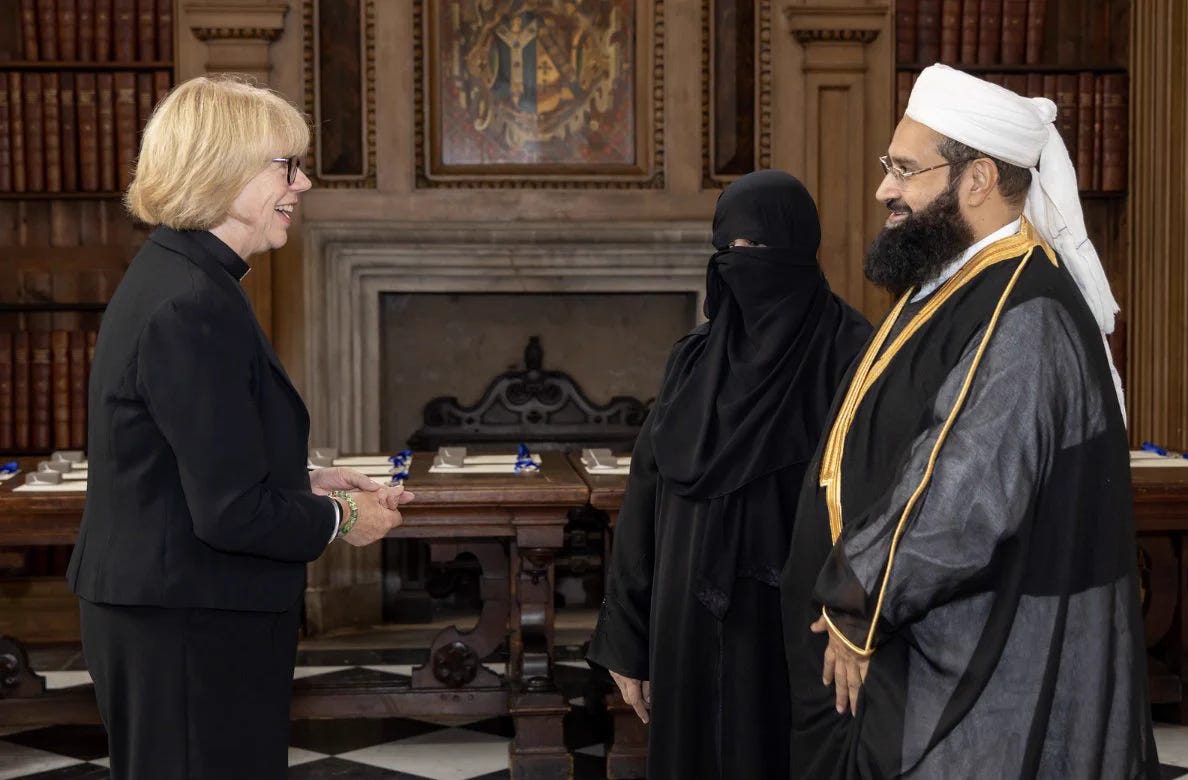
On September 11, the Archbishop of Canterbury gave an interfaith award to a man who called Osama bin Laden the "Sword of God" and blames Jews and Christians for the war on Iran. The award was rescinded after public backlash.

21 September 2026
8.5 MINS
After a 20-week scan revealed possible heart abnormalities and genetic concerns, medical staff twice offered to abort a Christian couple's baby. Six weeks of fervent prayer later, the heart defect was gone — and their son is nearly ready to be born.
21 September 2026
2.4 MINS
It is truly concerning that this sort of incursion into free speech can even be suggested. Labor's Digital Duty of Care Bill is about controlling the narrative online, and must be defeated.
21 September 2026
3.2 MINS
Something special happens when men step out of the everyday and focus on being fully present. Dads4Kids recent Men’s Summit and the upcoming Courageous Online Fathering Course create space for presence.

18 September 2026
4.4 MINS
Up to 10,000 rallied in Sydney for a ban on sex-selective abortion. Twenty-four hours later, the NSW Legislative Council defeated John Ruddick's bill 21–16. The fight, says Dr Joanna Howe, is just beginning.
18 September 2026
3.5 MINS
Brothers Luke and Joel Smallbone have become one of the world's most loved Christian pop acts. As For King & Country, they have won four Grammys, 15 GMA Dove Awards and billions of song streams. And today they releasing their latest album.
18 September 2026
4.9 MINS
The government's $75 million deradicalisation program isn't working — and some wannabe terrorists have left more radical. So it's announced a new plan — which forbids identifying what's doing the radicalising.


