Rediscovering James McAuley, One of Our Finest Poets
James McAuley’s legacy reaches far beyond Australia’s Catholic hymnals. Poet, convert and cultural warrior, he defended beauty, truth and faith in an age of changing values.
A party for rockstar Australian poets would be an intimate gathering. Banjo Paterson would certainly be there. And Bruce Dawe, Dorothea Mackellar, Les Murray, and Henry Lawson. Maybe Kenneth Slessor and Judith Wright. Possibly John O’Brien.
The Poet Behind Australia’s Beloved Hymns
But the poet who is most widely read wouldn’t be there. He is James McAuley, the author of some of the favourite hymns in Catholic hymnals. Everyone knows “Seek O Seek the Lord”, “In Faith and Hope and Love”, and “Help of Christians, Guard This Land”, even if they have never heard of McAuley. Every Sunday, across the country, people will be singing his hymns. Not even Banjo Paterson can match that.
It is 50 years last week since McAuley died on 15 October 1976. He was a Catholic convert, and he was a poet, but it would be wrong to call him a “Catholic poet”. He was far too complex and paradoxical to be pigeon-holed like that.
McAuley was born in Lakemba in 1917. He went to Fort Street Boys High School and succeeded brilliantly at the University of Sydney. His background was Anglican, but by the time he graduated, he was, if anything, an atheist.
He married Norma in 1942 and served in various military roles during World War II, mostly as a pen-pusher in Melbourne, although late in the war he saw some action in Papua New Guinea.
The Ern Malley Hoax That Haunted His Career
It was on a lazy afternoon in 1944 in Victoria Barracks that he wrote some poems that marked him for life. He shared with fellow poet Harold Steward a contempt for “the decay of meaning and craftsmanship” in modern poetry, and in particular, for an Adelaide literary magazine called Angry Penguins. Together they penned a fictitious biography of a recently deceased poet named Ern Malley and concocted 17 obscure poems that he had written.
The editor of Angry Penguins, Max Harris, took the bait and published the poetry as the work of an unknown genius. Kapow! Harris became an international laughingstock. But McAuley and Stewart ended up as the real victims. Their names became synonymous with rigid conservatism in Australian poetic circles. McAuley carried this albatross around his neck for the rest of his life. His critics sneered that Ern Malley was a far better poet than McAuley ever was.
To tell the truth, some of the poems do have unforgettable lines. “I am still / the black swan of trespass on alien waters” or “I have split the infinitive. Beyond is anything.” are often quoted.
A Conversion That Transformed His Life and Work
After the war, McAuley spent long periods in New Guinea for his work. Amazingly, it was there that he became interested in the Catholic Church. He was fascinated by the traditional culture of the people and by Archbishop Alain de Boismenu, a saintly priest who was declared a Venerable in 2014. He was received into the Church in 1952; his wife followed him a few months later.
McAuley was a passionate, energetic, serious man who threw himself into his commitments. Filled with the fervour of a recent convert, he penned long letters explaining Catholic dogma to a bemused fellow litterateur, Dorothy Green. He became a staunch anti-communist activist and eventually an ally of Bob Santamaria. He founded Quadrant, a magazine of literary, cultural and political commentary which is still an important voice.
Although Sydney’s Cardinal Gilroy predicted that McAuley would be known as one of the 20th century’s greatest converts, later on, they clashed bitterly. The casus belli was the split in the Labor Party in the late 1950s. McAuley worked hard to create a NSW branch of the Democratic Labour Party; the Cardinal wanted the Church to stay out of politics and opposed the DLP. The Catholic Weekly became embroiled in the controversy.
One of McAuley’s hymns, “Help of Christians, guard this land”, reflects his dismay at the naivete of the “Gilroy Catholics”. In his turn, Cardinal Gilroy refused to give his imprimatur to a hymn book with McAuley’s early hymns.
He combined frantic activity as a public intellectual with raising five children with his wife, a job with the Commonwealth government, and his poetry.
A Legacy Worth Rediscovering
During the 1950s and early ’60s, he wrote most of his explicitly religious poems. “A Letter to John Dryden” surveys the “isms” fighting for the Australian soul. It concludes by invoking the grace of holiness for Australia.
“Incarnate Word, in whom all nature lives,
cast flame upon the earth: raise up contemplatives
among us, men who walk within the fire
of ceaseless prayer, impetuous desire.
Set pools of silence in this thirsty land.”
As Archbishop of Melbourne, Cardinal Pell had these words engraved on the water sculpture on the eastern side of St Patrick’s Cathedral.
In 1961, McAuley and his family moved to Hobart, where he became a professor of English and, for a brief time, acting vice-chancellor. Many of his poems reflect his delight in exploring the Tasmanian bush.
In 1964, McAuley published a long epic poem, “Captain Quiros”, about the Spanish explorer who called the unknown southern continent “Australia del Espíritu Santo”. It is an allegory of what McAuley perceived as the crisis of Western culture.
But thereafter, McAuley’s poems changed. They became more introspective, more personal, more melancholy, more elegiac. His poems about his father, a Catholic who gave up his faith to marry an Anglican, are poignant, not bitter, but sorrowful. His faith was tested by bleak moods and the turmoil after the Second Vatican Council.
A spiritual darkness emerges in a later poem about visiting his parish church:
I bring with me my griefs, my sins, my death,
And sink in silence as I try to pray.
Though in this calm no impulse stirs my breath,
At least there’s nothing that I would unsay.
In 1970, he was diagnosed with cancer. “Better a semi-colon than a full stop,” he joked after his colostomy. But he kept working and writing. In 1976, the year of his death at the age of 59, he published a brilliant collection of essays, The Grammar of the Real. A posthumous collection of poems was published in 1977.
James McAuley was a remarkable man – a poet, public intellectual, academic, administrator. In the ’60s and ’70s, he was admired or loathed – never ignored. But in recent years, his star has faded. This has happened not simply because the elegant formality of his verse has gone out of fashion, but because the “modernity” with which he battled for most of his professional life is the reigning ideology of the age. He defended beauty and truth against relativism and schlock. He lost. Woke art has no time for the serene heart-piercing purity of his best poems.
That’s a shame, because he deserves to be remembered and celebrated. Even before his conversion to the Catholic faith, he was extraordinarily well-read in the politics, philosophy, and literature of the Western tradition. After his conversion, he immersed himself in the works of leading Catholic writers in order to understand his responsibilities as a poet who had been baptised into the Faith. He brought maturity and sophistication to Catholic intellectual life in Australia.
Which is not to say that his answers were necessarily correct, or that his verse is a benchmark for Christian poets. But his struggle to be true to his poetic vocation gives him a permanent place in Australian intellectual history. Fashions come and go. McAuley will be back.
___
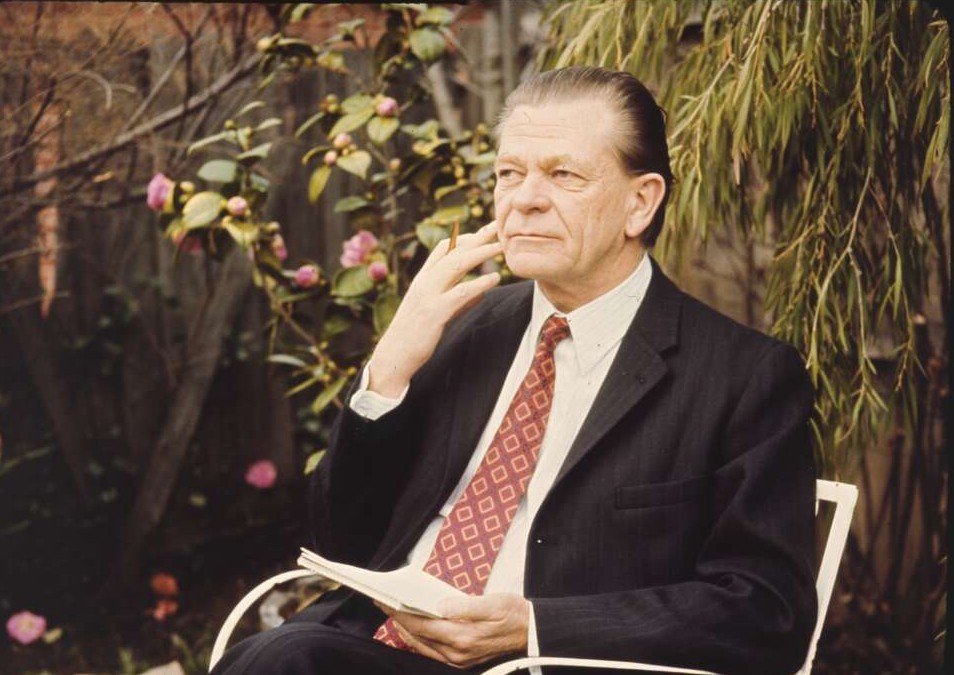
Republished with thanks to The Catholic Weekly. Image courtesy of the Australian News and Information Bureau.
Recent Articles:
20 October 2026
3.9 MINS
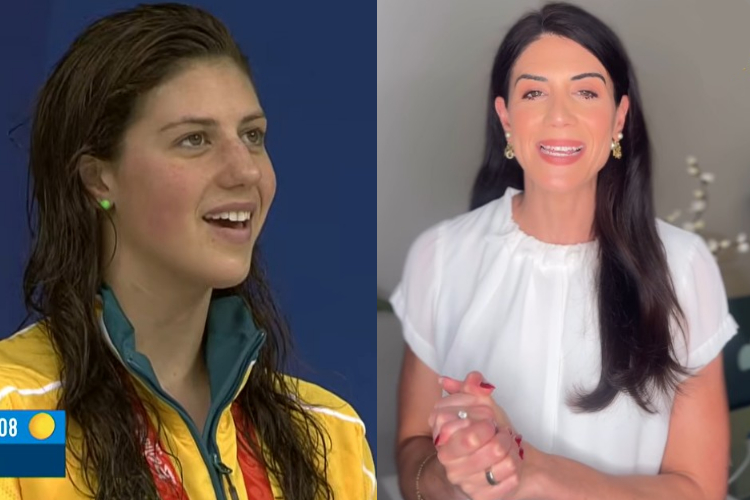
Olympic champion Stephanie Rice has faced a wave of online ridicule after revealing she resigned from her dream job following what she believes was God’s direction.

20 October 2026
4.5 MINS
As rioters burn cars and historical buildings, celebrating the destruction of France’s inheritance, the West confronts an uncomfortable question: what happens when a civilisation loses the will to defend itself?
20 October 2026
3 MINS
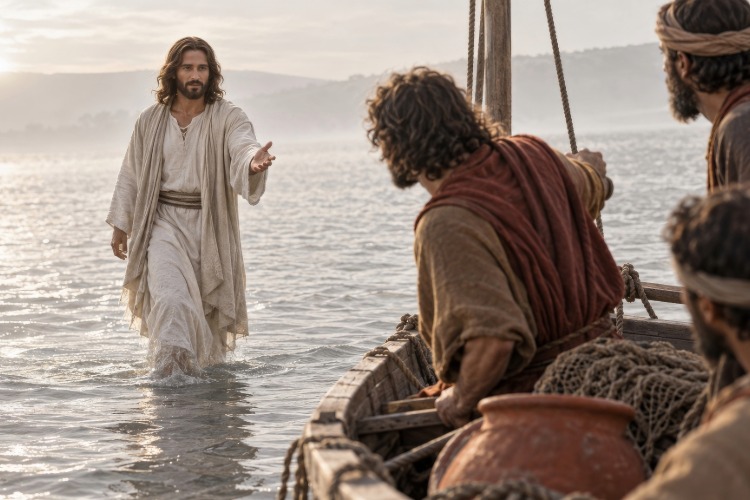
Scripture teaches us to pray the "prayer of faith", because without faith it is impossible to please God.

19 October 2026
7 MINS
Western Australia’s euthanasia deaths have surged, prompting calls for an urgent inquiry amid concerns about doctor shopping, waived safeguards, limited palliative care and proposed legal expansion.
19 October 2026
12.4 MINS
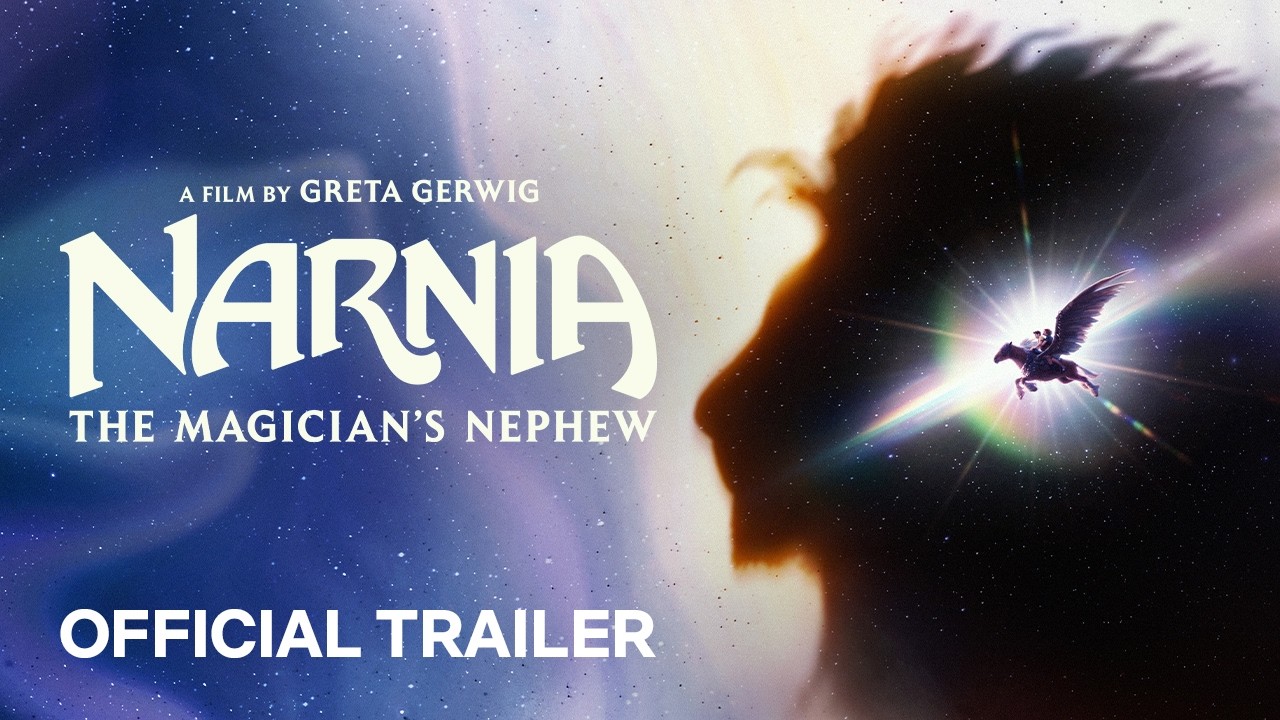
Greta Gerwig’s "Narnia: The Magician’s Nephew" trailer raises questions about C. S. Lewis’s Christian vision and the faithfulness of the new Netflix adaptation. Here are my initial impressions and concerns.

19 October 2026
3.3 MINS
Discover why dads make a unique difference in their children’s lives, and how the Dads4Kids Fun Camp creates lasting memories through adventure, connection and fun.

19 October 2026
3 MINS
Paul prayed that we would be awakened to a deeper revelation of the Father and who we are in Christ, so that we will make Jesus known to others more passionately.