The Western World is currently in the midst of a civilisational crisis, and unless the LORD mercifully intervenes in a dramatic way, we will continue the slide into cultural suicide. For an excellent examination of this, see the recent book by Gad Saad, Suicidal Empathy: Dying to be Kind (2026).
The US Midterms
A dramatic illustration of this is the recent election of eight transgender women at the US midterms, which is nothing other than the continued erasure of women. Sadly, Joanna Whaley from Michigan used to be an evangelical pastor who had previously been married to a woman who had given him three children. Sadly, ‘Ms Whaley’ is now ‘married’ to a man, a further sign that this once great nation is under the judgment of God (see Romans 1:18–27; Isaiah 3:12).
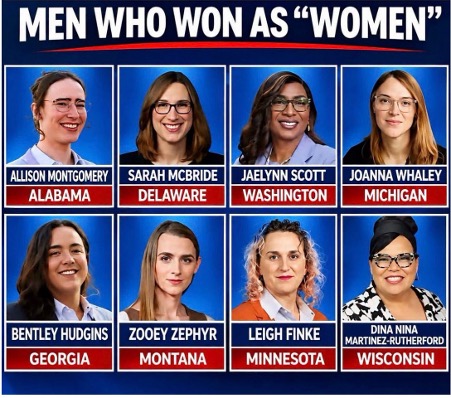
This is all part of what I call “The Great Deception”, where just as in Israel before the exile, people have called evil good and good evil, they have put darkness for light and light for darkness, and they have exchanged bitter for sweet and sweet for bitter! (See Isaiah 5:20) As the prophet Isaiah says, ‘woe’ unto any nation whose moral compass has become so distorted and whose spiritual discernment has become so obscured.
The Tragic Case of Tasmania
I have also witnessed this tragic situation in the state of Tasmania, where I currently reside, the lower house recently passed some of the most extreme ‘anti-conversion’ laws in the world. While others have outlined the plethora of problems with the bill, there was one speech in particular which I wanted to draw to people’s attention.
The Hon. Felix Ellis, who is the member for Braddon and also the Minister for Police, Fire and Emergency Management, made one of the most insightful and articulate speeches on the subject. Rather than be lost in the ‘memory hole’ of political amnesia, I have reproduced his speech in full below.
Unfortunately, more and more people are no longer reading. But there are some speeches which are too important to ignore and the one by Mr Ellis is a case in point. Many people commonly misattribute the aphorism to G.K. Chesterton, “Whoever marries the spirit of this age will find himself a widower in the next”. (The true author, though, was William Ralph Inge, Professor of Divinity at Cambridge and Dean of St Paul’s Cathedral.)
Nonetheless, the point is still true. While the following speech by Felix Ellis is currently opposed, it will in the future be viewed for what it really is: a clarion call for sanity in a time when people have sadly lost their minds.
And that is why it’s so important we ourselves do not become victims of The Great Deception but continue to stand and speak The Truth.
Speech by the Hon. Felix Ellis
Thank you, Speaker, I rise to speak on the Conversion Practices Prohibition Bill 2026. I want to begin with what unites this House, because I think it matters. No member here supports cruelty. No member wants a young person coerced or abused because of who they love or how they understand themselves. The aversion therapies of the last century — drugs to induce nausea, electric shocks and the like — were a stain on medicine. If this bill did nothing more than outline that it would pass this House without a division. We know that because legal protections against such harms already exists. But that’s not what this bill does. The hardest question this bill touches is not about the practices of the 1960s. It is a question that doctors, psychologists and parents are wrestling with right now. That’s why it’s here today. How do we care for a child or a teenager who is deeply distressed about their sex or their gender? This is one of the most contested questions in modern medicine, but this bill asks us to legislate as though that matter was settled.
Let me be precise about why I rise. I rise for the 13-year-old in Burnie or Devonport who tells their parents that they’re born in the wrong body; for those parents sitting in the GP’s waiting room, frightened and unsure; and for the psychologist who wants them to take time to understand what’s going on. The potential for anxiety, anorexia, autism, trauma, bullying or an emerging sexuality. Before anyone reaches for an answer, a child in distress deserves a question before they are given an answer. I’m not here to tell any trans Tasmanians who they are. Adults who have transitioned are, of course, like anyone, owed respect, dignity and the full protection of the law. The issue at stake in this bill is narrower and far more complex. This bill turns the most cautious care for a distressed child into some of the most legally dangerous care that a parent or clinician can offer. No parliament should do that to children and to the people who love them.
A decade ago, there was a confident view in some quarters that the right response to a gender distressed child was to affirm early and to move to a medical intervention when the child asks, even if they were not yet at the age of consent. That confidence has not survived contact with the evidence. In April 2024, Dr Hilary Cass, a paediatrician, not a politician, handed down the most comprehensive review of youth gender services ever undertaken. Her forward did not mince words. She warned that the evidence in this field is thin and that what it shows has been overstated. She wrote that there is, ‘no good evidence on the long-term outcomes of interventions to manage gender related distress’, as it’s practised then in the UK, that these pathways can cause infertility, physical and mental health harms including suicidal ideation, sexual dysfunction and the need for lifelong medical intervention beginning at that age as a child – consequences which she found many children cannot be reasonably assumed to have made informed consent. She called for every young person to instead receive a cautious and holistic assessment: their mental health, their neurodiversity, their family, their history.
This caution has now crossed the world. New Zealand has stopped new prescriptions of puberty blockers, Queensland has paused new hormone treatments for minors in its public hospitals until the release of a UK trial is known in 2031, the Northern Territory has followed and our own federal Health minister has asked the National Health and Medical Research Council to rewrite the national guidelines with draft interim advice on puberty blockers due in public consultation next month. We are being asked to legislate certainty in a field where the honest answer is we don’t know yet. The debate is not settled, but the international evidence points to the Greens’ preferred model of gender transitions for minors as doing more harm than good for children.
Here is the telling thing: when the British government published its own draft conversion practices bill in June, Dr Cass welcomed it because it specifically confined that crime to abusive conduct causing serious harm, capped the penalty at five years and puts an exemption for healthcare on the face of the bill. She said clinicians must be able to care for young people without fear of litigation. This is what careful law looks like; it draws a bright line around cruelty and leaves clinicians free to think. This bill does the reverse.
Let me turn to the text, because good intentions are not drafting technique. Clause 5 defines a ‘conversion practice’ as conduct directed at a person with or without their consent, for the purpose of changing, suppressing or eradicating their gender identity or inducing them to. ‘Suppressing’ is not defined, ‘inducing’ is not defined, and clause 5(2) says it’s irrelevant whether the conduct rests on a mistaken assumption about who that person is.
Then there’s the identity that this bill protects. Last week, one of the bill’s leading advocates answered my question about what a woman is. A woman, he says, is anyone who knows themselves at their deepest level to be a woman. This is the bill’s problem in miniature. No clinician can see what a 13-year-old knows that their deepest level. No court can test it and the bid for suppressing a gender identity without saying what suppressing means. And this leading advocate can only define a woman by pointing back to the word itself. When the definitions like this run in circles, the line gets drawn by whoever complains first.
Consider the psychologist. The bill protects her if she acts in good faith and complies with all relevant legal, professional and ethical requirements. But in this field, the professional requirements are precisely what is a dispute around the world. The national guidelines here in Australia are being rewritten as we speak. Which requirements is she supposed to meet, today’s or the ones published next year? She cannot know and she will only find out when someone complains. How do you comply with all professional requirements when the standards are in dispute with each other? The guidance is shifting under her feet.
The journalist Bernard Lane, who has reported on Australia’s gender clinics for years, revealed in April that the Australian Psychological Society’s new position statement dropped the Cass commission evidence review that had appeared in the 2024 draft. The bill told psychologists that exploring gender with a client is not a conversion therapy unless they push for a particular outcome. The final version, instead, puts the onus on them to make sure their work does not amount to conversion therapy. This is exactly the kind of professional guidance a court could look to in deciding whether a Tasmanian psychologist meets this bill’s test.
The bill also lets practitioners help a young person explore their identity, but without directing, predetermining or seeking to influence the person towards a particular outcome. Medicine is not neutral about irreversible outcomes. A clinician who hopes that a 14-year-old can find a way through their distress without a lifetime of medical intervention is not running a conversion program; she’s practicing medicine. Then there’s the school counsellor, the youth worker, the social worker who is not a registered practitioner; they get no health exemptions at all. They must argue that what they did genuinely facilitated exploration and someone else decides what ‘genuinely’ means, potentially at the end of years of legal proceedings.
Then look at what hangs off that uncertain definition: anyone can make a report whether or not they were affected; adults who believe an offence has been committed against a child, who is exactly the focus of this bill, must report it to police. The commissioner can compel documents, override the privilege against self-incrimination, also known as the right to silence, and is not bound by the rules of evidence. Conduct towards a child becomes reportable conduct under child safety laws with no harm threshold at all.
The criminal offences require only injury, including temporary harm to mental health caused negligently. The bill sets no penalty. The Criminal Code default applies — that’s up to 21 years. Victoria reserves 10 years for serious injury and New South Wales and South Australia requiring intent and serious harm for five.
With a clinician, of course though, the punishment is not just the verdict; it’s the complaint, the investigation, the years of waiting. We’ve already seen it happen. In 2023, Dr Jillian Spencer, a senior child psychologist at the Queensland Children’s Hospital, was stood down after raising concerns about its gender service. Years of disciplinary proceedings followed. This year, Queensland Health finally dropped every one of those against her, settled with her and accepted that clinicians must not direct a child down a predetermined treatment pathway. She was right, and it cost her years and her place at that hospital.
Clinicians will respond as any sensible person would to these conversion practices laws. A vague law does not stop bad practice; it stops cautious practice. The psychologist with a six‑month waiting list will simply decline the gender-distressed teenager, not because she’s done anything wrong, but because she cannot afford the risk. Professor Patrick Parkinson says that even LGBT-focused clinicians in Victoria have grown reluctant to treat these minors, and this month Mr Lane reported a Victorian mother telling a conference in Adelaide that her state’s laws had had an absolutely catastrophic effect on being able to find neutral, supportive therapy for children with gender distress.
Let me turn to the people that this bill seems least able to imagine: mums and dads. The bill protects parents discussing sexuality, gender, or religion with their children. Discussing. It says nothing about deciding. Consider a situation the Archdiocese of Hobart put to its members. A 14-year-old asks their school to use a new name and new pronouns. Their parents, who love them, ask the school to wait until they have clinical advice. The school agrees. Is that suppressing a gender identity? The bill doesn’t say. The parents don’t know, the school doesn’t know, and the commissioner will decide after the fact. And remember, Dr Cass found that social transition is an active intervention. A parent who says, ‘Let’s slow down’, is doing what the most comprehensive review in the world recommends. Ultimately, that is the heavy responsibility for parents of children below the age of consent, not just to discuss, but often it’s to decide.
Caution is not conversion, and curiosity is not cruelty. The bill targets something different. A parent who chooses a therapist who will explore rather than simply affirm. A parent who takes their child to Melbourne for a second opinion, when clause 14 makes it an indictable offence to take a person out of Tasmania for a so-called conversion practice. Grandparents, foster carers and kinship carers raising a child get no express protection at all. The clause simply names only parents, and because the bill rights conversion practices into Tasmania’s child abuse laws, a teacher or relative is legally required to report a family to police or face legal risks themselves.
Consider where this bill will land hardest in the case of a bitter separation. Last year in the case of Re Devin, the Family Court heard separated parents fight over whether their 12‑year-old should start puberty blockers. The mother said yes, the father believed the child was gender expansive rather than dysphoric and said no. The court found the gender clinic had not done a proper assessment, as we are often hearing, gave the father sole parental responsibility and the treatment did not proceed. Under this bill, the father’s stance, the one the Family Court upheld, is exactly the kind of thing an angry former partner could report to the commissioner as a conversion practice.
Anyone can make a report. No harm need be alleged. The allegation alone makes the child a person affected under the bill. Imagine how that reads in an affidavit. In a bitter separation the bill hands one parent a new weapon, the power to call the other parents caution abuse. No parent can read this bill and know where the line is. If a law cannot be explained to a parent at the kitchen table, it should not be enforced against them in the courtroom. Parents are not a risk to be managed. They are people who will still be there long after the appointments end.
Who are these young people presenting to gender services today? In 2020, the American journalist Abigail Shrier wrote Irreversible Damage. She documented a striking change: clinics that once saw a small number of mostly boys are now seeing huge numbers of mostly teenage girls, many with no childhood history of gender distress, many from friendship groups and online communities where coming out as trans was celebrated. She described therapists whose job it is to ordinarily test the patient’s assumptions simply deferring to them instead. She pointed out that, outside cosmetic surgery, this is the only field of medicine where the patient supplies both the diagnosis and the treatment plan. She was denounced for saying so, but four years later Dr Cass’s review documented the same change in who was presenting. Ms Shrier was right about who was walking through the clinic door, and it demands careful assessment, not legal presumption.
A study of young people at Melbourne’s Royal Children’s Hospital found that close to half had autistic traits. An Australian study of 660 gender-diverse adolescents found one-quarter reported symptoms of anorexia or bulimia. Australian clinicians have documented high rates of trauma, family breakdown and adverse child experiences among the children they are seeing. These are children carrying a great deal. Even the international affirming standards — the World Professional Association for Transgender Health (WPATH) Standards of Care — call for a comprehensive assessment of exactly these things before medical steps are taken. Exploration is not a fringe idea; it is the standard of care.
Then there are the groups that this debate rarely mentions. Older studies of children seen in gender clinics found that most no longer express gender distress after puberty and many grew to become gay or lesbian adults, so when we make exploration legally risky, we should ask who pays? When exploration becomes legally risky, affirmation becomes the default, not because the evidence says so, but because the law does, and some of those young people carried along that path will be gay kids who simply needed time.
Then, of course, there are the detransitioners, young adults who took irreversible steps and now regret them. The bill, of course, lets clinicians discuss the wish to transition, but many detransitioners will tell you the moment that mattered came earlier, the moment when nobody asked why. A law that makes clinicians afraid to ask why will create more of them, not fewer, and more of the suffering that those young people are experiencing now.
I’ll speak further about what amendments are required to improve this fatally flawed bill in the committee stage, but the focus must be on coercion and harm; the actual definition of what is banned, not just what is exempt; clinical safeguards; protection for parents’ decisions, not just discussions; thresholds set at harm, intent and recklessness not far below; retrospectivity and vicarious liability; and of course the need for a proper inquiry into this issue.
There are many who believe that this bill needs to go to a parliamentary committee for proper scrutiny and that is a reasonable request. Getting this right will take months. Getting it wrong will cost children years.
Let me come back to that thirteen‑year‑old in Burnie or Devonport. What does the child need? Not a slogan from either side of this debate. They need time. They need adults who will listen without flinching. They need a psychologist who is free to ask the hard questions about anxiety, about autism, about what happened at school, about who they’re attracted to, and free to say, ‘Let’s not rush’. They need parents treated as partners, not suspects.
If, after all that care, the young person grows into a trans adult, they deserve this parliament’s protection and respect. If they grow into a gay man or a lesbian woman, then they deserve exactly the same, and if they simply grow up comfortable in their own body, that’s not a failure of anyone’s ideology. That’s a child who was given room to find out.
This bill, however well meant, shrinks that room. It has the potential to turn careful and considered decisions with a young person dealing with some of life’s biggest questions — who am I and who am I meant to be? — into a legal minefield, with parents, caregivers and clinical professionals carrying a risk of future prosecution by participating in those important decisions. For those reasons, I oppose the bill.
___
Image: Adobe.






The Great Deception – The Tragic Case of Tasmania and America
9 November 2026
12.5 MINS
The Western World is currently in the midst of a civilisational crisis, and unless the LORD mercifully intervenes in a dramatic way, we will continue the slide into cultural suicide. For an excellent examination of this, see the recent book by Gad Saad, Suicidal Empathy: Dying to be Kind (2026).
The US Midterms
A dramatic illustration of this is the recent election of eight transgender women at the US midterms, which is nothing other than the continued erasure of women. Sadly, Joanna Whaley from Michigan used to be an evangelical pastor who had previously been married to a woman who had given him three children. Sadly, ‘Ms Whaley’ is now ‘married’ to a man, a further sign that this once great nation is under the judgment of God (see Romans 1:18–27; Isaiah 3:12).
This is all part of what I call “The Great Deception”, where just as in Israel before the exile, people have called evil good and good evil, they have put darkness for light and light for darkness, and they have exchanged bitter for sweet and sweet for bitter! (See Isaiah 5:20) As the prophet Isaiah says, ‘woe’ unto any nation whose moral compass has become so distorted and whose spiritual discernment has become so obscured.
The Tragic Case of Tasmania
I have also witnessed this tragic situation in the state of Tasmania, where I currently reside, the lower house recently passed some of the most extreme ‘anti-conversion’ laws in the world. While others have outlined the plethora of problems with the bill, there was one speech in particular which I wanted to draw to people’s attention.
The Hon. Felix Ellis, who is the member for Braddon and also the Minister for Police, Fire and Emergency Management, made one of the most insightful and articulate speeches on the subject. Rather than be lost in the ‘memory hole’ of political amnesia, I have reproduced his speech in full below.
Unfortunately, more and more people are no longer reading. But there are some speeches which are too important to ignore and the one by Mr Ellis is a case in point. Many people commonly misattribute the aphorism to G.K. Chesterton, “Whoever marries the spirit of this age will find himself a widower in the next”. (The true author, though, was William Ralph Inge, Professor of Divinity at Cambridge and Dean of St Paul’s Cathedral.)
Nonetheless, the point is still true. While the following speech by Felix Ellis is currently opposed, it will in the future be viewed for what it really is: a clarion call for sanity in a time when people have sadly lost their minds.
And that is why it’s so important we ourselves do not become victims of The Great Deception but continue to stand and speak The Truth.
Speech by the Hon. Felix Ellis
Thank you, Speaker, I rise to speak on the Conversion Practices Prohibition Bill 2026. I want to begin with what unites this House, because I think it matters. No member here supports cruelty. No member wants a young person coerced or abused because of who they love or how they understand themselves. The aversion therapies of the last century — drugs to induce nausea, electric shocks and the like — were a stain on medicine. If this bill did nothing more than outline that it would pass this House without a division. We know that because legal protections against such harms already exists. But that’s not what this bill does. The hardest question this bill touches is not about the practices of the 1960s. It is a question that doctors, psychologists and parents are wrestling with right now. That’s why it’s here today. How do we care for a child or a teenager who is deeply distressed about their sex or their gender? This is one of the most contested questions in modern medicine, but this bill asks us to legislate as though that matter was settled.
Let me be precise about why I rise. I rise for the 13-year-old in Burnie or Devonport who tells their parents that they’re born in the wrong body; for those parents sitting in the GP’s waiting room, frightened and unsure; and for the psychologist who wants them to take time to understand what’s going on. The potential for anxiety, anorexia, autism, trauma, bullying or an emerging sexuality. Before anyone reaches for an answer, a child in distress deserves a question before they are given an answer. I’m not here to tell any trans Tasmanians who they are. Adults who have transitioned are, of course, like anyone, owed respect, dignity and the full protection of the law. The issue at stake in this bill is narrower and far more complex. This bill turns the most cautious care for a distressed child into some of the most legally dangerous care that a parent or clinician can offer. No parliament should do that to children and to the people who love them.
A decade ago, there was a confident view in some quarters that the right response to a gender distressed child was to affirm early and to move to a medical intervention when the child asks, even if they were not yet at the age of consent. That confidence has not survived contact with the evidence. In April 2024, Dr Hilary Cass, a paediatrician, not a politician, handed down the most comprehensive review of youth gender services ever undertaken. Her forward did not mince words. She warned that the evidence in this field is thin and that what it shows has been overstated. She wrote that there is, ‘no good evidence on the long-term outcomes of interventions to manage gender related distress’, as it’s practised then in the UK, that these pathways can cause infertility, physical and mental health harms including suicidal ideation, sexual dysfunction and the need for lifelong medical intervention beginning at that age as a child – consequences which she found many children cannot be reasonably assumed to have made informed consent. She called for every young person to instead receive a cautious and holistic assessment: their mental health, their neurodiversity, their family, their history.
This caution has now crossed the world. New Zealand has stopped new prescriptions of puberty blockers, Queensland has paused new hormone treatments for minors in its public hospitals until the release of a UK trial is known in 2031, the Northern Territory has followed and our own federal Health minister has asked the National Health and Medical Research Council to rewrite the national guidelines with draft interim advice on puberty blockers due in public consultation next month. We are being asked to legislate certainty in a field where the honest answer is we don’t know yet. The debate is not settled, but the international evidence points to the Greens’ preferred model of gender transitions for minors as doing more harm than good for children.
Here is the telling thing: when the British government published its own draft conversion practices bill in June, Dr Cass welcomed it because it specifically confined that crime to abusive conduct causing serious harm, capped the penalty at five years and puts an exemption for healthcare on the face of the bill. She said clinicians must be able to care for young people without fear of litigation. This is what careful law looks like; it draws a bright line around cruelty and leaves clinicians free to think. This bill does the reverse.
Let me turn to the text, because good intentions are not drafting technique. Clause 5 defines a ‘conversion practice’ as conduct directed at a person with or without their consent, for the purpose of changing, suppressing or eradicating their gender identity or inducing them to. ‘Suppressing’ is not defined, ‘inducing’ is not defined, and clause 5(2) says it’s irrelevant whether the conduct rests on a mistaken assumption about who that person is.
Then there’s the identity that this bill protects. Last week, one of the bill’s leading advocates answered my question about what a woman is. A woman, he says, is anyone who knows themselves at their deepest level to be a woman. This is the bill’s problem in miniature. No clinician can see what a 13-year-old knows that their deepest level. No court can test it and the bid for suppressing a gender identity without saying what suppressing means. And this leading advocate can only define a woman by pointing back to the word itself. When the definitions like this run in circles, the line gets drawn by whoever complains first.
Consider the psychologist. The bill protects her if she acts in good faith and complies with all relevant legal, professional and ethical requirements. But in this field, the professional requirements are precisely what is a dispute around the world. The national guidelines here in Australia are being rewritten as we speak. Which requirements is she supposed to meet, today’s or the ones published next year? She cannot know and she will only find out when someone complains. How do you comply with all professional requirements when the standards are in dispute with each other? The guidance is shifting under her feet.
The journalist Bernard Lane, who has reported on Australia’s gender clinics for years, revealed in April that the Australian Psychological Society’s new position statement dropped the Cass commission evidence review that had appeared in the 2024 draft. The bill told psychologists that exploring gender with a client is not a conversion therapy unless they push for a particular outcome. The final version, instead, puts the onus on them to make sure their work does not amount to conversion therapy. This is exactly the kind of professional guidance a court could look to in deciding whether a Tasmanian psychologist meets this bill’s test.
The bill also lets practitioners help a young person explore their identity, but without directing, predetermining or seeking to influence the person towards a particular outcome. Medicine is not neutral about irreversible outcomes. A clinician who hopes that a 14-year-old can find a way through their distress without a lifetime of medical intervention is not running a conversion program; she’s practicing medicine. Then there’s the school counsellor, the youth worker, the social worker who is not a registered practitioner; they get no health exemptions at all. They must argue that what they did genuinely facilitated exploration and someone else decides what ‘genuinely’ means, potentially at the end of years of legal proceedings.
Then look at what hangs off that uncertain definition: anyone can make a report whether or not they were affected; adults who believe an offence has been committed against a child, who is exactly the focus of this bill, must report it to police. The commissioner can compel documents, override the privilege against self-incrimination, also known as the right to silence, and is not bound by the rules of evidence. Conduct towards a child becomes reportable conduct under child safety laws with no harm threshold at all.
The criminal offences require only injury, including temporary harm to mental health caused negligently. The bill sets no penalty. The Criminal Code default applies — that’s up to 21 years. Victoria reserves 10 years for serious injury and New South Wales and South Australia requiring intent and serious harm for five.
With a clinician, of course though, the punishment is not just the verdict; it’s the complaint, the investigation, the years of waiting. We’ve already seen it happen. In 2023, Dr Jillian Spencer, a senior child psychologist at the Queensland Children’s Hospital, was stood down after raising concerns about its gender service. Years of disciplinary proceedings followed. This year, Queensland Health finally dropped every one of those against her, settled with her and accepted that clinicians must not direct a child down a predetermined treatment pathway. She was right, and it cost her years and her place at that hospital.
Clinicians will respond as any sensible person would to these conversion practices laws. A vague law does not stop bad practice; it stops cautious practice. The psychologist with a six‑month waiting list will simply decline the gender-distressed teenager, not because she’s done anything wrong, but because she cannot afford the risk. Professor Patrick Parkinson says that even LGBT-focused clinicians in Victoria have grown reluctant to treat these minors, and this month Mr Lane reported a Victorian mother telling a conference in Adelaide that her state’s laws had had an absolutely catastrophic effect on being able to find neutral, supportive therapy for children with gender distress.
Let me turn to the people that this bill seems least able to imagine: mums and dads. The bill protects parents discussing sexuality, gender, or religion with their children. Discussing. It says nothing about deciding. Consider a situation the Archdiocese of Hobart put to its members. A 14-year-old asks their school to use a new name and new pronouns. Their parents, who love them, ask the school to wait until they have clinical advice. The school agrees. Is that suppressing a gender identity? The bill doesn’t say. The parents don’t know, the school doesn’t know, and the commissioner will decide after the fact. And remember, Dr Cass found that social transition is an active intervention. A parent who says, ‘Let’s slow down’, is doing what the most comprehensive review in the world recommends. Ultimately, that is the heavy responsibility for parents of children below the age of consent, not just to discuss, but often it’s to decide.
Caution is not conversion, and curiosity is not cruelty. The bill targets something different. A parent who chooses a therapist who will explore rather than simply affirm. A parent who takes their child to Melbourne for a second opinion, when clause 14 makes it an indictable offence to take a person out of Tasmania for a so-called conversion practice. Grandparents, foster carers and kinship carers raising a child get no express protection at all. The clause simply names only parents, and because the bill rights conversion practices into Tasmania’s child abuse laws, a teacher or relative is legally required to report a family to police or face legal risks themselves.
Consider where this bill will land hardest in the case of a bitter separation. Last year in the case of Re Devin, the Family Court heard separated parents fight over whether their 12‑year-old should start puberty blockers. The mother said yes, the father believed the child was gender expansive rather than dysphoric and said no. The court found the gender clinic had not done a proper assessment, as we are often hearing, gave the father sole parental responsibility and the treatment did not proceed. Under this bill, the father’s stance, the one the Family Court upheld, is exactly the kind of thing an angry former partner could report to the commissioner as a conversion practice.
Anyone can make a report. No harm need be alleged. The allegation alone makes the child a person affected under the bill. Imagine how that reads in an affidavit. In a bitter separation the bill hands one parent a new weapon, the power to call the other parents caution abuse. No parent can read this bill and know where the line is. If a law cannot be explained to a parent at the kitchen table, it should not be enforced against them in the courtroom. Parents are not a risk to be managed. They are people who will still be there long after the appointments end.
Who are these young people presenting to gender services today? In 2020, the American journalist Abigail Shrier wrote Irreversible Damage. She documented a striking change: clinics that once saw a small number of mostly boys are now seeing huge numbers of mostly teenage girls, many with no childhood history of gender distress, many from friendship groups and online communities where coming out as trans was celebrated. She described therapists whose job it is to ordinarily test the patient’s assumptions simply deferring to them instead. She pointed out that, outside cosmetic surgery, this is the only field of medicine where the patient supplies both the diagnosis and the treatment plan. She was denounced for saying so, but four years later Dr Cass’s review documented the same change in who was presenting. Ms Shrier was right about who was walking through the clinic door, and it demands careful assessment, not legal presumption.
A study of young people at Melbourne’s Royal Children’s Hospital found that close to half had autistic traits. An Australian study of 660 gender-diverse adolescents found one-quarter reported symptoms of anorexia or bulimia. Australian clinicians have documented high rates of trauma, family breakdown and adverse child experiences among the children they are seeing. These are children carrying a great deal. Even the international affirming standards — the World Professional Association for Transgender Health (WPATH) Standards of Care — call for a comprehensive assessment of exactly these things before medical steps are taken. Exploration is not a fringe idea; it is the standard of care.
Then there are the groups that this debate rarely mentions. Older studies of children seen in gender clinics found that most no longer express gender distress after puberty and many grew to become gay or lesbian adults, so when we make exploration legally risky, we should ask who pays? When exploration becomes legally risky, affirmation becomes the default, not because the evidence says so, but because the law does, and some of those young people carried along that path will be gay kids who simply needed time.
Then, of course, there are the detransitioners, young adults who took irreversible steps and now regret them. The bill, of course, lets clinicians discuss the wish to transition, but many detransitioners will tell you the moment that mattered came earlier, the moment when nobody asked why. A law that makes clinicians afraid to ask why will create more of them, not fewer, and more of the suffering that those young people are experiencing now.
I’ll speak further about what amendments are required to improve this fatally flawed bill in the committee stage, but the focus must be on coercion and harm; the actual definition of what is banned, not just what is exempt; clinical safeguards; protection for parents’ decisions, not just discussions; thresholds set at harm, intent and recklessness not far below; retrospectivity and vicarious liability; and of course the need for a proper inquiry into this issue.
There are many who believe that this bill needs to go to a parliamentary committee for proper scrutiny and that is a reasonable request. Getting this right will take months. Getting it wrong will cost children years.
Let me come back to that thirteen‑year‑old in Burnie or Devonport. What does the child need? Not a slogan from either side of this debate. They need time. They need adults who will listen without flinching. They need a psychologist who is free to ask the hard questions about anxiety, about autism, about what happened at school, about who they’re attracted to, and free to say, ‘Let’s not rush’. They need parents treated as partners, not suspects.
If, after all that care, the young person grows into a trans adult, they deserve this parliament’s protection and respect. If they grow into a gay man or a lesbian woman, then they deserve exactly the same, and if they simply grow up comfortable in their own body, that’s not a failure of anyone’s ideology. That’s a child who was given room to find out.
This bill, however well meant, shrinks that room. It has the potential to turn careful and considered decisions with a young person dealing with some of life’s biggest questions — who am I and who am I meant to be? — into a legal minefield, with parents, caregivers and clinical professionals carrying a risk of future prosecution by participating in those important decisions. For those reasons, I oppose the bill.
___
Image: Adobe.
About the Author: Mark Powell
Australia / Children / COMMENTARY / Fairness & Justice / Faith / Family / Gender / Identity Politics / Politics / World
SHARE >
We need your help. The continued existence of the Daily Declaration depends on the generosity of readers like you. Donate now. The Daily Declaration is committed to keeping our site free of advertising so we can stay independent and continue to stand for the truth.
Fake news and censorship make the work of the Canberra Declaration and our Christian news site the Daily Declaration more important than ever. Take a stand for family, faith, freedom, life, and truth. Support us as we shine a light in the darkness. Donate now.
Recent Articles:
‘She’ll Be Right’ Is Killing Us: Anderson Calls for Courage Over Complacency
9 November 2026
3.1 MINS
John Anderson has repeatedly called for Australians to confront our cultural and moral decline and put courage over complacency.
America Will Rue The Day: Voters Turn on Trump at the Midterms
9 November 2026
6.6 MINS
Americans made it clear that if they have to choose between a nuclear-armed Iran and high fuel prices, they'll accept a nuclear-armed Iran, along with some supporters of the Iranian regime in their own halls of power. Our own government is just as short-sighted.
Government Admits No Informed Consent for Covid Jabs
9 November 2026
1.3 MINS
NSW Health has apologised after admitting 20,000 Year 12 students were not given sufficient information for informed consent before receiving Covid vaccinations.
Sophie Cunningham’s Faith and the Reason She Won’t Back Down
6 November 2026
4.1 MINS
Sophie Cunningham has drawn attention over her stance against men in women's sports. But behind the basketball star's tenacity is her Christian faith. Baptised in April, she has spoken openly about it, saying, "I just love Jesus."
Australia, it Is Time to Wake Up: An Open Letter to the Australian Government and the Church
6 November 2026
9.7 MINS
Australia is confronting something far greater than an economic crisis. We are facing a crisis of national leadership, responsibility and spiritual direction. To the Australian Government, I say: Wake up. To the Australian Church, I say: Rise up.
Trump’s Midterms Wipeout Just Handed the West a Brutal Setback
6 November 2026
3.7 MINS
Trump's MAGA movement made serious inroads in the culture war despite the mistakes that led to the Midterms electoral wipeout. Protesting against fuel prices and an ongoing war in Iran, most people are oblivious to the all-out assault on Western civilisation.
Right to Life UK Calls for Inquiry After Queensland’s VAD Deaths Increase 36%
6 November 2026
5.3 MINS
Queensland has recorded the world's highest proportion of assisted deaths at year three, prompting urgent calls for an independent inquiry into safeguards and rising numbers.
Use your voice today to protect
Faith · Family · Freedom · Life
MOST POPULAR
ABOUT
The Daily Declaration is an Australian Christian news site dedicated to providing a voice for Christian values in the public square. Our vision is to see the revitalisation of our Judeo-Christian values for the common good. We are non-profit, independent, crowdfunded, and provide Christian news for a growing audience across Australia, Asia, and the South Pacific. The opinions of our contributors do not necessarily reflect the views of The Daily Declaration. Read More.
MOST COMMENTS
GOOD NEWS
HALL OF FAME
BROWSE TOPICS
BROWSE GENRES