



The Netflix Controversy and the Normalisation of Paedophilia
Last week, Netflix found itself in the middle of controversy when it was accused of promoting paedophilia. The streaming platform featured ads for a French film called Cuties, due out in September of this year. The Post Millennial explains what the movie is about:
The story is about an 11-year old girl who joins “The Cuties,” a dance troupe. According to Deadline, she “rapidly grows aware of her burgeoning femininity — upsetting her mother and her values.”
The poster originally used by Netflix to advertise the movie to its American audience was highly suggestive, with four “tween” girls striking sexualised dance moves — leading to significant public backlash.
Netflix eventually apologised for the poster, replacing the graphics and the movie’s description. But they stopped short of taking down the movie itself, defending it on ‘cultural’ and creative grounds.
A Change.org petition has since been set up to see the movie removed from Netflix entirely.
Incidents like this could easily pass us by without catching too much of our attention, but it is part of an emerging pattern that suggests paedophilia may be normalised in Western cultures in the coming years.
In 2015, for example, the New York Times published an op-ed entitled, “Pedophilia: A Disorder, Not a Crime”. While it didn’t condone the practice on moral grounds, the article pushed for a shift in thinking towards “minor-attracted persons’.
Since the 1970s, groups that are openly pro-paedophilia have campaigned to lower the age of consent and to normalise attraction to minors as a legitimate sexual orientation. British writer Tom O’Carroll (1945-), a convicted paedophile, is perhaps the most notorious for this. In 2018, his ideas were published by the peer-reviewed academic journal Sexuality and Culture.
What we must be aware of is that these shifts have not taken place in a vacuum. In the West, we are following the same moral trajectory that can be traced back to at least the 1960s.
In answering the question “how should I live?”, our civilisation no longer answers with God or Scripture in mind. Instead, our creed of moral relativism insists that we can live however we like, so long as we don’t harm anyone else. This sounds noble — but of course, we all define “harm” differently, and even the definition of “harm” can quickly and easily shift.
The disappearance of the Beaumont children is an event that older Australians are familiar with. On Australia Day in 1966, Jane, Arnna and Grant Beaumont, aged four to nine, went missing from Glenelg Beach near Adelaide in a suspected abduction and murder.
The case has never been solved, but it is widely recognised as a cultural turning point in Australian history, after which parents no longer felt safe leaving their children unsupervised in public.
On hearing this, what should strike younger people is that there was in fact a time when parents didn’t think twice about letting their kids run off without supervision. This was once a normal part of the Western lifestyle — not because parents were irresponsible, but because society was much safer.
We can’t turn back the clock, but we should be candid about how we arrived here. In regard to sexual ethics, it is often said that what goes on behind my closed doors isn’t your business. The problem with this individualistic outlook is that it doesn’t work that way in practice.
What happens behind collective closed doors — especially with the widespread use of pornography now — eventually changes a society’s perception of right and wrong, and therefore how safe that society is.
Now a US$97 billion global industry, pornography has measurable affects on mental health, addiction, divorce, violence against women, deviant sexual behaviours, and many other ills. And in the wake of the Sexual Revolution, over 20,000 images of child pornography are now posted on the internet every week.
Not too many years ago, it would have been inconceivable for a movie such as Cuties to be featured on a streaming service like Netflix. But in 2020, even if its poster is controversial, the movie itself can be defended as “art” and still be made available to countless viewers.
While Western jurisdictions have long resisted any call to legalise paedophilia, this is something we must stay on guard about. What’s considered immoral and evil today might be praised tomorrow. For evidence of this, all we need to consider is the last 60 years of the Sexual Revolution.
Praise God that in every age, there is a standard by which we can know good from evil. The Netflix controversy is a call to our culture to return to that standard. As it says in Proverbs 29:18,
[Photo by Charles Deluvio on Unsplash]“Where there is no revelation, people cast off restraint; but blessed is the one who heeds wisdom’s instruction.”
Recent Articles:
23 October 2026
13.1 MINS
Tasmania’s proposed conversion practices legislation raises serious questions about religious freedom, pastoral care and whether Christians can freely pray with those seeking to live according to their faith.

22 October 2026
4.7 MINS
Western Australia’s proposed anti-discrimination overhaul has sparked warnings from Christian leaders that religious freedom, parental choice and faith-based schools’ ability to uphold their beliefs are at risk.
19 October 2026
3.3 MINS
Discover why dads make a unique difference in their children’s lives, and how the Dads4Kids Fun Camp creates lasting memories through adventure, connection and fun.
16 October 2026
4 MINS
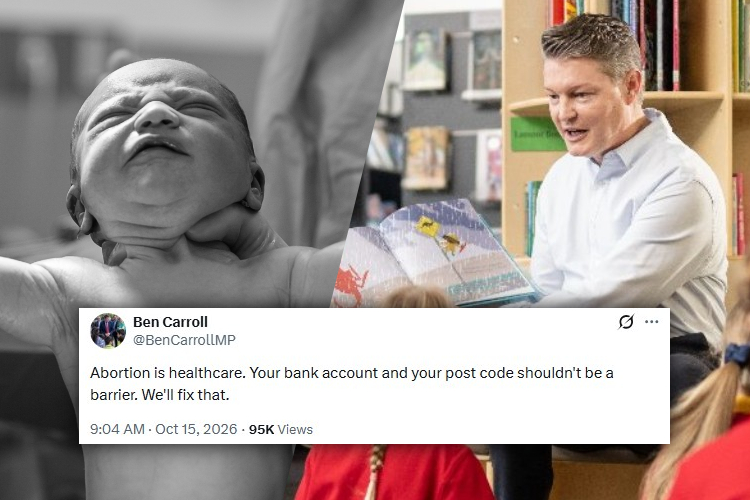
A desperate Victorian Labor Party is peddling taxpayer-funded abortions as free “healthcare”. In a shameless attempt to stay in power, they're willing to do anything — including killing the unborn and forcing taxpayers to pay for it.

16 October 2026
3.4 MINS
Australia’s proposed digital duty of care laws promise greater online safety and increased user control by switching off algorithms, but critics warn they could give ministers sweeping powers to restrict lawful content and threaten free speech.
A Million Women Movement Marks Second Anniversary: “Look What the Lord Has Done! Ishtar Has Fallen!”
16 October 2026
2.8 MINS
Two years after A Million Women gathered in Washington for ten hours of prayer and fasting, organisers point to victories they believe reflect God’s answers to intercession.
14 October 2026
6.7 MINS
A national poll challenges claims that pro-life Australians are extremists, revealing broad support for abortion restrictions, protections for unborn babies and safeguards for vulnerable women.


