



Equality: A Word for Weasels?
Calling someone a “weasel” is an American idiom that makes an unflattering comparison between a person and an animal. The Merriam-Webster dictionary defines “weasel” this way:
- Noun: Any of various small, slender, active carnivorous mammals (genus Mustela of the family Mustelidae, the weasel family) that are able to prey on animals (such as rabbits) larger than themselves.
- Noun: A sneaky, untrustworthy or insincere person.
- Intransitive verb. To use weasel words: equivocate.
“Equality” is often a weasel word. There is a valid Christian interpretation of the term, which some do use in good faith. But without question, there are others who are using the term “equality” to gaslight and manipulate, to grasp wealth and power.
The Magic Word
The dictionary goes on to define “equivocate” this way: “to avoid giving a definite answer or position.”
In modern America, “equality” is a weasel word in exactly this sense. We Americans are extremely attached to the idea of equality as an unambiguous good. Once a person invokes the shibboleth of “equality,” he is shielded from having to give precise answers about what he intends to do. Further questions are forbidden.
The concept of “equality” has a couple of traits in which ambiguity can be hidden. This concealed ambiguity, in turn, makes “equality” appealing to those who wish to deceive.
The Word that Means Everything… and Nothing
First, equality is intrinsically a relational concept. One thing cannot stand there and “be equal” all by itself. We have to specify who we are planning to make equal to whom. Are we comparing men and women to each other? How about people of different races or nationalities? Are we comparing age groups — make people under the age of 18 equal to people over 18? How about religious beliefs? Are we going to insist that every differing and contradictory religious belief be treated identically?
Second, we also have to specify what aspect of equality we intend to measure. Will we be measuring income equality? Equality in educational achievement? Equality in artistic ability? Equality in kindness, sweetness, or agreeability? Equality in holiness? Equality in our children’s achievements? Equality in the quality of indoor plumbing? Equality in the number or quality of orgasms? (Yes, this is actually a “thing” in some people’s minds.) What are we actually talking about here?
Suppose we agree that a deliberate governmental policy of “separate but equal” schools segregated by race once was and remains unjust. But exactly what does that consensus commit us to? Do we want equal numbers of black and white children sitting next to each other in absolutely every classroom? Or are we looking for equal expenditures on schooling resources? Or equality of educational outcomes? Or equal numbers of black and white kids from each and every school graduating on time and going to four-year universities?
Is reducing inequality good enough? Or do we insist on perfect equality in whatever dimension we’ve picked out? At what point do we step back and ask ourselves whether the policies we’ve adopted have actually succeeded in bringing us closer to whatever our goal is?
And even if we agreed on one or more of those metrics, are we allowed to balance the cost of achieving “equality” against other values? How long do children have to ride on a bus to get to the school that “equality” requires them to be in? How long a bus ride is too long? Does the bus ride itself exhaust the kids so much that they can’t learn as well? A bit of thought can easily multiply questions about tradeoffs.
The Fetish of the Priests of Baal
In other words, “equality” is not, and cannot be, a stand-alone concept. But we have practically made it an idol. We are so attached to the idea that we cannot allow ourselves to ask the most basic logical and factual questions. Once people have been persuaded that a public policy or personal practice will increase “equality”, the persuasive burden is pretty much completed. People are not inclined to even ask what other values might be at stake, or what price they might have to pay.
I just told you a very short story about trying to achieve educational equality by race. Thomas Sowell, Walter Williams, and Glenn Loury have been telling similar stories for years. I could tell you comparable stories about achieving “equality” between men and women, or between same-sex couples and opposite-sex couples. Our “betters” are now trying to figure out how to create “equality” for people who are dissatisfied with the sex of their bodies.
The underlying problem is that making everyone equal in every dimension is not possible. Even if it were possible, it would be inhuman. People are irreducibly different; that is part of our beauty as unique individuals.
You Are Getting Sleepy, Very Sleepy…
Like all weasel words, “equality” is intentionally slippery; its usefulness relies upon ambiguity. The term is intended to manipulate. The victim thinks he is agreeing to something good, something he’d be ashamed to oppose. In point of fact, he is being maneuvered into submitting to something much less appealing, perhaps even indefensible. By the time people figure out what has actually happened, the new laws or practices have become so institutionalised that walking them back is very difficult. The term “equality” carries a lot of water for the powermongers.
When someone already in power proposes something in the name of “equality,” we have every right to insist on knowing the details. Exactly who is going to be equal to whom, and in exactly what characteristics? We don’t have to agree to every political or social demand made in the name of “equality.” We don’t have to genuflect whenever we hear that sacred word.
And if the people making these proposals won’t give us a direct answer, we have every right to call them what they are: weasels.
___
Republished with thanks to The Ruth Institute. Image courtesy of Adobe. Image courtesy of Adobe.
One Comment
Leave A Comment
Recent Articles:
8 October 2026
2.8 MINS
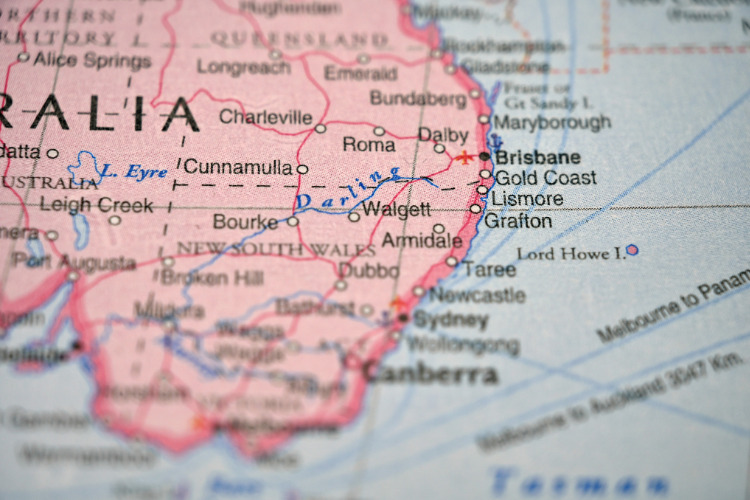
The MDBA’s case for further water buybacks rests on climate projections increasingly challenged by climate scientists, historical rainfall data and evidence of a greener Basin.
7 October 2026
6 MINS
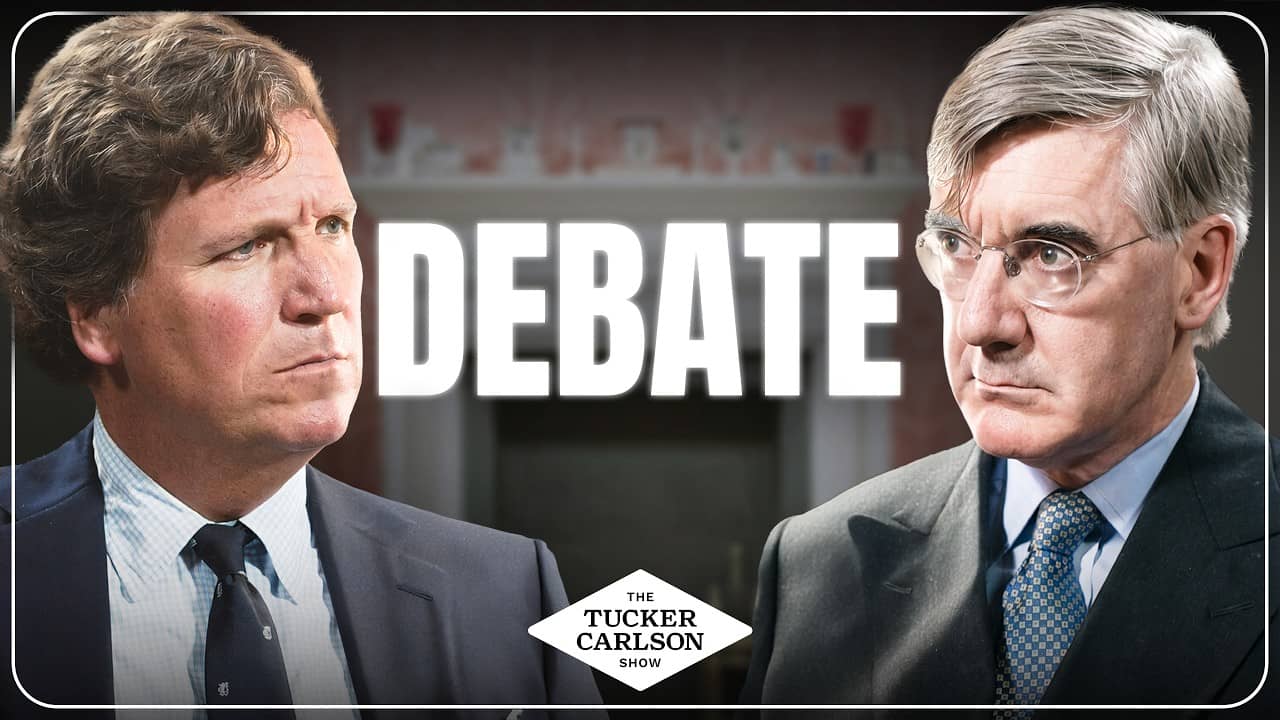
What can Tucker Carlson’s interview with Jacob Rees-Mogg teach us about political disagreement? Their clash over war, Russia and national defence highlights the importance of listening carefully and understanding an opponent’s position before attempting to refute it.

7 October 2026
8.5 MINS
Gerald McDermott’s work challenges Christians to approach Israel through Scripture first, exploring God’s covenant faithfulness, Christian Zionism, Jewish identity and antisemitism.

6 October 2026
3.4 MINS
Christians cannot afford to let headlines and social media shape their view of Israel. Scripture provides a foundation for understanding Israel, God’s promises and our response.
6 October 2026
6.2 MINS
Britain’s grooming gang scandal exposes a devastating failure to protect vulnerable children, raising urgent questions about political correctness, accountability, immigration and the loss of moral courage.

6 October 2026
3.8 MINS
A grandmother’s disputed death has put Canada’s euthanasia regime under fresh scrutiny, as the Medical Assistance in Dying (MAiD) program passes 100,000 deaths with a further expansion slated for 2027.

5 October 2026
4.9 MINS
Free Speech Union co-founder Reuben Kirkham warns Australia’s proposed Digital Duty of Care could expand censorship powers, undermine free expression and bypass recent legal protections.



A great quote:
“Our culture has accepted two huge lies. The first is that if you disagree with someone’s lifestyle, you must fear or hate them. The second is that to love someone means you agree with everything they believe or do. Both are nonsense. You don’t have to compromise convictions to be compassionate.” ― Rick Warren