



Surrogacy: The Real Handmaid’s Tale
I find it particularly ironic that those who decry the criminalisation of abortion as tantamount to forcing women to bear children, as in Margaret Atwood’s dystopian novel The Handmaid’s Tale, usually do not see anything morally wrong with the practice of surrogacy, where a woman’s womb is lent or rented to produce a human being.
Gestational or host surrogacy, via in vitro fertilisation (IVF), was first successful in April 1986.
Made to Order
The Telegraph reports that “the global market – already worth almost $US18 billion (£14 billion [$A26.5 billion]) – is projected to rise to $US129 billion by 2032, according to the research firm Global Market Insights, with anywhere between 5,000 and 20,000 babies incubated to order annually.
“This covers the whole caboodle in which you can DIY things with a friend at one extreme, or go for the full Lamborghini treatment, where, in some countries an agent will help you shop around the globe for the finest sperm, eggs and wombs money can buy.
“For those opting for the international pick-and-mix route, there are BOGOF deals (‘buy one, get one free’; that is, two implants for the price of one), the option of sex selection and a pay-as-you-go plan.”
A 2016 report in the Fertility Sterility Journal, “Gestational Surrogacy: A Call for Safer Practice”, noted:
“Since a single surrogacy transaction can cost in excess of $100,000, a ‘two for the price of one’ arrangement ‘may be appealing to intended parents’,” although this elevates health risks to both the surrogate mother and the foetuses.
Michael Cook, writing at Mercator in April this year, states that factors behind the high demand for surrogacy include “increasing infertility rates, advancements in assisted reproductive technologies, changing societal norms, and a growing acceptance of non-traditional family structures”.
Children have become a commodity, and so have women and their wombs. In prospective parents’ desire to engineer their perfect progeny, where is the concern for the deep bond between mother and child that begins in the womb? Where is the concern for the surrogate’s health, beyond its effect on her use as an incubator?
Professor Valerie Hudson is professor of political science at The Bush School of Government and Public Service at Texas A&M University. In 2018, she reflected on the Mercator website:
“At birth, the bond between gestational mother and child is qualitatively and measurably stronger than the bond between sperm donor and child.”
An unborn child knows his mother’s voice, her scent, and the sound of her heartbeat. Imagine being ripped away from the only person and home you have ever known, the moment you emerge into this world.
Hudson points out that science shows how a surrogate and the child she carries are biologically linked, even if the surrogate does not provide the egg. The surrogate mother’s microbiome affects the child’s epigenetics, which go on to influence the following generation.
The phenomenon of microchimerism, the migration of cells through the placenta, means that the surrogate mother will carry cells from the child in her very being for the rest of her life, cells which can strengthen her immune system and repair damaged tissue.
Anathema
In April, the Vatican published the declaration Dignitas Infinita, “On Human Dignity”. Among other moral issues like war and human trafficking, the declaration condemned surrogacy, pointing out that “the legitimate desire to have a child cannot be transformed into a ‘right to a child’ that fails to respect the dignity of that child as the recipient of the gift of life … In this practice, the woman is detached from the child growing in her and becomes a mere means subservient to the arbitrary gain or desire of others.”
This declaration followed Pope Francis’ remarks in January, when he told ambassadors to the Holy See:
“The path to peace calls for respect for life, for every human life, starting with the life of the unborn child in the mother’s womb, which cannot be suppressed or turned into an object of trafficking.
“In this regard, I deem deplorable the practice of so-called surrogate motherhood, which represents a grave violation of the dignity of the woman and the child, based on the exploitation of situations of the mother’s material needs. A child is always a gift and never the basis of a commercial contract.”
Just as sperm or egg donor-conceived children often struggle with their sense of identity and belonging, children born through surrogacy can be wounded for life. Thirty-three-year-old French-American mother of three Olivia Maurel shared at a conference in Rome that “the trauma of abandonment” has deeply affected her mental health.
“There is no right to have a child,” said Maurel. “But children do have rights, and we can say surrogacy violates many of these rights.”
In an age where youth already struggle with identity crises, how is it kind deliberately to concoct a human being who will always bear a question mark over his origin? Not to mention that the process of IVF creates discarded or frozen embryos, siblings who never get to live.
The Telegraph, in its August 13 article referred to above, adds: “Some companies even offer legal guarantees around defective foetuses that have to be aborted.” How convenient.
Exploiting the Poor
Many celebrities have had babies by surrogate: Paris Hilton, Elton John, Rebel Wilson, Khloé Kardashian, Kanye West, Nicole Kidman and Robert De Niro, to name but a few. It is an unseemly capitalistic practice where the rich exploit the bodies of the poor to produce offspring.
In January, Mercator’s Michael Cook, commenting on the Pope’s remarks, wrote:
“The truth is that surrogate mothers are almost always poor women who are desperate for cash. This makes them easy prey for human traffickers … (last year) a leading IVF clinic in Greece was raided by police. They found that a syndicate had taken more than 160 women from countries like Ukraine, Romania, Moldova, Georgia, and Albania and persuaded them to become egg donors and surrogate mothers in Greece.”
Cook adds:
“Surrogacy thrives in countries where there are weak legal protections for the mother and an abundant supply of poor women. After endless stories of abuse, the governments of India, Thailand, Nepal, and Cambodia made commercial surrogacy illegal. The surrogacy industry simply shifted to Laos, Kenya, Nigeria, Mexico, Kazakhstan, Ukraine, and other low-income countries.”
The pandemic and the war in Ukraine left hundreds of surrogate babies stranded; a thousand were trapped in Russia by the closure of international borders during the pandemic. Mercator adds:
“In countries like Ukraine, Georgia, Guatemala, or Russia, unforeseen national disasters happen regularly. But the clinics and agencies ignored the risks.”
Surrogacy is marketed as the fulfilment of a dream. But often, it ends up a terrible nightmare, especially considering the health risks to both the surrogate mother and the child.
Children born from surrogacy pregnancies often end up in neonatal intensive care, and suffer life-long health complications such as respiratory issues, cerebral palsy, epilepsy and developmental delays.
The U.S.-based site Legalize Surrogacy: Why Not? has an alarming list of stories of dead surrogate mothers, dead or injured egg donors, plus child abuse and neglect by commissioning parents (who have no requirement to be vetted).
Today, it is trendy to pursue natural, eco-friendly lifestyles. There is nothing natural about surrogacy. It is basically human trafficking, of the most vulnerable and defenceless humans: babies and pregnant women. It is an abominable practice that needs to be stopped.
___
Republished with thanks to News Weekly. Image courtesy of Adobe.
One Comment
Leave A Comment
Recent Articles:
9 October 2026
5 MINS
During a recent dialogue between high profile legal experts, a top Australian constitutional law expert was asked if Australia should have a Bill of Rights. His answer may surprise you.

8 October 2026
4.1 MINS
Aboriginal communities in Central Australia already know the gospel message. What they need now, Robyn Murray writes, is discipleship, encouragement and Christians willing to pray and participate.

8 October 2026
4.1 MINS
Italy honours St Francis of Assisi 800 years after his death, celebrating a saint whose devotion to Christ, radical simplicity and message of peace continue to shape generations.
8 October 2026
2.8 MINS
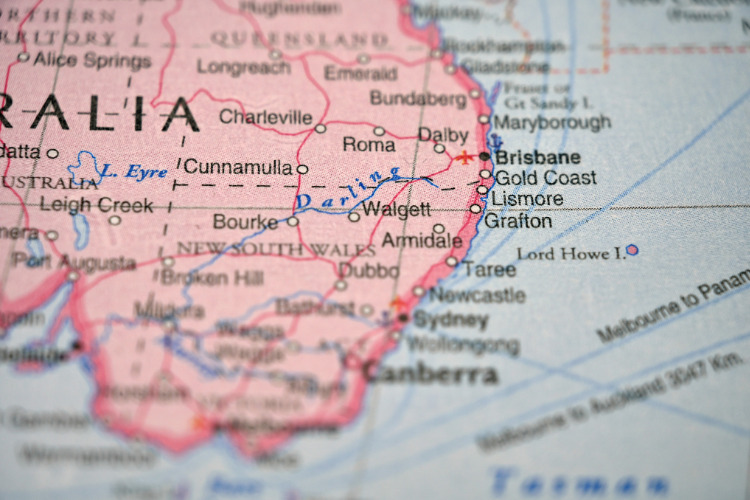
The MDBA’s case for further water buybacks rests on climate projections increasingly challenged by climate scientists, historical rainfall data and evidence of a greener Basin.
7 October 2026
3.6 MINS
Victoria’s 18th March for the Babies will bring families together to peacefully affirm the value of every human life and call for a cultural change towards life.
7 October 2026
1.5 MINS
Across the Middle East, North Africa and Anatolia, Christianity once shaped entire civilisations. Could Britain’s Christian heritage likewise become a memory rather than a reality?

7 October 2026
6 MINS
What can Tucker Carlson’s interview with Jacob Rees-Mogg teach us about political disagreement? Their clash over war, Russia and national defence highlights the importance of listening carefully and understanding an opponent’s position before attempting to refute it.



God sees, and knows, and loves the broken heart;
And holds, and binds, and heals the broken heart.
May His gracious and tender Spirit lead the lost, and the least, and the last, to Jesus – our great Shepherd of His sheep.