



Retrospect on a Pontificate
Elected as a courageous reformer, Pope Francis was expected to renew the Church. But did his pontificate blur boundaries and slow the New Evangelisation?
Editor’s Note: The team at the Canberra Declaration holds deep respect for our brothers and sisters in Christ within the Catholic Church, which represents 50.1% of the global Christian population, totalling 2.5 billion people. We also honour Pope Francis for his leadership of the Church over the past 12 years. Our passion is for unity in Christ, as expressed in John 17. That said, many Catholics have expressed grave concerns about the Pope’s actions and statements, which have often been misrepresented by secular media seeking to discredit the Christian faith. The Canberra Declaration team shares these concerns. To ensure fair and respectful coverage, we consulted our managing editor, a devoted Catholic herself, for guidance on addressing these issues following Pope Francis’ passing while also paying proper tribute to his leadership. This story was selected for publication by a devout Catholic committed to God.
___
During the March 2013 interregnum following the abdication of Pope Benedict XVI, and in the conclave itself, proponents of Cardinal Jorge Mario Bergoglio SJ as Benedict’s successor described him as an orthodox, tough-minded, courageous reformer who would clean the Vatican’s Augean stables while maintaining the theological and pastoral line that had guided the Church since John Paul II’s election in 1978: dynamic orthodoxy in service to a revitalised proclamation of the Gospel, in a world badly needing the witness and charity of a Church of missionary disciples.
That was how I had perceived Cardinal Bergoglio when we met for over an hour in Buenos Aires ten months earlier. During that conversation, the Cardinal expressed gratitude for what I had done to explain John Paul II to the world in Witness to Hope. In turn, I told him how taken I was with the 2007 “Aparecida Document”, in which the bishops of Latin America had committed themselves to a future of intensified evangelisation. It was, I said, the most impressive explication of the New Evangelisation I had yet read, and I thanked him for the leading role he had played in drafting it.
So, when Cardinal Bergoglio was elected Pope on March 13, 2013, I anticipated a pontificate in broad continuity with its two predecessors, if with distinctive personal accents. So, I daresay, did most of the cardinals who voted to make the Archbishop of Buenos Aires the 266th Bishop of Rome. Francis, it was thought, would be a reforming pope who would further energise the Church for mission and evangelisation by straightening out the Vatican mess that had destabilised the pontificate of Benedict XVI.
That is not quite what transpired over the next 12 years.
Unsettling
Pope Francis’ evident compassion for the dispossessed and the poor certainly helped the world understand better that the Catholic Church follows its Lord in extending a healing hand to the marginalised on the peripheries of society. His inaugural apostolic exhortation, Evangelii Gaudium (The Joy of the Gospel), was a ringing affirmation of the evangelical intention of the Second Vatican Council, in continuity with John Paul II’s great encyclical Redemptoris Missio (The Mission of the Redeemer) and the Aparecida Document. So was the Pope’s challenge to young people at his first World Youth Day in Brazil: don’t be afraid of trying new ways to bring others to Christ, even if some of those ways don’t work.
Yet within a year of his election, Pope Francis re-opened what was believed to be the settled question of whether Catholics in canonically irregular marriages — who remain members of the worshipping Church — could legitimately receive Holy Communion. In doing so, he set in motion dynamics that would become an impediment to the re-evangelisation of the secularising Western world and sowed confusion where the New Evangelisation had seen great success, not least in sub-Saharan Africa.
This pattern of unsettling what was believed settled continued throughout the pontificate and engaged questions of the moral life (including the Church’s response to the increasingly bizarre claims of the sexual revolution), questions of Church order (including who the Church was authorised to ordain), and questions of Catholicism’s relationship to world powers eager to bring the Church to heel (as in China).
Proclaim the Gospel
In late 2016, Pope Francis invited me to what would be my third and last private audience with him. It was a friendly, candid conversation, like its predecessors. But when I suggested that the arguments over Holy Communion for those in irregular marriages, which had intensified following his apostolic exhortation Amoris Laetitia (The Joy of Love), were an impediment to the passionate evangelisation he had proposed in Evangelii Gaudium, the Pope dismissed my concerns by saying, “Oh, arguments are fine”. Of course they are, I thought, in many other circumstances. But is it in the nature of the papacy to unsettle what has been settled?
There remains a great work of reform to be done in Rome: financially, theologically, and otherwise. Even more fundamentally, however, the next pontificate must understand what the Francis pontificate seems not to have grasped: Christian communities that maintain a clear understanding of their doctrinal and moral identity and boundaries can not only survive the acids of post-modernity; they have a chance to convert the post-modern world. By contrast, Christian communities whose self-identity becomes incoherent, whose boundaries become porous, and who mirror the culture rather than trying to convert it, wither and die.
For as always, the bottom-line question for the Catholic future is: “When the Son of Man returns, will he find faith on earth?” (Luke 18:8) — the “faith which was once for all delivered to the saints” (Jude 1:3), and none other.
___
Republished with thanks to First Things. Image courtesy of Wikimedia Commons.
5 Comments
Leave A Comment
Recent Articles:

27 October 2026
25.3 MINS
Labor’s Digital Duty of Care Bill threatens free speech, empowers covert online surveillance, and imposes potentially burdensome regulations on Australian businesses.
27 October 2026
10.3 MINS
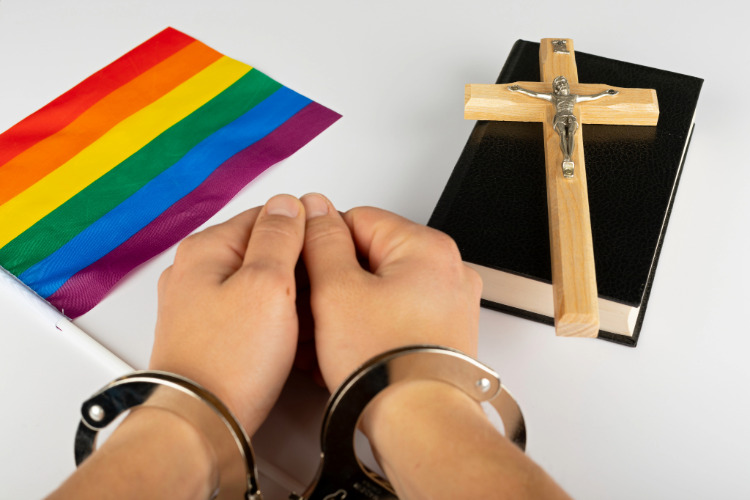
As Tasmania and Western Australia consider conversion therapy bans, a former LGBT+ ministry leader warns of threats to religious freedom, personal choice and Christian discipleship.
27 October 2026
4.9 MINS
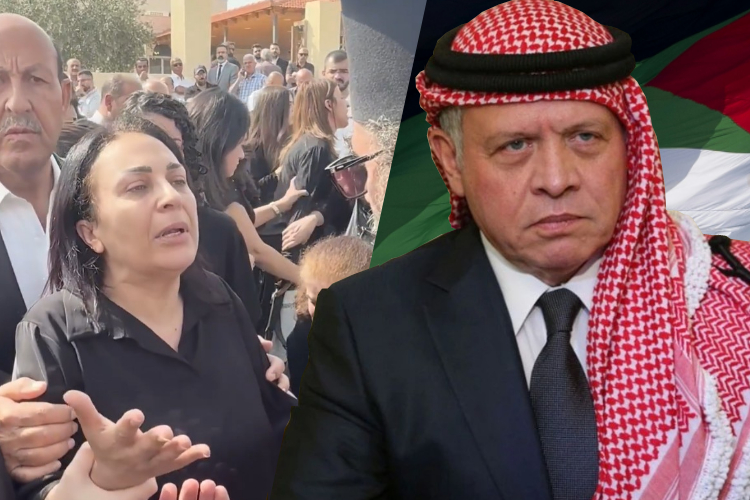
Nine Christians have been killed in a terrorist attack on a Jordanian church, prompting fierce condemnation, demands for justice and renewed concerns about religious persecution.
27 October 2026
3.6 MINS
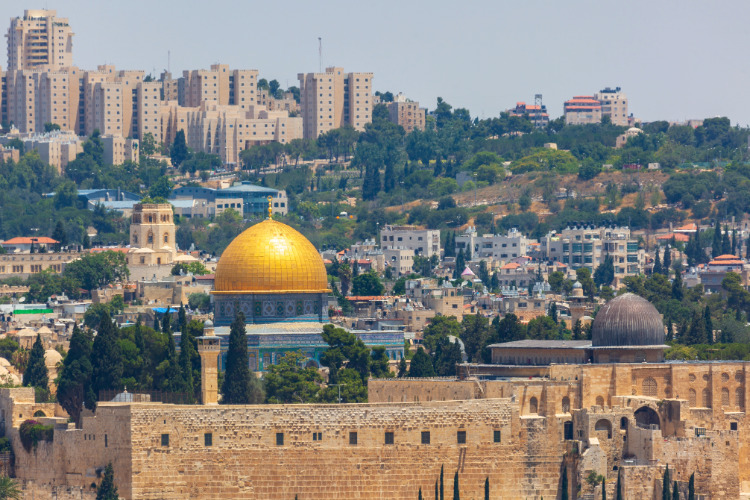
For 25 years, the Mount Moriah Trust has supported struggling Christians across the Holy Land, bringing practical assistance, encouragement and hope to believers facing hardship and persecution.
27 October 2026
1.3 MINS
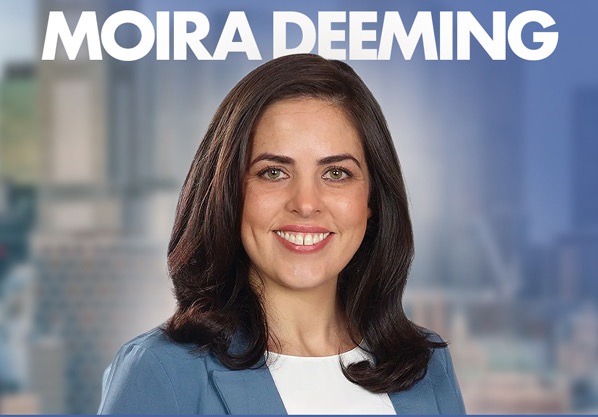
Moira Deeming’s re-election campaign has energised Family First supporters, raising $90,000 as the party prepares for a crucial Victorian election and a potential breakthrough.
27 October 2026
3.1 MINS
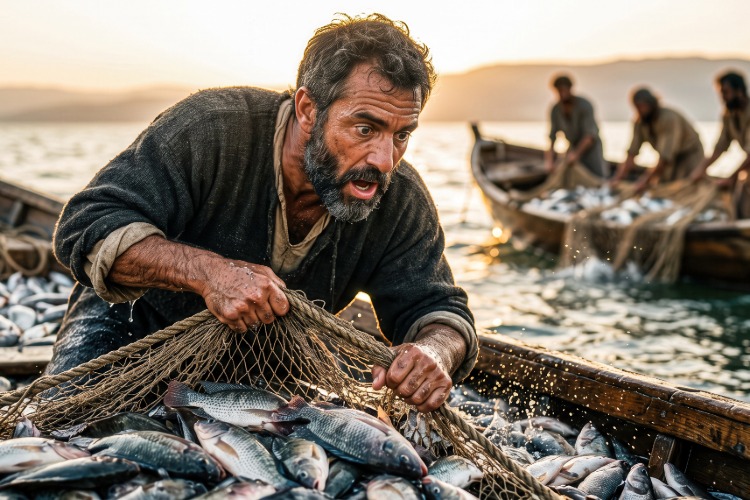
As the disciples discovered through a huge haul of fish, we can trust Jesus for a net-breaking, boat-sinking catch of people.
26 October 2026
2.5 MINS
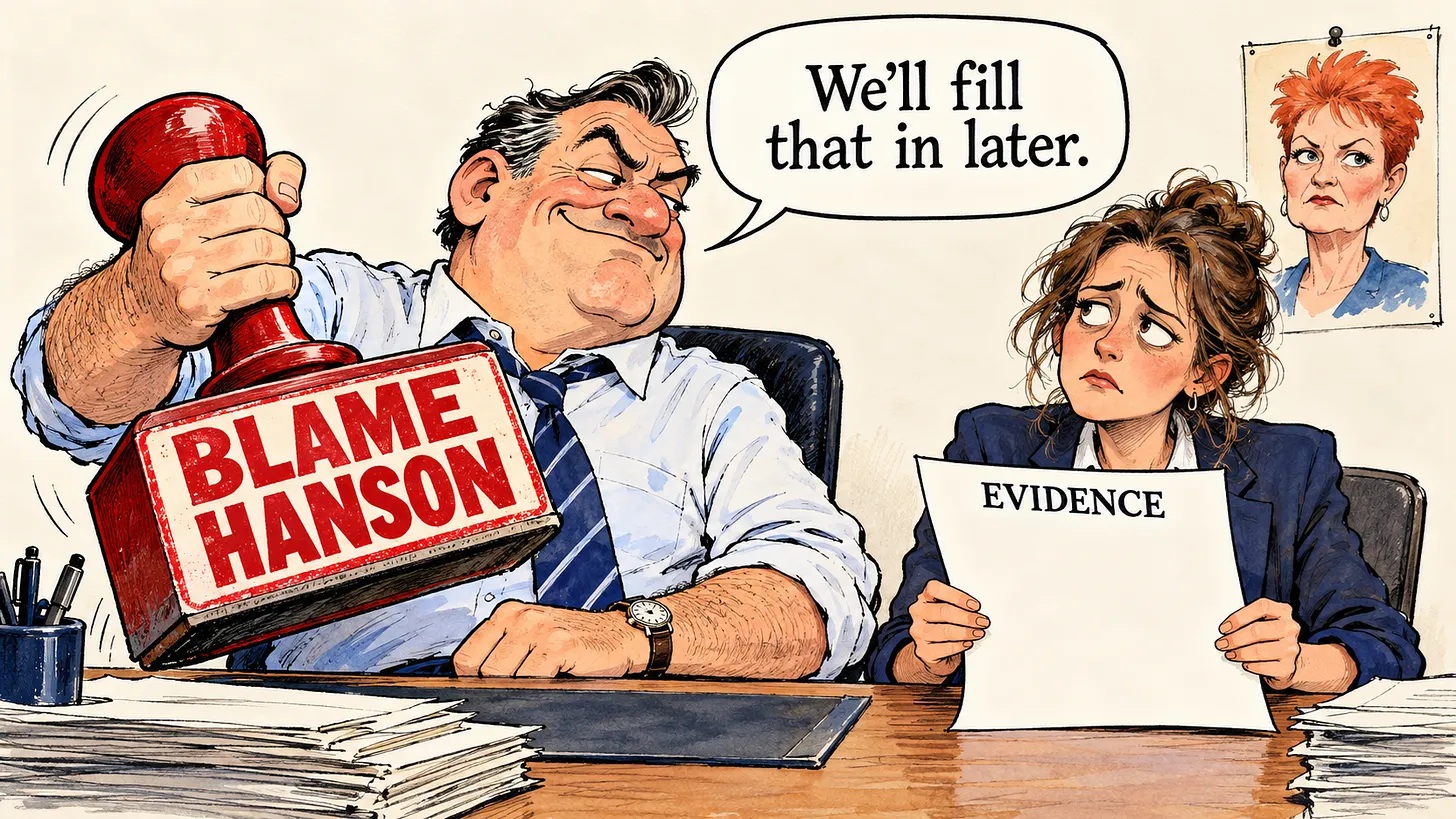
Nation First exposes the rush to weaponise the Haines attack against Pauline Hanson, conservative voices and men before investigators established a motive.



If Señor Bergoglio hadn’t become Pope, he would have been just another lefty.
It would take a miracle, but the next pontiff should be someone like Cardinal Sarah.
Never a truer word was written than the observation that those Christian communities who mirror the culture around them rather than trying to convert it, wither and die. I admire greatly those within the Catholic Church who faithfully practice and live out their faith boldly. For example I was most impressed by the Catholic youth who passionately protested the amendment to the abortion bill in NSW back in 2018. I often wish that their reverence and understanding of the sacred would also be evident in some Protestant circles.
Thank you for your editorial comment. As a Catholic, I have been shocked by the negative coverage of the Pope’s death by The Daily Declaration so far. Even today’s article is not very positive. Yesterday, I tried to get into St Peter’s here in Rome to honour and pray for Pope Francis but there were just too many people waiting in line to honour a Pope who loved Jesus, who loved the poor and the marginalized, and who called constantly for prayer for peace.
Vatican 2 in the 1960s destroyed the Catholic Church. In the West it emptied the churches overnight and decent priests resigned in their thousands , replaced by the dregs of society –drunks and paedophiles ! Where I attend Mass ,only at eg, Easter there are about 20 persons, all (like me )very old! When we die in a few years, there will be no more congregation!It’s so difficult to find anyone interested in being a priest , that we have a Nigerian whose parish is , I kid you not , so geographically ENORMOUS which means on, Good Friday, Easter Sunday and Christmas Day , there is NO Mass or Stations of The Cross ! There is now a Sri Lankan deacon to try to help fill the gap.
Whilst Pope Francis has been extremely popular with Asians and some Africans ( a lot of Africans are very devout and do not like the deviation from Biblical Truth ), his Papacy has been very devisive and has accelerated the rejection of Christianity in the permissive West.
He has been a Leftist Pope , the Darling of the Media and of the UN. I watch Quizz Shows –invariably almost every contestant fails to answer even the most basic question about the Bible ! They have NO idea who Moses , the Flood ,or , what were the Apostles or the Crucifixion, or who Jesus Christ was, etc !
Once Protestants could “run rings around” we Catholics with their knowledge of the Bible–now both nominal Catholics and Protestants are equally ignorant , ie Pagans which spells BIG danger for the survival of Australia as an independent, prosperous and crime -free nation !
Pope Fancis has only made the situation worse with his deviation from Biblical teachings.His successor (unless we have a Miracle ) will be just as bad–a follower of Secularism and Socialism.We ,who escaped Communism, can tell you that Socialism only brings misery to the population but great wealth to the Communist Elites . Socialism is Communism in disguise . The UN’s “Agenda 2023 ” is to destroy Religion, Nations, and institute ONE WORLD GOVT in which Free Speech is banned (has already happened in Australia !), we will be forced to live where and how the State orders, all private property banned (stolen by the Elites) , we will live on “Social Credit “so long as we “behave “, etc. Only a strong Pope and other Church Leaders can stop us becoming slaves who will be jailed like Grandmother Rose for silently praying aganst Abortion .
I never heard Pope Francis condemn Abortion, Euthanasia, Censorship of Free Speech, criticise what is happening in the UK with the Muslim Rapes of underage girls and boys , or, rail against the Rapes , Murders, Kidnaps and destruction of Christian homes and churches in Syria, Egypt, India, China, Congo, Ethiopia,Iraq,Sri Lanka, Nigeria, parts of Muslim Terrorist-controlled Phillipines, etc. To equate Christianity with Islam is Heretical because Islam and its Hadiths preach Crimes, Barbarism , Satanic Practices, the very opposite of Biblical teachings .
Pope Francis has been an abject FAILURE, derelict in his DUTY to guide his Flock !
From what I’ve heard of this pope, to be blunt, he was a marxist, and therefore promoted causes directly antagonistic to christianity.
The next pope should be someone who has actually read the Bible.