



How John Paul II undermined Russia’s communists
Editor’s Note: Political analyst George Weigel reveals the impact which the late Pope John Paul II — the first non-Italian pope in centuries, and the first Slavic pope ever — had on the fall of Communism, as well as the effect of his faith-filled life on individuals around him, even hardened atheists.
View the original article at The Australian here and subscribe to The Australian here.
___
 Students of the Cold War’s dark arts know that communist intelligence services deeply penetrated the Vatican in the 1970s. Yet few know that Pope John Paul II, whose centenary will be marked on May 18, had his own secret agent in the Soviet Union during the 1980s. That relationship led to a remarkable personal encounter that helps explain what made the pope the man he was.
John Paul’s unlikely 007 was Irina Ilovayskaya Alberti, the Russian-born widow of an Italian diplomat. A former personal assistant to Alexander Solzhenitsyn in Vermont, she met the pope quite by accident during a papal audience in the early 1980s. A friendship quickly developed between them. As the Gorbachev thaw made access to the USSR easier, Alberti travelled to the country several times a year. “If I learned anything interesting,” she told me years later, “I’d call the pope, we’d meet, and I’d tell him.” Vatican diplomats, who liked to keep such matters on close hold, didn’t appreciate that kind of back channel. But John Paul had a habit of going around his mandarins when he thought doing so might yield useful information. He ignored the traditional managers and kept in touch with his clandestine operative.
As it happened, Alberti was also a friend of Yelena Bonner, the tough-minded wife of Soviet nuclear physicist and human rights campaigner Andrei Sakharov. Under house arrest in 1985, Sakharov went on a hunger strike and demanded Soviet officials let his wife leave the country for critical medical care. The authorities finally agreed, but Sakharov was hostage to Bonner’s good behaviour abroad. That meant no meetings with world leaders or the press.
Alberti still thought Bonner should meet the pope. When she came to Rome after her medical treatment, Alberti organised a subterfuge that had the Roman press corps chasing Bonner’s children as she drove the recovering dissident into Vatican City, incognito. Emotionally hardened by decades of battling the KGB, Bonner wasn’t given to sentimentality. Nor was she religious. Yet a two-hour, one-on-one meeting with Pope John Paul II left her sobbing. She told Alberti afterwards:
“He’s the most incredible man I’ve ever met. He’s all light. He is a source of light.”
The Bonner-John Paul II relationship continued for years and eventually led to a lengthy private meeting between the pope and Sakharov, who sought advice about playing a political role in the endgame of the USSR. It was that first meeting with Bonner — and her reaction to this Pole, a man she had never met before and the leader of a faith she didn’t share — that is worth pondering on the centenary of John Paul’s birth.
 How did Pope John Paul II touch hearts and minds, even those of nonbelievers, the way he did? He was a man of probing intelligence, an experienced pastor, a polyglot and a shrewd operator on the world stage. His commitment to human rights, irrespective of religious conviction or the lack thereof, had been demonstrated during his years as archbishop of Cracow and as pope. He had paid the price of that advocacy with his own blood, surviving an assassination attempt he suspected had been initiated in Moscow.
 But that curriculum vitae and that credibility do not explain why a tearful nonbeliever should say, “He is all light. He is a source of light”. Or why, in his last years, wracked by Parkinson’s disease, he could still draw vast crowds and lift the spirits of the suffering.
Pope John Paul II cannot be explained or understood unless he is taken for what he said he was: a radically converted Christian disciple. He believed that God had revealed Himself in history, first to the Jewish people and ultimately in Jesus of Nazareth. He believed the resurrection of the crucified Nazarene was the axial point of the human saga: an event in and beyond what we know as “history”, which disclosed that God’s passionate love for humanity was stronger than death itself.
Believing that, he lived without fear. And living without fear, he inspired fearlessness in others.
___
George Weigel is a distinguished senior fellow at the Ethics and Public Policy Centre, and a biographer of John Paul II.
Originally published in The Wall Street Journal.
2 Comments
Leave A Comment
Recent Articles:
20 October 2026
4 MINS
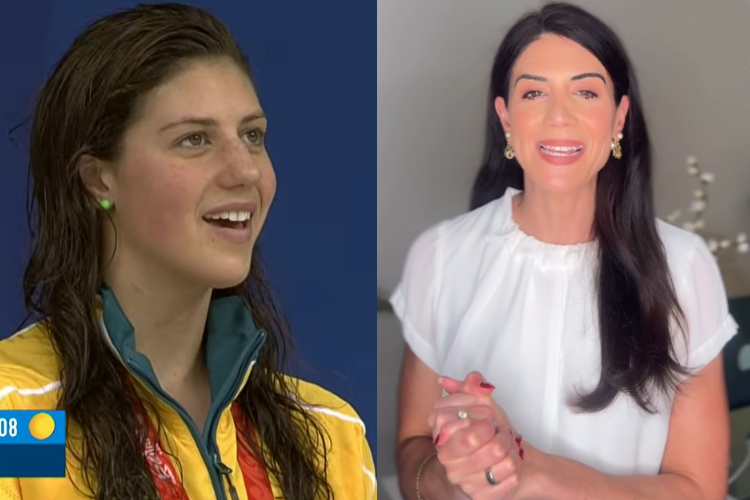
Olympic champion Stephanie Rice has faced a wave of online ridicule after revealing she resigned from her dream job following what she believes was God’s direction.
20 October 2026
7.7 MINS
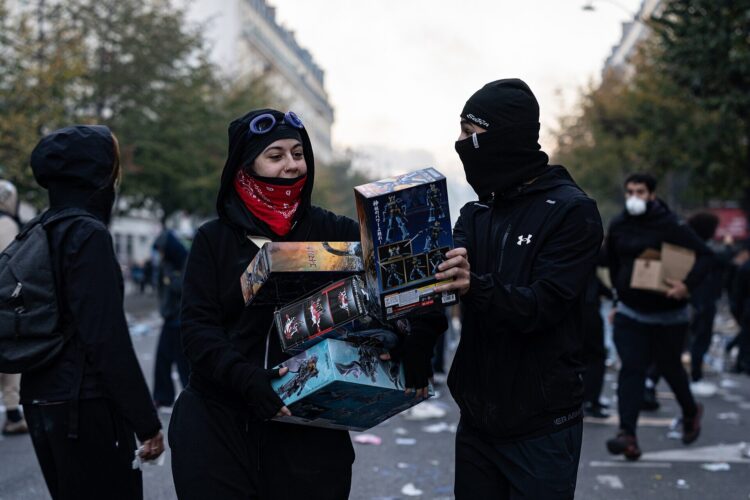
France and Europe are burning — is it too late to save them from the barbarians?
20 October 2026
4.6 MINS
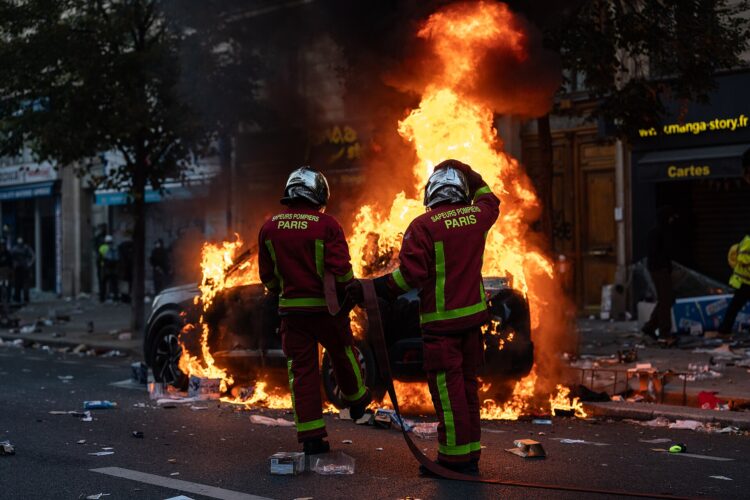
As rioters burn cars and historical buildings, celebrating the destruction of France’s inheritance, the West confronts an uncomfortable question: what happens when a civilisation loses the will to defend itself?
20 October 2026
4.9 MINS
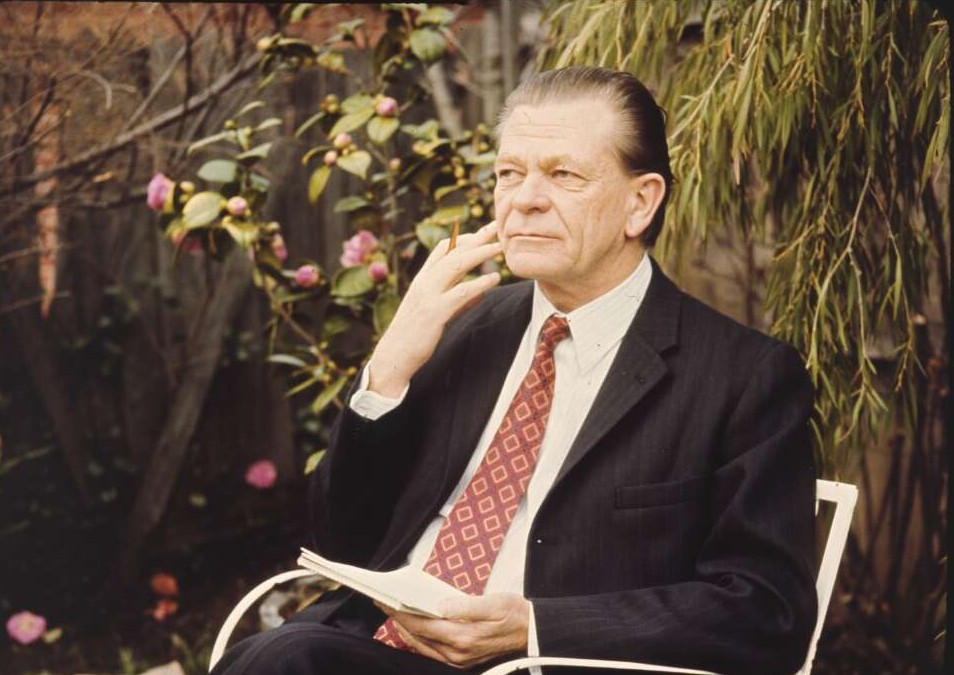
James McAuley’s legacy reaches far beyond Australia’s Catholic hymnals. Poet, convert and cultural warrior, he defended beauty, truth and faith in an age of changing values.

20 October 2026
4.9 MINS
A federal investigation has exposed how America’s biggest banks shut out conservative and Christian clients, relying on subjective reputation risks and controversial ideological watchdogs.
20 October 2026
3 MINS
Scripture teaches us to pray the "prayer of faith", because without faith it is impossible to please God.
19 October 2026
6.7 MINS
Europe’s escalating unrest raises urgent questions about immigration, national identity, secularism and the decline of Christian influence, prompting calls for repentance, prayer and renewed leadership.



Guest writer (not knowing your real name here), thank you for editing/writing this article and posted @ Canberra Declaration Facebook page. I saved the article, because Pope John Paul II story inspired me. And it still be remembered even mentioned by President Donald J. Trump – the calling to continue his legacy: “We want God.” Thank you so much and keep writing … – Ruth
Thank you for your lovely comment! This article was written by George Weigel.