


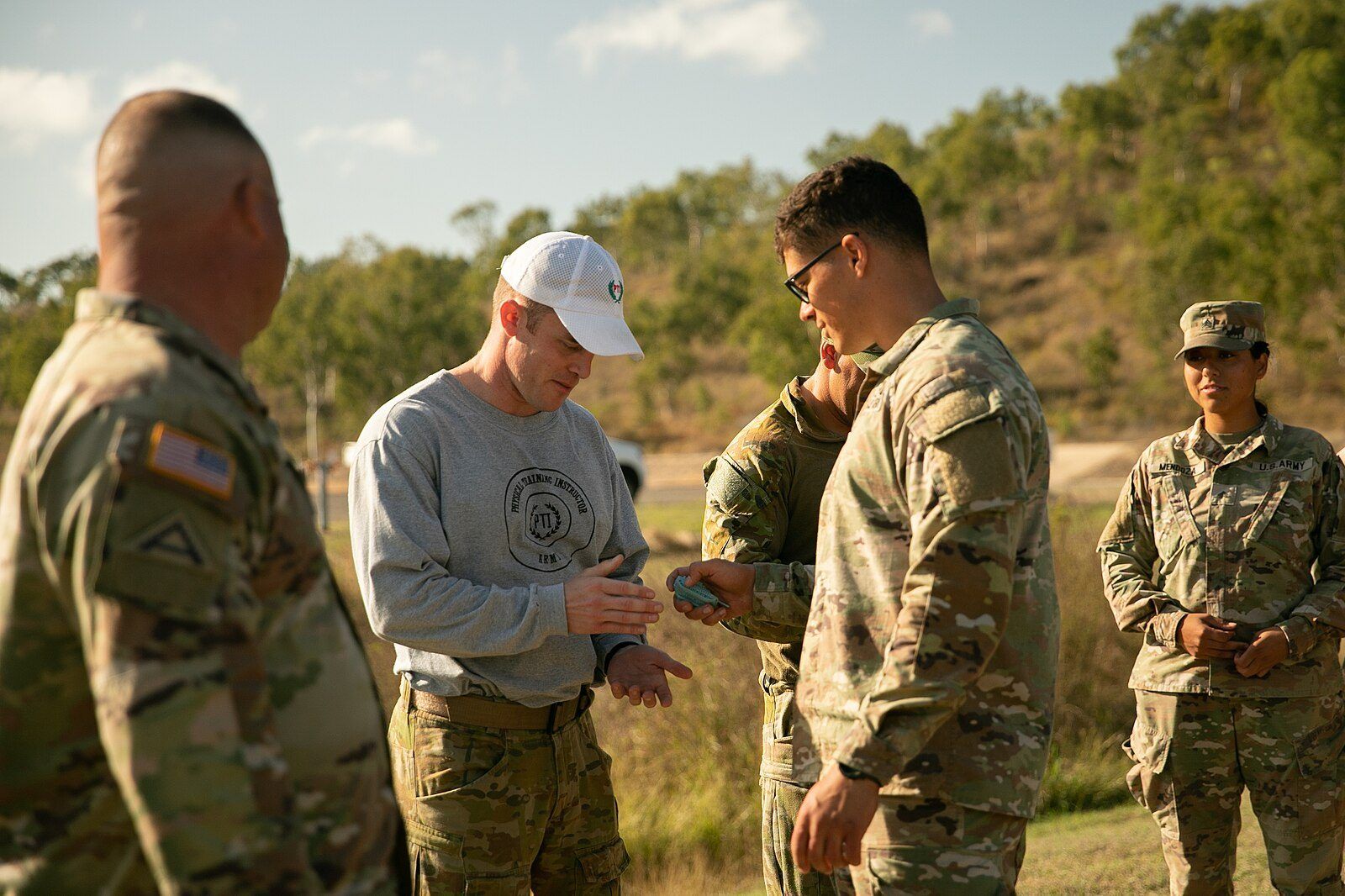
Australia Should Look to US for Ways to Raise Recruiting
Western democracies with volunteer armed services are experiencing serious problems with recruiting and retention of trained personnel, including NATO nations and specifically the United States, the UK, Poland, France and Germany. The United States, however, has gone a long way towards redressing its problems.
Australia’s armed forces are also are finding it hard to recruit. The problem seems to be, how to recruit from within the population and then retain skilled personnel?
First, the services must impart a sense of purpose and identity, especially in peacetime. In times of conflict or national emergency, the raison d’être is easily understood.
During peacetime, life outside the service is always alluring, especially when service conditions aren’t attractive or are complicated by excessive overtime, long absences from home, frequent postings, and, worse, postings to remote or undesirable locations. These issues cause major disruptions, especially to married service personnel with children of school age.
Recruiting Crisis
The UK’s recruiting crisis is partially because of an inability to process applications quickly. Last year, the British Army, Royal Navy and Royal Air Force received 177,510 applications, but recruited just 10,930 people. The average process time is eight months. As a consequence, 83 per cent of the 707,000 people who applied to join the Army over the last decade withdrew in frustration at the recruiting bureaucracy.
Adding to the recruiting woes was the adverse publicity and the subsequent release of the 2023 positive discrimination report against white males, who met the selection criteria, but were rejected by the diversity and inclusion policy of the RAF. This fiasco was caused by a contradictory “Executive Committee … strategic aim to access the best talent available and become the most inclusive organisation it can be … with their own inflow (recruiting) aspiration of 40 per cent women, 20 per cent black, Asian and minority ethnic (BAME), and 5 per cent lesbian, gay and bisexual (LGB) by 2030”.
The 2025 UK Strategic Defence Review stated that “poor recruitment and retention, shoddy accommodation, falling morale, and cultural challenges” were also factors in the recruiting crisis.
In contrast, in the U.S., the Air Force and Space Force announced that they met their recruitment goals for fiscal year 2025, three months early, with a total of 30,000 new recruits. This is a great result, given the recruiting failures under former President Joe Biden as his administration focused its selection criteria on diversity, equity and inclusion.
U.S. Defence Secretary Pete Hegseth unashamedly declared that his focus is on making regular war fighters. In his April 23 speech to the Army War College, Hegseth declared that the Administration’s priorities are “restoring the warrior ethos, rebuilding our military and re-establishing deterrence”.
Overhaul
Australia’s recruiting process needs a major overhaul. In 2024, 64,000 applicants sought a career in the Australian Defence Force (ADF). But, even worse than the UK’s eight-month process, the Australian bureaucratic process takes on average nearly ten months. That means that, if a potential recruit applies on January 1, maybe he will get an approval by late October.
“Nah, forget it!”
Jennifer Parker of the National Security College at the Australian National University, a prominent voice on Australian defence and strategy, wrote last year in The Strategist that, “people don’t join the ADF; they join one of the services”.
“They join either the Royal Australian Navy (RAN), Australian Army or Royal Australian Air Force, each of which has unique traditions, service life and a proud history of defending Australia … Joining the Navy, Army or Air Force isn’t just a career move; it’s a commitment to a legacy of service and sacrifice.”
Her observations are based on the Canadian experience. In 1968, under the Canadian Forces Reorganisation Act, the Royal Canadian Navy, Canadian Army and Royal Canadian Air Force were merged into a single entity. The move precipitated a decline in morale and recruitment. Parker, a 20-year veteran in the RAN, said: “It took Canada more than four decades to reverse that decision; it officially reinstated separate branches in 2011.”
Clouding the Australian recruiting issue is the debate to incorporate non-citizen Pacific islanders into the ADF, primarily as a possible solution to the recruitment shortfalls. The Australian Strategic Policy Institute produced a special report in 2024 on that proposition. Although there are some valid points to the proposal, there are solid legal and cultural arguments against. And it will not resolve the underlying problem of Australian recruitment and retention.
A vital ingredient missing throughout the Albanese Government and the Defence Department is leadership.
Retention in the Australian armed services is a problem. The Albanese Government offers, as of July 1, 2025, a $40,000 re-enlistment/continuation benefit to regular and part-time reservists who are deemed essential. The grant applies to officers of the rank of major, captain or lieutenant and non-commissioned sergeants and below. Issues around housing and the defence pension fund are ongoing matters that need attention.
So, it can be argued that if the Australian Government and Defence Department refocused on the individual service’s traditions, core values and career opportunities, then recruitment numbers would increase without having to resort to engaging non-citizens to make up the numbers that Australians would willingly fill.
As for retaining those currently in service, the Albanese Government must have the will to tackle the genuine problems faced by serving personnel of all ranks.
___
Republished with thanks to News Weekly. Image courtesy of Wikimedia Commons.
Recent Articles:

13 October 2026
2.6 MINS
Allegra Spender’s proposed bill reignites debate over discrimination protections, religious freedom and the right of faith-based schools to uphold their beliefs and values.

13 October 2026
2.1 MINS
Victoria’s assisted dying deaths have surged by 300 per cent since legalisation, while a disturbing case involving a patient’s partner raises urgent questions about safeguards.

13 October 2026
1.8 MINS
Australia faces mounting geopolitical, economic and defence threats, but its political leaders lack the statesmanship, bold vision and decisive communication needed to prepare the nation.
12 October 2026
3.1 MINS
The proposed livestream of Nidal Hasan’s execution has reignited debate over justice, deterrence and public accountability, with critics comparing American justice to ISIS propaganda.

12 October 2026
3.7 MINS
An EU court case over baptismal records could pit data protection laws against religious freedom, raising serious questions about whether governments can compel churches to erase sacramental history.

9 October 2026
5 MINS
During a recent dialogue between high profile legal experts, a top Australian constitutional law expert was asked if Australia should have a Bill of Rights. His answer may surprise you.

9 October 2026
3.3 MINS
New South Wales healthcare workers who object to abortion and voluntary assisted dying face growing pressure, raising serious questions about conscience rights, employment and moral injury.


