


From Union Jack to Southern Cross: Australia’s Flag and Its Rich Christian Heritage
Today is National Flag Day. Most Australians aren’t aware of the rich Christian symbolism of Australia’s flag. Discover the meaning behind its four Christian crosses.
At a recent pro-Palestine rally in Melbourne, masked protesters set fire to an Australian flag and spray-painted the words “Abolish Australia” across Spencer Street.
This was only the most recent attack on our national symbol.
Local councils have been caught removing the flag from public spaces. Activist groups continue to push for the removal of the Union Jack — or even a complete redesign of the national flag. At press conferences, Prime Minister Anthony Albanese frequently gives pride of place to the Aboriginal and Torres Strait Islander flags while leaving the Aussie flag off to the side.
To this cast of characters and their agitating allies, National Flag Day — celebrated today and every September 3 — may be a source of embarrassment. But for those proud of Australia and its heritage, it remains a timely and meaningful observance.
So, what exactly is National Flag Day? What does the Australian flag symbolise? And perhaps most importantly, why does it provoke such strong reactions from its detractors?
National Flag Day
Australia’s national flag is a powerful symbol of our country’s history, identity and unity. While not a public holiday, National Flag Day commemorates the first official raising of the Australian National Flag in 1901 and invites Australians to reflect on the history and values it embodies.
Following Federation on 1 January 1901, Prime Minister Edmund Barton announced an official Federal Flag design competition to select a flag that would represent the newly united nation.
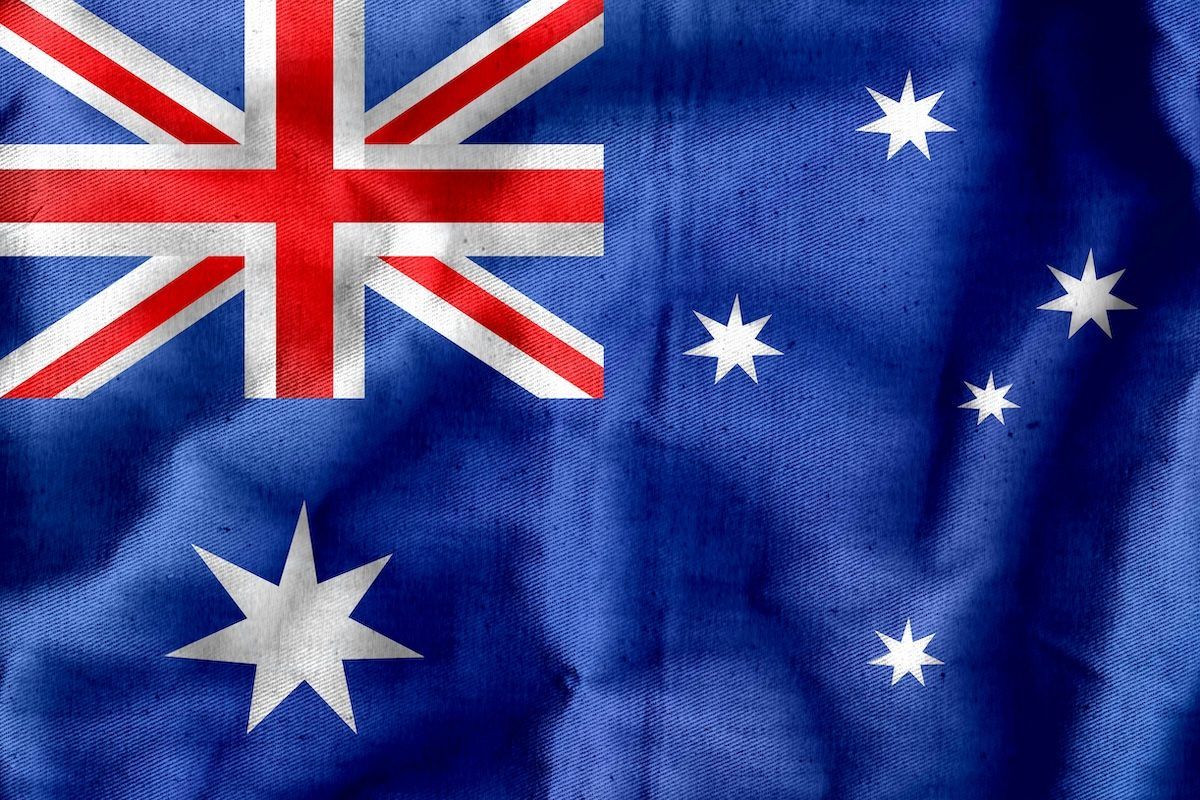
Almost 33,000 entries were submitted. A panel of judges reviewed the submissions and selected the winning design, which combined three key elements: the Union Jack, symbolising Australia’s historical ties to Great Britain; the Commonwealth Star, representing the Federation of states and territories; and the Southern Cross, highlighting Australia’s location in the Southern Hemisphere.
The flag was first raised on 3 September 1901 atop Melbourne’s Royal Exhibition Building, which temporarily served as Australia’s Parliament, marking the debut of a national symbol that has endured for more than a century.
In 1908, the original six-pointed Commonwealth Star was updated to seven points to include the territories alongside the six states. Later, the Flags Act of 1953, which came into effect in 1954, legally established the Australian National Flag as the official flag of the nation.
During a recent media appearance, Shadow Minister for Home Affairs Andrew Hastie explained in greater detail what the three main elements of the flag represent:
The Union Jack symbolises our parliamentary democracy, our rule of law. The [Commonwealth] Star reminds us that we are one people. We’re not just six states, but we are one Commonwealth. And finally, the Southern Cross reminds us of how unique our geography is. We have an abundance of natural resources and wealth and prosperity, but also we’re far from a lot of the strife around the world.
The Christian Symbolism Behind Australia’s Flag
While the Union Jack, the Federation Star, and the Southern Cross are the most immediately recognisable elements of Australia’s national flag, there is a subtler — but no less significant — layer of meaning: its Christian symbolism. The Australian flag doesn’t contain just one cross, but four in total. They are:
- St George’s Cross (England): St George was a Roman soldier and Christian martyr of the 3rd century, venerated for his courage and steadfast faith. His red cross on a white background emerged as England’s national emblem during the Middle Ages.
- St Andrew’s Cross (Scotland): St Andrew, one of Jesus’ twelve apostles, is said to have been martyred on an X-shaped cross, which became his personal emblem. According to tradition, this symbol was adopted by Scottish kings in the Middle Ages, and the white diagonal cross on a blue background eventually became the national flag of Scotland.
- St Patrick’s Cross (Ireland): St Patrick, the 5th-century missionary credited with spreading Christianity throughout Ireland, is symbolised by a red diagonal cross on a white background. This emblem was later combined with the crosses of St George and St Andrew to form the Union Jack — the national flag of the United Kingdom, representing the union of England, Scotland, and Ireland.
- The Southern Cross: A constellation prominent in the Southern Hemisphere, the Southern Cross has long been a familiar sight in Australia’s night sky. Used as a guide for navigation by sailors and explorers, it has come to symbolise Australia’s unique geographical identity and the pioneering spirit of its people. In the context of the national flag, it also represents guidance, hope, and faith throughout the nation’s history.
Together, these elements blend Britain’s Christian heritage with Australia’s unique geography, creating a flag rich in cultural and spiritual meaning — reflecting Australia’s godly heritage and its emergence as a distinct nation in the Southern Hemisphere.
As observed by British theologian, minister and writer Dr Francis Nigel Lee:
It needs to be remembered that the Australian flag unites the three Christian crosses of England, Ireland and Scotland in the Union Jack — the Christian crosses of St George, St Patrick and St Andrew — with the Southern Cross. Indeed, it is hard to imagine the flag of any country with a more graphic Christian significance.
“It needs to be remembered that the Australian flag unites the three Christian crosses of England, Ireland and Scotland in the Union Jack — the Christian crosses of St George, St Patrick and St Andrew — with the Southern Cross. Indeed, it is hard to imagine the flag of any… pic.twitter.com/XOS0Gcwjaf
— Caldron Pool (@CaldronPool) September 4, 2024
So, this National Flag Day, take a moment to appreciate our national ensign — a symbol of Australia’s rich heritage and enduring values — and reaffirm your commitment to the unity and identity it embodies.
___
Image courtesy of Pexels.
7 Comments
Leave A Comment
Recent Articles:

27 October 2026
25.3 MINS
Labor’s Digital Duty of Care Bill threatens free speech, empowers covert online surveillance, and imposes potentially burdensome regulations on Australian businesses.
27 October 2026
10.3 MINS
As Tasmania and Western Australia consider conversion therapy bans, a former LGBT+ ministry leader warns of threats to religious freedom, personal choice and Christian discipleship.

27 October 2026
4.9 MINS
Nine Christians have been killed in a terrorist attack on a Jordanian church, prompting fierce condemnation, demands for justice and renewed concerns about religious persecution.
27 October 2026
3.6 MINS
For 25 years, the Mount Moriah Trust has supported struggling Christians across the Holy Land, bringing practical assistance, encouragement and hope to believers facing hardship and persecution.

27 October 2026
1.3 MINS
Moira Deeming’s re-election campaign has energised Family First supporters, raising $90,000 as the party prepares for a crucial Victorian election and a potential breakthrough.

27 October 2026
3.1 MINS
As the disciples discovered through a huge haul of fish, we can trust Jesus for a net-breaking, boat-sinking catch of people.

26 October 2026
4.5 MINS
OECD chief Mathias Cormann warns Australia is losing its competitive edge, as excessive regulation, housing pressures, immigration challenges and declining public trust threaten national prosperity.



Thank you, Kurt, for this timely reminder. I wonder how many Australian children have learnt about these important truths. What flag do they rally to?
Raise the colours!
Three cheers for the Stars & Crosses!
Matt Canavan posted this earlier today (worth adding):
The first political use of the Southern Cross was on the flag of the Anti-Transportation League who successfully campaigned to end convict transportation.
The idea apparently began with Rev. John West in the mid-1800s.
WONDERFUL ARTICLE!!!!!!!!!!!!!!!!!!!
I will proudly fly the Australian flag every September 3 from now on. Thank you!
Thank you very much Kurt. I didn’t know that history; although I was aware that the crosses are Christian symbols acknowledging our nation was founded on Christianity.
No wonder that there are efforts to eliminate it: Especially shameful of our Prime Minster and some members of our Federal Parliament in their part in that and their utter disrespect of our National Flag. All activity against our National Flag should be illegal and called out to be TREASON.
it looks good hanging with the the indigenous flags
every day we move further away from england
we have more in common with canadians ( now theres a good looking flag!)
most young people care nothing about this, and when it is its about graphic design
its a boomer thing they dont relate to
flag worship is idolatry anyway
when young people see a flag they start looking around for a tubbymiddle age dude in a tight black t shirt and sunnies frowning about something really important