



Social Media Account Bans: Yay or Nay?
A thoughtful critique of youth social media bans, questioning the science, highlighting deeper cultural and spiritual factors, and arguing that family strength and faith—not legislation alone—shape young people’s wellbeing.
I deeply respect the work of Jonathan Haidt. I use it regularly while working with schools, parents and trainee teachers. My usual mode of presenting Jon’s well-described observations is “Here are some patterns some researchers (like Jon Haidt and Jean Twenge) have found. Let’s see if they help us talk about any similar patterns you have observed, and options for good responses.”
As a social researcher who is critically aware of the technical difficulties of using the scientific method with human beings, I aim to maintain a realistic presentation of such material: Don’t overstate the research! Outline what has been described and then provide discussion for “What next?” — reflecting Biblically as we go.
So, what is not to like about the new Australian social media account bans for those under sixteen? To his credit, Dr Haidt has been engaging with technical issues (like correlation vs causation), and whether it is “too much” centralisation.
With reference to the first, he has a growing amount of data he is working with. In response to the second, he likens these bans to smoking or drinking restrictions. You can read this material (including his two latest reports) at his After Babel Substack platform.
What the Research Shows — and Doesn’t
But I am still ambivalent about this new legislation. On the technical side, I note that the difficulties in the use of social media accounts that have been tracked seem to be growing for a number of youth, but those who might be considered at high risk are still a significant minority.
And despite claims of “almost causality”, none of the research, even with the big data sets, is strictly under scientific method protocols. For example, a basic issue is controlling for all variables. This is where working with people as natural science objects always becomes difficult, if not impossible.
For example, a lot of other research indicates, yes, again using correlation, that having a personal theistic faith and belonging to a faith community seems to generate patterns of doing better “on all measures”, which even Haidt reports. If that is accurate, does the increase in the reported malaise of the young have to do as much with the loss of faith, and/or loss of involvement with faith communities, as an increase in social media accounts at a young age? Haidt and some of his colleagues admit that this is a conundrum that they are working to understand, but it is left undiscussed when it comes to the legal interventionist considerations.
Another technical aspect is the phenomenon of ‘concept creep’ within our therapeutic societies. We label all kinds of experiences as indicative of anxiety and depression, when earlier those experiences had less clinically serious labels that did not infer clinical-style interventions.
In addition to these concerns are the realities of the social context here in Australia, with reference to how Haidt conceptualises how to improve happiness in life. In his first big book, The Happiness Hypothesis (which really is worth the read), Haidt demonstrates his ‘soft scientism’ mindset (as JP Moreland would describe it). That is because he has a formula for happiness, described in the following way:
“H = S + C + V”; where S represents the biological set point, C represents conditions of your life, and V represents voluntary activities. And the next statement by Haidt demonstrates his weak scientism:
The challenge for positive psychology is to use the scientific method to find out exactly what kinds of C and V can push H up to the top of your potential range. (THH, p. 91 – emphasis added)
Put another way, Haidt believes he has found a ‘C’ that will make young people (pre- and early pubescents) happier – that is, less availability of social media accounts in life conditions. His ‘V’ is the encouragement to have young people go outside and play more in the physical world.
What he misses is not understanding the soulness of this situation within broader social trends is the part of “C” (conditions of your life) that has been gradually undermining the strength of family and local community commitment (see the classic book Bowling Alone for an example of that; or in Australia, The Unlucky Country).
Family, Faith, and the Missing Social Conditions
Without going into detail, I believe it is fair to say that our successive governments have created “C”s that weaken the support of families – no tax encouragements, growing difficulties in the housing markets, marginalising parents in critical decision-making (e.g. the gender affirmation debate), and making the ending of life more emotionally focussed (lessening standards for abortion and assisted suicides).
Yet, Dr Haidt says that this new law ‘releases parents from the collective pressure trap’ of answering the demands of the young who claim, “But all my friends are doing it.”
What does the strength to resist this attempted emotional manipulation require? Historically, it is parents who know that they are blessed and responsible to train and manage and nurture their young within the guardrails of life given to us by the Creator Himself (think, for example, the Ten Words from Sinai).
When this occurs, it seems reasonable that correlationally, those young people seem to do better, which on average they seem to do. These young folk are well known at the heart level. They are listened to. They have safety boundaries put around them. Indeed, Dr Haidt explores one aspect of this when he and Greg Lukianoff describe safetyism in their The Coddling of the American Mind.
So, I do not expect this ban to make much difference – hopefully I am wrong. But my best guess is that while there will be fewer social accounts in this age group, without families as families (that is, families living as best they can within the Creator’s guidelines), being given more encouragement, there will be other social contagions that arise to ostensibly help the young people in what they are “feeling” (thinking).
The exceptions? Sincere Jewish and Christian faith communities, and possibly other faith communities, where they at least have very strict social rules which they enforce (these are places where the desire to belong at home and the local community overtakes the passion of belonging to the social media world).
One thing I am certain of – in the government review of how this program is going, these faith community differences will not be considered. Why am I so confident in this? That is because in all the debates I have had over the last fifty years in psychology and education here in Australia, where such realities of human life are strategically ignored, and when I have pointed this out, there has been no desire to change.
What are we to do?
Be light and salt in living differently. The Godly faithful remnants have learnt to do so over the last millennia. We are likewise called to do so.
___
Republished with thanks to Stephen’s Substack. Image courtesy of Adobe.
4 Comments
Leave A Comment
Recent Articles:
21 October 2026
3.5 MINS
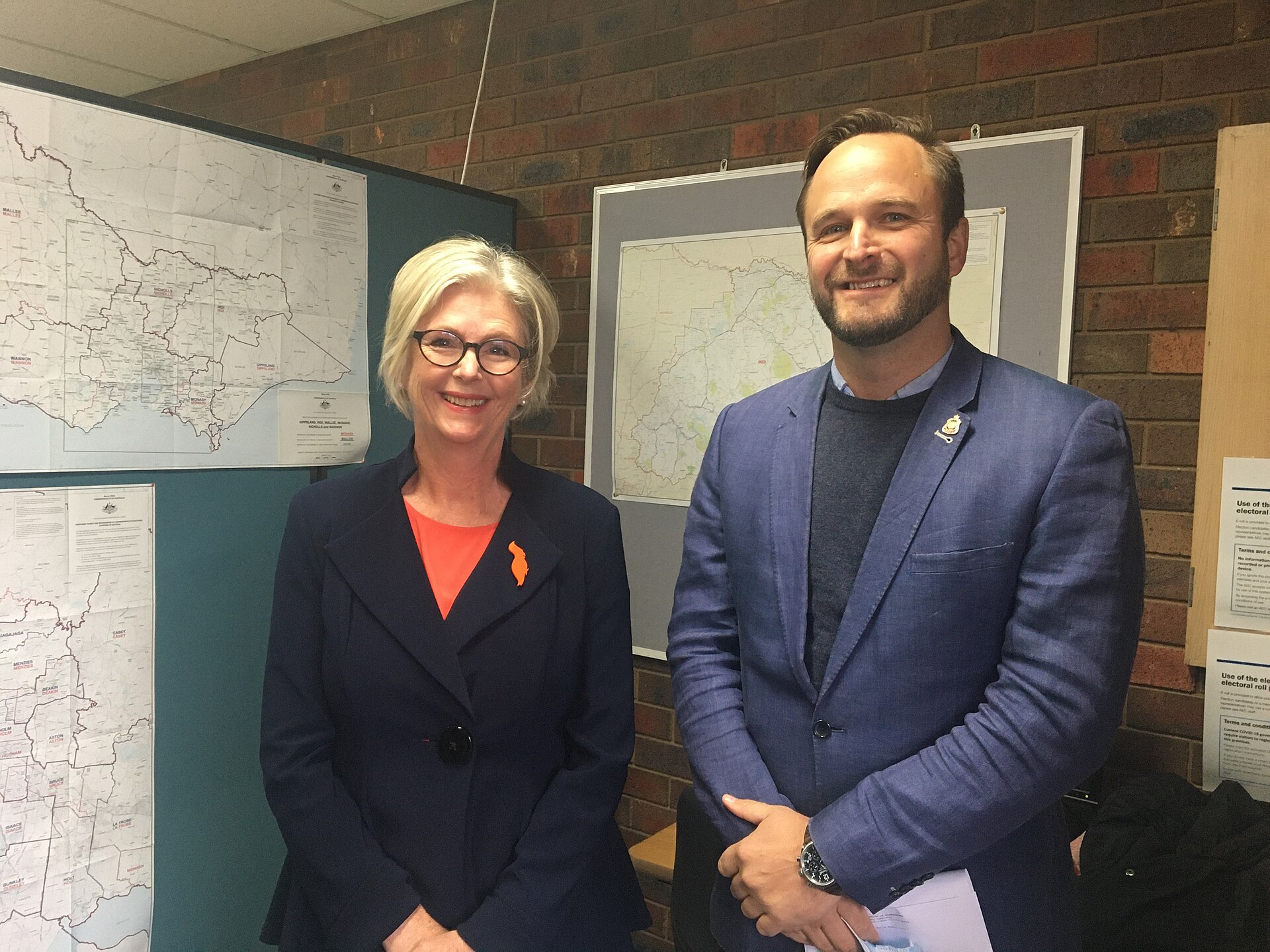
The alleged attack on Helen Haines demands condemnation, but rising threats against politicians also raise questions about public trust, political intimidation and selective outrage.
21 October 2026
3.9 MINS
Evangeline Lilly walked away from Hollywood to pursue a deeper purpose. Today, her Christian faith, humanitarian calling and passion for human creativity shape her next chapter.
21 October 2026
3.5 MINS
Ben Carroll has called for an end to hateful political rhetoric, but his treatment of Pauline Hanson raises questions about how consistently he applies that standard.

21 October 2026
7.9 MINS
A collection of sobering reflections on Western civilisation’s decline, the loss of Christian foundations and the dangers of cultural complacency, ending with a message of enduring Christian hope.

21 October 2026
3.4 MINS
If we want to avoid being compliant — even unintentionally — with ungodly ideas, we need to feed our souls with food that is in accord with God’s reality.

21 October 2026
3.4 MINS
Christians were accused of "turning the world upside down" in Acts 17:6. Let's pray to awaken the Church and do exactly that.
20 October 2026
4 MINS
Olympic champion Stephanie Rice has faced a wave of online ridicule after revealing she resigned from her dream job following what she believes was God’s direction.



Stephen, thank you, a beautifully crafted, positive take on this new initiative from our leaders. I particularly appreciated your reflection at the end where you so rightly state that the crafting of legislation takes no account of the diversity of cultural and religious backgrounds of our peoples.
So… yesterday a 13yo girl we know had created a set of new social media accounts, purporting to be 25yo.
As are her friends doing similar things.
She was smart enough to set the age to 25 and not 17 which is too obvious.
Bottom line… the Government ban is a complete fail.
By being hidden, children are in more danger than by knowing their actual age.
This is a disastrous policy/law.
Bottom line… the Government ban is a complete fail.
Bottom line… the Government ban is a complete fail.
Bottom line… the Government ban is a complete fail.
Ian… Maaaate… I think I said that already ☺️