


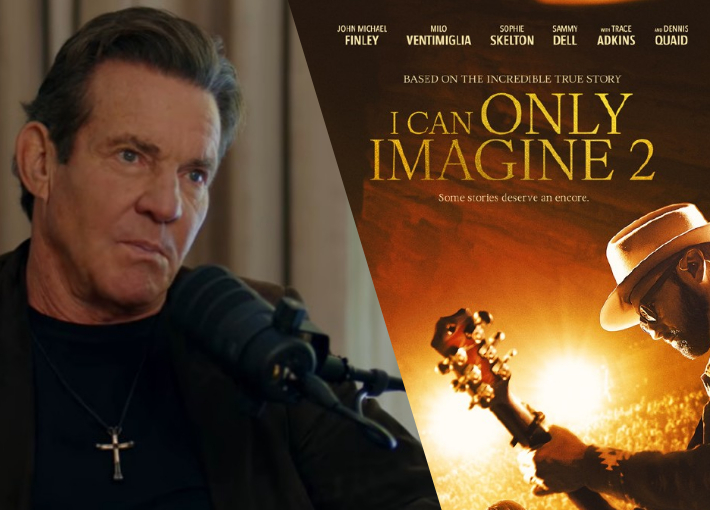
Dennis Quaid on Prioritising God Over Hollywood Glory: “Who Cares About the Oscars?”
Dennis Quaid isn’t chasing Oscars — he’s chasing meaning, letting roles find him while staying grounded in faith, family, and authentic storytelling.
Dennis Quaid is not interested in seeking glory. He’s just loving the game.
One of the coolest and hardest-working actors around, Quaid told podcast Out of Order that he’s “enjoying doing work (he’s) interested in doing.”
“I’m enjoying work a lot more than I did back then,” the screen legend of the ’80s, ’90s, and beyond said, adding, “I’m not trying to get anywhere.”
Loving the Game, Not the Glory
Noting that Hollywood hasn’t handed him its coveted Golden-bronze accolade, Quaid explained that he’s “not trying to push to get an Oscar.”
“Who cares about that?”
The Texas-born actor said he’s not really seeking specific roles anymore. Instead, he lets the part seek him out.
“I’ve gotten to play so many things, and I just let them find me,” Quaid revealed.
He also “tries not to typecast himself, which,” he said, “ basically means changing your haircut every once in a while.”
A central theme of the John Feitelberg podcast was Quaid’s work ethic.
He has an ever-expanding anthology of over 125 credited films, with a future four set for release this year. (Source: IMDb)
Proving he’s in the business for the love of the game, not the glory that comes with it, some of those films include faith-based content such as Reagan, both I Can Only Imagine films, and Soul Surfer.
(For The Daily Declaration’s reviews of I Can Only Imagine 2, see here, here and here).
On A Wing and a Prayer, Frequency, Blue Miracle, American Underdog, and The Hill also fit neatly into that category.
These are risky roles for even a seasoned actor who cut his craft in Hollywood long before it became Hollywoke.
Nostalgia-wise, my personal Quaid favourites include Inner Space, Day After Tomorrow, In Good Company, and Wyatt Earp, as well as the remakes, Flight of the Phoenix and Yours, Mine and Ours.
A Career Built on Passion, Not Prestige
Recalling comments he made in an interview with IMDb, Quaid told Feitelberg that The Rookie and The Right Stuff were catalysts in his life.
For example, The Rookie’s theme about second-chances hits home (no pun intended).
The Right Stuff was where Quaid said he lived out a boyhood dream. It’s also where he met “Chuck Yeager and got his pilot’s licence.”
He also learned that his early fear of flying only occurred when someone else was at the helm.
“I’m still nervous when somebody else is driving,” he explained, adding, “You know what I mean? They got it in my hand. It’s no problem.”
On faith-based films, Quaid said in a 2024 live interview with Patrick Bet-David, that he thought “they were really finding their legs.”
These are “movies that actually speak to audiences.”
“People don’t go to movies to see things,” Quaid asserted. “They go to movies to feel things.”
When it comes to faith-based [Christian] content, “Hollywood doesn’t even know how to track them.”
Citing the first I Can Only Imagine film, Quaid said, “They tracked it, but it wasn’t going to make 2 million dollars that weekend.”
The “film ended up making 17 million, leaving Hollywood scratching their heads.”
Then all of a sudden, “these studios are getting representatives to go out and make faith films.”
“They’re after the money, not what’s behind the films.”
Indicating that Hollywood no longer gets it, he said, “There’s a hunger for themes and stories that people can relate to, that fit their lives, and what they aspire to be.”
Faith plays a big role in that. Like “American values and the way we live our lives.”
These films don’t lecture people on “what to feel and what to think.”
The change is happening, Quaid said, “it’s slow, but the centre is going to move.”
The political centre is moving away from Hollywood.
“If I were an actor starting out now,” Quaid remarked, “I wouldn’t go to there.”
“I would go to Georgia, because that’s where they’re going to be hiring the smaller parts I can get as an actor starting out.”
Why Quaid Left Hollywood Behind
Appreciative of what Los Angeles afforded him as an actor over the years, Quaid said the place had changed.
Because of an obsession with political correctness, “it’s no longer a place where you can exchange ideas.”
“There’s a lot of fear I kind of feel there,” Quaid recounted, saying that this was why he moved to Nashville.
“Everything in Hollywood has turned upside down. Forget about left and right, conservative Republican or Democrat.
“It used to be that to be in (Tinseltown) was to be an outsider; to be a rebel, not the establishment.
“That’s turned. To be left is to be for the status quo, to be politically correct. Now the Republican Party is the party of the common man.”
It “used to be that the Republican Party was the party of rich fat cats.”
Now that’s the “Corporations and the Democrats.”
Quaid also talked about censorship. He recalled experiencing the politically correct clampdown firsthand, being told, “not to talk about politics or the way he felt because he’d be cancelled.”
Something he thought was strange after he’d see actors on talk shows talking about Biden and endorsing the Democrats.
“They were fine,” he said.
“Endorse a Republican Trump, though, and they don’t want you.”
We’ve lost the right to “have and hold a conversation,” Quaid concluded.
Republicans let that happen by taking too long to speak up.
Americans need to start “remembering that it’s okay to laugh at each other, to make fun of each other, and that it’s okay to talk, even if that’s awkward.”
From Cocaine to Christ: A Personal Transformation
Quaid’s own faith is another reason why he isn’t hunting for Hollywood’s golden handout.
Christ helped him break free from an addiction to cocaine.
In 1990, Quaid said he had one of those “white light experiences, where he saw himself either going to jail, dead or losing everything in the following five years.”
After this, “he stepped into rehab and started reading the Bible again.”
“I’ve always been very into God – to put it one way – but this time I read it and was struck by what Jesus said.”
“That’s really what started a real personal relationship with God.”
That has “grown and nurtured, and ebbed and flowed since,” Quaid shared.
“That relationship with God is what we’re all looking to fill up that hole we fill with drugs, gambling or thrill.”
“It doesn’t work,” he asserted.
Even if Quaid didn’t win big at the Oscars, his grounded take on Christ, culture and life is winning big with fans.
Proving staying power, Quaid released a Gospel album in 2023 as part of the Gaither series called Fallen: A Gospel Record for Sinners.
He shared a bit of the backstory with People magazine, saying, “It’s not churchy,” but it does reflect his love of hymns.
One Comment
Leave A Comment
Recent Articles:
20 October 2026
4 MINS
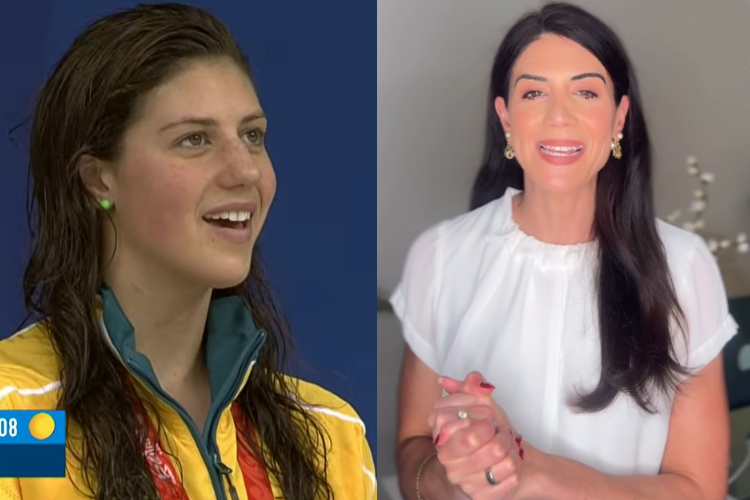
Olympic champion Stephanie Rice has faced a wave of online ridicule after revealing she resigned from her dream job following what she believes was God’s direction.

20 October 2026
7.7 MINS
France and Europe are burning — is it too late to save them from the barbarians?

20 October 2026
4.6 MINS
As rioters burn cars and historical buildings, celebrating the destruction of France’s inheritance, the West confronts an uncomfortable question: what happens when a civilisation loses the will to defend itself?
20 October 2026
4.9 MINS
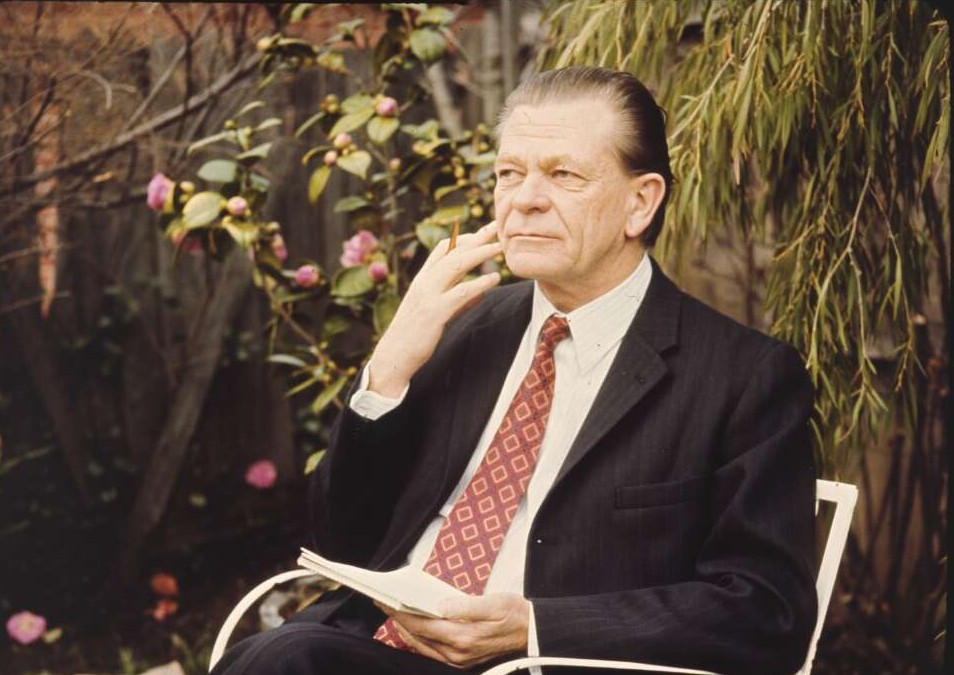
James McAuley’s legacy reaches far beyond Australia’s Catholic hymnals. Poet, convert and cultural warrior, he defended beauty, truth and faith in an age of changing values.

20 October 2026
4.9 MINS
A federal investigation has exposed how America’s biggest banks shut out conservative and Christian clients, relying on subjective reputation risks and controversial ideological watchdogs.
20 October 2026
3 MINS
Scripture teaches us to pray the "prayer of faith", because without faith it is impossible to please God.

19 October 2026
6.7 MINS
Europe’s escalating unrest raises urgent questions about immigration, national identity, secularism and the decline of Christian influence, prompting calls for repentance, prayer and renewed leadership.



Great article Rod!!!!!!