


Reading the Psalms with C. S. Lewis: A Review of “Reflections on the Psalms”
In Reflections on the Psalms, C. S. Lewis explores the beauty, difficulty, and emotional honesty of the biblical Psalms. This review examines how Lewis wrestles with challenging passages while uncovering their enduring spiritual and literary depth.
Clive Staples Lewis’s Reflections on the Psalms (1958) is a lesser-known work by the great twentieth-century English writer, apologist, scholar, and lay theologian. It comprises “a series of brief essays” on the Old Testament poetic book.
Reflections on the Psalms: Context and Background
As was noted by an academic review at the time, Reflections is difficult to classify. It is part devotional, part theology, part literary study, and part apologetics.
In contrast to other works published towards the end of Lewis’s life — such as English Literature in the Sixteenth Century (Excluding Drama) (1954) and The Discarded Image (1964) — Reflections is not an academic work. It is much closer in style and purpose to The Four Loves (1960), which explores the Christian conception of love.
In Reflections, written towards the end of his life, Lewis explores the Old Testament book of Psalms in a manner aimed at a general audience. He seeks to address “difficulties” (2) that may confront a reader of the Old Testament poetic book, especially around the “invective language” and the apparent “occasional self-righteousness of the Psalmists”.
Lewis does not claim to be providing expert insight into the Psalms. He writes “as one amateur to another, talking about difficulties I have met, or lights I have gained, when reading the Psalms, with the hope that this might at any rate interest, and sometimes even help, other inexpert readers” (2).
From a Place of Suffering
Despite Lewis’s very modest introduction, the reader of Reflections will be struck by Lewis’s intellectual depth and scholarly rigour (especially as it pertains to the literary aspects of the Psalms). However, true to form, Lewis’s language remains easy to understand and accessible for a lay reader (someone not trained in theology).
In his magisterial biography of C. S. Lewis’s life, Harry Lee Poe notes that the idea for Reflections came to Lewis as his wife, Joy Davidman, was suffering from a painful illness, which would ultimately take her life. It was in this turmoil that Lewis turned to the Psalms, with the intention of exploring some of the more difficult and darker elements the book contains.
Just as David often penned Psalms in times of suffering, more than three thousand years later, C. S. Lewis would be drawn to the emotional honesty and rawness of David’s songs in his own time of suffering. And Lewis does not steer clear of difficult topics in Reflections.
He dedicates the first three chapters to “Judgement”, “the Cursings”, and “Death” before turning to lighter subjects.
Lewis and the Authority of Scripture
An evangelical reader will be struck — and perhaps distressed — by Lewis’s apparent willingness to accept mistakes on the part of human authors in the Psalms.
Although he held to the authority of Scripture and was committed to the fundamentals of the faith, it does not appear that Lewis affirmed the traditional evangelical view of the inerrancy of Scripture. Instead, he emphasised that the Bible pointed to the Logos, the Word — namely, the person of Jesus Christ.
To this extent, his emphasis is one on which we should all agree. The Bible is not an end in itself. It was always designed to point us to the One who reveals Himself through it.
Nevertheless, throughout the book, Lewis draws out the beauty, comfort, and goodness of God in the face of the wickedness of the world. There is much wisdom and beauty to be gained from his insights.
Especially edifying are his later chapters on “The Fair Beauty of the Lord” and the law of God. He also devotes a chapter to “connivance”, where he draws a clear line between the experience of the psalmists and our own world:
“It is all over the Psalter. One almost hears the incessant whispering, tattling, lying, scolding, flattery, and circulation of rumours. No historical readjustments are here required, we are in the world we know. We even detect in that muttering and wheedling chorus voices which are familiar. One of them may be too familiar for recognition.”
In his last sentence of the chapter — “One of them may be too familiar for recognition.” — Lewis brings the reality of human evil home. That voice is our own. If we do not recognise the potential for evil in our own hearts, we cannot hope to clearly judge the moral failings in the world around us.
Lewis, Nature and the Psalms
Interestingly, Lewis devotes an entire chapter of Reflections to “Nature” — a topic in which he exhibited a marked interest over the course of his life. In it, he outlines the psalmists’ approach to nature, in particular how it exhibits a “Theology of Creation in the Judaic and Christian sense” (93).
Lewis emphasises how Creation “leaves Nature full of manifestations which show the presence of God” and shows how this idea is developed in the Psalms:
“The light is His garment, the thing we partially see Him through (104:2), the thunder can be His voice (29:3–5). He dwells in the dark thundercloud (18:11), the eruption of a volcano comes in answer to His touch (104:32). The world is full of his emissaries and executors. He makes winds His messengers and flames His servants (104:4), rides upon cherubim (18:10), commands the army of angels.” (95)
Before he turns to the final broad section of the book, Lewis adds “a word about praising”, which he hopes “will be unnecessary for most people” (105) — especially addressing the question of God’s demand for praise from His creation.
Conclusion
The three chapters that conclude Reflections address questions of “hermeneutics” — namely, the interpretation of texts. While, as mentioned before, many evangelical Christians will disagree with Lewis’s particular approach to the authority of Scripture, there remains much of value in these final chapters for the reading and study of the Bible.
One Jewish reviewer of Reflections shortly after the book was published noted that, despite its genius, it demands “all the critical faculties of the reader, in order to separate the gold from the dross and extract the grain from the chaff”.
This is apt advice for the reader of Reflections on the Psalms.
Although we may disagree with some of his approaches to Scripture — we may even struggle to reconcile this with what we know of him as a staunch public defender of Christian truth — there is much gold and grain to be found in this little-known devotional work from the mature C. S. Lewis.
Bibliography
- Assenza, Christopher, “‘Taking Up’ Scripture: Reflections on the Psalms”, C. S. Lewis: The Official Website, 2008, accessed 6 April 2026.
- Gordis, Robert, “Review of Book of Job, a Commentary; Reflections on the Psalms”, Jewish Social Studies, 1959, accessed 6 April 2026.
- Lewis, C. S., Reflections on the Psalms (William Collins: London), 2020.
- McGrath, Alistair, C. S. Lewis, A Life: Eccentric Genius, Reluctant Prophet (Hodder & Stoughton: London), 2013.
- Poe, Harry Lee, The Completion of C. S. Lewis: From War to Joy (1945–1963) (Crossway: Wheaton IL), 2022.
- Vanderzee, Brett, “C. S. Lewis on the Psalms’ ‘Ferocious Parts’”, Christianity Today, 2025, accessed 6 April 2026.
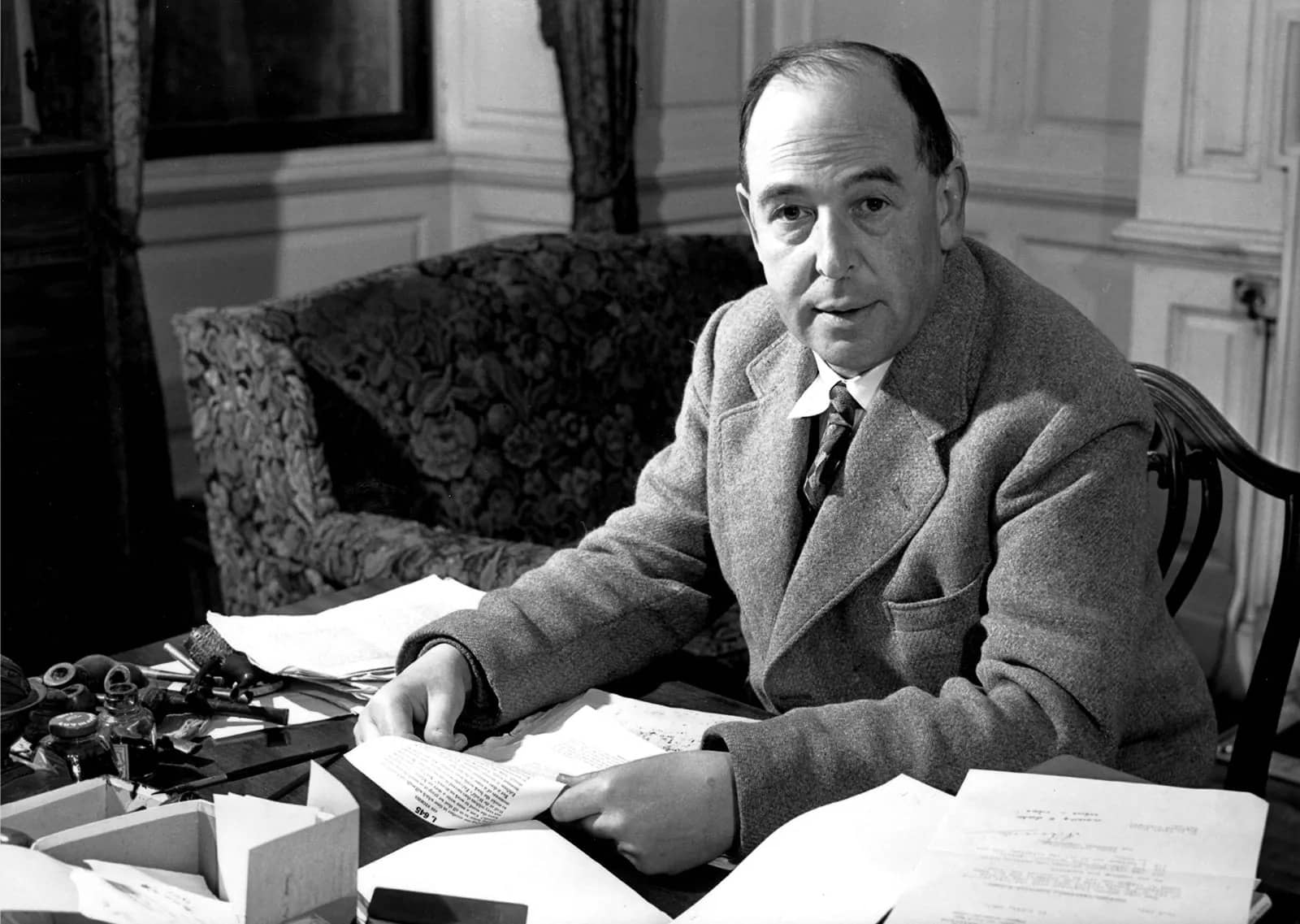
Image courtesy of Arthur P. Strong © Ingrid Franzon (www.IngridFranzon.com) via Britannica.
One Comment
Leave A Comment
Recent Articles:

20 October 2026
4 MINS
Olympic champion Stephanie Rice has faced a wave of online ridicule after revealing she resigned from her dream job following what she believes was God’s direction.
20 October 2026
4.9 MINS
James McAuley’s legacy reaches far beyond Australia’s Catholic hymnals. Poet, convert and cultural warrior, he defended beauty, truth and faith in an age of changing values.
20 October 2026
3 MINS
Scripture teaches us to pray the "prayer of faith", because without faith it is impossible to please God.

19 October 2026
12.4 MINS
Greta Gerwig’s "Narnia: The Magician’s Nephew" trailer raises questions about C. S. Lewis’s Christian vision and the faithfulness of the new Netflix adaptation. Here are my initial impressions and concerns.

19 October 2026
3 MINS
Paul prayed that we would be awakened to a deeper revelation of the Father and who we are in Christ, so that we will make Jesus known to others more passionately.

18 October 2026
2.7 MINS
Every season of life belongs to Christ, and we don't retire from discipleship as we grow older. In fact, our older years hold unique gifts for the younger generations.

17 October 2026
3.4 MINS
Seeking the face of God means surrender, laying aside our agenda and wants. Revival begins when we want God himself more than we want the outcome.



Very beautiful and needed article!!!!!