


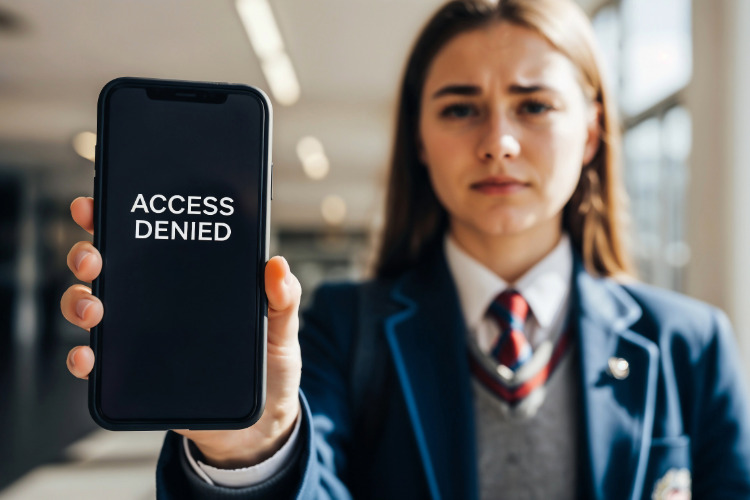
Social Media Ban Goes Viral Worldwide
Australia’s under-16s social media ban has gone viral, with more countries now moving to restrict children’s use of platforms like TikTok, Instagram and Facebook.
At the end of 2024, the Australian Government passed the Online Safety Amendment (Social Media Minimum Age) Bill introducing a mandatory minimum age of 16 for accounts on certain age-restricted social media platforms. The law came into effect in December 2025, urging the companies that own YouTube, X, Facebook, Instagram, TikTok, Snapchat, Reddit, Twitch, Threads and Kick to take action to prevent under-16s from having accounts – or face fines of up to $50 million. Currently, under-16s can still access messaging, gaming and networking platforms.
This world-first legislation was passed not to penalise parents and children, but the platforms that “enable algorithms that may recommend harmful or inappropriate content, infinite scrolling and other features designed to keep users continuously engaged”, according to eSafety Commissioner Julie Inman Grant.
According to Reuters, the move to restrict access was accelerated when the wife of South Australian Premier Peter Malinauskas encouraged him to read The Anxious Generation by American social psychologist Jonathan Haidt and to take action in the state, which quickly led to a national ban. In the book, Haidt argues that today’s teen mental-health crisis – marked by anxiety, depression, self-harm and loneliness – is being driven by the “phone-based childhood” created through young people’s excessive use of smartphones and social media.
Australia’s ban has sparked global debates around the damaging impact of social media, prompting governments in other parts of the world to implement similar measures.
Domino Effect
According to Ursula von der Leyen, president of the European Commission, the Digital Fairness Act will be proposed by the Commission towards the end of 2026 to target “addictive and harmful design practices”. A European age-verification app is also ready for deployment and will be available to citizens in the coming months, allowing users to prove their age anonymously while ensuring children are shielded from harmful content.
“The question is not whether young people should have access to social media. The question is whether social media should have access to young people. Let us give childhood back to children,” von der Leyen said.
In the UK, consultations around a potential under-16 ban – and age restrictions for addictive features such as infinite scrolling, autoplay and push notifications – were due to close on May 26. And, in France, President Emmanuel Macron is pushing for a social media ban for under-15s, with plans for implementation in September.
Plans are underway in Spain for a ban for under-16s, in Germany for under-14s and in Denmark and Poland for under-15s. In February, a bill was approved in Portugal requiring parental consent for children aged 13 to 16 to use social media and blocking access for under-13s. A mechanism called the Digital Mobile Key will be used to verify a child’s age and to provide parental consent.
Turkey passed legislation in April banning the use of social media – including game software platforms – by children under 15, requiring platforms to implement age-verification measures. Norway is planning to introduce an under-16 ban by the end of 2026, while Greece’s under-15 ban to combat the addictive nature of social media – as well as rising anxiety and sleep problems among young people – will come into effect in January 2027.
On March 28, 2026, Indonesia became the first Southeast Asian country to restrict children’s social media access, gradually implementing an under-16 ban of “high-risk” platforms to prevent online addiction, pornography, scams and abuse. Malaysia, India and New Zealand have also announced plans to introduce similar regulations for under-16s.
Accountability and Privacy
These restrictions highlight Big Tech’s accountability for social media addiction among young people. The US landmark case K.G.M. v. Meta et al. is considered the first successful case to argue this point, with the jurors deciding on March 25, 2026, that Meta (Instagram) and Google (YouTube) intentionally created addictive products and failed to warn users about their harms. The plaintiff, a 20-year-old woman who went by the initials K.G.M., claimed that her social-media addiction as a child led to anxiety, depression, self-harm and body dysmorphia.
But how effective are these new bans at preventing such destructive online exposure? In March 2026, the UK-based Molly Rose Foundation surveyed 1,050 Australians aged 12 to 15 and found that 61 per cent who previously held accounts on the restricted platforms still have access to at least one active account.
Furthermore, 70 per cent of children surveyed said it was “easy” to bypass the restrictions, while around 60 per cent said the platforms took “no action” to remove or deactivate existing accounts.
And, as more blanket bans are rolled out, privacy concerns continue to grow. Can children be protected from harmful and addictive online content without invasive digital ID checks or biometric scans? Even if platforms cannot compel users to provide government-issued identification – instead relying on account age data or age-estimation technology for verification – children can still slip through the cracks, leaving them in much the same vulnerable position as before.
Australia’s social-media ban may have set a precedent, but its success as an international template is far from guaranteed.
___
Republished with thanks to News Weekly. Image courtesy of Adobe.
One Comment
Leave A Comment
Recent Articles:

13 October 2026
1.8 MINS
Australia faces mounting geopolitical, economic and defence threats, but its political leaders lack the statesmanship, bold vision and decisive communication needed to prepare the nation.

13 October 2026
2.8 MINS
The church in Ephesus had so much going for it. Yet despite their hard work, perseverance, endurance, and discernment, there was something deeply wrong: they had left their first love.
12 October 2026
4.6 MINS
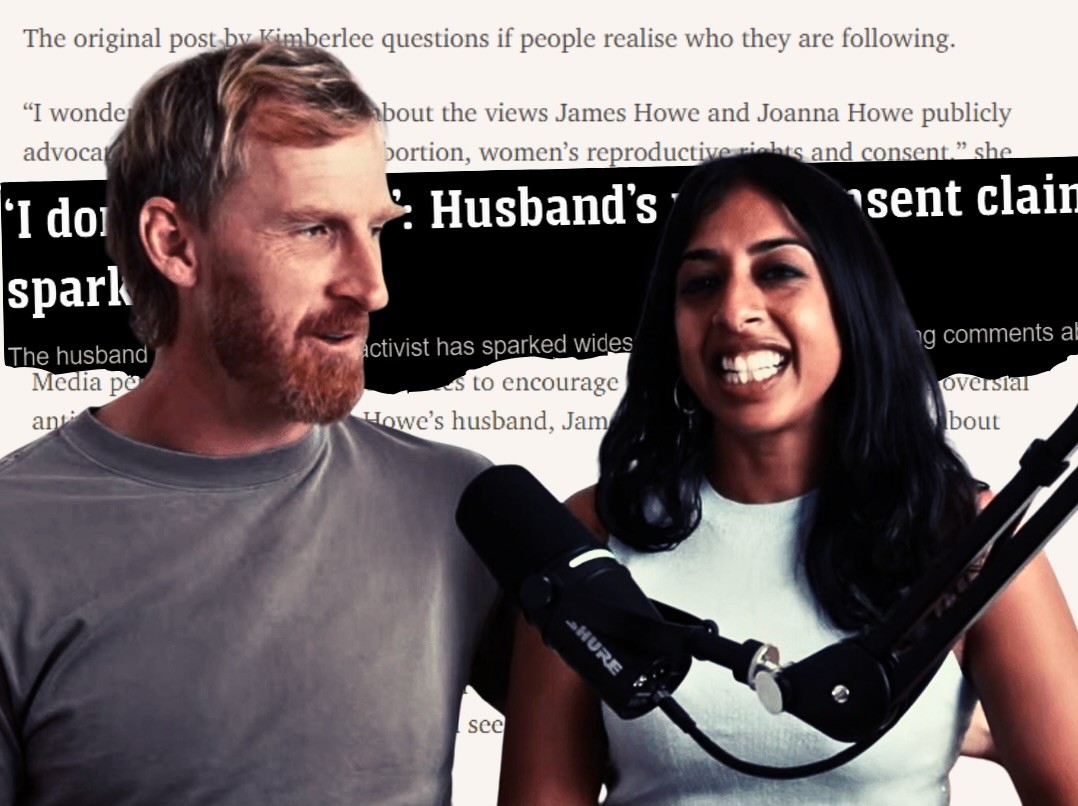
Learn how journalists use loaded language, selective quotes and misleading headlines to shape public opinion, using a controversial report about James and Joanna Howe as a case study.

12 October 2026
3.1 MINS
The proposed livestream of Nidal Hasan’s execution has reignited debate over justice, deterrence and public accountability, with critics comparing American justice to ISIS propaganda.
12 October 2026
3.7 MINS
An EU court case over baptismal records could pit data protection laws against religious freedom, raising serious questions about whether governments can compel churches to erase sacramental history.
12 October 2026
3.2 MINS
Your support has helped us change the world for the better, as Dads4Kids has poured our heart, soul and finance into the global promotion and celebration of International Men’s Day.

12 October 2026
3.3 MINS
In the week leading up to Christ’s crucifixion, Jesus' soul was troubled. He responded with a bold prayer, and his example challenges us to that same boldness.



Nicole, a very important piece, thank you so much for your research. The question I have about all this is ‘the shift from parent responsibility to government responsibility.’ I totally agree that children should be protected from addictive stimuli, but who should do the controlling? I am nervous about governments around the world in the left leaning nations in particular, managing their people more and more.