


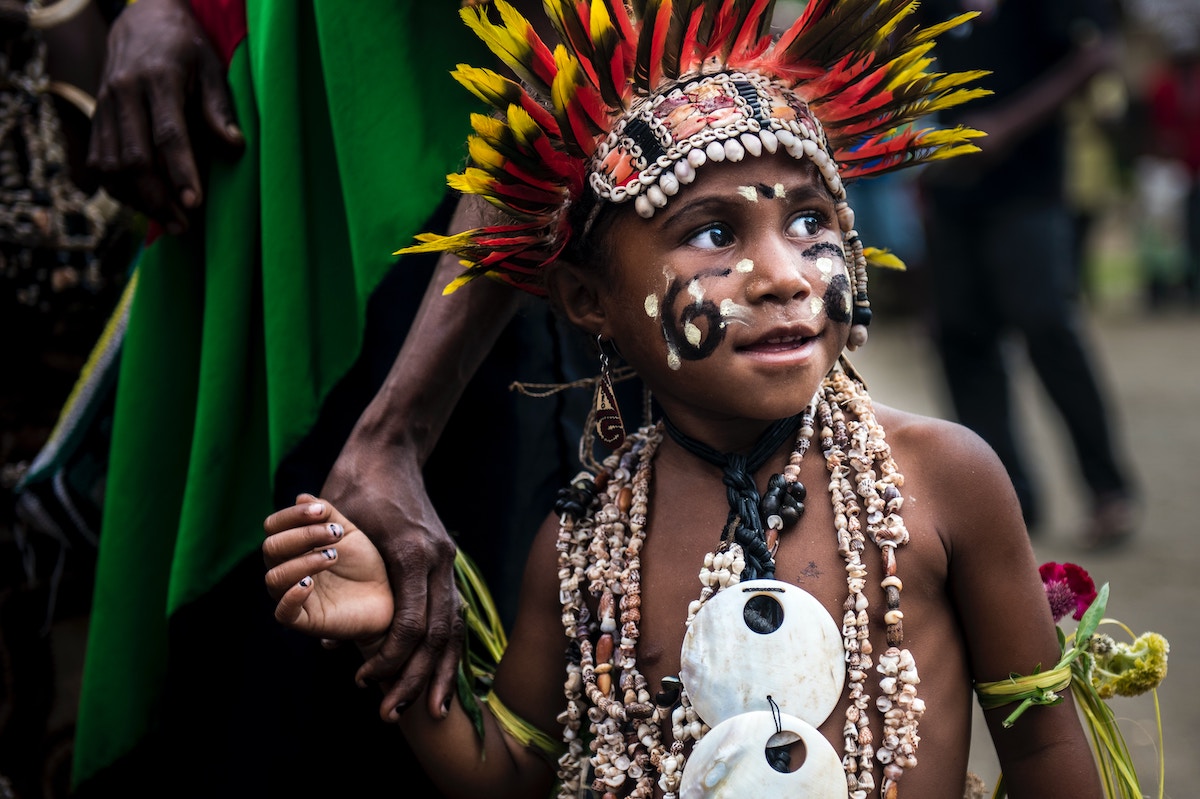
Jesus, Our Peace Child
The story of the Sawi in South Papua reveals an incredible picture of the gospel, presenting Jesus as our ‘Peace Child’.
The Sawi are an ethnic group from South Papua in Indonesia, once infamous as cannibalistic headhunters.
Today, the majority of Sawi are believers in Christ.
The story of their transformation from fierce warriors to followers of Jesus is told in the book Peace Child (1972) by Don Richardson, a Canadian missionary who, along with his wife Carol, spent 15 years ministering among the Sawi.
Peace Child was also turned into a short film by the same name.
The Sawi and the Significance of Sacrifice
The story of the Sawi reveals the miraculous way God works to change the hearts of people from even the most tribal and far-flung cultures.
More than this, their story provides an incredible picture of the gospel itself.
As Western believers, we can it difficult to grasp the biblical concept of sacrifice, which is at the heart of the good news of Jesus.
Why the cross? Why did Jesus need to die for our salvation? Couldn’t God just have waved his hand and said, “You’re forgiven”?
The Sawi help us answer this question.
Before the gospel came to the Sawi, they were in constant warfare with the tribes around them.
The Sawi had an infamous tradition — it was almost like a sport. One of them would pretend to befriend someone from another tribe, and the end goal of the fake friendship was to kill and eat that person.
The game involved a lot of planning and deception. The more elaborate the plan of betrayal was, the more the betrayer would be recognised as a hero by his people.
So deeply embedded was this tradition that, when Don and Carol Richardson began teaching the Sawi the Gospels, the Sawi viewed Judas Iscariot as the hero of the story, not Jesus!
A Picture of the Gospel from the Depths of the Jungle
It was at this point that Don and Carol became disheartened, and wondered if the gospel could ever bring transformation in this part of South Papua.
Then one day, the Richardsons witnessed a ceremony.
One of the Sawi villages needed to make peace with a nearby enemy village. So both villages offered each other a newborn baby. The two babies were exchanged, on the understanding that as long as the child they were given remained alive, they would be at peace with the other village.
Moreover, if there was ever a disagreement with the other village, someone could point to the peace child as a plea for the fighting to stop — and stop it would.
Finally, Don and Carol had found a cultural key to explain the good news of Jesus to the Sawi.
They explained that Jesus is God’s Peace Child. God has given Jesus to the world in order to establish peace between Himself and humanity.
The Sawi understood this message, and eventually, the majority of their tribe found faith in Christ. They even built the world’s largest circular building made strictly from un-milled poles as a place of worship.
Jesus, Our Peace Child
For the Sawi — in fact, for countless cultures around the world — the idea of sacrifice is powerful and important. It is a central tenet of Judaism, and is common in many eastern religions such as Buddhism and Hinduism.
For us as Westerners, the notion of sacrifice may still seem foreign. But it is at the very heart of the Christian faith.
Jesus’ death is the most significant event in all history. Jesus’ death is God’s answer to our deepest questions. Jesus is our Peace Child. He is proof that God loves us, and that God has established eternal peace with us.
We don’t need to strive or perform rituals or have all the right religious words to make God happy. We can simply just point to Jesus — because it was Jesus’ death and resurrection by which God has made us right with Himself forever.
Image via Unsplash.
4 Comments
Leave A Comment
Recent Articles:
18 October 2026
2.7 MINS
Every season of life belongs to Christ, and we don't retire from discipleship as we grow older. In fact, our older years hold unique gifts for the younger generations.
17 October 2026
3.4 MINS
Seeking the face of God means surrender, laying aside our agenda and wants. Revival begins when we want God himself more than we want the outcome.

16 October 2026
4 MINS
Katie Zacharia’s first days as White House Press Secretary have sparked fierce media criticism, but her remarkable testimony of surviving an abortion attempt tells a deeper story.

16 October 2026
3.4 MINS
Australia’s proposed digital duty of care laws promise greater online safety and increased user control by switching off algorithms, but critics warn they could give ministers sweeping powers to restrict lawful content and threaten free speech.
A Million Women Movement Marks Second Anniversary: “Look What the Lord Has Done! Ishtar Has Fallen!”

16 October 2026
2.8 MINS
Two years after A Million Women gathered in Washington for ten hours of prayer and fasting, organisers point to victories they believe reflect God’s answers to intercession.

16 October 2026
2.6 MINS
Euthanasia accounted for 4% of all deaths in Belgium in 2025, with growing numbers involving people who were not terminally ill, dementia patients and psychiatric conditions.
16 October 2026
5.2 MINS
Christa Pike’s botched execution has sparked outrage across America, but critics argue that the same concern for human dignity is denied to abortion survivors.



Wow! Hallelujah! What a miraculous story! To God be the glory! Is there still a church there?
Yes amazing right! I don’t know first hand if there is still a church there but I strongly suspect there is – Papua is one of the more Christian regions in the country.
Thank you Kurt…a wonderful testimony of Breakthrough in South Papua …missions are happening in West and South Papua these past few months and reports for Timika and surrounds are positive e.g. Asmat region people
Yes, the Sawi church continues to thrive.
https://youtu.be/mm6R9EPtMHo?is=tWCJyMxoOKfFpuky